


At negative temperatures, their real capabilities noticeably differ from the specified data. This material summarizes the results of tests by the German automobile club ADAC and shows how significantly the range can decrease even at a moderate cold of around −7 °C.
Why Cold Affects Electric Vehicles So Strongly
Lower temperatures directly impact the operation of the traction battery. Chemical processes inside the accumulator slow down, internal resistance increases, and part of the energy is additionally spent on heating the cabin and maintaining the battery's operating temperature. As a result, electricity consumption rises, and the real range on a single charge decreases.
Even laboratory tests, excluding snow, wind, and complex terrain, demonstrate a noticeable drop in efficiency. In real conditions, the effect is often even more pronounced.
ADAC Testing Methodology
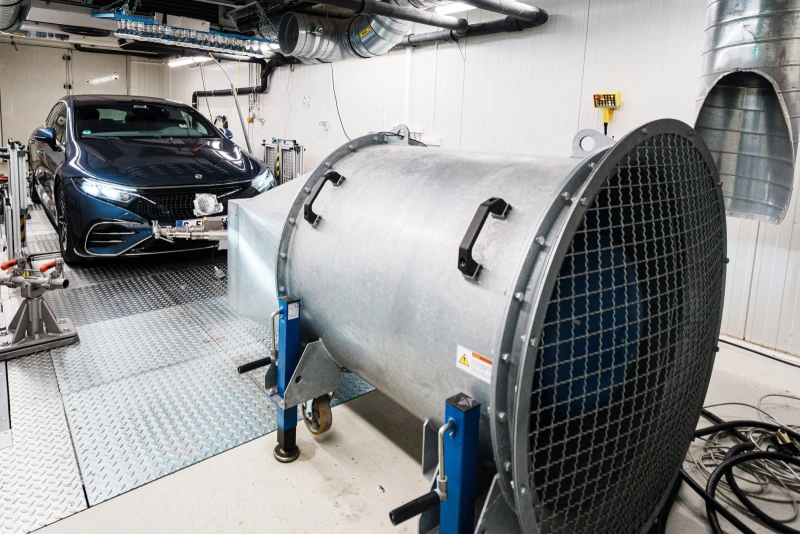
The German automobile club ADAC regularly conducts comparative tests of electric vehicles in a climate chamber. The temperature in such tests is set at −7 °C, which cannot be called extreme cold. Vehicles undergo a standard driving cycle with cabin heating enabled, after which the results are compared to those at around +23 °C.
The obtained data allow evaluating the impact of cold without adjustments for driving style or road conditions and provide a clear picture of the problem's scale.
Most Illustrative Examples
The results for individual models are particularly revealing. For the Volkswagen ID.5 crossover, energy consumption in cold doubled, and the range decreased to about 250 kilometers. The Tesla Model 3 under similar conditions increased electricity usage by nearly 70 percent, leading to a range reduction to around 240 kilometers.
Compact urban electric vehicles suffer even more. The Peugeot e-208 and Fiat 500 Electric in the winter test failed to exceed 200 kilometers. The Chinese Leapmotor T03, with its modest size and power, showed a result of less than 150 kilometers. The Dacia Spring, equipped with a 24 kWh battery, in cold is effectively limited to about 100 kilometers of range.
Overall Market Picture
Even larger and more expensive electric vehicles are no exception. According to ADAC data, a 40–50 percent reduction in range under laboratory conditions is typical. Thus, the Skoda Enyaq RS loses about 44 percent, the Renault Scénic E-Tech — around 47 percent, and the Mercedes EQS, considered one of the most efficient, drops about 27 percent.
With further temperature drops to −15 °C, active use of heating, and high-speed driving, the difference between the claimed and real range can approach twofold.
Conclusion
ADAC tests show that winter operation remains a weak point for electric vehicles. Even at moderate cold, the real range significantly decreases, and for models with small batteries, it becomes critically limited. These features are important to consider when choosing an electric vehicle and planning trips in cold seasons.