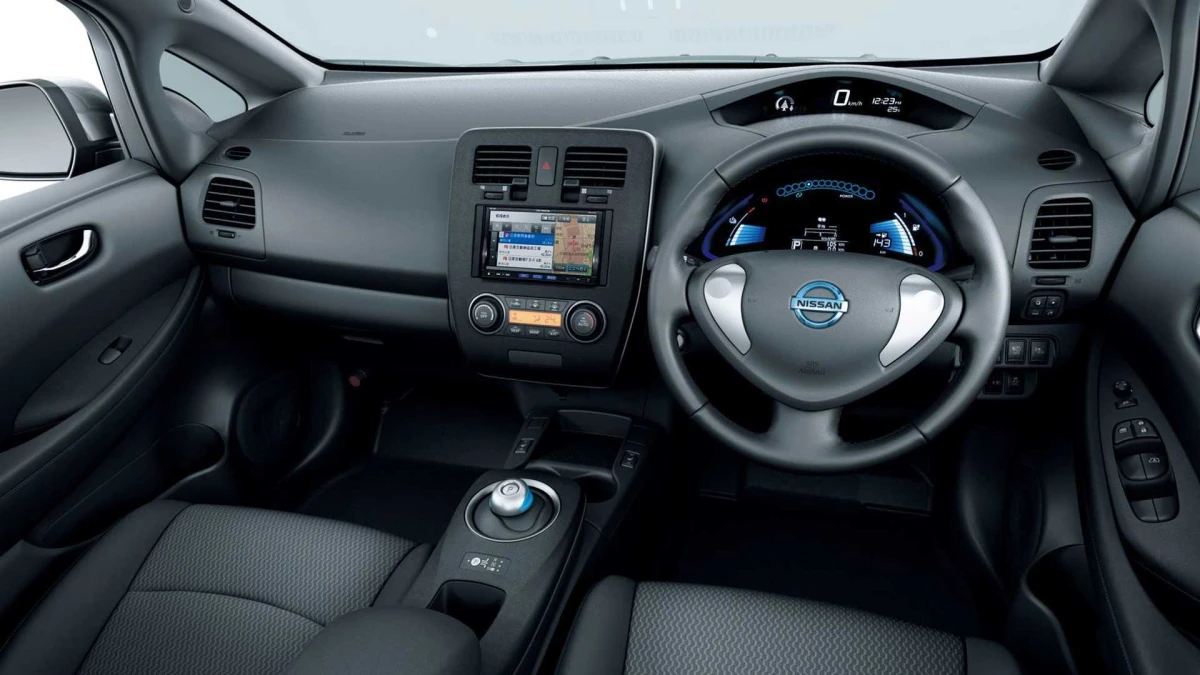



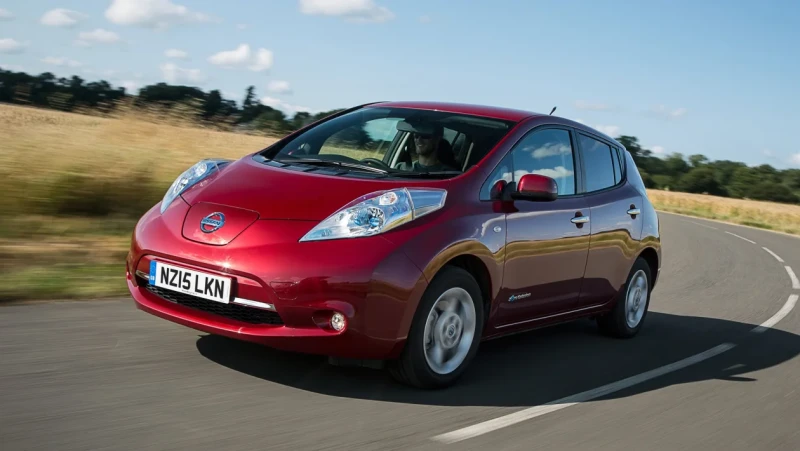
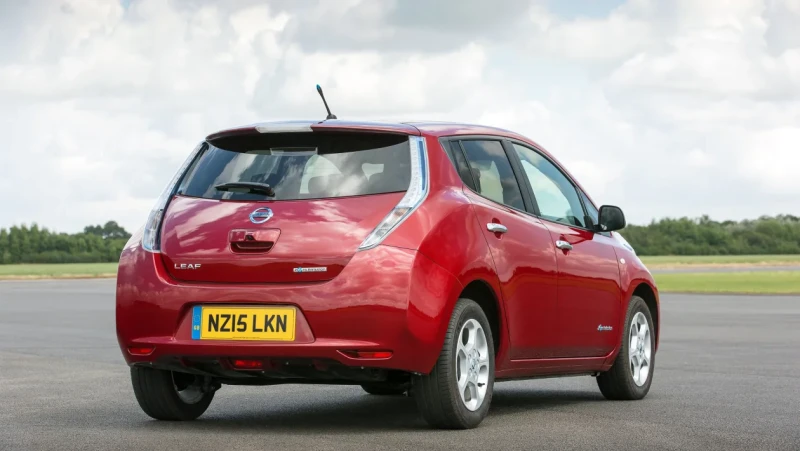
The official debut took place in December 2010, European sales kicked off in spring 2011, and the first Leafs reached the United States that same year — mostly imports from Japan at first. Production ran through late 2017, with a major facelift in 2013 that introduced the AZE0 index and upgraded the battery to 30 kWh.
The car rides on the Nissan V platform (previously known as the B-platform), shared with models like the Tiida, Note, and Juke. Placing the heavy battery pack under the cabin floor delivers an exceptionally low center of gravity, giving this compact C-segment hatchback outstanding stability and handling.
Key highlights of the first-generation Nissan Leaf:
• fully electric powertrain delivering 80 kW (109 hp) and 254–280 N·m of torque
• battery options: 24 kWh (2010–2015) and 30 kWh (2015–2017)
• NEDC-rated range of 175 km (earlier models) and up to 250 km (later versions)
• CHAdeMO fast charging port (up to 50 kW)
• drag coefficient Cx = 0.28–0.29
• 5-star Euro NCAP rating (2012)
What’s new compared to previous models
As the very first production generation of the Leaf, it had no direct predecessor. Still, compared with gasoline counterparts (Tiida, Note, Versa) and Nissan’s earlier EV experiments (Altra EV, Hypermini), the leap was massive:
- completely new platform engineered for a heavy underfloor battery
- no engine, transmission, or exhaust — pure silence and instant torque
- lithium-ion battery developed by Nissan-AESC instead of older nickel-metal hydride tech
- regenerative braking with B-mode and the foundation for the later e-Pedal system
- heat pump in higher trims after the 2013 facelift
- remote climate control and charging management via the CarWings app
U.S. Market in 2025: Current Situation
As of late 2025, the first-generation Nissan Leaf remains one of the most widely available used electric vehicles in the United States. Listings on major platforms like Cars.com, Autotrader, and CARFAX show hundreds of 2010–2017 examples constantly on the market.
| Model Year | Battery Capacity | SOH (State of Health) | Approximate Market Price (USD) |
|---|---|---|---|
| 2011–2012 | 24 kWh | 65–78 % | $3,500 – $6,000 |
| 2013–2014 | 24 kWh | 75–88 % | $5,000 – $8,000 |
| 2015–2017 | 30 kWh | 82–96 % | $7,000 – $11,000 |
| 2016–2017 Premium (leather, Bose, LED) | 30 kWh | 90–98 % | $9,500 – $13,000 |
The most sought-after examples on the U.S. market are 2014–2017 models with the 30 kWh battery and SOH above 85%. These typically deliver a realistic range of 80–110 miles even in cold weather.
Main Trims & Configurations Available in the U.S.
American buyers most frequently encounter these three core trims:
- Visia / Base — cloth seats, 16" steel wheels, air conditioning, heated seats & battery, cruise control
- Acenta — automatic climate control, rearview camera, 16–17" alloy wheels, CarWings connectivity
- Tekna (most popular premium choice) — leather interior, Around View Monitor, Bose audio, LED headlights, heated steering wheel & rear seats
After 2015 many Japanese-spec S and G versions arrived with the rear spoiler solar panel and advanced B-mode/e-Pedal-like functionality.
Who Should Buy a First-Gen Nissan Leaf in 2025–2026 in the US?
This remains an excellent first EV and very capable city commuter for:
- families with kids (5 seats, Isofix, high safety rating)
- residents of cities with strong charging infrastructure (Los Angeles, San Francisco, Seattle, New York, Atlanta)
- drivers with daily commutes of 60–80 miles or less
- budget-conscious owners — cost per mile roughly $0.03–$0.05 with home charging
Critical things to check before purchase:
- battery SOH (below 75% signals higher risk of rapid further degradation)
- number of battery capacity bars remaining (aim for at least 10–11 out of 12)
- model year and previous climate exposure (cars from milder regions usually fare better)
- presence of heat pump (highly recommended for cold winters)
- proper function of the CHAdeMO port and 12-volt auxiliary battery
Even in 2025 the Nissan Leaf I (2010–2017) continues to be one of the smartest, most proven, and affordable used EVs on the American market. Reliable, inexpensive to maintain, backed by a huge owner community and readily available parts — a true people’s electric car.