


Over roughly a decade of production from 2015 through 2025, the B9 interior evolved significantly while preserving its defining character: understated German luxury without unnecessary visual drama. The generation reached U.S. showrooms for the 2017 model year, and both early cars and facelifted 2020-and-newer examples are now common on the used market. The difference between them becomes especially noticeable when comparing vehicles with approximately 90,000–125,000 miles.
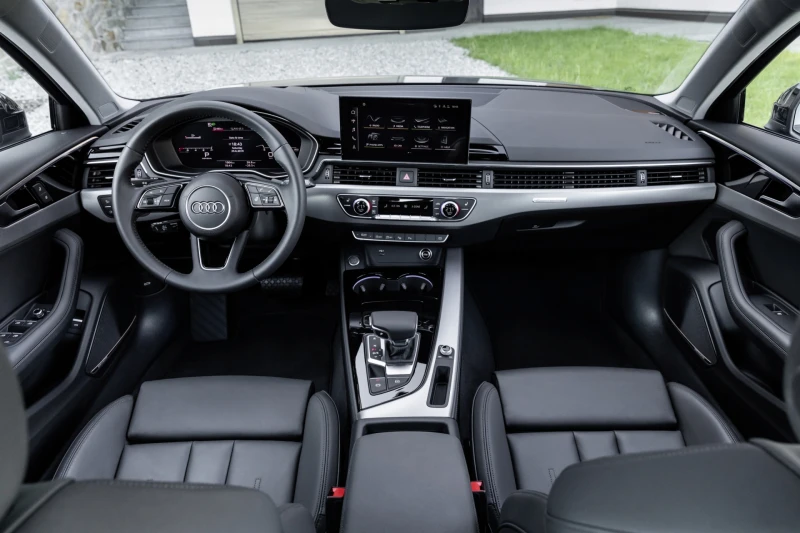
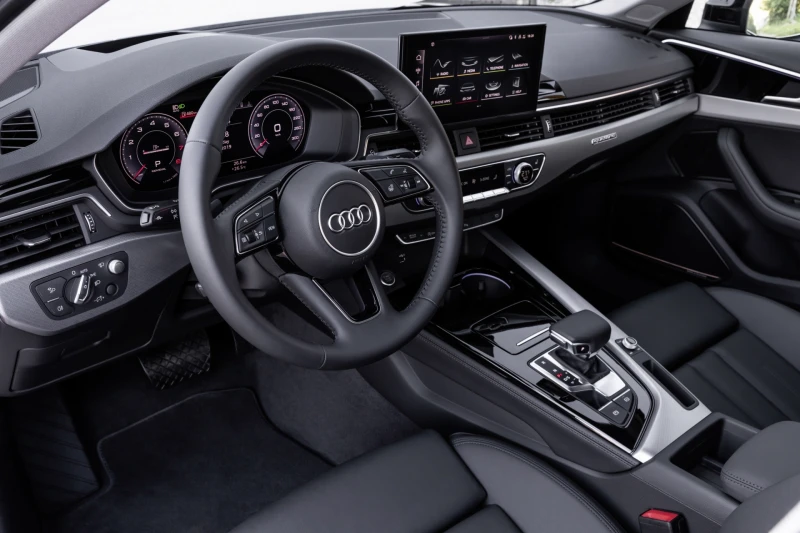
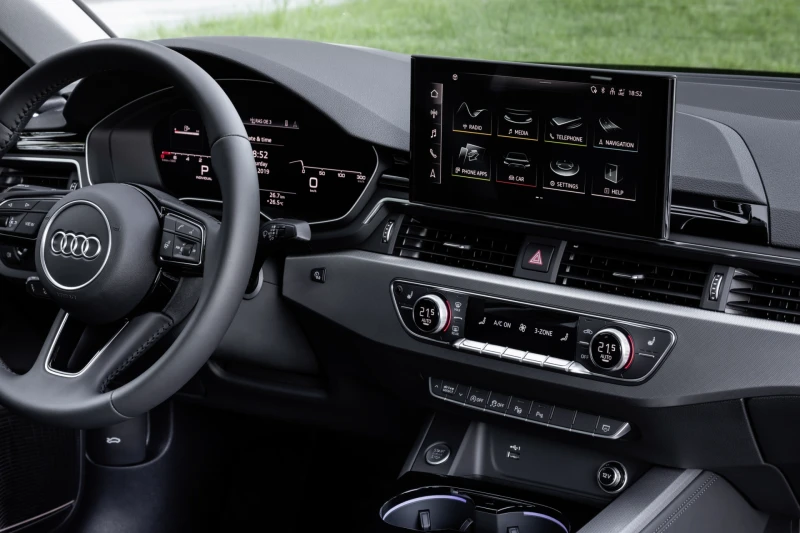
From the beginning, Audi used a strongly horizontal dashboard layout. The long air vents stretching across much of the dash create a sense of width and openness. In pre-facelift models, the center controls were subtly angled toward the driver, improving ergonomics and reinforcing the cockpit-like feel. Following the 2019 global update, introduced in the United States for the 2020 model year, the dashboard became cleaner and multimedia control moved to a touchscreen. The changes were not revolutionary, but they made the cabin feel considerably more modern without abandoning Audi’s familiar design language.
Interior materials and how they hold up over time
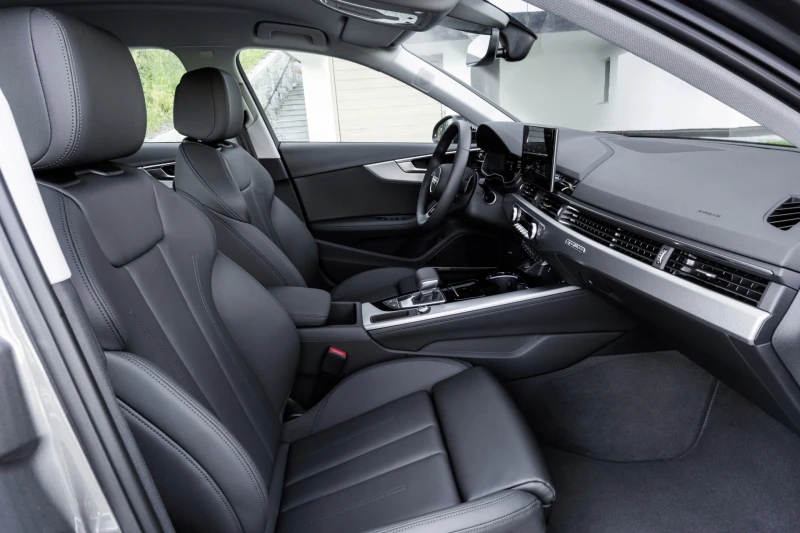
Material quality remains one of the strongest aspects of the A4 B9. Even lower trims use soft-touch plastics with convincing textures, along with aluminum-look or wood trim and durable upholstery. More expensive configurations add leather, Alcantara-style inserts, or upgraded decorative trim. Black and gray interiors dominate the U.S. used-car market because they are practical and tend to conceal everyday wear better than lighter colors.
In real-world American conditions, the materials generally age well. Cold winters in the Midwest and Northeast, along with intense summer heat in states such as Arizona and Texas, usually do not cause major cracking or hardening when the cabin is properly maintained. Suede-like material on door panels or the center console may become polished in frequently touched areas, particularly after about 60,000 miles, although professional cleaning can often improve its appearance. Leather seats typically wear well and remain presentable when cleaned and conditioned regularly. Owners occasionally report squeaks around the center console or pillars on rough pavement, but this is not unusual for premium vehicles of this age and rarely undermines the overall impression of quality.
Driving position, ergonomics, and passenger space
The A4 B9 offers a naturally comfortable driving position. A wide range of seat and steering-column adjustment makes it easy for most drivers to find the right setup. Front sport seats, especially those included with S line equipment, provide strong lateral support without becoming tiring during long drives on highways such as I-5 or I-95. Forward and side visibility are good, although the relatively thick front pillars may require some adjustment during tight urban maneuvers.
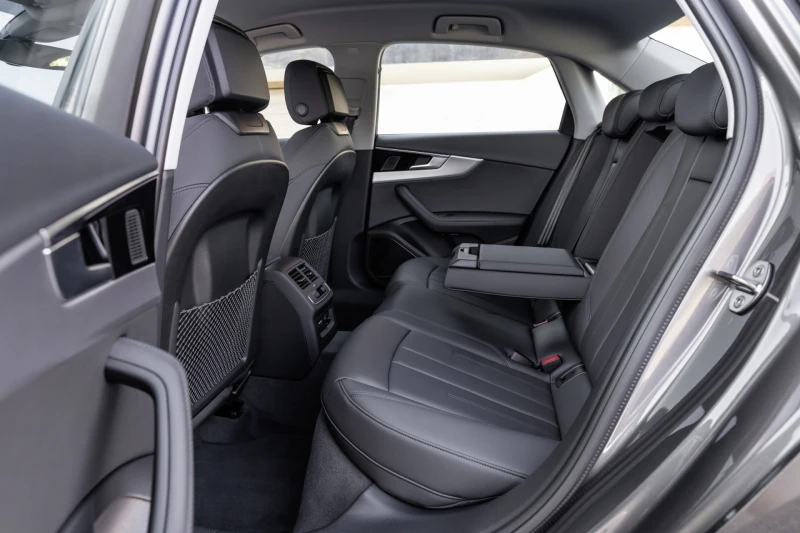
Rear-seat space is competitive for a compact luxury sedan. The 111-inch wheelbase provides noticeably more passenger room than the previous B8 generation. Three adults can fit across the rear bench for shorter trips, though the tall center tunnel limits foot space for the middle passenger. Legroom and headroom are generally acceptable for occupants around 6 feet 1 inch to 6 feet 3 inches tall, depending on seat position and whether the car has a sunroof.
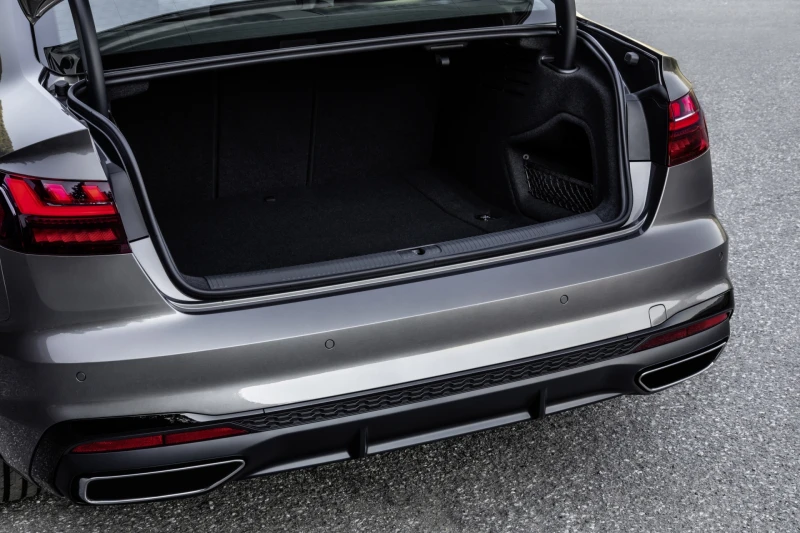
The sedan’s trunk measures approximately 16 cubic feet under the European VDA method, although U.S. specifications may show a lower figure because of different measurement standards. Wagon-style B9 models offer around 17.5–17.8 cubic feet behind the rear seats, with capacity increasing substantially when the seatbacks are folded. In the United States, buyers are more likely to encounter the raised A4 allroad than a conventional A4 Avant. Either body style provides enough practicality for family trips, luggage, or everyday cargo.
Storage is thoughtfully arranged, with deep door pockets, a useful center armrest compartment, and several smaller trays. On facelifted models, the cupholders were positioned farther forward on the center console, making them easier to reach.
Technology and equipment across the trim range
Equipment varies significantly by model year and trim. Early U.S.-market cars were offered primarily in Premium, Premium Plus, and Prestige configurations. Many 2017–2019 examples have analog gauges, a 7-inch infotainment display controlled by the rotary MMI dial, dual-zone climate control, and conventional upholstery. Audi Virtual Cockpit, a configurable 12.3-inch digital instrument cluster, became one of the most desirable options on higher-spec cars.
The facelift brought more substantial technology changes for the 2020 model year. A 10.1-inch touchscreen replaced the traditional MMI rotary controller on the center console. Virtual Cockpit became more widely available, although its inclusion still depends on trim and option packages. Three-zone climate control, a heated steering wheel, wireless phone charging, Bang & Olufsen audio, navigation, and expanded driver-assistance systems can all be found on used examples listed through major U.S. marketplaces such as Autotrader, Cars.com, and CarGurus.
Well-equipped Premium Plus and Prestige models are among the most attractive used-market choices. S line-equipped cars add sport seats, upgraded upholstery, contrast stitching, aluminum pedal covers, and additional interior detailing. Some vehicles also include a surround-view camera, adaptive cruise control, multicolor ambient lighting, and upgraded LED exterior lighting. These configurations tend to remain desirable because they combine a modern-looking cabin with equipment that still feels current.
What the cabin is like in everyday use
After years of use on American roads, the A4 B9 has developed a generally positive reputation for cabin comfort. Visibility is good overall, although reflections on the large windshield can be distracting during heavy rain or when driving toward low sunlight. Sound insulation is appropriate for the class. At approximately 75–80 mph, the cabin remains relatively quiet, though some tire noise can enter through the wheel wells, especially with larger wheels or performance-oriented tires.
Most interior weaknesses are related to age and mileage rather than fundamental design flaws. Early cars occasionally receive complaints about window fogging or climate-control performance during extremely cold weather, but maintenance of the cabin filter, air-conditioning system, and drainage channels often resolves these issues. Controls generally age well, with buttons and rotary knobs retaining a precise feel even after several years. Regular interior cleaning and leather conditioning are especially important for cars used year-round in stop-and-go urban driving.
Overall, the B9 cabin still looks relevant. A well-maintained 2017 or 2018 model can appear surprisingly modern because of its clean lines and logical ergonomics. Facelifted 2020-and-newer cars feel fresher thanks to the larger touchscreen, updated software, and wider availability of Virtual Cockpit.
Which Audi A4 B9 interior is the best choice today?
For most U.S. buyers, a 2020–2022 Audi A4 Premium Plus or Prestige offers the strongest balance of price, comfort, and equipment. Examples with leather seating, Virtual Cockpit, the S line package, and advanced driver-assistance features combine modern technology with proven everyday usability. Earlier 2017–2019 cars remain appealing to buyers seeking a lower purchase price and may actually suit drivers who prefer the tactile MMI rotary controller over a touchscreen interface.
The fifth-generation Audi A4 B9 interior remains one of the most balanced cabins in the compact luxury segment. It no longer feels cutting-edge in 2026, but it continues to deliver impressive build quality, comfortable ergonomics, and useful practicality. That combination helps the A4 remain competitive on the used market, offering a genuine premium experience at a more accessible price than many newer luxury sedans.