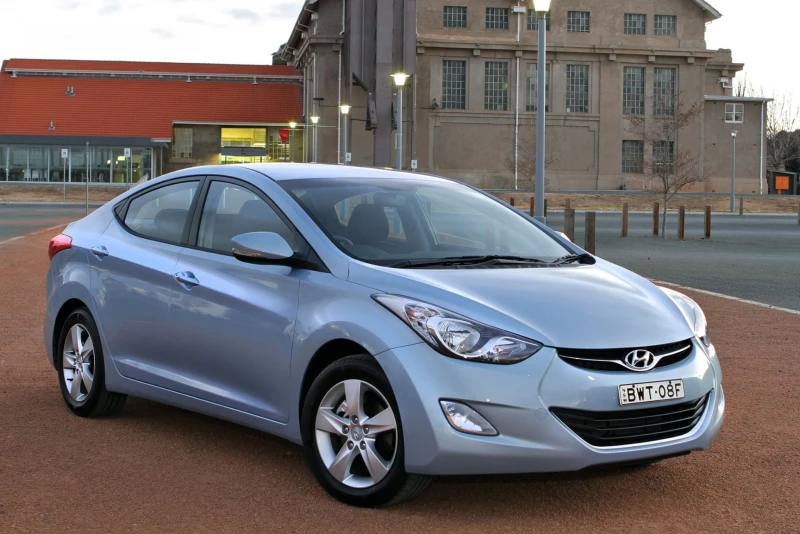
That said, like any used car with mileage, it has its share of known weak points and potential trouble spots. This guide covers the most common Hyundai Elantra (2010–2015) problems, reliability concerns, and key things to check when shopping for a used example on the American market. For full specs, interior photos, and driving impressions, see our separate model overview articles.
Key Weak Points & Owner-Reported Issues
Owners of the 2010–2015 Elantra frequently mention several recurring characteristics. City fuel economy for the 1.6L Gamma MPI (128–132 hp) and 1.8L Nu MPI (148–150 hp) engines typically ranges from 22–28 mpg combined, depending on driving style and traffic. Highway numbers often improve to 33–38 mpg, though aggressive driving or heavy use of the automatic can push real-world figures lower.
Pre-facelift models usually came with a basic audio system featuring CD/MP3 playback and USB input, but no Apple CarPlay or Android Auto. Navigation was limited to higher trims and feels dated today. After the 2013 facelift, touchscreens were added in many versions, though response times can feel sluggish by modern standards.
Sound insulation is average for the class: tire and road noise become noticeable above 40 mph, especially on coarse pavement or with all-season tires. Interior plastics and seat fabrics hold up reasonably well to daily use, but the steering wheel leather often starts peeling after 12,000–20,000 miles, and seat cloth can show wear around 90,000–100,000 miles.
Some repairs require more labor than others: oil changes, spark plugs, and air filters are straightforward, but steering rack or transmission work may need specialized tools. Parts prices remain reasonable—OEM components are widely available, and quality aftermarket alternatives help keep costs down. Items like wheel bearings and control arm bushings are inexpensive to replace, though small repairs can add up over time.
Example of typical rust on body panels of a high-mileage Hyundai Elantra.
Model Years & Versions — Red Flags to Check
Early 2010–2012 models tend to show more issues than later cars. Pre-mid-2011 examples can exhibit inner CV joint play when shifting the automatic transmission, along with harsh or delayed shifts. Steering racks in these years are more prone to bushing wear, causing clunks over bumps. Some early 1.8L Nu engines suffered from oil consumption or cylinder scoring due to piston ring design.
The 2013–2015 facelift brought meaningful improvements: better cabin insulation, more durable interior trim, upgraded infotainment with touchscreens, refined automatic transmission calibration, and stronger suspension components. Engine updates reduced the likelihood of oil burning in U.S.-spec 1.6L and 1.8L units. Note that some imported diesel 1.6 CRDi variants (mainly from Europe) may have fuel system sensitivities not seen in gasoline models sold stateside.
| Year / Version | Key Characteristics & Potential Issues |
| 2010–2012 (pre-facelift) | CV joint play, harsh automatic shifts, steering rack knocks, possible oil consumption in 1.8L |
| 2013–2015 (facelift) | Improved sound deadening, better materials, smoother transmission; steering issues less common |
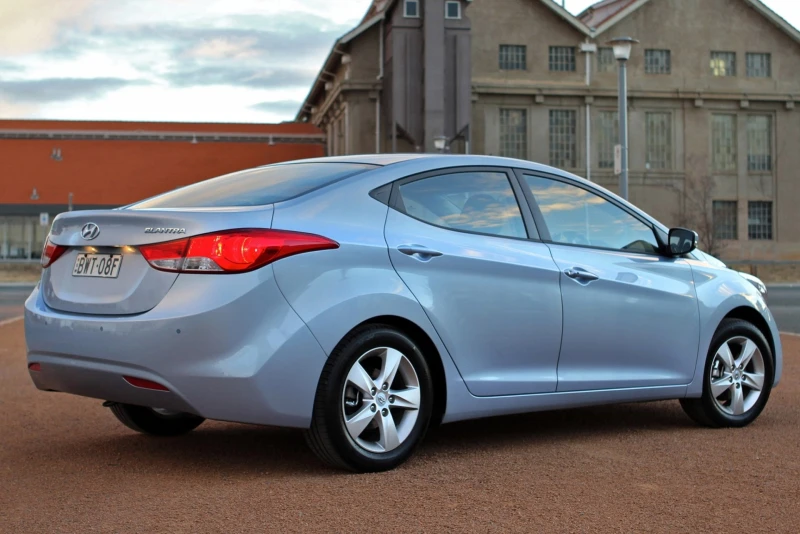
The Used Market in the United States
On the U.S. used car market, most 2010–2015 Elantras are domestic examples or imports from Canada, with typical mileage between 90,000–160,000 miles. Rust is a concern in salt-belt states: wheel arches, rocker panels, and underbody areas often show corrosion where road salt is heavily used. Thin factory paint leads to chips on the hood and roof, and limited galvanization increases long-term rust risk.
Service history is critical: cars without documented maintenance may hide timing chain stretch, transmission wear, or neglected fluid changes. Verify originality via VIN—replaced suspension or body parts can indicate prior accident damage. Odometer rollback remains a risk, so always run a full diagnostic scan and check vehicle history reports.
Most common configurations are GLS or Limited trims with the 1.8L engine and 6-speed automatic. Approximate fair market prices in 2025–2026 typically range from $4,500 to $9,500 depending on condition, mileage, and location (roughly equivalent to clean examples in the $5,000–$10,000 range on major listing sites).
Example of worn suspension components on a higher-mileage Hyundai Elantra.
What You Can Fix & Budget to Bring It to Good Shape
Many Elantra weak points are fixable. Adding aftermarket sound-deadening mats to doors, wheel wells, and floor can drop cabin noise noticeably. Upgrading the head unit to a modern unit with Apple CarPlay/Android Auto is a popular and relatively easy mod.
Refreshing worn interior pieces—seat upholstery or steering wheel cover—is straightforward at most upholstery shops. Suspension refresh (wheel bearings, bushings, shocks/struts) with quality aftermarket parts dramatically improves ride and handling. Rust prevention includes undercoating and prompt touch-up of paint chips. Following the maintenance schedule—oil changes every 7,500 miles, filters, and plugs—helps keep the engine healthy.
When buying, budget 10–20% of the purchase price for immediate needs. A thorough pre-purchase inspection plus minor repairs usually runs $500–$1,500, depending on what’s found.
Final Verdict & Buying Advice
In 2026 the 2010–2015 Hyundai Elantra remains a sensible choice for budget-conscious buyers seeking an affordable, fuel-efficient compact sedan—as long as you buy carefully. Early models (2010–2012) demand extra scrutiny of the transmission and steering, while facelifted 2013–2015 versions are generally the safer bet thanks to Hyundai’s updates.
The 1.8L Nu MPI with automatic is the sweet spot for most U.S. buyers, balancing efficiency, power, and long-term dependability. During inspection and test drive, listen for suspension knocks, monitor for oil consumption, inspect the body for rust, and feel for smooth transmission operation. A professional pre-purchase inspection and clean CARFAX/vehicle history report are strongly recommended to minimize surprises.