


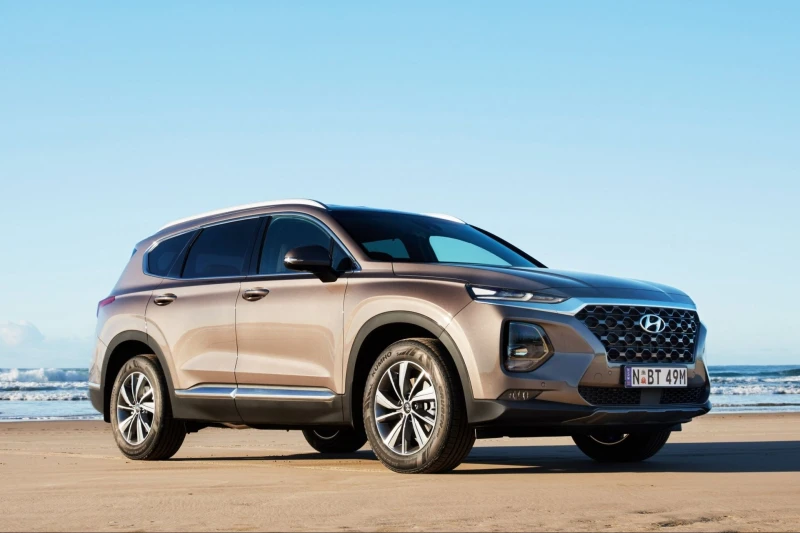
Now 7–8 years old, every Santa Fe from this generation has accumulated some well-known quirks and potential trouble spots that smart buyers should understand upfront. Here are the issues most frequently mentioned by American owners and used-car shoppers.
For full specs, interior photos, and driving impressions, see our other articles in this series.
Main Drawbacks & Generation Highlights
Fuel Economy. Real-world numbers for the 2.2 CRDi diesel (~200 hp) usually fall in the 22–29 mpg combined range (highway/city/cold weather). The naturally aspirated 2.5 MPI gasoline engine (180 hp) typically delivers 20–25 mpg combined, dropping to 18–22 mpg in heavy urban driving or winter conditions. The 1.6 T-GDi hybrid (HEV) variants achieve the best efficiency — often 32–38 mpg — but remain relatively scarce on the used market.
Road & Wind Noise. Pre-facelift models (2018–2020) came with noticeably lighter factory sound deadening: tire roar, wheel-arch noise, and wind rush become obvious above 70–75 mph. The 2020–2021 refresh added more insulation materials, which helped, but even post-refresh cabins are far from class-leading in quietness — especially on coarse pavement.
Infotainment & Navigation. The original 8-inch touchscreen (2018–2020) is frequently criticized for sluggish response, dated graphics, and occasional glitches with the factory navigation. The post-2021 10.25-inch screen is much quicker and sharper, though some owners still report occasional freezes, Android Auto/Apple CarPlay quirks, and map-update hassles.
Interior Materials & Wear. Glossy trim pieces scratch and fingerprint easily. Driver’s seat bolsters and cushion edges often show significant wear by 80,000–110,000 miles. Door cards and center console plastics can develop creaks in cold weather or after interior detailing.
Parts Pricing. Genuine components (Common Rail injectors, high-pressure fuel pump, dual-mass flywheel, turbo actuators) carry a premium. Fortunately, quality aftermarket options from Lemförder, CTR, Bosch, Gates, and others are widely available and can dramatically reduce repair costs.
Model Years & Versions — What to Scrutinize
2018–2019 (pre-facelift). Early examples are more likely to have:
- lighter sound insulation;
- slower 8-inch multimedia system;
- older 2.4 MPI gasoline or early 2.2 CRDi diesel with less advanced emissions hardware;
- early-production 8-speed automatic (occasional reports of harsh shifts when cold).
2020 — transitional year. Some units already received updated parts, others did not.
2021–2023 (facelifted / refreshed). Generally regarded as the most refined:
- noticeably better NVH package;
- 10.25-inch touchscreen + 12.3-inch digital cluster;
- updated Smartstream 2.2 CRDi with revised fuel system and AdBlue;
- improved 8-speed automatic valve body & software calibration.
Hybrid (HEV) models from 2021–2023 are uncommon in the used market and deserve close inspection of the high-voltage battery health and cooling system.
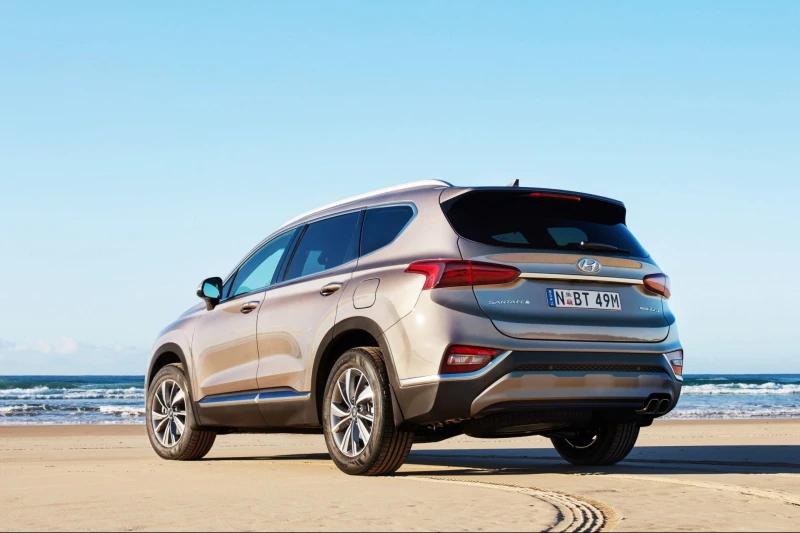
Used Market in the United States
Most Santa Fe (TM) examples available today were originally sold in the U.S., with a smaller number imported from Canada, Korea, or previously leased fleet vehicles. A growing number of clean one-owner cars from California, Texas, and the Sun Belt states continue to appear.
Body Condition. Wheel arches, rocker panels, lower door edges, and tailgate seams are the main areas to inspect — especially on vehicles that spent time in the Rust Belt or Northeast where road salt is used heavily. 2018–2020 models show rust more often if winter maintenance was neglected.
Mileage. Odometer rollback remains a concern; discrepancies of 20,000–50,000 miles are not uncommon. Always verify with CARFAX/AutoCheck, service records, and physical clues (pedal/steering wheel/seat/leather wear).
Service History. Cars with documented maintenance at Hyundai dealerships or reputable independent shops command the strongest resale values and inspire the most buyer confidence.
Fixable Issues & Typical “Bring It Up to Par” Budget
Most common complaints can be addressed:
- Aftermarket sound deadening (arches, floor, doors, firewall) — one of the highest-ROI upgrades;
- Infotainment firmware update or aftermarket Android-based head unit replacement;
- Leather re-dye, seat bolsters repair, or steering wheel re-wrap;
- Replacement of worn stabilizer links, bushings, and rear multi-link silent blocks (common after 60,000–90,000 miles);
- Underbody rustproofing / cavity wax treatment;
- Transmission fluid & filter service every 30,000–45,000 miles.
Estimated additional investment to reach a comfortable, reliable state (varies by condition and shop rates):
- Minimal — detailing + routine maintenance;
- Moderate — sound deadening + suspension refresh + undercoating;
- Comprehensive — all of the above + interior refresh + updated infotainment.
On the current U.S. used market, plan for a realistic extra budget ranging from moderate to substantial depending on year, mileage, and overall condition of the specific vehicle.
Final Thoughts & Buying Advice
In 2026 the 2018–2023 Hyundai Santa Fe (TM) remains a sensible, well-equipped choice in the used midsize crossover segment — provided you select carefully and understand the model’s traits. The sweet spot is usually the facelifted 2021–2023 versions equipped with the 2.2 CRDi diesel (~200 hp), 8-speed automatic, and HTRAC all-wheel drive (where available).
During inspection and test drive, pay special attention to:
- Transmission behavior when cold and fully warm (no harsh shifts, delays, or clunks);
- Diesel-specific items: turbo health, EGR/AdBlue system operation;
- Absence of suspension knocks over small bumps;
- Proper function of all driver assists, cameras, and sensors;
- Paint condition, hidden cavities, and engine-bay / arch seams for rust;
- Interior wear level as a cross-check against reported mileage.
With a clean history, documented service, and solid mechanical condition, a 2018–2023 Santa Fe TM continues to offer one of the strongest value propositions in the used midsize crossover segment across the United States.