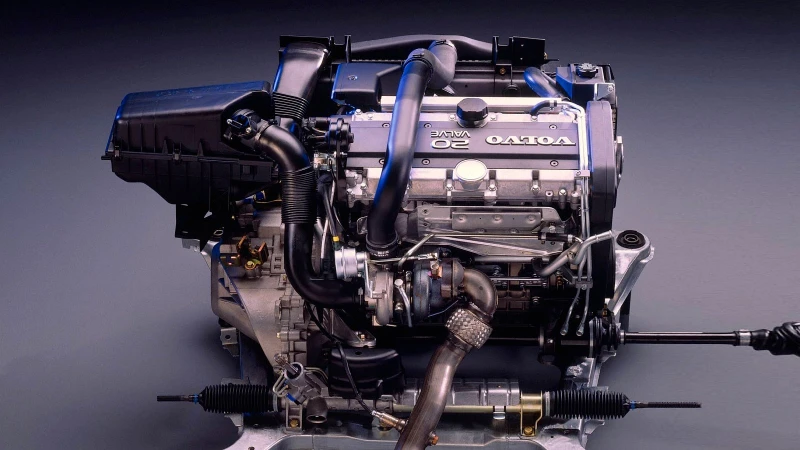
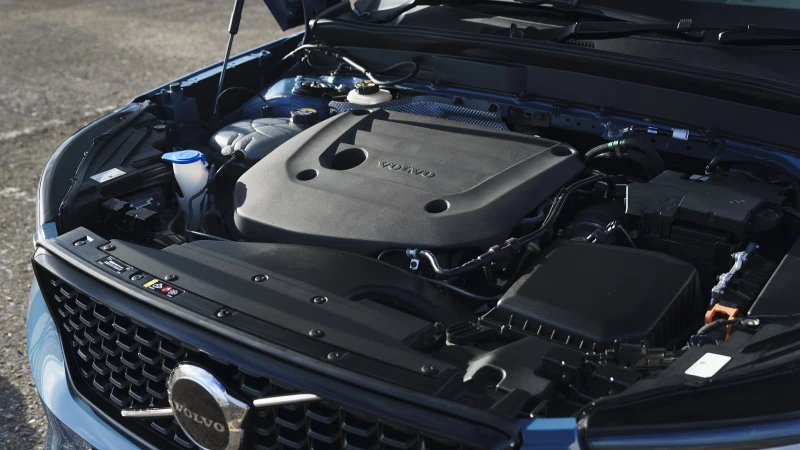
Although most of the brand's vehicles continue to be equipped with gasoline or hybrid powertrains, the company has already relinquished its own production capacities for internal combustion engines.
The situation is unusual in the contemporary automotive industry: while the manufacturer continues to actively market vehicles with traditional engines, it no longer produces these units in-house. Consequently, Volvo will rely on external partners and suppliers in the years ahead.
Electric Vehicle Sales Fall Short of Expectations
Volvo sold more than 710,000 vehicles globally in the previous year. Approximately 79 percent of these sales were models powered by gasoline engines, mild hybrids, or plug-in hybrid systems.
Fully electric vehicles represented a much smaller portion of total sales. The situation was especially difficult in Europe, where demand for Volvo's electric cars decreased. Even with rising interest in electric vehicles in some regions, their share remains insufficient to enable a full transition to electric propulsion.
Volvo had previously targeted a complete phase-out of internal combustion engine vehicles by 2030. The company later revised this objective, recognizing the ongoing need to advance hybrid technologies.
Volvo No Longer Operates Its Own Engine Manufacturing Plants
Volvo's management has confirmed that the company no longer maintains production facilities for gasoline and diesel engines. A number of plants were sold off, and some locations were converted to manufacture components for electric models.
Within the company, development and production of conventional engines are no longer viewed as core competencies. Nevertheless, Volvo cannot yet discontinue vehicles equipped with these engines, as they continue to drive the majority of sales.
Essentially, the manufacturer is in a position where demand for hybrids and internal combustion engine vehicles persists, but the in-house production infrastructure for these powertrains has been eliminated.
Reliance on External Suppliers
Volvo must now procure engines from external partners. Horse Powertrain, affiliated with the Chinese conglomerate Geely that owns Volvo, is identified as the most probable supplier.
Horse Powertrain focuses on the development and manufacturing of gasoline and hybrid powertrains. It already works with several prominent automakers and is positioning itself as a significant participant in this market segment.
This arrangement enables Volvo to lower its internal engine development expenditures while heightening its reliance on outside technologies and suppliers.
Changes in the Global Automotive Market
Volvo's trajectory mirrors a wider shift taking place throughout the global automotive sector. Several years ago, numerous European automakers were publicly committing to an all-electric future and curtailing investments in traditional powertrains.
Market developments, however, have proceeded more slowly than projected. Consumers continue to favor hybrid and gasoline models, particularly in regions with limited charging infrastructure.
Further strain arises from strong competition by Chinese electric vehicle producers, who supply contemporary models at lower price points.
Summary
Volvo remains among the European brands most actively pursuing vehicle electrification. The present circumstances, however, underscore the difficulties of completely eliminating internal combustion engines.
Although the company has discontinued its own manufacturing of conventional engines, it remains dependent on vehicles featuring these powertrains. In the coming years, Volvo is expected to focus on the development of hybrid models and cooperation with external engine suppliers, while continuing to expand its electric vehicle lineup.