The third generation, known internally as the CR, made the Touareg’s unusual position in the Volkswagen lineup even more obvious. It became more sophisticated and more technology-focused, while shifting further away from the rugged off-road character of the original model toward highway comfort, long-distance driving and digital features.
At the same time, the Volkswagen Touareg III does not simply imitate a traditional luxury SUV. There is no third-row seat, no deliberately flashy premium image and no broad range of body styles. It remains a large five-seat SUV aimed at drivers who want a powerful engine, a spacious cabin, all-wheel drive and a high level of equipment without necessarily wanting a luxury-brand badge.
Why the third generation was such a major change
The switch to the MLB Evo architecture mattered more than the exterior redesign alone. The same basic platform family underpins several large Volkswagen Group vehicles, which is why the Touareg CR is much closer in chassis design, electronics and available technology to premium SUVs than it is to the Tiguan or other mainstream Volkswagen models.
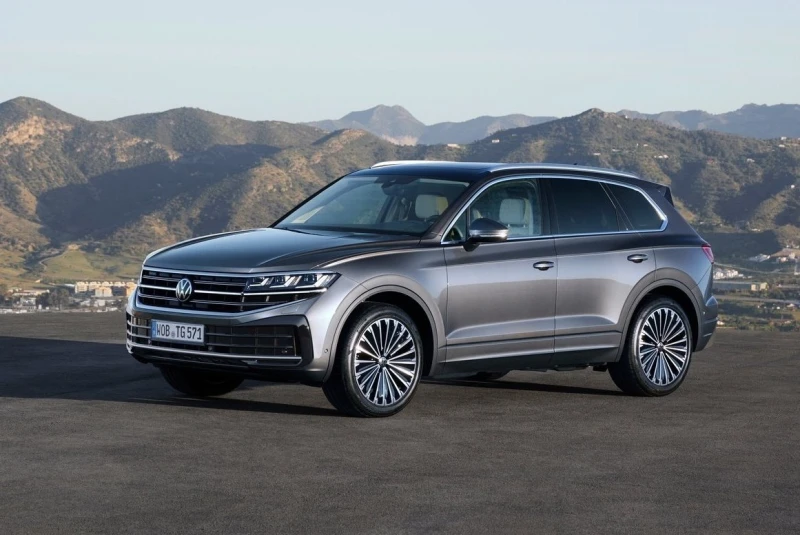
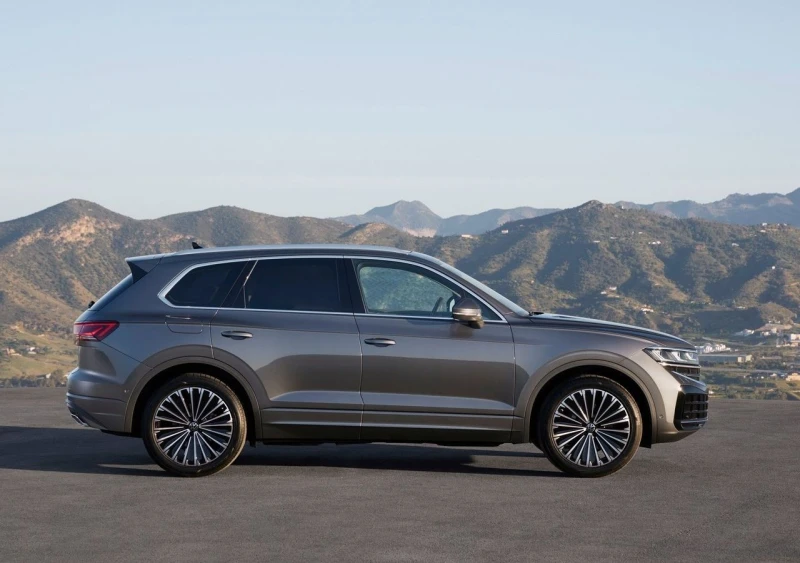
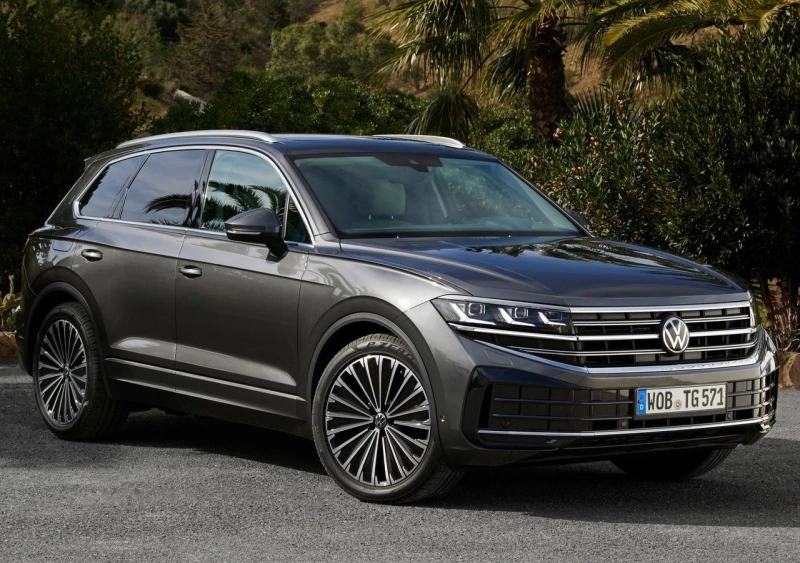
Compared with the Touareg II, the third-generation SUV became longer and roomier, with a longer wheelbase and a slightly lower overall profile. Early 2018–2022 models are easy to recognize by their wide chrome grille integrated visually with the headlights and by their relatively restrained rear styling. The 2023 update brought more elaborate lighting, revised bumpers and taillights, a front light bar on certain versions and, depending on the market and trim, an illuminated Volkswagen emblem at the rear.
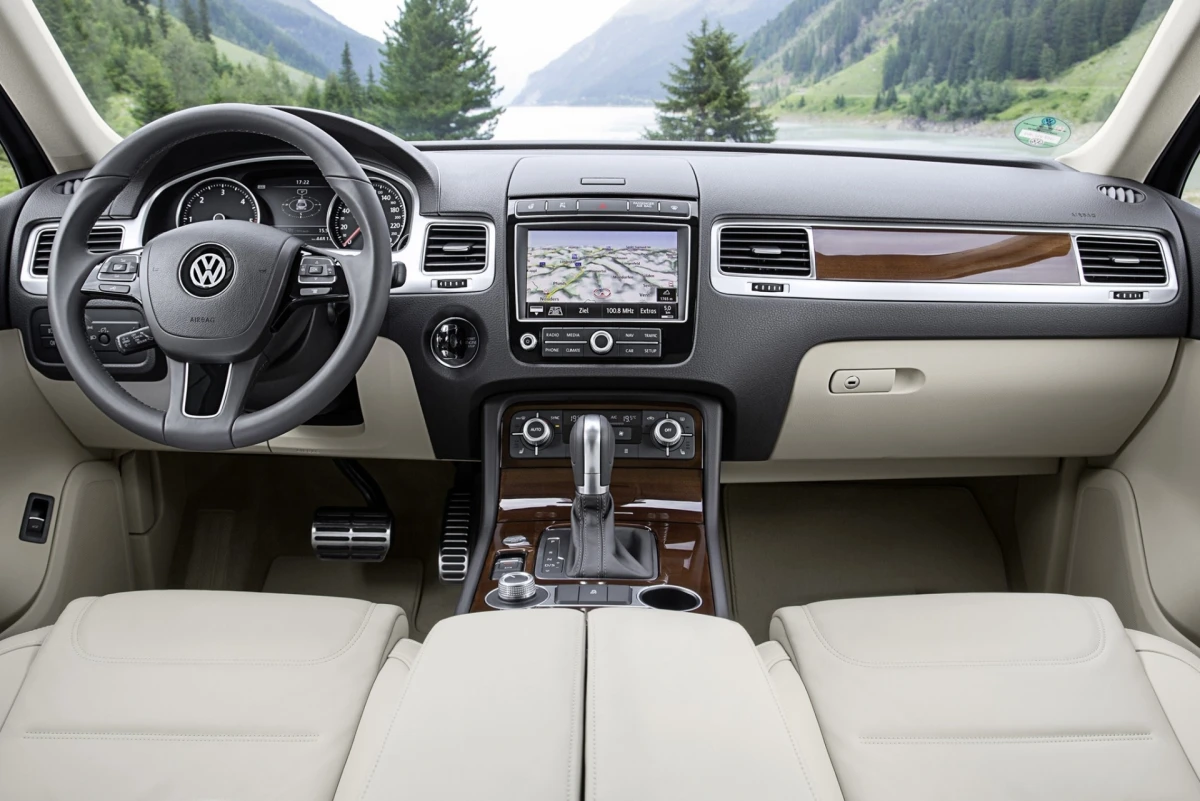
The biggest change was inside. Instead of the conventional dashboard layout with separate gauges and a relatively small center display, higher-spec versions introduced the Innovision Cockpit, visually combining the digital instrument cluster with a large infotainment screen. The setup looked almost concept-car-like when the CR debuted, although screen-based control of climate and other functions will not appeal to every driver.
Comfort became more important than the off-road image
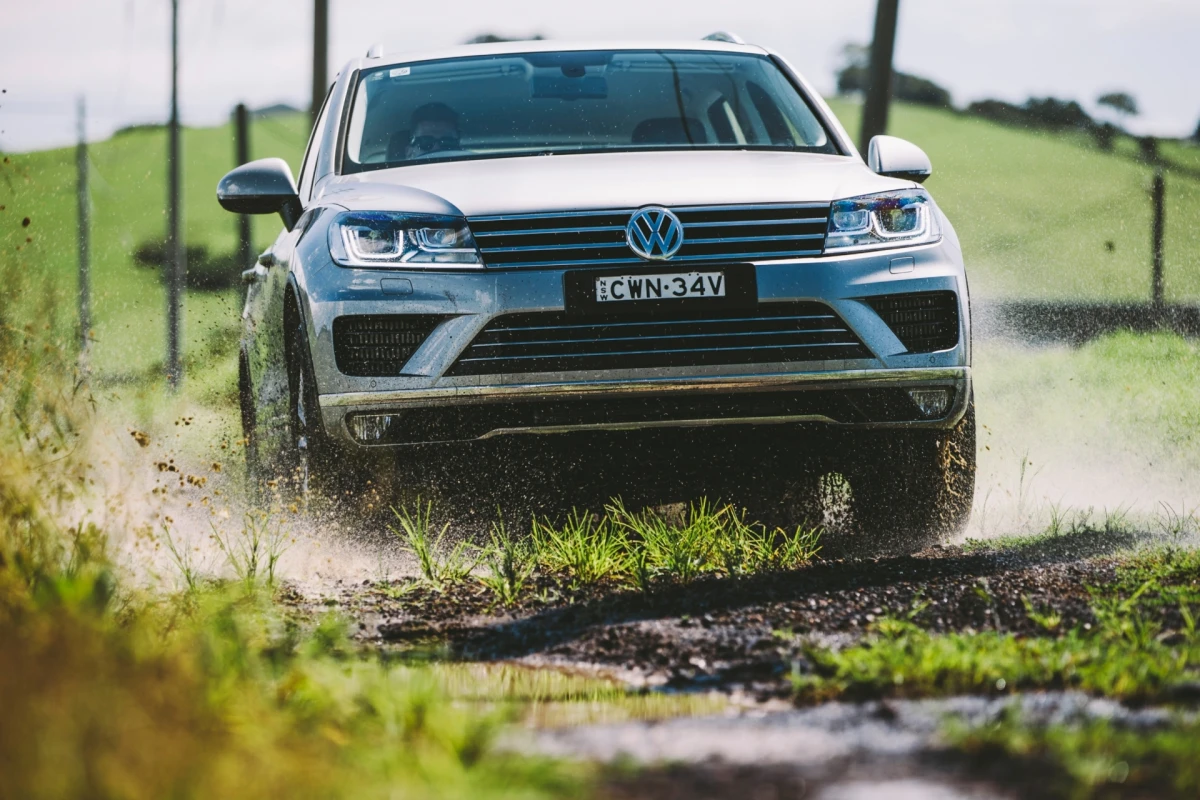
The Touareg III retained 4MOTION all-wheel drive, strong powertrains and substantial towing capability, but its overall character became more road-focused. Even with the standard suspension, the SUV is primarily designed for pavement, long trips and sustained highway speeds. Available air suspension broadens its range by allowing the ride height to change, improving ride comfort and lowering the rear of the vehicle to make loading cargo easier.
Higher-end configurations can also feature all-wheel steering and active roll stabilization. Rear-wheel steering reduces the turning circle and makes a nearly 16-foot-long SUV easier to maneuver in tight spaces, while active roll control helps keep the body flatter through corners. Both systems can noticeably improve the driving experience, but on a used vehicle they also represent additional complex hardware that deserves careful inspection.
Engines U.S. buyers may encounter on imported Touareg CR models
The most important distinction for American readers is that the Touareg CR was never part of Volkswagen’s official U.S. model range. Its engines and transmissions therefore reflect European and other international markets rather than a U.S.-specific lineup. Most versions use a V6 engine, an eight-speed automatic transmission and 4MOTION all-wheel drive, but the exact powertrain depends on model year and original market.
| Version | What to know |
| 3.0 V6 TDI, about 228 hp (231 PS) | One of the lower-output European-market V6 diesels. It was not offered as a U.S.-market Touareg CR powertrain. |
| 3.0 V6 TDI, about 282 hp (286 PS) | A widely used higher-output diesel configuration in European-market third-generation Touaregs. |
| 3.0 V6 TFSI, about 335 hp (340 PS) | The gasoline V6 alternative, offering stronger throttle response but generally higher fuel consumption than the diesel versions. |
| eHybrid and Touareg R | Plug-in hybrid versions with European-market system outputs of 381 PS and 462 PS, equivalent to roughly 376 hp and 456 hp. |
| Other global-market versions | Engine availability, output and equipment varied by country and model year. None formed part of a regular U.S. Touareg CR lineup. |
For a U.S. buyer, the V6 diesels should not be viewed the same way they are in Europe, where they make up a large share of the Touareg market. These CR-generation diesel powertrains were never part of the normal U.S. lineup. The higher-output version offers stronger passing performance, while the lower-output diesel is tuned more conservatively rather than being genuinely underpowered for the vehicle.
The 3.0 TFSI gasoline engine may feel more familiar to an American buyer, but a Touareg CR equipped with it is still a non-U.S.-spec vehicle. The plug-in hybrids provide considerably more system power, although their practical advantage depends on regular charging. Without frequent charging, the driver is carrying the additional weight and complexity of the electrical portion of the powertrain without using it as intended.
Equipment matters more than the badge on the tailgate
The Volkswagen Touareg III has been sold internationally in trims such as Elegance, R-Line and R, along with numerous country-specific packages and special editions. Trim names and standard equipment differ substantially by market, so an imported vehicle should be evaluated by its VIN, build specification and actual equipment rather than by assuming that a familiar-looking badge represents a fixed U.S.-style trim level.
Two visually similar Touaregs can differ in suspension, steering hardware, headlights, acoustic glass and driver-assistance systems. Available equipment includes matrix LED headlights, surround-view cameras, adaptive cruise control, ventilated and massaging front seats, a head-up display, soft-close doors, premium audio and a panoramic roof. Not every feature is equally important, however, particularly when buying a complex used SUV.
Which options actually change the way the Touareg feels
Air suspension has one of the biggest effects on the Touareg’s character, giving the SUV a more compliant ride and a wider range of ride-height settings. All-wheel steering is particularly useful in parking garages and tight urban spaces. Advanced headlights can make a major difference on dark roads, while ventilated seats and acoustic glass may matter more on long trips than cosmetic appearance packages.
Large wheels give the Touareg a more aggressive appearance, but a moderate wheel diameter with more tire sidewall is usually the more practical choice on rough pavement. With 20- and 21-inch wheels, replacement tires cost more, sharp potholes become a greater concern and differences in road quality are transmitted more noticeably into the cabin.
U.S. market: a generation that was never officially sold here
The CR-generation Touareg has no conventional U.S. retail history. Volkswagen ended American Touareg sales after the 2017 model year, before the third generation launched globally. As a result, a 2018-or-newer Touareg found in the United States should be treated as an unusual imported vehicle rather than a normal domestic-market used SUV. Mainstream marketplaces such as Autotrader, CarGurus and Cars.com may therefore offer little representative inventory for this generation.
That also means there is no reliable nationwide used-price range comparable with markets where the Touareg CR was officially sold in meaningful numbers. The value of an imported example can depend heavily on its history, mileage, condition, powertrain, documentation and the practical availability of service and parts. Simply converting European asking prices into U.S. dollars would not produce a meaningful American market value.
There is likewise no U.S. MSRP for a new Volkswagen Touareg III because Volkswagen did not offer the CR generation through its American dealer network. Prices quoted for new or late-production Touaregs in Europe and other markets are local figures rather than U.S. list prices. For buyers shopping within the regular American market, more relevant reference points include the Audi Q7, BMW X5, Mercedes-Benz GLE and Volvo XC90.
The third-generation Touareg is also in the final stage of its international lifecycle, with Final Edition models marking the end of the current generation. For U.S. readers, however, that global timeline does not change the basic market situation: there is no current Touareg in Volkswagen’s normal American model range, and CR-generation vehicles remain specialty imports rather than typical dealer-stock used SUVs.
What a buyer gets in practice
The Volkswagen Touareg is often compared with the Audi Q7, but it makes more sense to evaluate it as a distinct vehicle. It does not offer a third row, but it provides a spacious five-seat cabin and approximately 28.6 cubic feet of luggage space behind the rear seats. That layout works well for families, road trips and bulky cargo when seven-passenger seating is not a requirement.
One of the Touareg’s strengths is the combination of size and road manners. It never feels like a compact SUV, but available all-wheel steering can make it easier to maneuver than its exterior dimensions suggest. The Touareg is particularly well suited to long-distance driving, where its stability, strong powertrains, quiet cabin and available driver-assistance systems become more noticeable.
At the same time, the third generation should not be viewed as a simple, inexpensive Volkswagen to own. Its technical relationship to premium-segment vehicles brings correspondingly sophisticated brakes, suspension components, electronics and lighting systems. The more heavily equipped the vehicle, the more important a thorough pre-purchase inspection becomes. Particular attention should be paid to air suspension, active roll stabilization, rear-wheel steering, advanced headlights, cameras and the numerous electronic control modules.
For a U.S. buyer, there is no single CR-generation powertrain that can be recommended as the obvious default because every Touareg III is fundamentally an import-market proposition. The safest approach is to prioritize a vehicle with clear documentation, a verifiable service history and an equipment level that can realistically be maintained. Chasing the highest specification only makes sense when the condition and history of the individual vehicle justify the additional complexity.