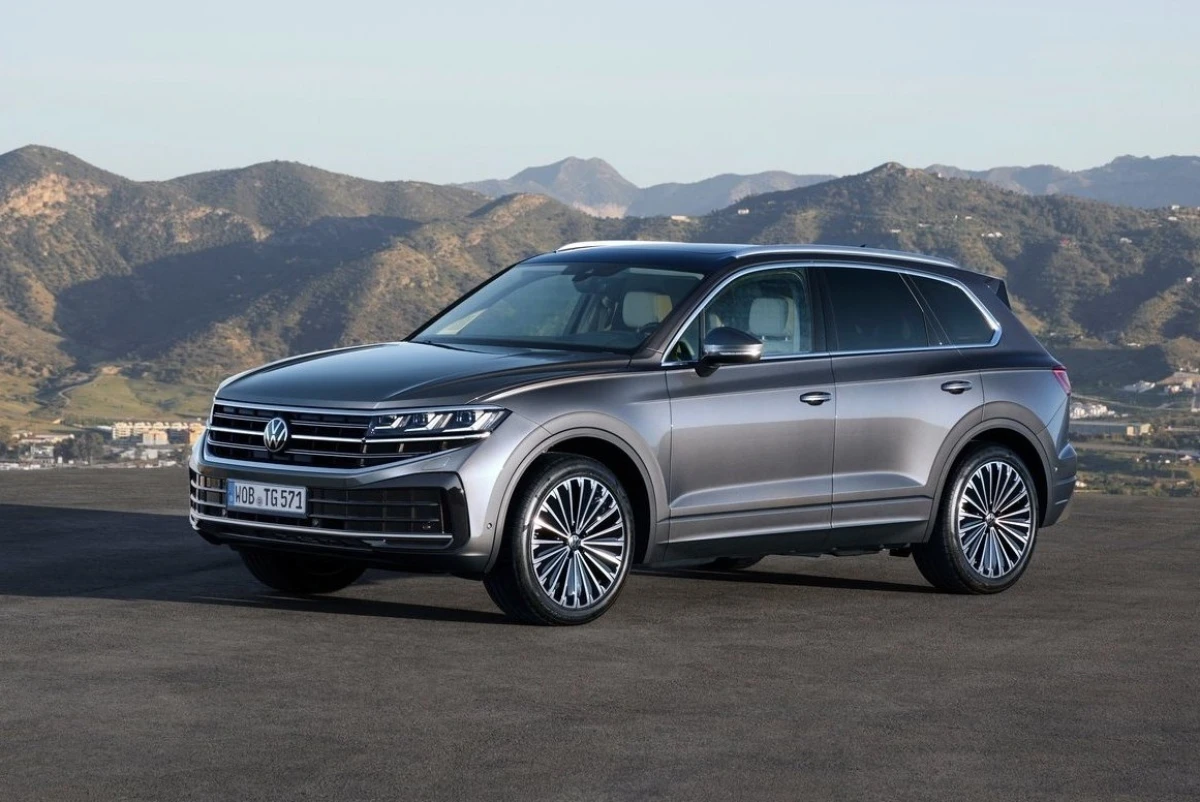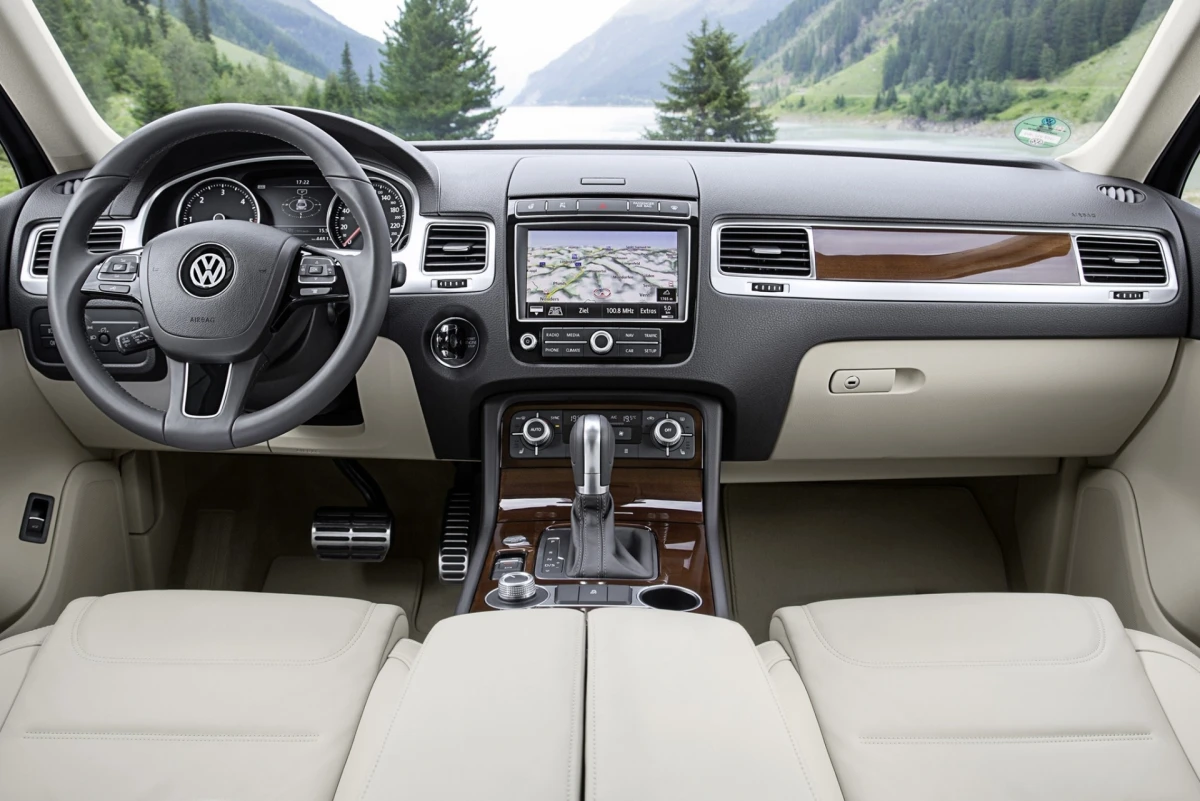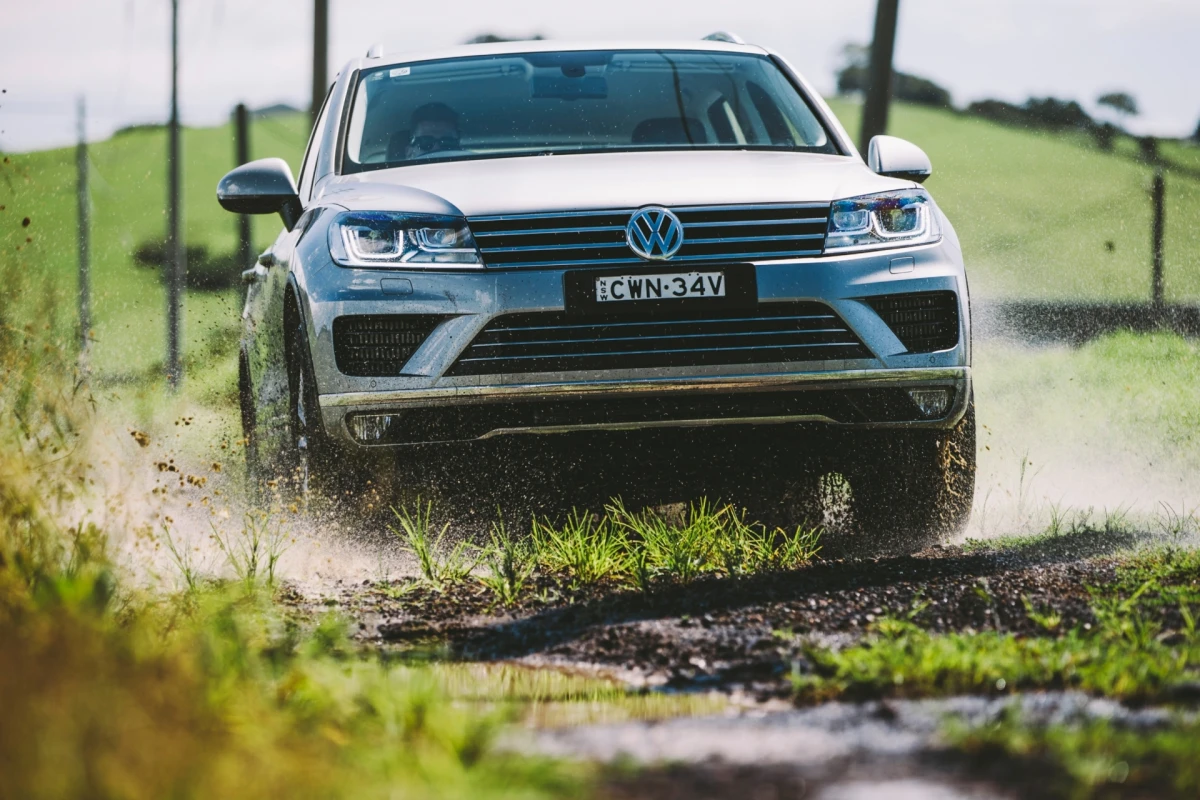



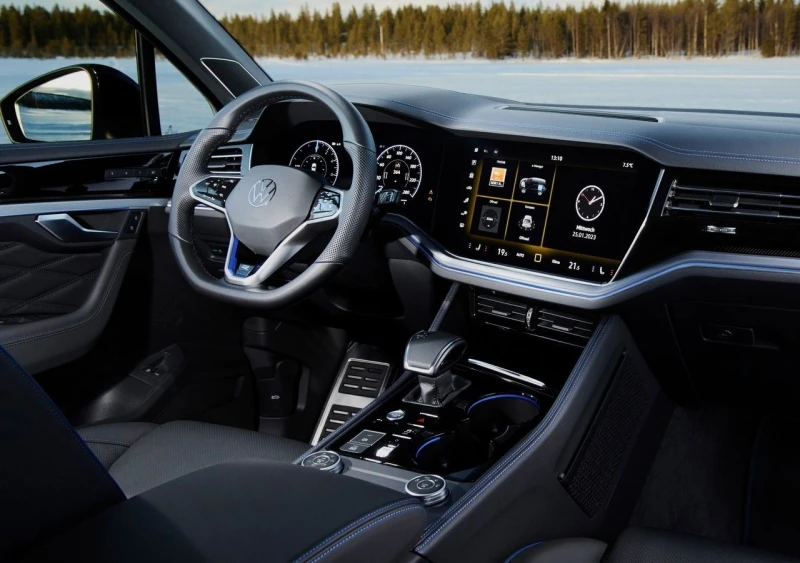
The CR-generation Touareg retained Volkswagen’s restrained design language, but versions equipped with Innovision Cockpit moved away from the traditional arrangement of separate gauges, a small infotainment screen, and rows of physical buttons. Instead, a digital instrument cluster and a 15-inch touchscreen became the dashboard’s focal point. There is an essential distinction for American readers: this third generation, introduced in 2018, was never officially sold in the United States.
The Touareg III’s interior varies considerably by production year, destination market, and equipment package. One example might have understated trim, conventional comfort seats, and relatively simple decorative finishes. Another could feature leather upholstery, ventilated and massaging seats, four-zone climate control, a panoramic sunroof, a head-up display, and multizone ambient lighting. Overseas trim names provide only a starting point: the actual equipment should be checked against the vehicle’s VIN-linked build information and inspected in person.
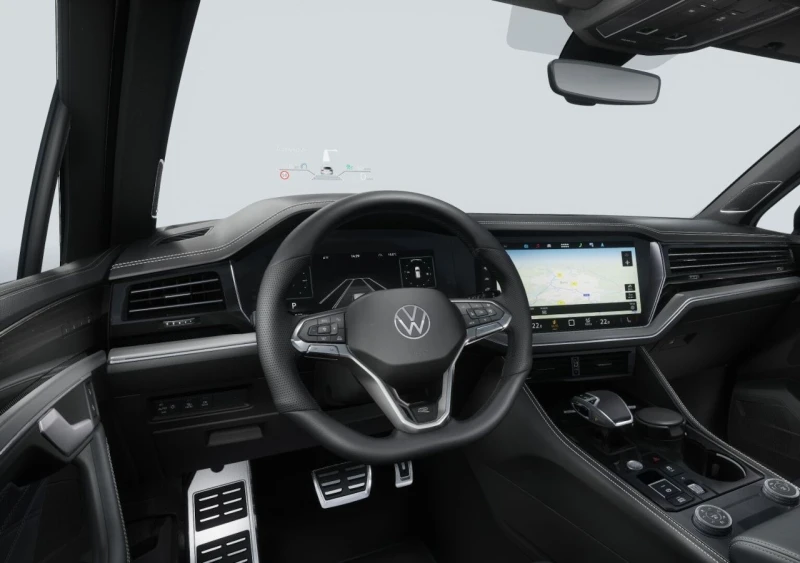
A Cabin Built Around a Digital Dashboard
With Innovision Cockpit, the dashboard is oriented toward the driver. The digital instrument cluster and center touchscreen sit at nearly the same height within a continuous glossy surround. Below them are the air vents and a wide center console housing the automatic transmission selector, drive-mode controls, and a large storage compartment beneath the armrest.
The instrument display measures approximately 12 inches, while the Discover Pro Max infotainment screen spans 15 inches. Configurable layouts can show navigation maps, trip information, driver-assistance displays, or conventional virtual gauges. The infotainment home screen also supports customizable shortcuts. The 2023 update brought wireless Apple CarPlay and Android Auto integration, along with higher-output USB-C connections rated at up to 45 watts rather than the previous 15 watts.
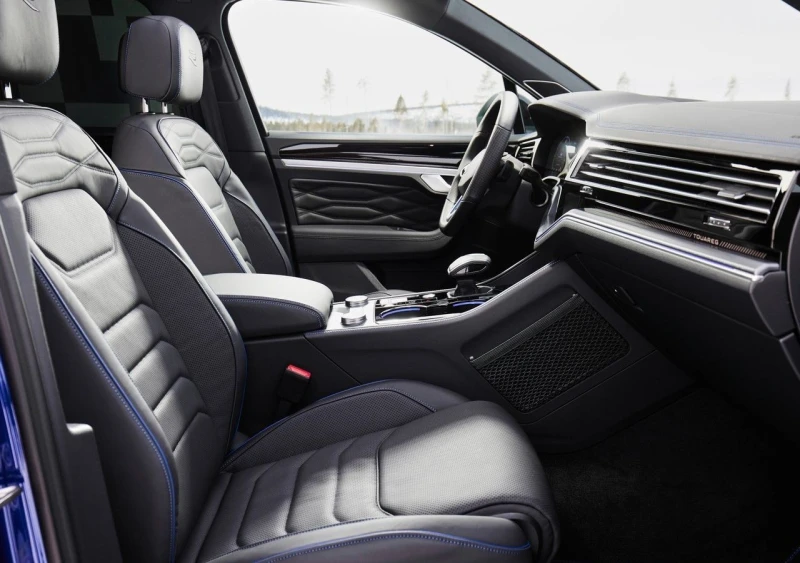
Some Controls Work Better Outside a Touchscreen
The large display makes maps and surround-view camera images easier to read, but the digital layout comes with a practical trade-off: climate settings, seat ventilation, and several secondary functions are accessed through on-screen menus. Familiarity makes routine adjustments quicker, though physical controls would be easier to use while driving. The difference becomes particularly noticeable when wearing gloves or traveling over uneven pavement, where accurately tapping a small screen control takes more effort.
The glossy dashboard surface readily shows fingerprints and dust. A soft microfiber cloth and nonabrasive cleaning products are preferable, since fine scratches on the black finish become especially visible in angled sunlight. Cosmetic wear does not necessarily affect functionality, but it can significantly change how a used vehicle’s cabin looks.
The available head-up display is a useful addition. It projects speed, navigation directions, and selected driver-assistance information onto the windshield, reducing the need to glance down at the instrument cluster. In a vehicle with such a visually busy dashboard, this feature can offer more everyday value than additional decorative lighting or especially large wheels.
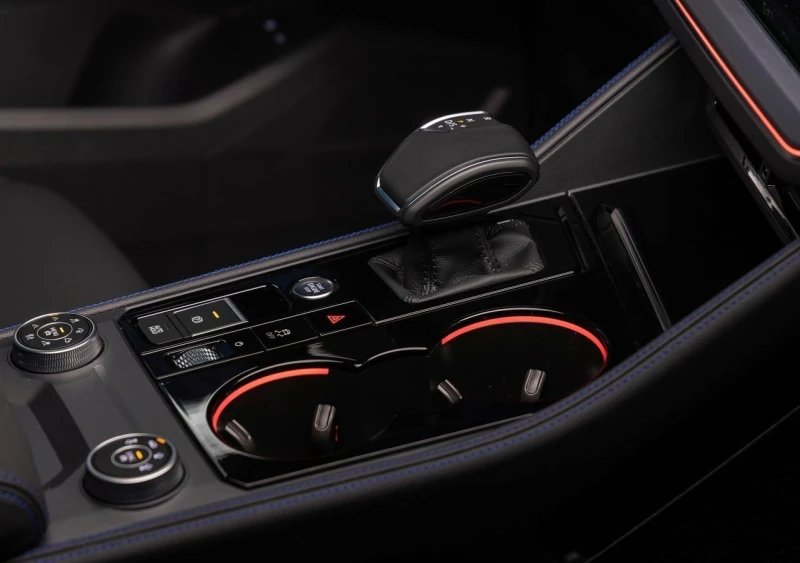
Equipment Matters More Than Styling
There is no U.S.-market Touareg CR trim lineup. Overseas configurations have included Elegance, Atmosphere, and R-Line, while names such as Silver, Silver+, and R-Line Platinum belong to particular regional offerings, including Ukraine. These should not be confused with trims on the earlier Touareg sold in America. Equipment combinations also differ between countries and model years, so one market’s brochure cannot reliably describe every vehicle carrying the same badge.
The more understated configurations use subdued decorative finishes and less overtly sporty detailing. Depending on the market and year, Elegance models can feature wood trim, while R-Line versions may have aluminum or dark accents, metal pedal covers, a perforated-leather sport steering wheel, and matching sill trim. These visual differences generally matter less to everyday comfort than the seats, climate-control system, and camera equipment.
Leather upholstery has been offered in several forms, including Varenna and the more upscale Puglia. Available colors depend on the market and the original order, with brown, beige, and two-tone interiors joining conventional black. Light-colored leather makes the cabin feel more open but requires more regular care, particularly where winter clothing and footwear bring moisture, road salt, and dirt inside.
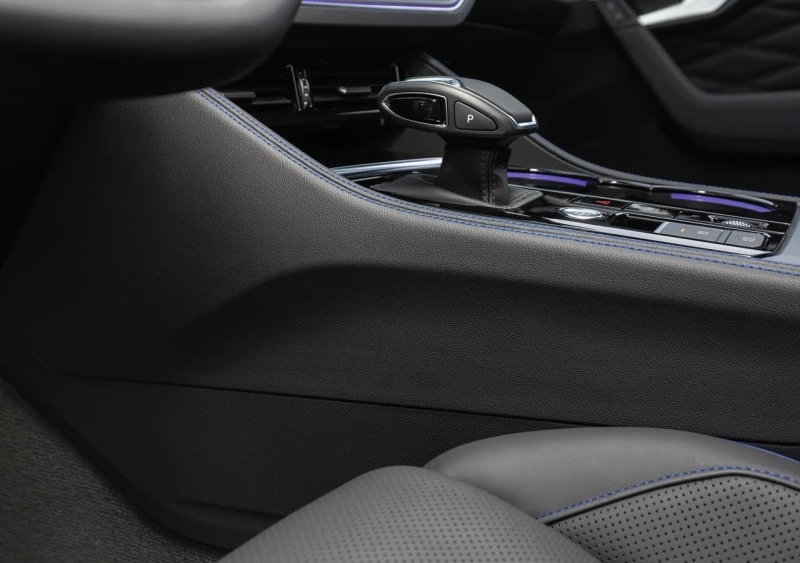
The Seats Differ More Than Photos Suggest
Power-adjustable seats provide a useful range of driving positions, but highly equipped examples offer 18-way adjustable ergoComfort front seats with adjustable lumbar support, ventilation, and massage. Available massage functionality includes eight programs. In practice, the adjustment count matters less than the ability to tailor cushion length, side support, and the position of the upper backrest.
The driving position is elevated without the upright posture associated with more utilitarian SUVs. Seat and steering-column adjustment accommodate a broad range of driver heights. The wide center console creates a distinct driver’s space, although it also reduces room beside the right knee. The facelift addressed this area with softer console-side surfaces and double decorative stitching.
Heated and ventilated front seats make a useful combination in climates with cold winters and hot summers. Massage is an additional convenience for long trips, while a heated steering wheel helps on cold mornings. Some overseas configurations also include four-zone climate control, allowing rear passengers to adjust their temperatures independently; others have a simpler system.
Two Rows, Five Seats
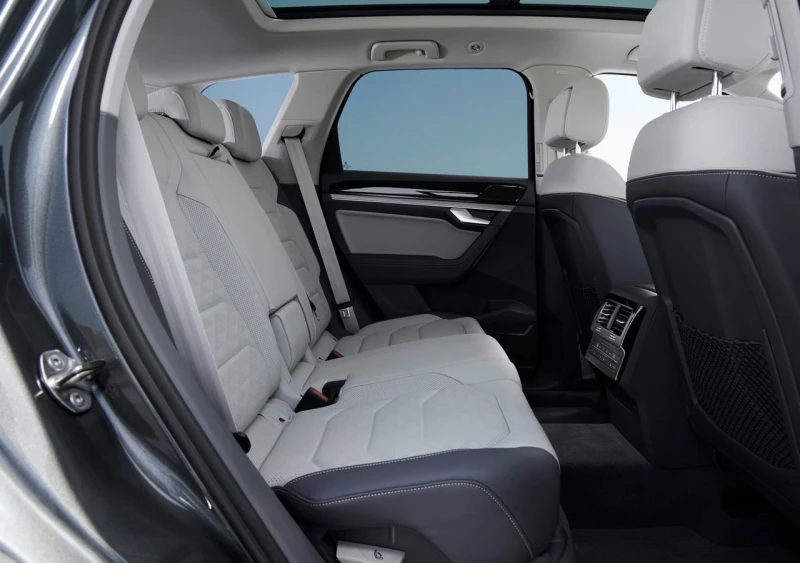
The third-generation Volkswagen Touareg introduced in 2018 is strictly a five-seater. Leaving out a third row preserves useful cargo capacity and generous rear passenger space. Its 114.3-inch wheelbase provides ample knee room, and the cabin is wide enough for three passengers across the rear bench. However, the seat contours and raised center tunnel make the two outboard positions more comfortable than the middle seat.
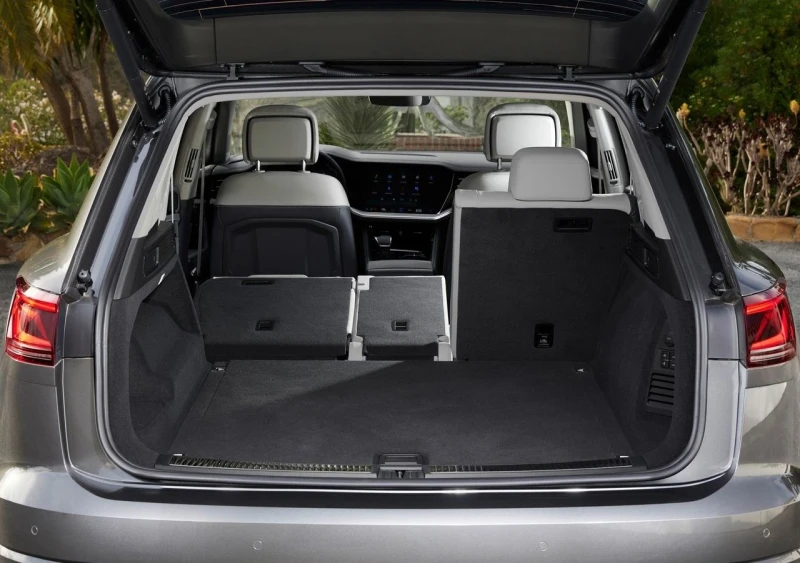
The rear backrests recline, and the seat sections slide fore and aft to adjust the balance between passenger room and cargo space. This flexibility is useful for family travel, allowing the cargo area to grow without folding the seats completely. Overseas models have ISOFIX child-seat anchors, and the large rear door openings make entry and child-seat installation easier.
Forward and side visibility are reasonable for a vehicle of this size, but the thick pillars and high rear bodywork take some getting used to. A backup camera, parking sensors, and especially the Area View surround-view system therefore serve a practical purpose. Without the surround-view cameras, maneuvering in a tight parking garage requires more care despite the relatively straightforward body shape.
Conventional Powertrains Leave More Cargo Room
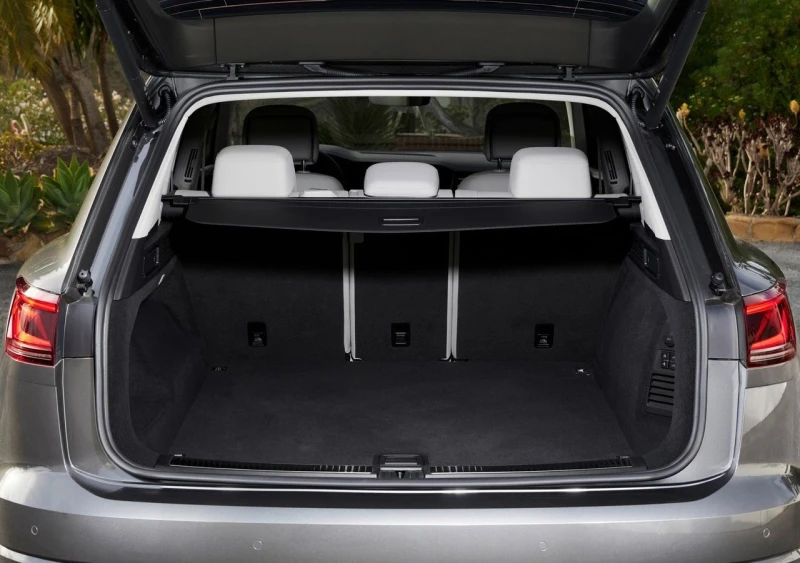
Overseas Touareg models with a conventional gasoline or diesel V6 offer approximately 28.6 cubic feet of cargo space, increasing to about 63.6 cubic feet with the rear seats folded. These figures are direct conversions of the original 810- and 1,800-liter specifications, rather than separately measured U.S. cargo ratings. The load floor is nearly flat, the opening is wide, and models equipped with air suspension can lower the rear of the vehicle to ease loading.
On plug-in hybrid versions sold overseas, the battery occupies some of the space beneath the floor, reducing cargo capacity with the rear seats up to approximately 23.5 cubic feet, converted from 665 liters. That remains useful for everyday tasks, but the conventional versions offer more room for bulky luggage. The optional Dynaudio audio system also places its subwoofer in the cargo area. None of these third-generation powertrain configurations was officially offered in the United States.
What Changed With the 2023 Facelift
The facelift did not completely redesign the cabin. The main dashboard architecture, dual-display arrangement, and basic control locations remained familiar, so an earlier Touareg with Innovision Cockpit does not look fundamentally outdated. The revisions focused on details owners encounter in everyday use.
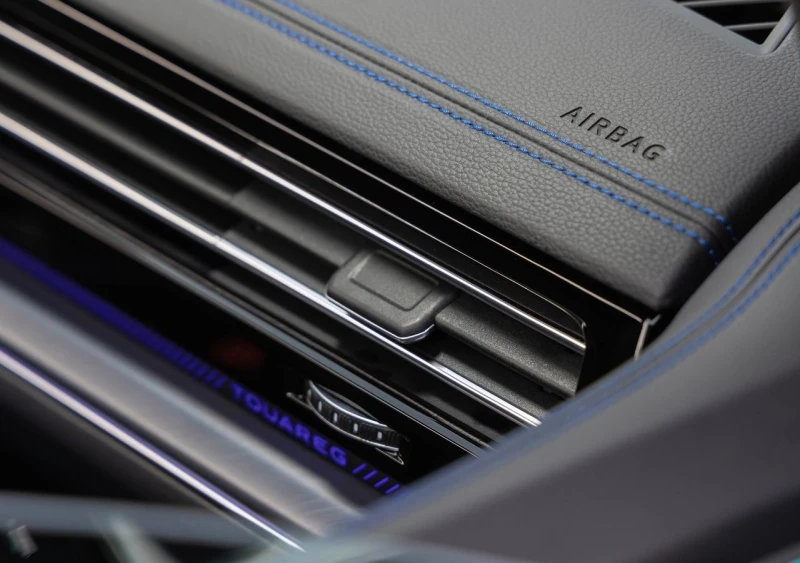
Alongside updated software and wireless smartphone connectivity, Volkswagen revised selected controls and the center-console volume roller, refreshed decorative lighting elements, and added softer padding near the driver’s and front passenger’s knees. The upper door panels received double stitching. These are modest changes, but they give the updated interior a more finished appearance.
Available ambient lighting offers up to 30 colors, with separate adjustment for upper and lower zones. The chosen color coordinates with the displays. Certain special editions also illuminate dashboard trim elements and door-sill inserts.
The source market, Ukraine, received a FINAL EDITION for 2026 based on R-Line Platinum equipment. Its interior distinctions include special-edition markings, such as embossing on the leather transmission selector. This is an overseas specification, not a U.S. offering. The differences are primarily decorative: the underlying cabin architecture remains that of the facelifted Touareg.
How the Interior Holds Up in Use
The main soft-touch surfaces and door panels generally show cosmetic wear less readily than the glossy trim. On a higher-mileage example, inspection should focus on the driver’s outer seat bolster, steering-wheel leather, center-console buttons, and touchscreen surface. Light upholstery makes dye transfer from clothing more noticeable, while perforated leather needs careful cleaning to avoid forcing moisture and cleaner into the holes.
The panoramic sunroof deserves separate attention. It brings more light into the cabin, particularly for rear passengers, but adds seals, tracks, and drainage channels that require attention. When inspecting a used example in a market where this generation was sold, check the headliner for water stains, confirm that the shade operates properly, and listen for unusual noises over uneven pavement.
Squeaks and rattles are not inevitable, but the tailgate, cargo cover, rear-seat latches, and panoramic-roof components can produce localized noises on rough roads. A useful inspection drive therefore includes both smooth pavement and sections with small bumps.
The Options That Make a Practical Difference
The Touareg III’s interior remains appealing thanks to its large displays, supportive seating, and spacious second row. Its digital interface no longer feels as novel as it did in 2018, however. Newer vehicles offer quicker responses and more contemporary graphics, even when they retain similar drawbacks associated with touchscreen controls.
For an overseas example, a balanced equipment list would include leather seats with heating and ventilation, Innovision Cockpit, surround-view cameras, a head-up display, and suitable multizone climate control. Massage, Dynaudio audio, soft-close doors, and elaborate ambient lighting add convenience or atmosphere without being essential to a comfortable cabin. This is an assessment of overseas equipment, rather than a configuration available through U.S. Volkswagen dealers.
When evaluating a used Touareg CR, working electronics and well-kept materials matter more than the trim badge. A carefully maintained Elegance with a documented history can be a more sensible choice than a heavily equipped R-Line with malfunctioning features or pronounced wear. For American readers, the key distinction remains the generation: this interior belongs to the overseas CR model, not the earlier Touareg found on the U.S. used market.