


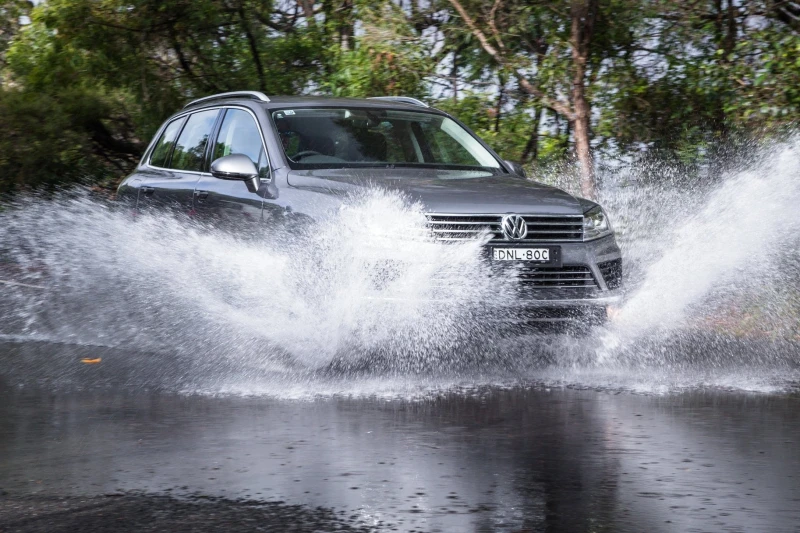
On the U.S. used-car market, a second-generation Volkswagen Touareg can now be priced alongside simpler midsize SUVs, but mechanically it remains a heavy, premium-oriented vehicle with a longitudinal engine layout, standard all-wheel drive, large brakes, and a long list of available comfort and electronic features.
That is why Volkswagen Touareg 7P problems can vary so widely from one example to another. One vehicle may need little beyond routine maintenance, while another at a similar asking price may require work on the engine, cooling system, suspension, brakes, or electronics at the same time. Model year and trim are only a starting point. Service history, actual mileage, prior accident repairs, and the quality of previous maintenance matter far more.
For an overview of the generation, technical specifications, and interior, see the other articles in this series.
The U.S. Touareg 7P lineup is different from Europe
In the United States, the second-generation Touareg was sold for the 2011 through 2017 model years. The core engine was the 3.6-liter FSI VR6 with 280 hp, while the 3.0-liter TDI V6 was offered earlier in the generation with 225 hp and later 240 hp. A gasoline-electric Hybrid with a supercharged 3.0-liter V6 was also sold in limited numbers, with a combined output of about 380 hp. By the 2017 model year, the U.S. lineup was gasoline-only.
This matters when comparing American cars with European-market Touaregs. U.S.-spec models did not use the same diesel range, trim structure, or off-road hardware offered in some other regions. The second-generation U.S. Touareg also did not offer the self-leveling air suspension used on some earlier or overseas versions, so a used U.S.-market vehicle should not be evaluated as if it had the same chassis configuration as a European Terrain Tech model.
Mileage deserves its own verification. On 2011–2014 vehicles, readings above roughly 125,000–155,000 miles are no longer unusual, especially for highway-driven examples. A low odometer figure should be supported by maintenance records, diagnostic data where available, interior condition, and a vehicle-history report rather than accepted on its own.
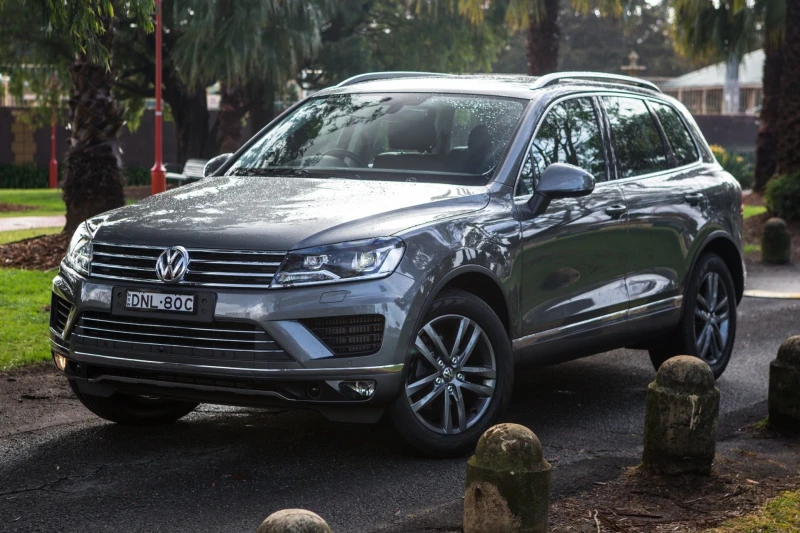
The 3.0-liter TDI: condition depends heavily on use and maintenance
The 3.0-liter TDI remains attractive because its torque suits the Touareg's weight and it can deliver substantially better fuel economy than the gasoline VR6. That advantage is most noticeable on longer highway trips. In short-trip city use, especially in cold weather, the difference can narrow while the emissions-control system sees more demanding operating conditions.
Many Volkswagen Touareg TDI problems are tied not to the basic engine block itself but to the systems around it. The exhaust-gas-recirculation system, diesel particulate filter, sensors, intake components, and related emissions hardware all need to work together correctly. Repeated short trips can make regeneration more difficult and can contribute to soot buildup or warning lights.
Intake, EGR, and diesel particulate filter
Deposits in the intake can affect airflow control and engine operation. An EGR or DPF fault code should not automatically lead to replacing the first sensor named by a scan tool. The real cause may be an intake leak, a differential-pressure sensor, excessive ash loading, temperature-sensor problems, or a regeneration issue.
Some faults can be addressed with cleaning or replacement of individual actuators and sensors. A heavily loaded particulate filter, failed EGR cooler, or damaged intake component can require considerably more labor and expense. Before buying a TDI, it is worth having the entire emissions system diagnosed rather than relying only on the absence of a warning light during a short test drive.
Timing chain and cooling system
The timing-chain drive is located in a difficult-to-access area of the engine, so major chain work can be labor-intensive. A brief noise at startup does not automatically prove that immediate replacement is required, but it should not be ignored. Diagnosis should include a cold start, scan data, and review of the service history.
On higher-mileage 3.0 TDI engines, check the cooling system carefully, including the water pump, valves, heat exchangers, hoses, and connections. A slowly falling coolant level without an obvious external leak deserves investigation rather than repeated topping-off. Minor oil seepage is not unusual on an older vehicle, but active leaks can involve significant disassembly.
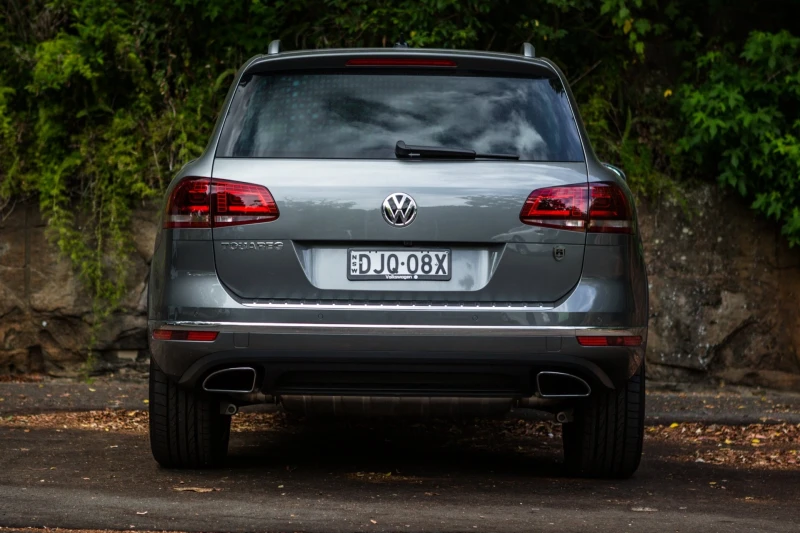
The 3.6-liter VR6 is simpler than the TDI in some ways, not in all ways
The naturally aspirated 3.6-liter FSI VR6 is the most straightforward U.S.-market choice because it avoids the diesel particulate filter and diesel emissions hardware. It also became the only engine offered for the final U.S. model year. The tradeoff is fuel consumption: a heavy all-wheel-drive Touareg with the VR6 is not an economy vehicle, especially in stop-and-go driving.
The VR6 still deserves a close inspection of the timing-chain system, cooling system, ignition components, and intake. Direct injection can allow deposits to accumulate on the intake valves over time. Rough running, misfires, cooling-system leaks, or unexplained warning lights should be diagnosed before purchase rather than treated as minor age-related quirks.
The Touareg Hybrid is much rarer on the U.S. used market. Its combined powertrain output is higher, but it also adds hybrid-specific electrical and cooling components. For these vehicles, access to a shop familiar with the Touareg Hybrid matters as much as the purchase price, and battery and high-voltage system diagnostics should be part of a pre-purchase inspection.
The eight-speed automatic and all-wheel-drive system still need inspection
U.S.-market Touareg 7P models use an eight-speed automatic transmission with standard all-wheel drive. The transmission is designed to handle substantial torque, but a vehicle that is now more than a decade old should be judged by how it operates and by whatever maintenance history is available, not by assumptions about lifetime fluids.
During a test drive, there should not be a long delay when selecting Drive or Reverse, harsh impacts during gentle shifts, or persistent vibration when the torque converter locks. At the same time, not every clunk or vibration comes from the transmission itself. Engine mounts, driveshaft components, CV joints, wheel and tire issues, and driveline mounts can create similar symptoms.
The U.S. second-generation Touareg does not have the low-range transfer case and Terrain Tech hardware found on some other-market versions. That reduces off-road complexity, but the all-wheel-drive system still deserves inspection for leaks, abnormal noises, vibration, and mismatched tires that can place additional stress on the driveline.
Highway vibration should not automatically be blamed on the drivetrain. The Touareg is sensitive to wheel balance, bent wheels, uneven tire wear, and brake condition. Diagnosis should begin with the wheels and brakes before moving deeper into the driveline.
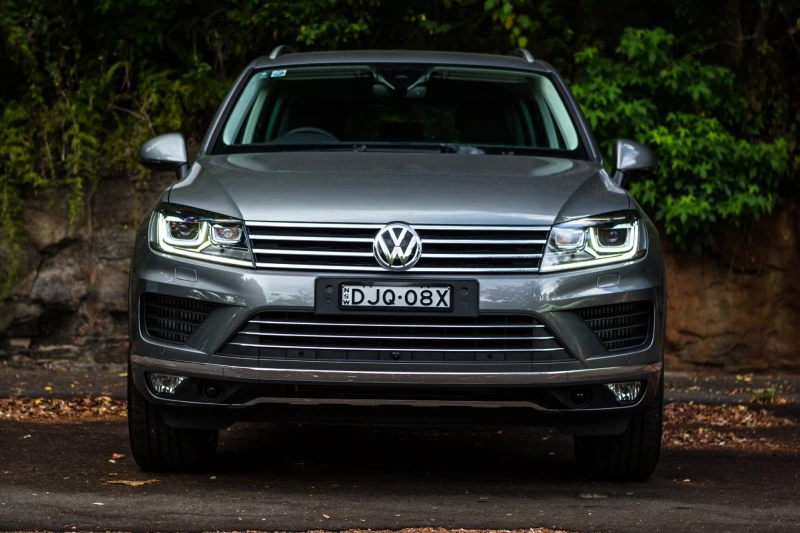
U.S. models use conventional steel-spring suspension
Unlike some Touareg configurations sold in other markets, the second-generation U.S.-spec model did not offer self-leveling air suspension. That removes the compressor, air springs, height sensors, and valve block from the list of concerns, but it does not make the chassis inexpensive to maintain.
The Touareg is heavy, and its independent suspension uses numerous bushings, control arms, ball joints, dampers, and wheel bearings. Worn components can produce clunks, wandering, uneven tire wear, or vague steering. A proper inspection should be done with the vehicle on a lift rather than based only on how it feels during a short drive.
Brake wear also matters. Large wheels and heavy curb weight put considerable demand on rotors, pads, wheel bearings, and tires. Replacing several of these items at once can turn a seemingly small list of deferred maintenance into a substantial first-year expense.
Vehicles from states that use heavy road salt deserve additional attention underneath. Check suspension fasteners, brake lines, subframes, exhaust components, and any area where protective coatings have been damaged. Surface oxidation on chassis hardware is different from structural corrosion, so the location and severity matter more than appearance alone.
Comfort features age along with the electronics
A well-kept Touareg remains quiet and comfortable on long trips, but with age the result depends increasingly on tire quality, wheel bearings, door seals, and previous body repairs. Tire cupping, a worn bearing, or a poorly refitted underbody panel can create noise that feels like a general decline in cabin insulation.
The factory RNS 850 infotainment system was sophisticated for its time, but its graphics, processing speed, and smartphone integration now feel dated. Aftermarket Apple CarPlay or Android Auto interfaces are common upgrades, but after any nonfactory installation it is worth checking the cameras, audio system, steering-wheel controls, navigation functions, and vehicle settings for proper operation.
Common age-related wear inside includes the outer driver's-seat bolster, steering-wheel leather, and frequently used switchgear. Glossy trim can accumulate fine scratches. These are usually cosmetic issues if the electrical equipment works correctly and the dashboard and door panels have not been repeatedly disassembled.
On vehicles with a panoramic roof, inspect the headliner, pillars, spare-tire well, and carpet for signs of moisture. Drainage problems or previous water intrusion can affect wiring and electronic modules. Also test seat heating and ventilation where equipped, cameras, keyless entry, climate-control zones, parking sensors, and the power liftgate one by one.
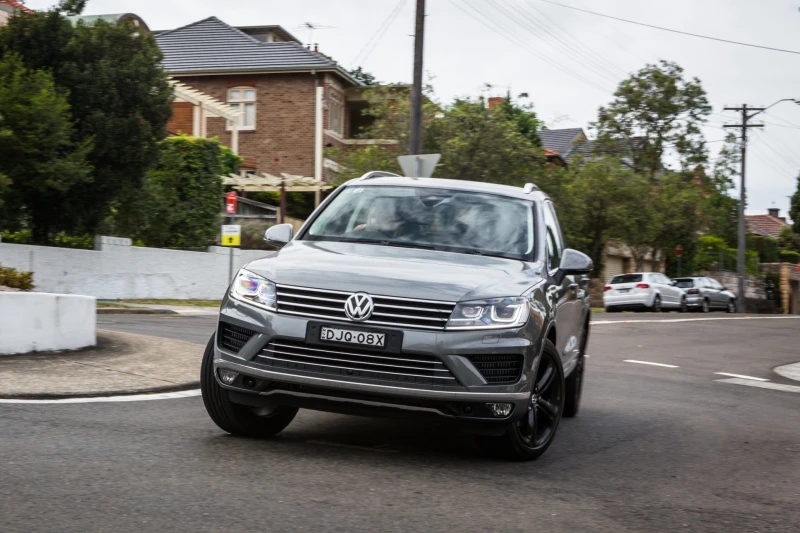
Body condition matters more than one paint-thickness reading
Severe corrosion is not a defining trait of the generation, but age and winter road salt justify a close look at the underbody, suspension mounting points, brake lines, and areas where coatings have been damaged. Rust on replaceable suspension hardware is not the same concern as corrosion affecting seams, structural sections, or mounting points.
A paint meter can help identify prior repairs, but a repainted door or fender does not by itself determine whether a Touareg is a good or bad purchase. More important are body geometry, structural repairs, welds, fasteners, airbag-system condition, and whether cameras, lighting, and driver-assistance hardware were correctly restored after a collision.
How to estimate future repair costs
Most age-related Touareg issues can be repaired. Suspension components, brakes, cameras, infotainment hardware, and interior parts are serviceable, and parts availability for the 3.6 VR6 and 3.0 TDI is generally workable in the United States. The real risk is having several deferred repairs come due at the same time.
A sensible approach is to keep a repair reserve after purchase for a complete baseline service and for the issues identified during the pre-purchase inspection. If diagnostics reveal simultaneous problems with the timing drive, cooling system, emissions hardware, suspension, and electronics, the total can easily outweigh a modest discount negotiated with the seller.
For the U.S. market, the 3.6-liter VR6 is usually the easiest version to understand because it was the core gasoline engine throughout the generation and the sole engine for 2017. The TDI can be appealing for highway use, but it requires a more careful review of the emissions system and service history. The Hybrid is the specialist choice because of its additional high-voltage components and lower parts familiarity among general repair shops.
A second-generation Volkswagen Touareg should not be rejected simply because of its age or engineering complexity. It should, however, be purchased only after a thorough inspection of the engine, transmission, suspension, brakes, and electronics. On this generation, the condition of the individual vehicle and documented maintenance history matter more than trim level or a long equipment list in the classified ad.