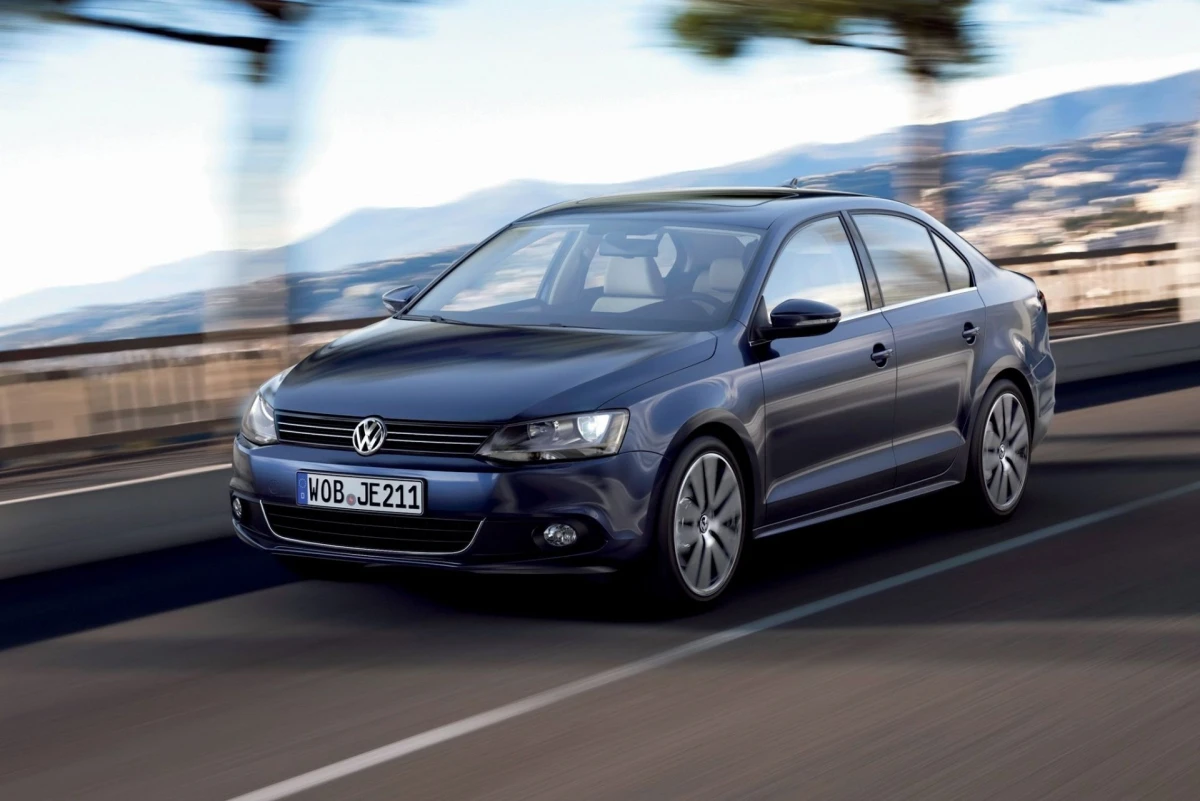



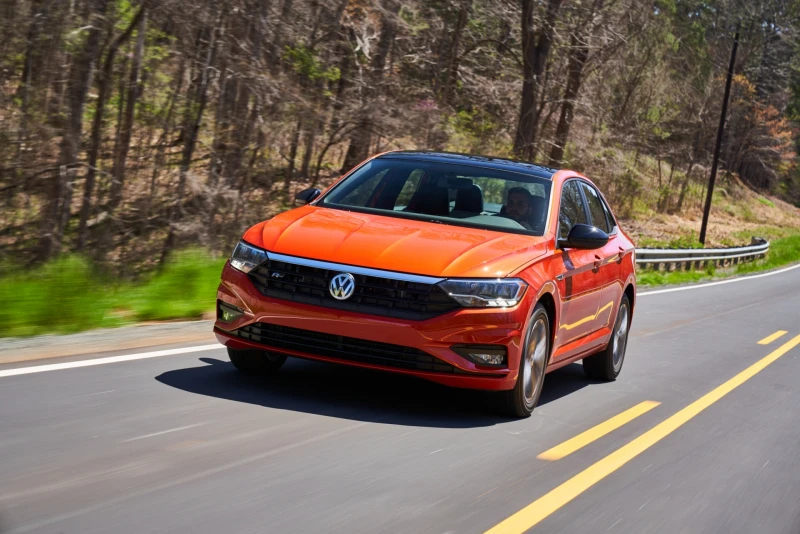
In the United States, the seventh-generation Volkswagen Jetta arrived for the 2019 model year and was sold through Volkswagen dealers rather than entering the market primarily as a used import. That changes the buying picture considerably: instead of focusing on auction history by default, shoppers should verify maintenance records, accident history, title status, recall completion, and the quality of any previous body repairs.
That does not mean Volkswagen Jetta VII problems are limited to collision damage. The model has several powertrain, transmission, electronics, and interior details worth checking, but different versions should not be lumped together. A regular Jetta with the 1.4-liter turbo engine and 8-speed automatic is mechanically different from a GLI with the 2.0-liter turbo engine, 7-speed DSG, and multi-link rear suspension. For the 2022 model year, the standard Jetta switched to a 1.5-liter turbo engine, while the 2025 refresh brought updated exterior styling and revised cabin technology.
For a broader overview of the generation, specifications, and interior, see the other articles in this series.
Vehicle history matters more than a clean-looking exterior
A U.S.-market Jetta can have a clean appearance and still hide significant previous damage. Before buying, compare the VIN against vehicle-history reports, service records, title information, mileage history, and any available repair documentation. Cars with branded or rebuilt titles deserve especially careful inspection because the extent and quality of previous repairs can vary widely.
After a front-end repair, inspect the radiator support, cooling-system mounts, wiring, active grille-shutter hardware where fitted, headlamp installation, and panel alignment. If airbags deployed, diagnosis should go beyond confirming that the warning light turns off: restraint-system fault codes, seat-belt pretensioners, impact sensors, and replaced control modules all need to be checked.
Driver-assistance systems add another layer. Replacement of a windshield, bumper, grille, camera, or radar sensor can require calibration. A car may show no obvious warning message yet still have an improperly calibrated adaptive-cruise or lane-assistance system, so a proper scan and functional road test are worthwhile.
Rust is usually about climate or previous repairs
Volkswagen Jetta VII body problems are more likely to be related to environment or repair quality than to a pronounced factory corrosion weakness. Inspect welds, wheel-arch interiors, rocker panels, jacking points, and the trunk floor. Uneven seam sealer, heat marks, overspray, or paint applied over dirt can indicate previous structural or cosmetic work.
Cars from northern states can show surface corrosion on fasteners, suspension hardware, and subframes after repeated exposure to road salt. Light oxidation on replaceable suspension components is not automatically serious, but corrosion around repaired seams, structural sections, or hidden cavities deserves much closer attention.
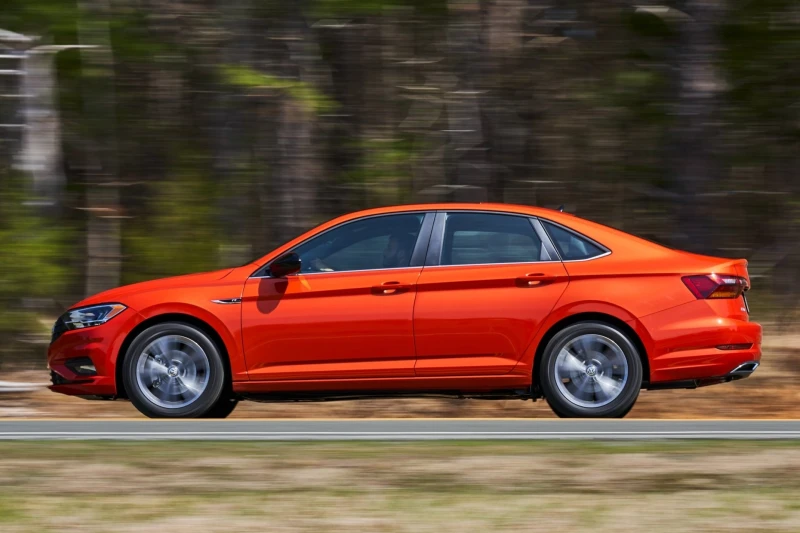
The 1.4T: maintenance history matters more than displacement
For the 2019–2021 model years, the mainstream U.S.-market Jetta used a 1.4-liter turbocharged four-cylinder from the EA211 family rated at 147 hp. It uses a timing belt rather than the timing-chain layout associated with some older Volkswagen turbo engines. There is no single universal failure that automatically makes this version a poor used-car choice, but maintenance history remains important.
During an inspection, check cold starting, idle quality, fuel-trim data, misfire counts, and the cooling system. Coolant residue around the water-pump or thermostat area, hose connections, or related fittings should not be dismissed without diagnosis. A minor leak may be manageable, but prolonged operation with low coolant can lead to more expensive consequences.
At higher mileage, misfires can come from spark plugs or ignition coils, and direct-injection engines can also develop injector contamination or intake-valve deposits. These issues do not occur on every car. Warning signs include rough running after startup, hesitation under load, mixture-related fault codes, or a meaningful difference in cylinder compression.
Fuel economy should be judged against the correct EPA rating for the exact model year and configuration rather than against European or other-market figures. Depending on year and drivetrain, the regular turbocharged Jetta is generally rated in the low-30-mpg range combined, with highway figures around 40 mpg. Short trips, winter operation, heavy traffic, and prolonged idling can push real-world consumption well below those numbers without necessarily indicating a mechanical problem.
What changed with the 1.5T
For 2022, the U.S.-market Jetta received a 1.5-liter turbocharged four-cylinder rated at 158 hp. It is more technically sophisticated than the earlier 1.4T and uses efficiency-focused combustion and turbocharger technology. Because these cars are newer, long-term high-mileage experience is naturally less extensive than it is for early seventh-generation examples.
On a test drive, look for smooth cold operation, consistent boost response, stable coolant temperature, and current software. Occasional reports of hesitation or uneven low-speed response should not automatically be treated as proof of a widespread engine defect, since similar symptoms can also come from software adaptation, ignition components, fuel quality, or transmission behavior.
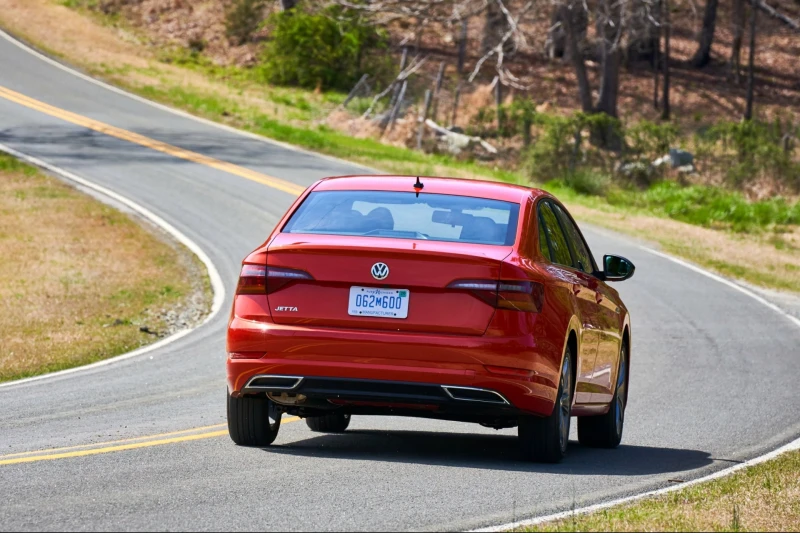
The regular 8-speed automatic is not a DSG
Most U.S.-market non-GLI Jettas with the 1.4T or 1.5T use a conventional 8-speed automatic transmission. It is sometimes incorrectly described in used-car listings as a DSG, but the design and service considerations are different from Volkswagen's dual-clutch gearbox.
Some early cars can feel more noticeable during low-speed shifts, especially when cold. Volkswagen issued service information for certain drivability, software, noise, and sealing concerns on specific production ranges. That does not mean every transmission is defective, but it makes a scan for stored faults, confirmation of software updates, and inspection for leaks worthwhile.
During the road test, the automatic should behave consistently both cold and fully warmed up. Delayed engagement into Drive or Reverse, a strong thump when coming to a stop, flare or slipping under load, or a burnt-fluid odor all justify further diagnosis. Do not assume that a transmission marketed as low-maintenance should never be inspected or serviced; fluid condition and leakage still matter.
The Jetta GLI uses a 2.0-liter EA888 turbo engine and, depending on model year and configuration, either a 6-speed manual or 7-speed DSG. The wet-clutch DSG has its own maintenance requirements. A modified GLI, especially one with an unknown tune or evidence of repeated hard launches, carries more uncertainty. Repairs to the DSG, turbocharger, cooling system, or direct-injection hardware can become expensive, so service history matters as much as the badge.
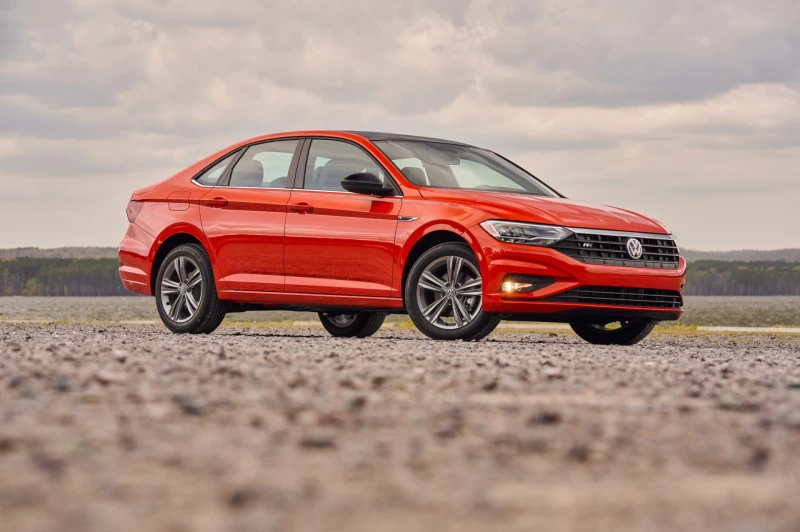
Electronics often need diagnosis before parts replacement
Infotainment systems in early Jettas can occasionally freeze, reboot, lose audio, or display a black screen. Software updates have addressed some concerns on certain systems. These symptoms do not automatically mean the display itself has failed; battery condition, software version, network faults, and stored diagnostic codes should be checked first.
Digital-instrument-cluster complaints have also appeared on some cars, while vehicles that were poorly repaired after a collision can suffer from wiring damage, weak grounds, or incompatible replacement modules. In those cases, the root cause may be repair quality rather than a factory electronics fault.
Various model years have been subject to recalls affecting specific components or software, including some restraint-system, rearview-camera, tire-pressure-monitoring, ignition, and fuel-system issues. Recall applicability is VIN-specific, so the correct approach in the United States is to check the individual vehicle through the NHTSA recall database or a Volkswagen dealer rather than relying only on model year.
Ride comfort depends on wheels and previous repair quality
The Jetta VII is reasonably refined for a compact sedan, but it does not completely isolate tire noise or sharp pavement impacts. Cars on larger 17- or 18-inch wheels can transmit more impact harshness. The regular Jetta uses a torsion-beam rear suspension, while the GLI has a multi-link rear setup, so the two versions can feel noticeably different on rough roads.
The cabin uses plenty of practical but hard-touch plastic, especially on lower trim panels and rear-door areas. Scratches and small rattles can appear with age, and previous interior disassembly after body repairs can add more noise. A worn steering wheel, seat-bolster wear, or marks on glossy trim are mostly cosmetic; damaged dashboard mounts, incorrectly installed curtain airbags, or moisture under the carpet are much more important.
What to budget for after purchase
Even a mechanically sound used car with incomplete records may benefit from baseline maintenance after purchase: fluids and filters, spark plugs as appropriate, brake inspection, battery testing, and a careful look at belts and hoses. The exact cost depends on mileage, parts choice, local labor rates, and what the previous owner already replaced.
Cars with restraint-system faults, unstable transmission behavior, coolant leaks, or missing factory control modules are harder to budget for. In those cases, the final repair cost depends on which components were previously replaced and how well the electrical and body work was performed, so a pre-purchase inspection is more valuable than a generic parts-price estimate.
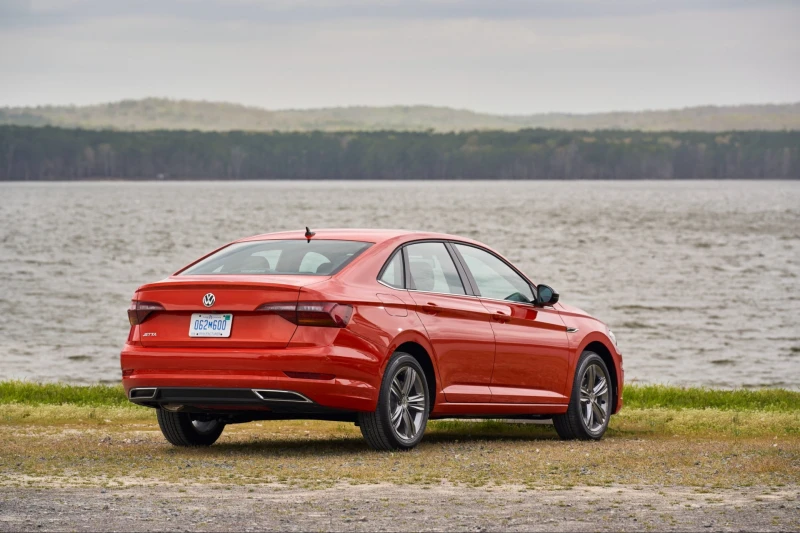
Which version leaves the fewest unknowns?
A Volkswagen Jetta VII can be a sensible used-car choice in the United States when its history is documented and a proper pre-purchase inspection shows no major problems. The 2019–2021 1.4T with the 8-speed automatic is common and relatively straightforward, while the 2022-and-newer 1.5T offers more power and improved efficiency but has a shorter long-term service record simply because it is newer.
The GLI is mechanically different and should be evaluated on its own terms. It is not automatically less reliable, but previous tuning, DSG service history, clutch condition on manual cars, and the health of the 2.0T engine can have a larger effect on ownership costs.
When shopping for a used Volkswagen Jetta, prioritize documented maintenance, a clean structural inspection, correctly functioning safety systems, and a transparent accident and title history over the longest options list or the lowest advertised mileage. With those checks completed, most of the generation's everyday drawbacks are easier to understand and budget for.