


The first-generation Volkswagen Tiguan 2007–2016, also known as Mk1 (NF, Typ 5N), pioneered Volkswagen's entry into the compact crossover segment, delivering a compelling mix of on-road refinement, light off-road ability, and efficiency. This article dives deep into the Tiguan engines, transmission pairings, drivetrain options, dimensions, and key updates over the years. For details on exterior, interior, trim levels, and common issues, check out other articles in this series.
The Tiguan I was built on the PQ46 platform (an extended PQ35), shared with the Golf V and Jetta, providing excellent body rigidity and parts compatibility across the VW Group. US sales began in 2009 (after the European debut in late 2007), with production running through 2016, including the significant 2011 facelift. Worldwide, over 2.5 million units were sold. On the current US used market, these models remain widely available and sought-after. Let's get into the specifics of the Tiguan powertrain overview.
Engines and Transmissions
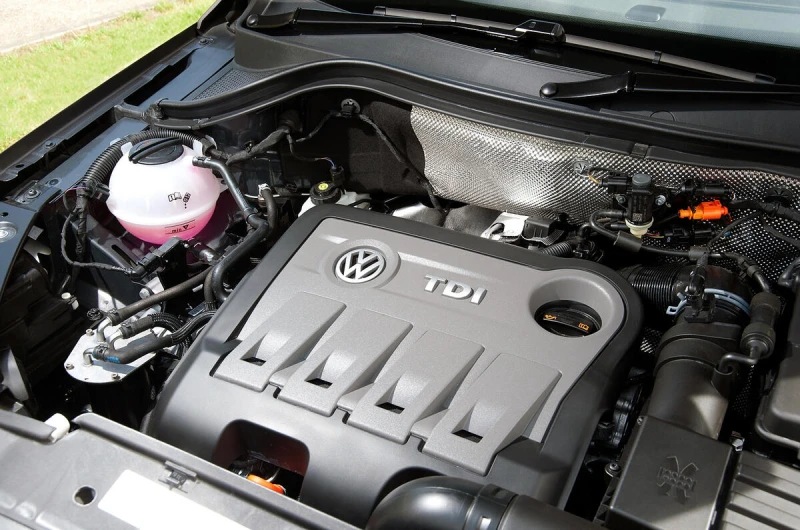
The first-generation Tiguan offered an impressive range of engines: naturally aspirated and turbocharged gasoline units, plus TDI diesels (though diesels were far less common in the US). Power outputs ranged from around 170 to 200 hp in the gasoline lineup most frequently seen stateside. Front-wheel drive was standard on many models, while the 4Motion all-wheel-drive system (Haldex-based) was available on higher trims and proved especially popular in snowy regions.
Transmission choices included a 6-speed manual, 6-speed conventional automatic (Tiptronic), and — from later models — the 6-speed DSG dual-clutch with wet clutches. Real-world fuel economy (combined cycle, based on US owner reports and EPA estimates):
- Gasoline 2.0T (200 hp): 20–23 mpg
- Other gasoline variants: typically 19–24 mpg depending on drivetrain and driving conditions
| Engine (type, displacement) | Power, hp | Transmission | Drivetrain | Fuel Economy (combined, mpg) |
|---|---|---|---|---|
| Gasoline, 2.0 TFSI | 200 | Manual-6 / DSG-6 | 4Motion AWD | 20–23 |
| Gasoline, 2.0 (earlier variants) | 170–200 | Manual-6 / Automatic-6 | FWD / 4Motion | 19–24 |
This table covers the primary US-market configurations through 2016, including facelifted models. In the States, 4Motion versions with automatic transmissions are among the most commonly found.
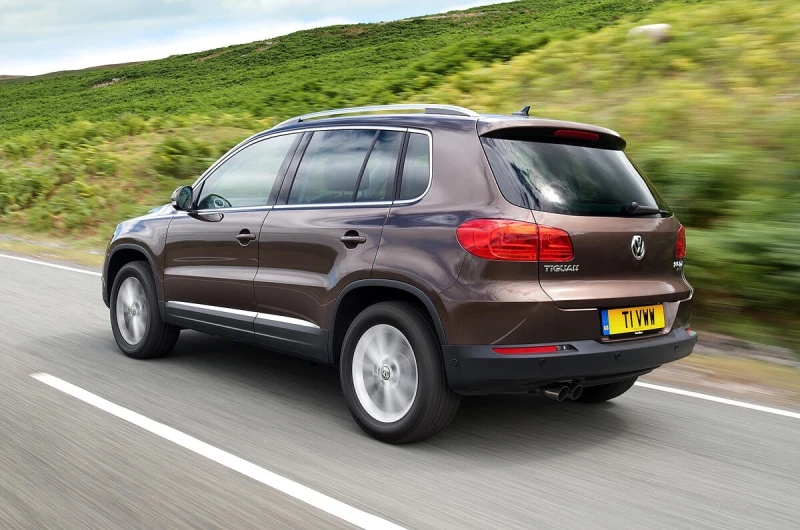
Dimensions & Weight
The Tiguan I is a compact crossover (B/C segment), perfect for American urban driving and light trails: agile, with a healthy ground clearance of about 6.9 inches. Dimensions stayed largely consistent after the 2011 refresh, though structural rigidity improved. Curb weight ranges from around 3,400 lbs for base front-drive models to 3,600+ lbs for AWD versions.
Cargo space: 23–56 cu.ft. (rear seats folded), fuel tank capacity – about 16.8 gallons. Front-wheel drive was most common, with 4Motion AWD available on roughly 40% of used examples today, especially desirable in regions with inclement weather.
| Specification | 5-door SUV (FWD) | 5-door SUV (4Motion AWD) |
|---|---|---|
| Length, in | 174.5 | 174.5 |
| Width, in | 71.2 | 71.2 |
| Height, in | 66.3 | 66.3 |
| Wheelbase, in | 102.5 | 102.5 |
| Ground Clearance, in | 6.9 | 6.9 |
| Curb Weight, lbs | 3400–3550 | 3550–3700 |
| Gross Vehicle Weight, lbs | 4585–4850 | 4800–5070 |
| Cargo Volume, cu.ft. (min/max) | 23/56 | 23/56 |
| Drivetrain | FWD | 4Motion AWD |
| Transmission Types | Manual-6, Auto-6, DSG-6 | Manual-6, Auto-6, DSG-6 |
Figures shown are for standard models; Off-Road/Track&Field packages added about 1.2 inches of clearance and slight weight. AWD variants make up a significant portion of the used market in many states.
Yearly Updates & 2011 Facelift
The Tiguan received its major facelift in mid-2011 (US models from 2012), bringing updated styling (new headlights, bumpers, LED elements) while maintaining core mechanicals. Pre-facelift models emphasized the launch of turbo gasoline engines; post-2011 versions offered improved refinement, better crash structure, updated suspension tuning for sharper handling, and more durable DSG software.
From 2012–2016: refinements to the turbo engines, Haldex system updates for improved traction, and various recalls addressed (mostly chain tensioners on early TSI). Facelifted models (2012+) now dominate the US used market — they offer better efficiency and overall polish.
Key Ownership Considerations for the US Market
Owning a Volkswagen Tiguan I in the United States offers a nice balance of driving enjoyment and practicality — with some typical German-car caveats. The 2.0T gasoline engines deliver strong performance (resource often 150–200k+ miles), though timing chains may require attention around 80–100k miles (~$1,200–$2,000), and minor oil consumption can appear after 100k miles. Regular premium unleaded fuel is recommended for turbo models to avoid carbon buildup (intake cleaning ~$400–$600 every 60–80k miles).
Transmissions: Manual units are very durable; the 6-speed auto is generally reliable with fluid changes every 40–50k miles (~$250–$350); post-2010 DSG units are much improved (clutches last 100–150k miles, ~$2,000–$3,000), though software updates help prevent overheating in traffic. The 4Motion system is robust — just remember Haldex fluid changes every 40k miles (~$300–$400).
Parts availability is excellent (OEM and quality aftermarket options), and VW specialists are widespread. Rust is rarely a major issue in most states (unlike salt-belt concerns on older models). Real-world fuel consumption often runs 1–3 mpg below EPA figures due to driving style and conditions. Always check compression, chain condition, DSG behavior, and full service history. For high-mileage examples (150k+ miles), budget $1,000–$2,500/year for maintenance.
Final Verdict: Smart Pick on the American Used Market
On the US used market (typically $6,000–$14,000 depending on year, mileage, and condition), the sweet spot is a post-facelift 2.0T + DSG-6 + 4Motion AWD (2012+). Why? Strong performance, usable all-wheel drive for varied weather, solid resale value, and reasonable upkeep costs (~$800–$1,500/year). For those wanting simplicity: base 2.0T with manual transmission. Avoid very early models with neglected maintenance. This combo works great for families, city driving, light adventures, and winter conditions — practical, capable, and still fun. For max performance, the 200-hp 2.0T + DSG + 4Motion shines, though expect slightly higher fuel and service costs.
The first-generation Tiguan remains a respected compact crossover: technically mature and rewarding when properly maintained. With care, total lifespan often reaches 200,000–300,000+ miles.