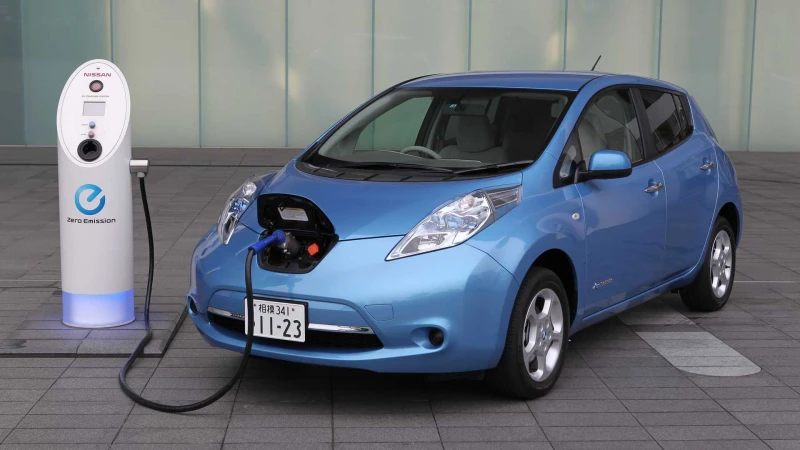
The first-generation Nissan Leaf (2010–2017), known by chassis codes ZE0 and AZE0 (post-2013 facelift), was designed with a focus on efficiency, zero emissions, and straightforward engineering. This guide dives deep into the powertrain evolution, dimensions, curb weight, and real-world ownership experience of the early Leaf in American conditions. Understanding these specs helps used-car shoppers make informed decisions in today’s pre-owned EV market.
Motors & Drivetrain
Unlike conventional gas vehicles, the Nissan Leaf I features a synchronous AC electric motor delivering instant torque and smooth, linear acceleration. Every model in this generation uses one of two motor variants: the original EM61 (2010–2012) or the refined EM57 (2013+). Power remains consistent at 80 kW (107 hp), while torque ranges from 187–207 lb-ft depending on the model year. Power reaches the front wheels through a single-speed reduction gear – no traditional transmission, fewer moving parts, and minimal energy losses.
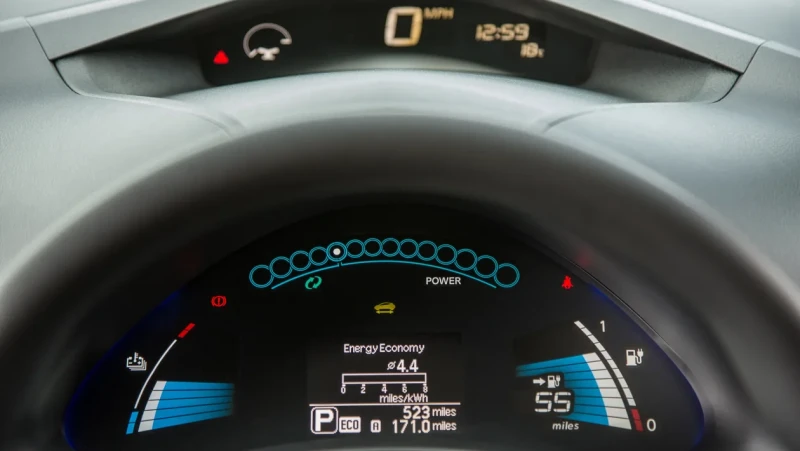
The battery is the heart of the vehicle: early models came with a 24 kWh pack (≈22 kWh usable), while 2016–2017 versions upgraded to 30 kWh with improved cell chemistry. This boosted EPA-rated range from roughly 73 miles to about 107 miles (NEDC estimates were higher). Real-world energy consumption typically falls between 3.5–4.5 mi/kWh in mixed driving. In American conditions – especially cold winters – consumption can rise noticeably, leading to 20–40% range reduction depending on temperature and heater use.
| Model Year | Motor Type | Power | Torque | Transmission | Drive |
|---|---|---|---|---|---|
| 2010–2012 | EM61 synchronous AC | 80 kW (107 hp) | 187–207 lb-ft | Single-speed reduction gear | Front (FWD) |
| 2013–2015 | EM57 synchronous AC | 80 kW (107 hp) | 207 lb-ft | Single-speed reduction gear | Front (FWD) |
| 2016–2017 | EM57 synchronous AC | 80 kW (107 hp) | 207 lb-ft | Single-speed reduction gear | Front (FWD) |
The table covers the entire production run. Consistent front-wheel drive and single-speed gearing make the Leaf very easy to maintain, though it’s not suited for serious off-road use.
Dimensions & Weight
With its compact C-segment hatchback footprint, the Leaf I is perfectly sized for urban American driving. The low-mounted battery gives it an excellent center of gravity and confident handling. Dimensions remained virtually unchanged throughout the generation: length 175.0 in, width 69.7 in (mirrors folded), height 61.0 in, wheelbase 106.3 in. Ground clearance of 6.3 inches works well on most city streets and light suburban roads.
Curb weight varies by battery: 3,354–3,391 lb for 24 kWh models and up to 3,492 lb with the 30 kWh pack. This contributes to 0–60 mph acceleration of 10–11.5 seconds and a top speed of 90 mph.
| Version | Length / Width / Height, in | Wheelbase, in | Curb Weight, lb | Gross Weight, lb | Transmission / Drive |
|---|---|---|---|---|---|
| 2010–2015 (24 kWh) | 175.0 / 69.7 / 61.0 | 106.3 | 3,354–3,395 | 4,289 | Reduction gear / FWD |
| 2016–2017 (30 kWh) | 175.0 / 69.7 / 61.0 | 106.3 | 3,380–3,492 | 4,289 | Reduction gear / FWD |
Year-by-Year Evolution
Major updates occurred in 2013 (AZE0 facelift) and 2016 (30 kWh battery). Early 2010–2012 models used a 24 kWh pack with passive air cooling, leading to faster degradation in hot climates. The 2013 refresh brought the more efficient EM57 motor, a heat pump (saving significant winter energy), and better aerodynamics (Cd improved to 0.28). These changes were very noticeable in the U.S. market – post-2013 models became much more desirable thanks to better real-world range.
The 2016 30 kWh upgrade increased energy density and EPA-rated range to around 107 miles. Battery construction was strengthened, and regenerative braking was refined. In the American used market, early models frequently show battery health (SOH) below 75%, while well-maintained 2013+ examples often retain 80–90%.
Key Buying Considerations
Owning a first-gen Leaf in the United States involves understanding climate, charging infrastructure, and the used EV market. The electric motor itself is extremely durable – many examples exceed 200,000 miles with virtually no motor repairs. The 30 kWh versions are most sought-after, often delivering 80–120 miles of real-world range even in cooler weather. Typical consumption runs 3.7–4.3 mi/kWh in summer and drops to 2.8–3.5 mi/kWh in winter.
Common issues include battery degradation (especially in very hot regions due to passive cooling), the 12-volt auxiliary battery (replace every 3–4 years), and occasional CHAdeMO port or inverter problems. Parts availability is good – used packs and motors are plentiful from salvage yards, and battery upgrades to 40 kWh are possible. Maintenance costs remain very low compared to gas cars.
Estimated market price range in the United States (2025–2026 used market): $4,000–$9,000 for 24 kWh models and $7,000–$12,000 for cleaner 30 kWh examples, depending on condition, mileage, and battery health. Always check battery SOH using LeafSpy or similar tools (below 70–75% is a caution flag).
Bottom Line
The Nissan Leaf I remains one of the most practical and affordable entry points into electric driving. The sweet spot for most American buyers is a 2016–2017 model with the 30 kWh battery, 80 kW motor, single-speed gearing, and front-wheel drive. It offers an excellent balance of price, efficiency (roughly 3–4 cents per mile at home charging rates), low maintenance, and strong resale demand in the used EV segment. Early examples can be budget-friendly but carry higher battery risk. Ideal for city commuting, second-car duties, or anyone wanting a reliable, no-gasoline daily driver.