


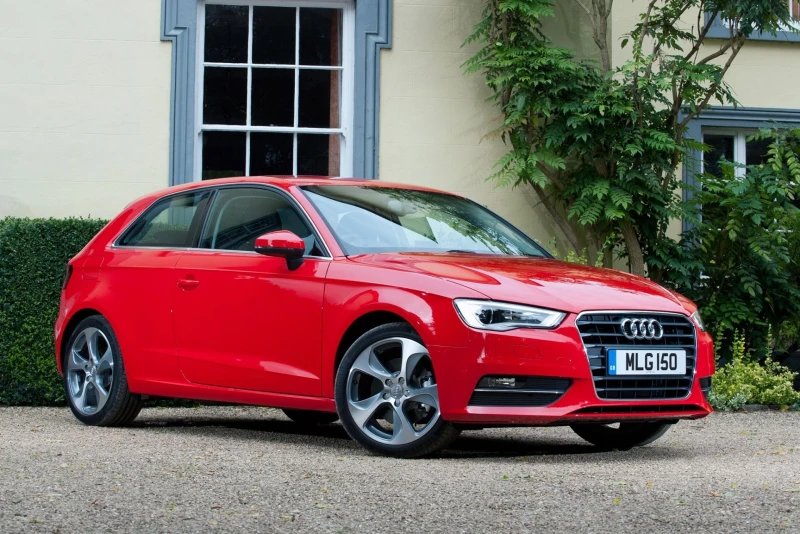
This model, built on the MQB platform, offers a wide range of technical specifications, including diverse engines, transmissions, and body dimensions. In this article, we dive deep into the technical specifications of the Audi A3 III, focusing on engines, gearboxes, drivetrains, exterior dimensions, and curb weight. Special attention is given to aspects relevant to the US market, where the A3 III remains sought-after on the used market thanks to its reliability, refinement, and efficiency. Audi A3 2012–2020 engines include turbocharged TFSI gasoline units and TDI diesels, with transmissions ranging from manual to the S tronic dual-clutch. Reviews of exterior design, interior, trim levels, and common issues of the generation are covered in other articles of the series.
Engines and Transmissions
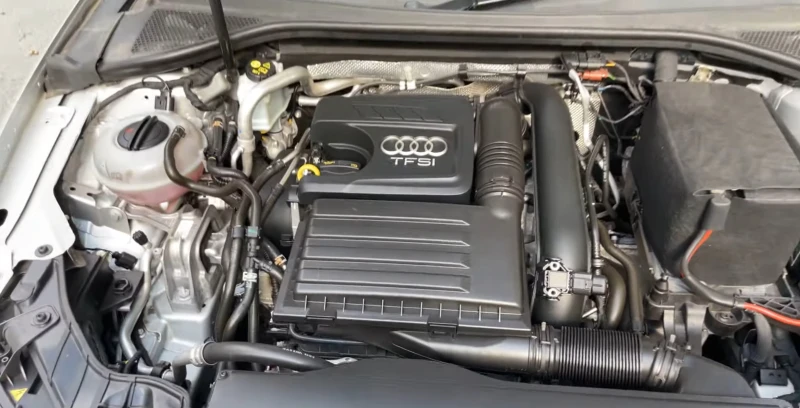
The Audi A3 2012–2020 engine lineup is diverse, balancing performance, fuel efficiency, and emissions compliance. Turbocharged TFSI gasoline engines with direct injection deliver power from 105 to 300 hp (in high-performance S3 versions), while TDI diesels range from 105 to 184 hp. Transmissions include 6-speed manual (MT), 6- or 7-speed S tronic dual-clutch (similar to DSG), and drivetrains are front-wheel drive (FWD) or quattro all-wheel drive with Haldex coupling. Below is a table of the main powertrains across the full production period (2012–2020). Data is based on North American and European specs relevant to the US market (imports and domestic configurations).
| Engine (type, displacement, power) | Transmission | Drivetrain |
| 1.0 TFSI (gasoline, 999 cc, 115 hp) | 6-speed MT / 7-speed S tronic | FWD |
| 1.2 TFSI (gasoline, 1197 cc, 105–110 hp) | 6-speed MT / 7-speed S tronic | FWD |
| 1.4 TFSI (gasoline, 1395 cc, 122–150 hp) | 6-speed MT / 7-speed S tronic | FWD |
| 1.5 TFSI (gasoline, 1498 cc, 150 hp) | 6-speed MT / 7-speed S tronic | FWD |
| 1.8 TFSI (gasoline, 1798 cc, 180 hp) | 6-speed S tronic / 7-speed S tronic | FWD / AWD (quattro) |
| 2.0 TFSI (gasoline, 1984 cc, 190–300 hp) | 6-speed S tronic / 7-speed S tronic | FWD / AWD (quattro) |
| 1.6 TDI (diesel, 1598 cc, 105–116 hp) | 6-speed MT / 7-speed S tronic | FWD |
| 2.0 TDI (diesel, 1968 cc, 150–184 hp) | 6-speed MT / 6-speed S tronic | FWD / AWD (quattro) |
These powertrains deliver 0–60 mph acceleration from about 5.5 to 10.5 seconds depending on the version (converted from original 0–100 km/h figures). The Audi A3 engine overview highlights that TFSI gasoline engines are favored for their responsiveness, while TDI diesels excel in fuel economy.
Dimensions and Weight
Audi A3 III dimensions vary by body style: 3-door hatchback (early models), 5-door Sportback, sedan, and cabriolet. The MQB platform keeps the car compact yet surprisingly roomy inside. Curb weight starts around 2,655 lbs for base models, with gross vehicle weight up to about 4,300 lbs. Below is a table with key parameters for the most common versions in the US (Sportback and sedan).
| Version | Length / Width / Height (in) | Wheelbase (in) | Curb / Gross Weight (lbs) | Drivetrain / Transmission |
| Sportback (5-door hatchback) | 169.5–169.8 / 70.3 / 56.1–56.2 | 103.8–103.9 | 2,655–3,263 / 3,880–4,299 | FWD / AWD; MT / S tronic |
| Sedan | 175.5–175.6 / 70.7 / 55.7 | 103.8 | 2,756–3,086 / 3,969–4,189 | FWD / AWD; MT / S tronic |
| Cabriolet | 174.1 / 70.6 / 55.5 | 102.2 | 3,098–3,417 / 4,089–4,299 | FWD / AWD; S tronic |
Ground clearance is approximately 5.5–6.5 inches, suitable for most paved roads. Trunk capacity: 12.9–40.2 cu ft (Sportback with seats folded), 14.1–31.0 cu ft (sedan).
Updates by Year
The Audi A3 III received a facelift in 2016 that brought technical improvements. Pre-2016: base engines included 1.2 TFSI, 1.4 TFSI (122–140 hp), 1.8 TFSI, 1.6 TDI, 2.0 TDI. Transmissions were manual and 6/7-speed S tronic, mostly FWD with quattro on higher trims.
Post-facelift (2016–2020): introduced 1.0 TFSI (115 hp) and 1.5 TFSI (150 hp with cylinder deactivation for better efficiency), 2.0 TFSI up to 190 hp (replacing 180 hp). Diesels updated to meet stricter emissions: 1.6 TDI (116 hp), 2.0 TDI (150–184 hp). Transmissions saw refined 7-speed S tronic with wet clutch (DQ381 replacing early dry DQ200 in some applications). Quattro all-wheel drive became more widely available in mid-level trims. In the US market, these updates translate to better emissions compliance, improved efficiency, and enhanced reliability on the used market. Suspension (adaptive option) and sound insulation were also refined.
Key Things to Know When Buying
Operating the Audi A3 III in the United States involves considerations around fuel quality, road conditions, and service networks. Engine reliability: the 1.4 TFSI (EA211 family) is among the strongest, with potential service life of 150,000–200,000 miles, though timing chain should be monitored (replacement recommended every 60,000–90,000 miles). 1.8/2.0 TFSI engines are lively but can develop oil consumption (up to 1 qt per 1,000 miles) due to piston ring design; many owners address this with software updates or hardware fixes. TDI diesels: 1.6 is very frugal but sensitive to fuel quality (EGR and DPF issues possible), while 2.0 TDI is robust (often 250,000+ miles) with proper oil and maintenance.
Popular configurations in the US: 1.4 TFSI or 2.0 TFSI with S tronic (great balance of performance and efficiency), 2.0 TDI quattro variants for highway cruising. Fuel economy (based on EPA estimates and real-world owner reports): gasoline 1.4–1.8 L engines achieve 25–35 mpg combined, diesels 1.6–2.0 L around 30–40 mpg (real-world figures in cities like Los Angeles or along Route 66 align with these numbers).
Transmission notes: early dry-clutch S tronic (DQ200) can suffer clutch wear (replacement every 40,000–60,000 miles, cost $1,500–$2,500). Wet-clutch DQ250/381 units are far more durable. Quattro system: Haldex coupling requires fluid changes every 20,000 miles to prevent overheating. Parts availability is excellent (OEM and aftermarket widely stocked), though genuine parts carry a premium (timing chain service $800–$1,500). In the US, always check for rust (especially on salt-belt or imported vehicles) and verify mileage via CARFAX or VIN history. Common issues: MMI electronics glitches, turbo wear on TFSI models (typical lifespan 90,000–120,000 miles).
Conclusion
On the US used market, the sweet spot is often a 2.0 TDI (150 hp) with 6-speed S tronic and front-wheel drive. This setup offers an excellent balance of approximate market price range $12,000–$18,000 (depending on year, mileage, and condition), fuel economy (30–38 mpg highway for strong savings on long drives), maintenance costs (diesels often cheaper long-term), and resale value (solid demand for efficient A3 models). For city driving, the 1.4 TFSI (150 hp) with 7-speed S tronic FWD delivers lively performance and 28–35 mpg combined without diesel-specific concerns. Avoid early 1.8 TFSI models prone to higher oil use. Overall, the technical specifications of the Audi A3 III make it a versatile compact premium choice for American roads, but prioritize post-facelift examples with documented service history.