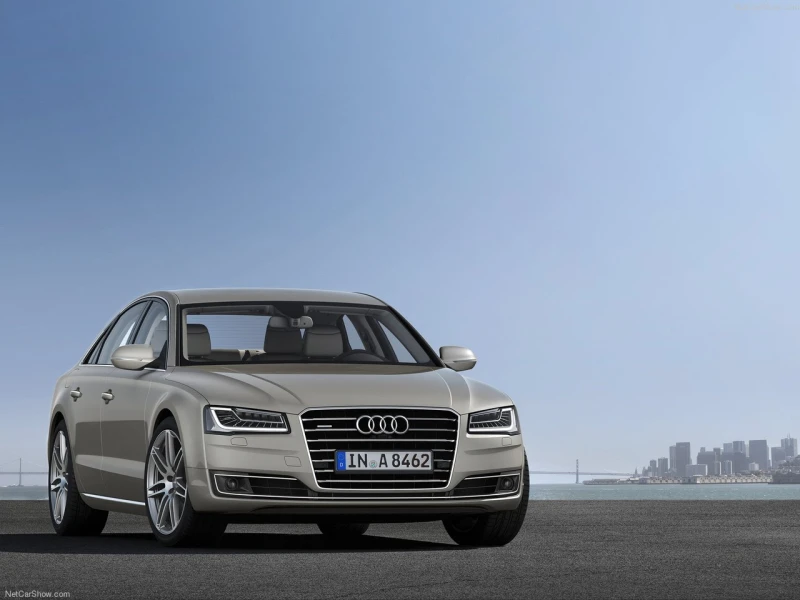
This flagship model blended cutting-edge technology, potent powertrains, and exceptional comfort, enjoying strong popularity across Europe and making its way to the United States through official channels. The Audi A8 III's technical specs highlight its focus on performance, efficiency, and long-term durability—even under demanding American road and weather conditions. In this guide, we dive deep into the 2009–2017 Audi A8 engines, transmissions, dimensions, curb weights, year-to-year changes, and essential ownership considerations. Understanding these powertrains helps explain why the D4 A8 remains sought-after on the used market today. Exterior design, interior features, trim levels, and common issues are covered in other articles in this series.
Engines & Transmissions
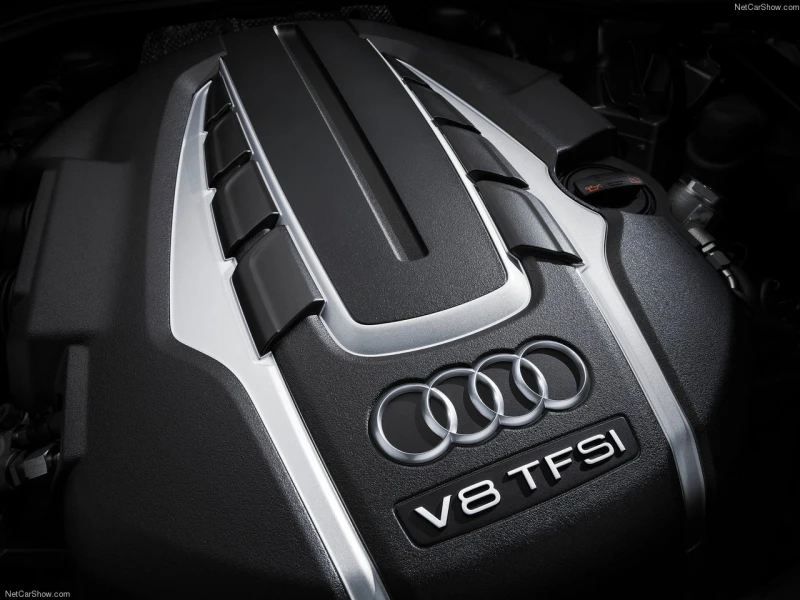
The 2009–2017 Audi A8 offered a diverse lineup of gasoline and (in select markets) diesel engines, ranging from efficient V6s to mighty W12 units. Most featured direct injection, turbocharging or supercharging, and met strict emissions standards (ULEV or similar in the US). The primary transmission was the smooth and efficient 8-speed ZF Tiptronic automatic. All-wheel drive via quattro was standard on the vast majority of models sold in the United States, with very few front-wheel-drive exceptions in early years. Below is a table of the key powertrains available during the production run (2009–2017), including type, displacement, horsepower, transmission, and drivetrain.
| Engine | Type / Displacement | Horsepower | Transmission | Drivetrain |
|---|---|---|---|---|
| 2.0 TFSI Hybrid | Inline-4, turbo, 1984 cc + electric motor | 211 + 54 (combined 245 hp) | 8-speed Tiptronic automatic | Front-wheel drive (FWD) |
| 3.0 TFSI | V6, supercharged, 2995 cc | 310 hp | 8-speed Tiptronic automatic | quattro AWD |
| 4.0 TFSI | V8, twin-turbo, 3993 cc | 435 hp | 8-speed Tiptronic automatic | quattro AWD |
| 4.2 FSI | V8, naturally aspirated, 4172 cc | 372 hp | 8-speed Tiptronic automatic | quattro AWD |
| 6.3 FSI W12 | W12, naturally aspirated, 6299 cc | 500 hp | 8-speed Tiptronic automatic | quattro AWD |
| 3.0 TDI (clean diesel – select markets) | V6, turbo, 2967 cc | 204 / 250 / 258 hp | 8-speed Tiptronic automatic | quattro AWD (some early FWD) |
| 4.2 TDI (select markets) | V8, twin-turbo, 4134 cc | 350 / 385 hp | 8-speed Tiptronic automatic | quattro AWD |
These engines delivered 0–60 mph acceleration ranging from about 4.4 to 7.5 seconds depending on the variant. Estimated fuel economy (based on EPA figures and real-world US owner reports): 3.0 TFSI models typically achieve 18–23 mpg combined, while larger V8s and W12 variants range from 15–20 mpg. The rare hybrid variant could reach up to around 25–28 mpg combined in ideal conditions, though it was uncommon in the US.
Dimensions & Weight
The Audi A8 III's technical specs include imposing proportions befitting its flagship status. Offered in standard-wheelbase (SWB) and long-wheelbase (LWB) configurations, the body utilized Audi's lightweight aluminum Space Frame construction to keep weight in check. Curb weight ranged from roughly 4,050 lbs for base models to around 4,800 lbs for top trims. Gross vehicle weight typically fell between 5,550–5,950 lbs. quattro AWD and the 8-speed Tiptronic were standard across most configurations. Below is a table summarizing key dimensions, weights, transmission, and drivetrain for the main variants.
| Variant | Length (in) | Width (in) | Height (in) | Wheelbase (in) | Curb / GVWR (lbs) | Transmission | Drivetrain |
|---|---|---|---|---|---|---|---|
| Standard Wheelbase (SWB) | 202.0 | 76.7 | 57.5 | 117.8 | 4,050–4,450 / 5,550–5,730 | 8-speed Tiptronic | quattro AWD |
| Long Wheelbase (LWB) | 207.4 | 76.7 | 57.9 | 122.9 | 4,360–4,780 / 5,730–5,950 | 8-speed Tiptronic | quattro AWD |
| S8 (performance model) | 202.6 | 76.7 | 57.4 | 117.9 | 4,350–4,520 / 5,700 | 8-speed Tiptronic | quattro AWD |
These dimensions deliver a spacious, executive-level cabin and excellent high-speed stability—perfect for long drives on American interstates and highways.
Year-to-Year Changes
Significant updates occurred within the D4 generation, especially during the 2013–2014 facelift. Pre-2013 models commonly featured the 4.2 FSI V8 (372 hp) and early 3.0 TFSI variants. In 2013, the 3.0 TFSI (supercharged, 310 hp) and 4.0 TFSI twin-turbo V8 (420–435 hp) were introduced, replacing the 4.2 FSI, while efficiency improvements appeared across the lineup. The 2014 facelift brought matrix LED headlights, cylinder-on-demand technology on select V8s for better fuel economy, active noise cancellation, and refined quattro systems with torque vectoring. In the US market, post-facelift models (2014–2017) are especially popular due to improved electronics, lighting, and overall refinement. The hybrid variant debuted around 2012 but remained rare. The 8-speed Tiptronic and quattro AWD remained core features throughout.
Key Buying Considerations
Owning an Audi A8 III in the United States requires attention to maintenance needs. The most common and well-regarded engine is the 3.0 TFSI supercharged V6—reliable with proper service intervals and capable of 200,000+ miles. The 4.0 TFSI twin-turbo V8 offers thrilling performance but demands premium unleaded fuel. Real-world fuel economy: 3.0 TFSI models typically return 18–22 mpg combined in mixed driving, while larger V8s average 15–19 mpg. Common issues include air suspension repairs ($800–$2,500), timing chain service on V8 engines (every ~90,000–100,000 miles), and turbo wear if maintenance is neglected. The Tiptronic transmission is durable but benefits from fluid changes every 40,000 miles. quattro AWD provides excellent traction, though the center differential and components need periodic attention. Parts availability is good through dealers and aftermarket channels in major cities like Los Angeles, Miami, and New York, though genuine parts carry a premium (OEM ~2x aftermarket cost). Consider winter conditions in northern states—pre-heaters or good snow tires are helpful. Other notes: occasional oil consumption on early TFSI engines and suspension wear on rough roads.
Bottom Line
On the US used market, the sweet spot is often a 3.0 TFSI quattro model with the 8-speed Tiptronic. This combination offers an excellent balance of performance, Approximate market price range for well-maintained examples: $15,000–$30,000 depending on year, mileage, and condition, fuel efficiency (18–22 mpg combined), maintenance costs (lower than V8s), and strong resale demand. Post-2014 facelift versions are recommended for updated tech and better long-term reliability. The Audi A8 III remains a compelling choice for buyers who appreciate advanced engineering and true luxury.