


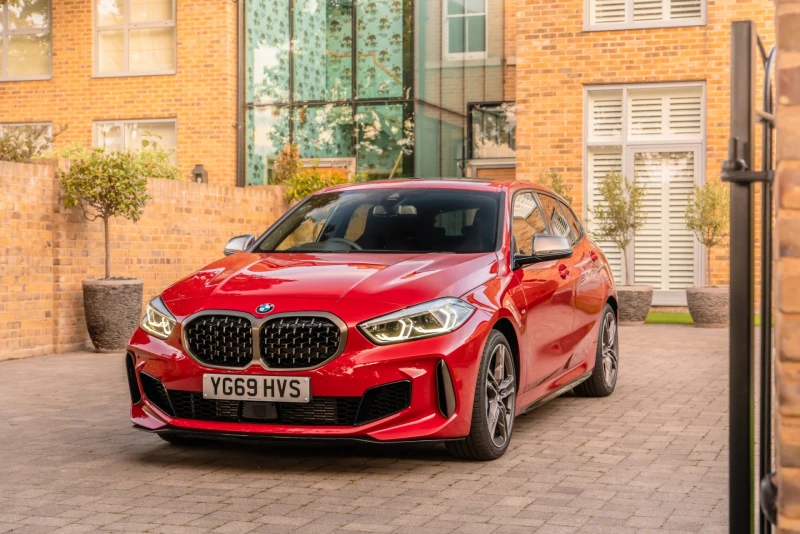
The third-generation BMW 1 Series, known as the F40 hatchback, was produced from 2019 to 2024 and marked a major evolution for BMW's compact premium hatch. This model blended sharp handling, strong efficiency, and cutting-edge tech, proving popular across Europe and beyond. It switched to the front-wheel-drive UKL2 platform, boosting interior space and everyday practicality. In this guide, we dive deep into the 2019–2024 BMW 1 Series engines, transmissions, dimensions, curb weights, year-over-year changes, and key ownership notes. Understanding these powertrains helps explain why the model holds strong appeal on the used market today. Styling, cabin, trim levels, and common issues are covered in other articles in this series.
Engines and Transmissions
The 2019–2024 BMW 1 Series lineup features a range of turbocharged gasoline and diesel engines focused on both performance and efficiency. All comply with stringent Euro 6d emissions standards, including particulate filters. Gasoline options include the 1.5-liter three-cylinder B38 (109–140 hp) and the 2.0-liter four-cylinder B48 (178–306 hp). Diesels consist of the 1.5-liter B37 (116 hp) and 2.0-liter B47 (150–190 hp). Transmissions range from a 6-speed manual, 7-speed dual-clutch, to an 8-speed automatic from Aisin. Drive is primarily front-wheel (FWD), with xDrive all-wheel drive available on higher-output models. Here's a breakdown of the main powertrains across 2019–2024.
| Engine | Type/Displacement | Power (hp) | Transmission | Drive |
|---|---|---|---|---|
| 116i | I3 turbo gasoline, 1.5L | 109 | 6-spd manual / 7-spd DCT | FWD |
| 118i | I3 turbo gasoline, 1.5L | 136-140 | 6-spd manual / 7-spd DCT | FWD |
| 120i | I4 turbo gasoline, 2.0L | 178-184 | 7-spd DCT / 8-spd auto | FWD |
| 128ti | I4 turbo gasoline, 2.0L | 265 | 8-spd auto | FWD |
| M135i | I4 turbo gasoline, 2.0L | 306 | 8-spd auto | xDrive AWD |
| 116d | I3 turbo diesel, 1.5L | 116 | 6-spd manual / 7-spd DCT | FWD |
| 118d | I4 turbo diesel, 2.0L | 150 | 6-spd manual / 8-spd auto | FWD / xDrive |
| 120d | I4 turbo diesel, 2.0L | 190 | 8-spd auto | FWD / xDrive |
These engines deliver 0-60 mph times ranging from about 4.5 to 10 seconds. Estimated fuel economy (based on WLTP figures and real-world owner reports): diesels achieve roughly 40–50 mpg combined, while gasoline models range from 30–38 mpg combined (approximate U.S.-style figures).
Dimensions and Weight
The BMW 1 Series F40 offers compact dimensions perfect for urban driving. The hatchback body uses aluminum components to keep weight down. Curb weight ranges from about 2,840 lbs for base models to 3,360 lbs for top versions. Gross vehicle weight reaches up to 4,200–4,630 lbs. Drive is FWD by default, with xDrive optional on select trims. See the table below for key measurements, weights, transmissions, and drivetrains.
| Version | Length (in) | Width (in) | Height (in) | Wheelbase (in) | Curb / GVWR (lbs) | Transmission | Drive |
|---|---|---|---|---|---|---|---|
| Standard (F40) | 170.0 | 70.8 | 56.5 | 105.1 | 2,840–3,120 / 4,060–4,300 | 6-spd manual / 7-spd DCT | FWD |
| M Sport (118i/118d) | 170.0 | 70.8 | 56.5 | 105.1 | 2,910–3,200 / 4,120–4,410 | 7-spd DCT / 8-spd auto | FWD |
| M135i xDrive | 170.0 | 70.8 | 56.5 | 105.1 | 3,360–3,530 / 4,590 | 8-spd auto | xDrive AWD |
These specs deliver agile handling and solid stability, with ground clearance around 5.5 inches—well-suited to city streets and light highways.
Year-by-Year Updates
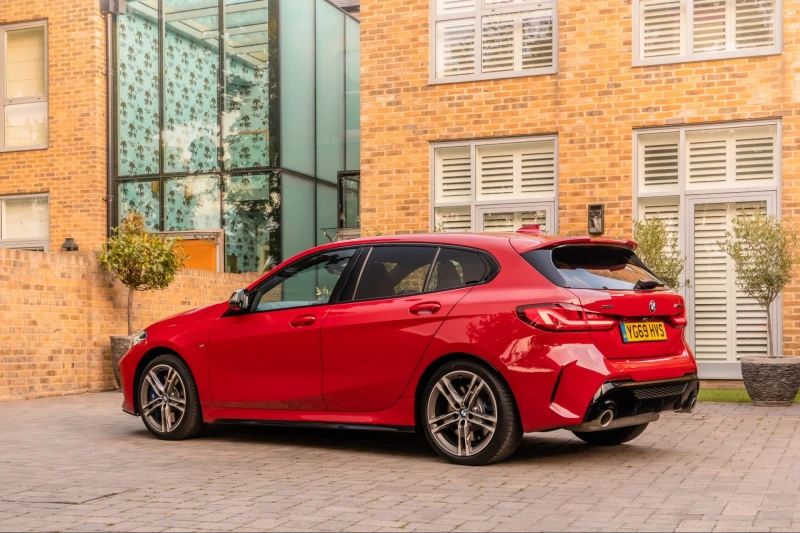
During its run, the BMW 1 Series F40 received a significant mid-cycle refresh in 2022–2023. Pre-2022 models used baseline engines meeting Euro 6d-TEMP. In 2022, the M135i xDrive gained revised springs, dampers, control-arm mounts, increased camber for sharper handling, and hydraulic mounts. New exterior colors and better sound insulation were added. The 2023 facelift brought updated bumpers, headlights, grille, and fresh iDrive graphics. Engines (especially B48 and B47) were tweaked for 0.5–1 L/100 km lower consumption. Transmission calibration improved, particularly on the DCT. Post-facelift models (2023–2024) are especially sought-after on the used market for their refined feel, reliability, and updated looks.
Key Buying Considerations
Owning a 2019–2024 BMW 1 Series in the U.S. means paying attention to engine reliability and maintenance. Popular choices include the diesel 118d variants (strong demand in Europe), often reaching 150,000+ miles with proper service. Gasoline 118i models are frugal but sensitive to fuel quality—use premium unleaded. Real-world fuel use: diesels around 38–45 mpg highway, gasoline versions 28–35 mpg combined (owner reports). Watch points: DCT units may need repairs after 90,000–100,000 miles (cost $1,500–$3,000), xDrive transfer case service every 35,000–40,000 miles. Suspension is firm; expect bushing replacements on rough roads (around $400–$600). Parts availability is good through BMW dealers and aftermarket, though genuine items carry a premium (OEM 50–100% more than equivalents). In colder states, winter tires are essential, and a block heater can help. Common concerns: timing chain on B48 (replacement ~$1,200–$1,800), iDrive electronics (software updates often resolve glitches).
Bottom Line
On the U.S. used market, the sweet spot is often a 118d-equivalent or 120i with the 8-speed automatic and FWD. This combo offers a great balance of estimated market price $18,000–$28,000 (depending on mileage and condition), fuel economy (30–40+ mpg), reasonable maintenance costs, and strong resale demand. Post-2023 facelift versions are preferred for improved refinement and dependability. The BMW 1 Series F40 remains a compelling compact premium hatch—delivering fun-to-drive character with everyday usability.