


This article dives into the engines, transmissions, dimensions, facelifts, and key ownership considerations for the Hyundai Sonata VI (YF), with a focus on the US market. Most examples available today are gasoline-powered models imported or sold domestically, while diesel variants were mainly offered in Europe. The 2009–2014 Sonata engines showcase Hyundai's shift toward more efficient direct-injection technology. Exterior design, interior, trim levels, and common issues are covered in other articles in this series.
Engines and Transmissions
The Hyundai Sonata VI (YF) was equipped with various four-cylinder gasoline engines from the Theta II family. Diesel options existed in Europe but are extremely rare in the US. The most common powertrains in the American market were the 2.0-liter and 2.4-liter gasoline units with multi-point or direct injection, paired with six-speed manual or automatic transmissions and front-wheel drive. The 2.4 Hybrid variant was offered in the US and can occasionally be found on the used market. The turbocharged 2.0 T-GDI was primarily sold in the US and Asian markets. All versions feature front-wheel drive (FWD) with no all-wheel-drive option available for this generation.
| Engine Type | Displacement | Power | Transmission | Drivetrain |
| Gasoline (Theta II MPI) | 2.0 L | 165 hp | 6MT / 6AT | FWD |
| Gasoline (Theta II GDI) | 2.4 L | 178–201 hp (market-dependent) | 6AT | FWD |
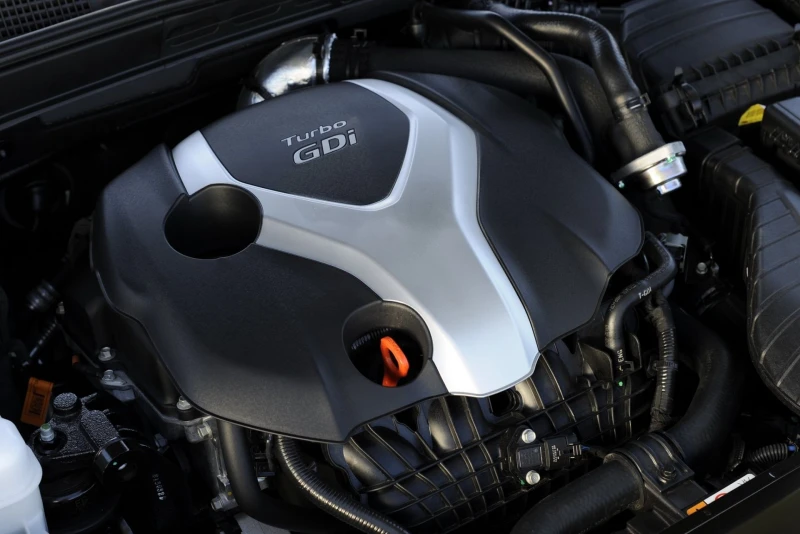
| Gasoline Turbo (Theta II T-GDI) | 2.0 L | 274 hp (US market) | 6AT | FWD |
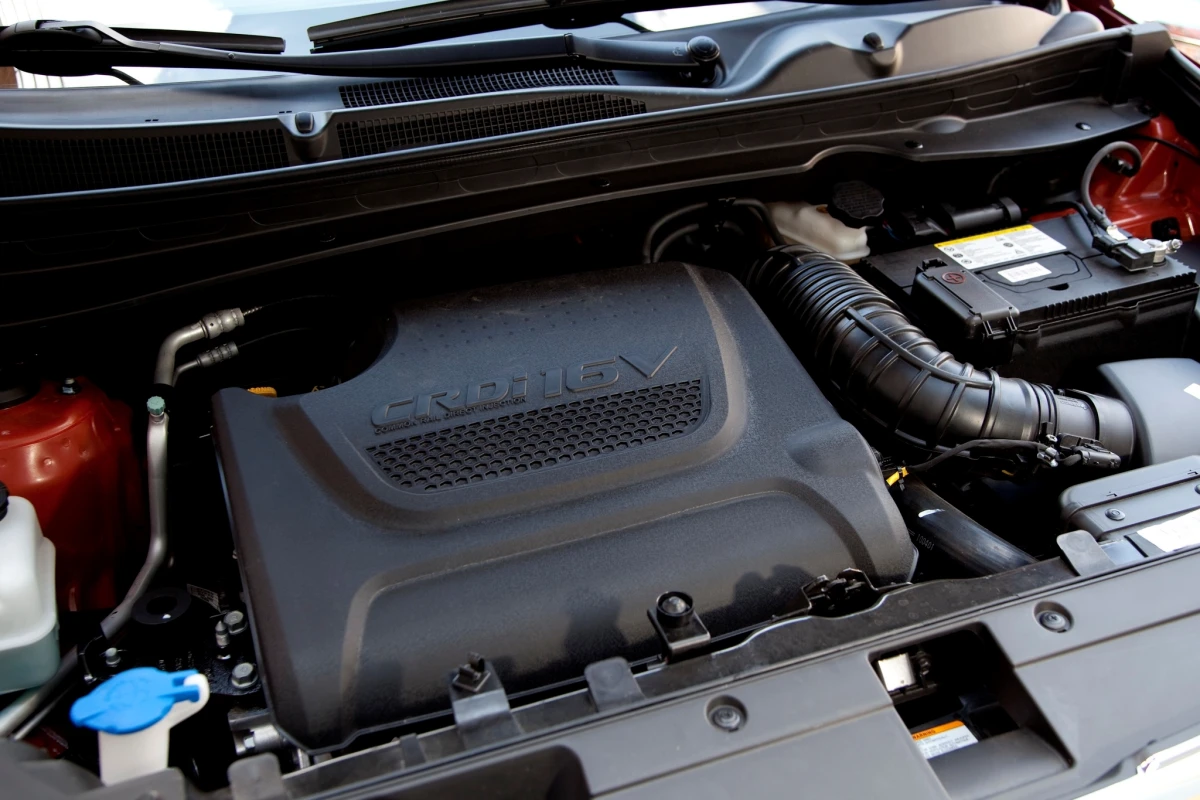
| Diesel (R-series CRDi) | 2.0 L | 136 hp (Europe) | 6MT / 6AT | FWD |
| Hybrid (Theta II + electric motor) | 2.4 L + 30 kW | 209 hp (combined) | 6AT | FWD |
The table covers the main powertrains offered in the US and Europe. In the United States, the 2.0 MPI and 2.4 GDI gasoline engines with automatic transmission dominate the used market. The 2.0 T-GDI turbo was available new and remains sought-after by enthusiasts. Hybrids are present but less common, while diesels are virtually nonexistent.
Dimensions and Weight
The Hyundai Sonata VI (YF) maintained consistent exterior dimensions throughout its run, with minor variations by trim and market. It is a true midsize sedan with a spacious cabin. Length is approximately 190 inches, width 72.2 inches, height 57.9 inches, and wheelbase 110 inches. Curb weight ranges from about 3,200 to 3,420 lbs depending on engine and transmission, with gross vehicle weight up to around 4,475 lbs. These figures represent typical front-wheel-drive models with six-speed transmissions. US-market specs align closely with global figures.
| Specification | Value | Notes (Transmission & Drivetrain) |
| Length | 190 in | Main versions (6MT/6AT, FWD) |
| Width | 72.2 in | Main versions (6MT/6AT, FWD) |
| Height | 57.9 in | Main versions (6MT/6AT, FWD) |
| Wheelbase | 110 in | Main versions (6MT/6AT, FWD) |
| Curb Weight | 3,200–3,420 lbs | Main versions (6MT/6AT, FWD) |
| Gross Vehicle Weight | 4,365–4,475 lbs | Main versions (6MT/6AT, FWD) |
These specs are typical for the gasoline models most commonly found on the US used market. Hybrids add roughly 220–330 lbs due to the battery pack, though they remain relatively uncommon.
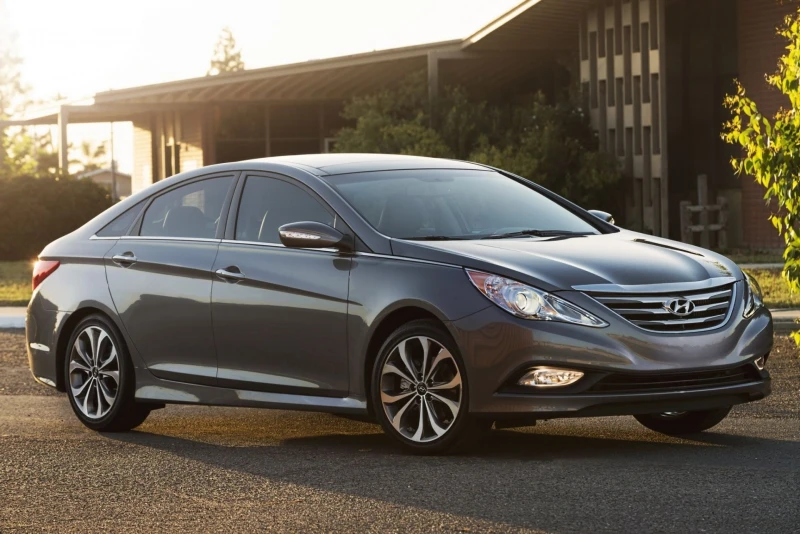
Yearly Updates and 2012 Facelift
The Hyundai Sonata VI (YF) received several updates between 2009 and 2014. It debuted in Korea in 2009, with US sales starting in 2010. Early 2009–2011 models featured the 2.0 MPI (165 hp) and 2.4 MPI (around 175–178 hp) engines. Later, the 2.4 GDI with direct injection improved efficiency and power. The six-speed transmissions saw calibration tweaks in 2011 for better fuel economy. The 2012 facelift (for the 2013 model year) brought styling refinements, increased power on the 2.4 GDI to 192–200 hp depending on tuning, better noise insulation, and suspension tweaks. The hybrid, introduced in 2011, received battery and efficiency improvements by 2013. On the US used market, post-facelift 2012–2014 models are preferred for their refined Theta II engines (with early oil consumption concerns largely addressed).
Ownership Notes and Technical Highlights
On the US market, the Theta II gasoline engines in the 2009–2014 Sonata are generally durable with proper maintenance. The 2.0 MPI and 2.4 GDI units perform well in daily driving, though pre-2012 versions may experience higher oil consumption due to piston ring wear—this was largely resolved in facelifted models. The six-speed Shiftronic automatic is reliable but benefits from fluid changes every 40,000–50,000 miles; the manual is less common but straightforward to maintain. Fuel economy for the 2.0 MPI averages around 23–28 mpg combined, while the 2.4 GDI typically achieves 24–30 mpg (EPA figures vary by year and trim). These sedans run happily on regular unleaded (87 octane) fuel. Parts availability is excellent thanks to the model's popularity—OEM components are reasonably priced, and aftermarket options abound. Repair shops are widespread, though turbo or hybrid variants may carry slightly higher parts costs. Always check for any outstanding recalls, particularly engine-related campaigns.
Summary and Best Pick for the US Market
Technically, the Hyundai Sonata VI (YF) delivers well-rounded specs that still hold up on today's used market. The 2.4 GDI with six-speed automatic and front-wheel drive stands out as a strong all-around choice—offering lively performance, solid fuel economy (around 24–30 mpg combined), and affordable upkeep. Approximate market prices for clean examples today range from $4,000 to $8,000 depending on mileage and condition. The 2.0 MPI versions are even more budget-friendly and efficient for commuting. Turbo and hybrid models appeal to specific buyers but trade some of the mainstream appeal and parts simplicity. Overall, post-facelift models (2012+) minimize potential issues and remain a smart, value-packed pick for reliable daily transportation.