


This generation of the compact crossover offered a wide range of powertrains tailored for North American markets, including the United States. The engine lineup for the Kia Sportage 2011–2016 balanced gasoline options with strong emphasis on efficiency and everyday drivability. Power outputs varied by engine family and trim, with a focus on reliable performance across city and highway driving. This article covers the main specs including engines, transmissions, dimensions, facelift changes, and real-world ownership considerations. Exterior styling, interior features, trim levels, and common issues are discussed in other articles in this series.
Engines and Transmissions
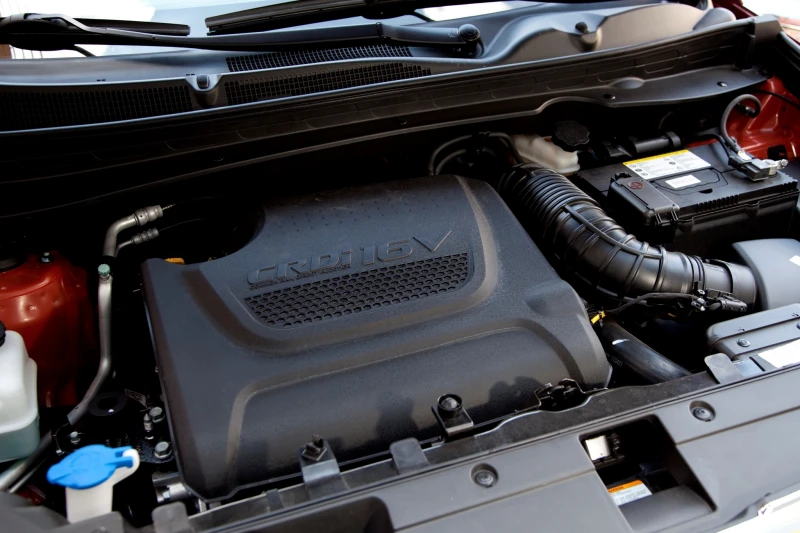
The third-generation Kia Sportage came with gasoline engines only in the US market—no diesel options were offered. Transmissions included 5- or 6-speed manuals (early models) and a 6-speed automatic. Drive configurations were front-wheel drive (FWD) or all-wheel drive (AWD) with on-demand rear axle engagement. Below is a table of the main versions available in the United States during 2011–2016.
| Engine Type | Displacement, L | Power, hp | Transmission Type | Drivetrain |
| Gasoline (Theta II G4KD MPI) | 2.0 | ~164-176 (varies by trim) | 5/6-speed Manual or 6-speed Auto | FWD/AWD |
| Gasoline (Nu G4NA MPI, post-facelift) | 2.0 | ~164-176 | 6-speed Manual or 6-speed Auto | FWD/AWD |
| Gasoline (Theta II G4KE/G4KJ GDI) | 2.4 | 176-182 | 6-speed Auto | FWD/AWD |
| Gasoline Turbo (Theta II G4KH T-GDi) | 2.0 | 260 | 6-speed Auto | FWD/AWD (SX trim, available in US) |
No hybrid versions existed in this generation. All engines met U.S. federal emissions standards (ULEV/SULEV in later years) with emphasis on durability for daily commuting.
Dimensions and Weight
The Kia Sportage III offered compact dimensions ideal for urban driving and easy parking. The five-door crossover used a unibody construction. Specs varied slightly by trim (e.g., with or without roof rails), but the averaged figures for most US models are shown below. Curb weight depended on engine and drivetrain: lighter FWD versions, heavier AWD models. Payload capacity was typically around 1,000–1,200 lbs.
| Parameter | Value | Notes |
| Length, in | 174.8–175.2 | Across most trims |
| Width, in | 73.0 | Without mirrors |
| Height, in | 64.4 | Most configurations |
| Wheelbase, in | 103.9 | Standard |
| Curb Weight, lbs | 3,150–3,400 | FWD Auto |
| Curb Weight, lbs | 3,300–3,600 | AWD Auto |
| Gross Vehicle Weight, lbs | 4,300–4,700 | Approximate range |
Ground clearance was approximately 6.8 inches, suitable for light snow and urban obstacles in most US regions (suspension tuned more for on-road comfort than severe off-road use).
Yearly Updates and 2014 Facelift
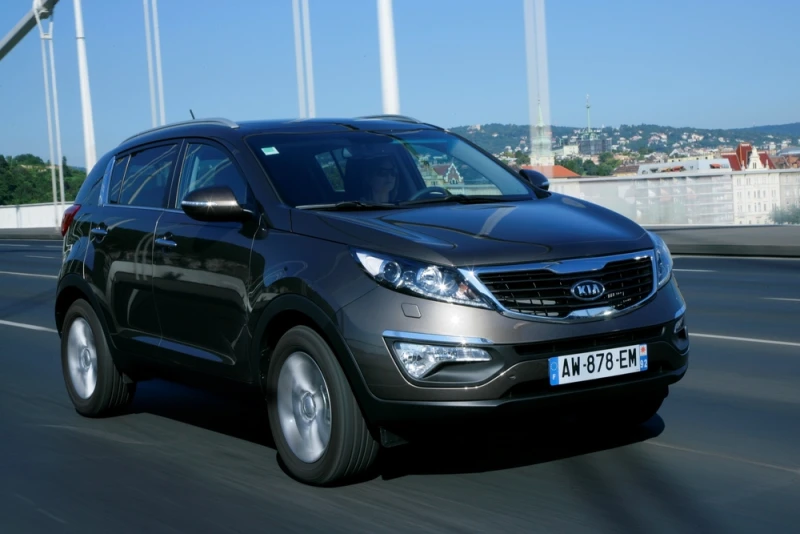
Changes during the model run included incremental improvements. From 2011, base models featured the 2.0L and 2.4L gasoline engines. In 2012–2013, refinements added better sound insulation and updated infotainment options. The 2014 facelift brought refreshed front fascia, headlights, grille, taillights, and interior updates (new gauge cluster and materials). Technically, the 2.0L MPI received efficiency tweaks, and the 6-speed automatic was recalibrated for smoother shifts and better fuel economy.
On the US used market, post-facelift models (2014–2016) are more common and often preferred for their updated styling and minor refinements.
Ownership Notes and Technical Highlights
When owning a 2011–2016 Kia Sportage in the United States, reliability of the major components stands out. The 2.4L GDI and 2.0L turbo engines can deliver strong performance but require regular maintenance; some early Theta II engines had oil consumption or knock-sensor concerns (check service history). The 2.0L MPI versions tend to be the most trouble-free for daily driving.
Approximate real-world fuel economy (EPA estimates and owner reports): 2.0L FWD ~22–25 mpg combined (21 city / 28–30 hwy); 2.4L AWD ~21–24 mpg combined; 2.0T SX ~20–23 mpg. Figures vary with driving style, AWD usage, and maintenance.
Transmissions: the 6-speed automatic is generally durable but benefits from fluid changes every 40,000–60,000 miles to avoid harsh shifts. AWD system performs well in rain/snow but can overheat during prolonged heavy towing or off-road use. Parts availability is excellent—OEM and aftermarket options are widely accessible (filters from $15–$30, suspension components $200–$600). Overall maintainability is good: MacPherson strut front and multi-link rear suspension is straightforward, though sway bar links may need replacement every 40,000–60,000 miles. Inspect underbody for rust in salt-belt states when buying used.
Summary and Best Pick for the US Market
Technically, the Kia Sportage III remains a well-rounded compact crossover on the used market. A popular sweet spot is the 2.4L GDI with 6-speed automatic and AWD—offering solid performance, reasonable fuel economy (~21–24 mpg combined), affordable maintenance (oil changes ~$50–$100, typical service ~$300–$600), and good resale liquidity (most sell within 2–5 weeks). Approximate used market prices today range from $5,000 to $10,000 depending on mileage, condition, and location (higher for low-mileage 2015–2016 examples). The 2.0L turbo SX trim suits performance seekers but comes with higher fuel and insurance costs. When shopping, prioritize vehicles with under 150,000 miles and documented service history.