


The model produced from 2006 to 2012 combines a durable build with a range of powertrains tailored for North American markets, including the United States. This engine overview of the Toyota RAV4 focuses on regional specifics, where gasoline versions dominated over diesels. Engines in the 2006–2012 Toyota RAV4 vary by fuel type and output, suited to typical U.S. driving conditions. Exterior design, interior, trim levels, and common issues of this generation are covered in other articles in the series.
Engines and Transmissions
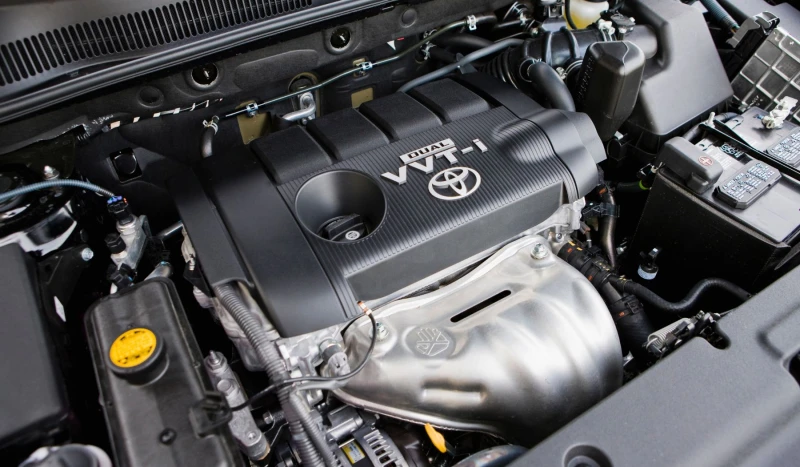
The third-generation Toyota RAV4 came with a variety of engines aimed at North American and European markets. For the U.S. market, gasoline four-cylinder and V6 powertrains were the norm, while powerful V6 versions (3.5L 2GR-FE) were primarily offered in the United States and rarely seen elsewhere. Key engines include four-cylinders ranging from 2.4 to 2.5 liters. Transmissions include 4- or 5-speed automatics for earlier models, with a 6-speed automatic and CVT appearing in later versions for select trims. Drive configurations range from front-wheel drive (2WD) to all-wheel drive (4WD) with dynamic torque distribution.
The table below lists the main versions commonly available in the U.S. market.
| Engine Type | Displacement | Power | Transmission Type | Drivetrain |
| Gasoline | 2.4 L (2AZ-FE) | 166–170 hp | 4- or 5-speed Automatic | FWD / AWD |
| Gasoline | 2.5 L (2AR-FE) | 179 hp | 5- or 6-speed Automatic / CVT (select regions) | FWD / AWD |
| Gasoline | 3.5 L (2GR-FE) V6 | 269–270 hp | 5-speed Automatic | AWD (primarily U.S.) |
Gasoline engines with VVT-i deliver a solid mix of power and efficiency, while the available V6 provides strong performance for highway driving and towing in the U.S. market. In the United States, gasoline models were far more common due to fuel availability and preferences.
Dimensions and Weight
Dimensions of the Toyota RAV4 III vary by version: short-wheelbase models were more common in Europe, while the long-wheelbase variant dominated in North America, including the United States. In the U.S., most examples are the longer-body versions around 181–182 inches long, well-suited for American highways and family use. Curb weight ranges from about 3,400–3,700 lbs depending on engine and drivetrain, with gross vehicle weight typically 4,600–4,850 lbs. Values in the table reflect the most common U.S. specifications.
| Parameter | Value | Notes |
| Length | 173–182 inches | Typical U.S. versions |
| Width | 71.5–73 inches | Typical U.S. versions |
| Height | 66–69 inches | Typical U.S. versions |
| Wheelbase | 101–105 inches | Typical U.S. versions |
| Curb Weight | 3,400–3,700 lbs | Automatic, FWD/AWD |
| Gross Vehicle Weight | 4,600–4,850 lbs | Automatic, FWD/AWD |
These dimensions offer good maneuverability in urban settings across the United States, with ample ground clearance (around 7.5–8.1 inches) for light off-road use and rough roads.
Yearly Updates and Facelift
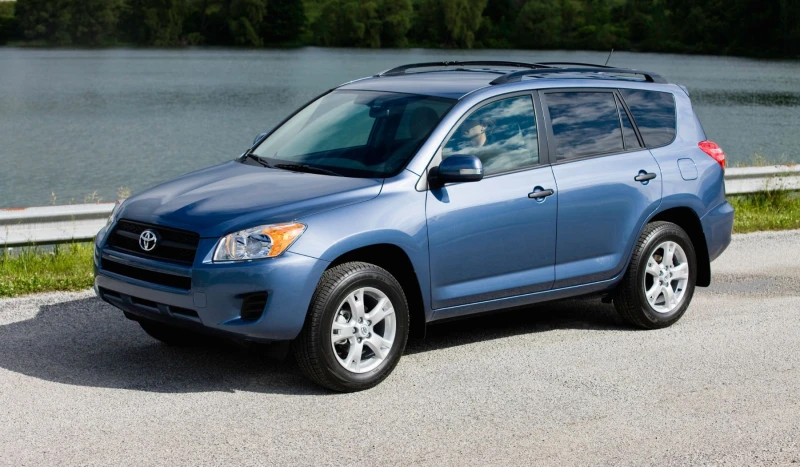
As a completed generation, the Toyota RAV4 III ran from 2006 to 2012 (with some local production extending later). Major changes arrived with the 2009 facelift: refreshed exterior styling (new headlights, grille, bumpers), better noise insulation, and interior upgrades. A new 2.5L gasoline engine (2AR-FE) was introduced for improved efficiency, and the 6-speed automatic became available on higher trims. Minor updates in 2011 focused on electronics and safety features.
In the U.S. market, post-facelift models (2009–2012) gained strong popularity thanks to better refinement, the updated 2.5L engine, and overall reliability. Earlier models (2006–2008) may show higher oil consumption issues in the 2.4L 2AZ-FE, which affects resale value on the used market.
Driving and Technical Notes
When owning a Toyota RAV4 III in the United States, engine reliability is a strong point. Gasoline engines like the 2.4L 2AZ-FE and later 2.5L 2AR-FE offer excellent longevity with proper maintenance, though early 2.4L units (2006–2008) were prone to excessive oil consumption due to piston ring issues—Toyota addressed this via service campaigns. The V6 3.5L is robust but thirstier. No widespread diesel versions existed in the U.S., so focus stays on gasoline powertrains using regular or premium unleaded fuel.
Estimated fuel economy based on U.S. EPA ratings and owner reports: 2.4–2.5L four-cylinders achieve around 20–27 mpg combined, while the V6 typically gets 19–24 mpg depending on driving style and drivetrain. Transmissions are durable—automatics handle high mileage well with regular fluid changes; the 4WD system is low-maintenance but can overheat the coupling during heavy off-road use.
Parts availability in the United States is excellent due to the model's popularity—OEM and aftermarket options are widely stocked, with moderate maintenance costs (oil change ~$50–$100, filters ~$30–$80). Overall repairability is strong: the design supports DIY work, though specialized shops are recommended for advanced diagnostics.
Summary and Best Pick for the U.S. Market
The technical specs of the Toyota RAV4 III highlight its reputation as a dependable compact crossover for the used market. The most well-rounded choice for the United States is often the post-2009 2.5L gasoline (2AR-FE) with automatic transmission and AWD—offering solid fuel economy (around 21–27 mpg combined), good power (179 hp), and capability for American roads and light trails. Approximate used market prices today range from $5,000 to $12,000 depending on condition, mileage, and trim. Maintenance costs are lower than many competitors, and resale value holds strong. That said, the right pick depends on mileage, condition, and needs—a 2.4L FWD suits city driving, while AWD versions excel in varied conditions. Always inspect for oil consumption (early 2.4L) and overall service history when buying.