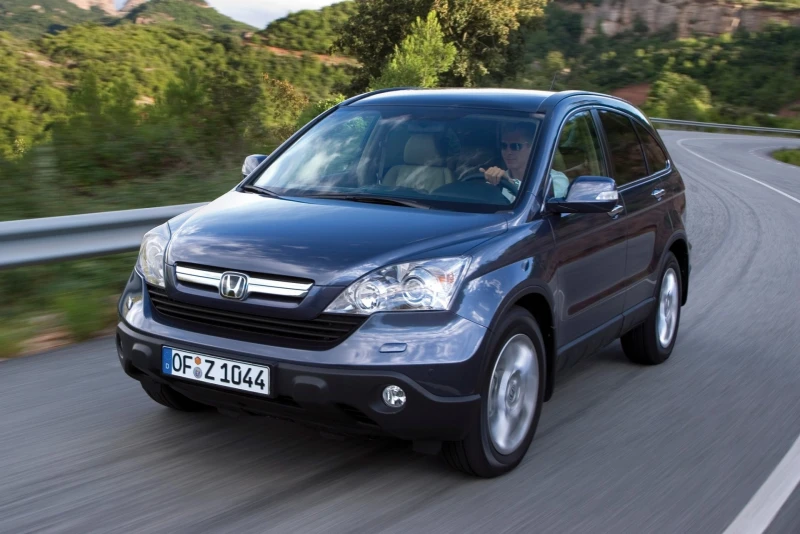
On the US market, the model was offered primarily with gasoline engines in North American specification. Diesel versions were not available through official channels.
A detailed breakdown of design, interior, trim levels, and common issues for this generation is covered in separate articles in the series. This piece focuses solely on technical specifications: powertrains, transmissions, dimensions, and key operating notes for American drivers.
Engines and Transmissions
For the North American market, the third-generation Honda CR-V came exclusively with the 2.4-liter K-series gasoline engine. No 2.0-liter variant or diesel options were offered in the US.
| Fuel Type | Engine Code | Displacement, L | Power, hp | Torque, lb-ft | Transmission | Drivetrain | Availability on US Market |
|---|---|---|---|---|---|---|---|
| Gasoline | K24Z (K24Z1 / K24Z4 / later variants) | 2.4 | 166–180 | 161–162 | 5-speed Automatic | FWD / Real Time 4WD | Primary and only engine option |
After the 2009–2010 facelift (model-year dependent), power output increased slightly to around 180 hp in later years, with minor refinements to the transmission calibration and efficiency.
Dimensions and Weight
Body and curb weight specs remained largely consistent throughout the generation (minor variations depending on trim and drivetrain).
| Parameter | Value | Notes |
|---|---|---|
| Length, in | 177.9–178.0 | average |
| Width, in | 71.6–72.0 | without mirrors |
| Height, in | 66.1–66.5 | with roof rails ~67.0 |
| Wheelbase, in | 103.1 | — |
| Ground Clearance, in | 6.7–6.8 | depending on tires and load |
| Curb Weight, lbs | 3,280–3,600 | FWD ~3,280 lbs, AWD ~3,500–3,600 lbs |
| Gross Vehicle Weight, lbs | 4,450–4,600 | depending on trim |
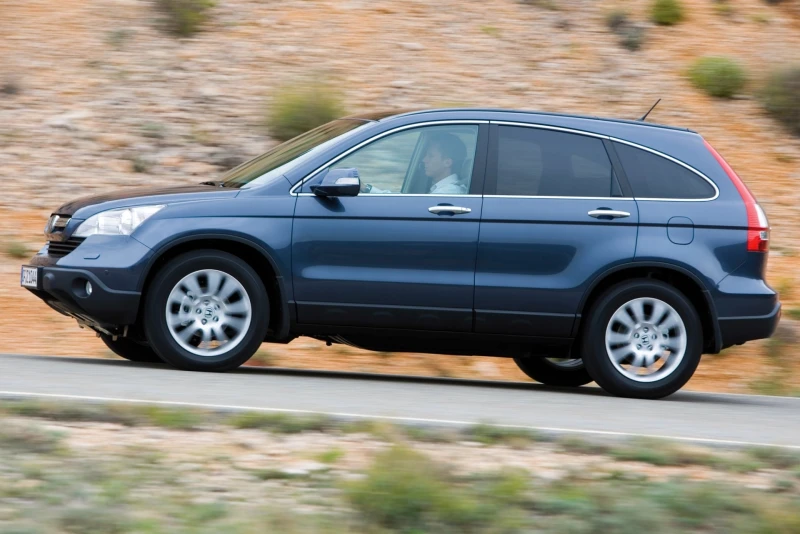
Yearly Updates and Facelift
2007–2009 (pre-facelift): The 2.4L engine produced 166 hp with the 5-speed automatic transmission available in both FWD and Real Time AWD configurations.
2009–2011 facelift: Updated exterior styling (headlights, bumpers, grille), improved sound insulation, and interior material enhancements. Engine output rose to approximately 180 hp in later models, with slight transmission tuning improvements for smoother shifts and better efficiency. No major mechanical overhauls occurred.
Driving Characteristics and Technical Notes
The 2.4L K24Z engine is regarded as one of Honda's most dependable powerplants of its era. With regular oil changes (recommended every 5,000–7,500 miles) and use of quality premium unleaded fuel, engine life commonly exceeds 200,000–250,000 miles. The chain-driven timing system and i-VTEC valvetrain are robust and low-maintenance features.
Some units experience minor oil consumption after 100,000–120,000 miles, and early VTC actuator rattle on cold starts was addressed in later production runs and recall campaigns.
According to real-world US owner reports and sites like Fuelly, typical fuel economy for the 2.4L version is roughly:
- city — 19–22 mpg (winter conditions lower)
- highway — 25–28 mpg
- combined — 22–24 mpg
The 5-speed automatic requires fluid changes (Honda ATF DW-1 or equivalent) every 30,000–40,000 miles for longevity. At higher mileages (150,000+ miles), some units may develop shift flare or need valve body attention. The Real Time 4WD system is reliable under normal use but can overheat during prolonged heavy towing or off-road-style slipping.
Parts availability is excellent in the US, with both OEM and high-quality aftermarket options at reasonable prices. Repairability remains strong, and most components are well-understood by independent shops.
Summary and Best Choice for the US Market
The most balanced and widely available combination on the American used market is the 2.4L engine paired with the 5-speed automatic and Real Time AWD — it delivers solid performance, reasonable fuel economy, and low long-term ownership costs.
Approximate market price range for well-maintained examples in 2025–2026: $5,000–$10,000 depending on mileage, condition, and location (Orientative market price for the United States).
Later facelifted models (2010–2011) are often preferred for their updated styling, slightly better power, and refined transmission behavior.
When shopping for a used example, prioritize 2009–2011 models with documented service history and mileage under 150,000–180,000 miles for the best reliability and value.