


This generation rode on the J5 platform, striking a nice balance between responsive handling and fuel efficiency. In the US market, most examples are domestic builds or imports from South Korea, with gasoline engines dominating the scene. Diesel variants were virtually nonexistent here. The article covers engines, transmissions, dimensions, facelifts, and real-world operating notes tailored to American driving conditions. Styling, interior, trim levels, and common issues are covered in separate articles in this series.
Engines and Transmissions
The Hyundai Elantra VI (AD) offered a range of gasoline engines tailored to different preferences. In the US, only gasoline powertrains were available—no diesels reached American showrooms. Displacements ran from 1.4 to 2.0 liters, with outputs between roughly 128 and 201 hp. Transmission choices included manuals, conventional automatics, and later a CVT-style IVT. All-wheel drive was never offered—strictly front-wheel drive (FWD). Below is a table of the main powertrain combinations commonly found in the US market.
| Engine Type | Displacement (L) | Power (hp) | Transmission | Drivetrain |
| Gasoline (Gamma MPI) | 1.6 | 128–130 | 6MT / 6AT | FWD |
| Gasoline (Nu MPI) | 2.0 | 147–150 | 6MT / 6AT / IVT (after 2018) | FWD |
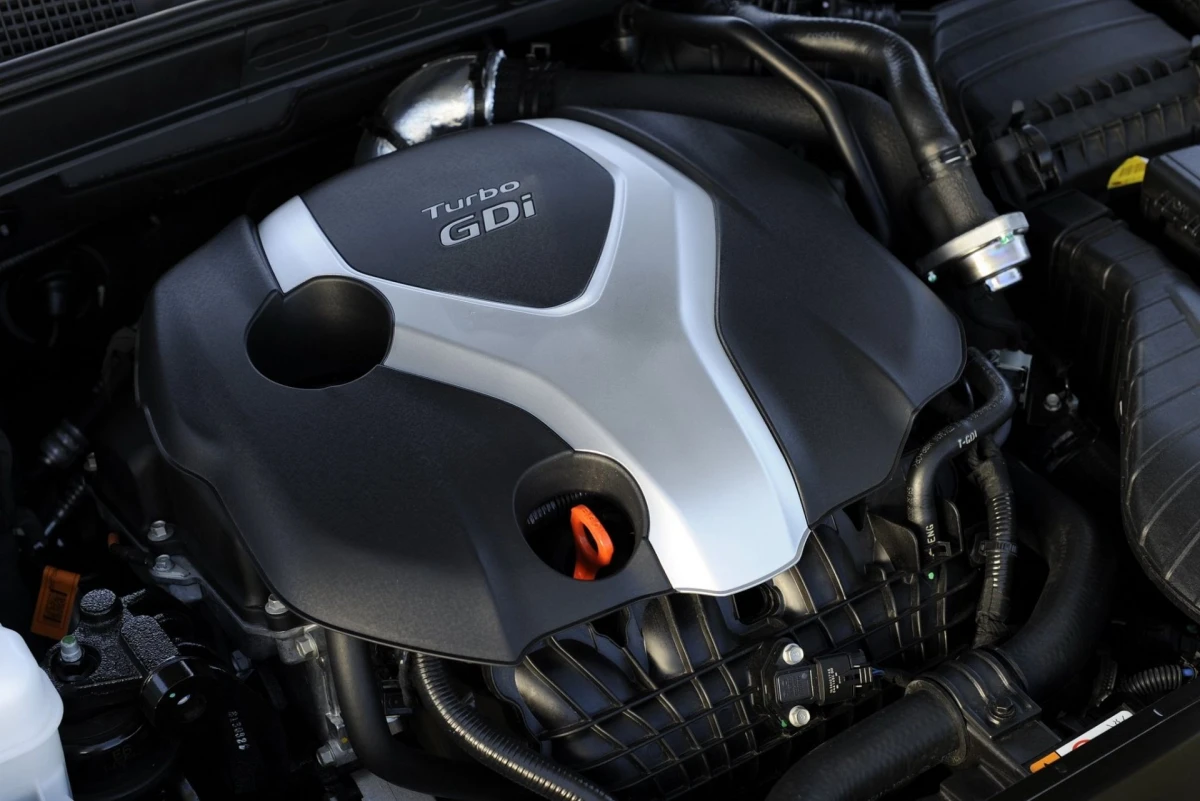
| Gasoline Turbo (Kappa T-GDi) | 1.4 | 128 | 7DCT | FWD |
| Gasoline Turbo (Gamma T-GDi) | 1.6 | 201 | 6MT / 7DCT | FWD |
Multi-point injection (MPI) and direct-injection (GDi) gasoline engines were the backbone of the lineup in the States. The 1.6-liter turbo appeared in limited numbers on certain trims, while the 1.6 T-GDi powered the Sport-oriented models with a sport-tuned suspension. After the 2018 facelift, many 2.0-liter versions switched to the IVT (Intelligent Variable Transmission) for smoother shifts and better efficiency. The focus remained squarely on fuel economy and everyday drivability: the naturally aspirated engines delivered a solid mix of power and frugality.
Dimensions and Weight
Exterior dimensions of the Hyundai Elantra VI stayed largely consistent throughout its run, with minor tweaks depending on trim (the Sport version sat slightly lower thanks to its suspension). As a compact sedan, it offered easy city maneuvering and decent interior space. Curb weight varied by engine and transmission: lighter manual versions hovered around 2,700 lbs, while heavier automatic or turbo models approached 3,100 lbs. Gross vehicle weight typically ranged from 3,900–4,000 lbs. Here are the most common specs seen in the US.
| Dimension | Value (in / lbs) | Notes / Drivetrain |
| Length | 179.9–181.9 | All versions / FWD |
| Width | 70.9 | All versions / FWD |
| Height | 56.5–56.7 | All versions / FWD |
| Wheelbase | 106.3 | All versions / FWD |
| Curb Weight | 2,680–3,075 | MT/AT/IVT/DCT / FWD |
| Gross Vehicle Weight | 3,880–3,970 | MT/AT/IVT/DCT / FWD |
These figures represent typical US-market configurations, especially the popular 2.0 Nu MPI paired with the 6AT or later IVT. Differences across regions were minimal, though some loaded examples from certain states carried slightly more weight due to additional equipment.
Yearly Changes & 2019 Facelift
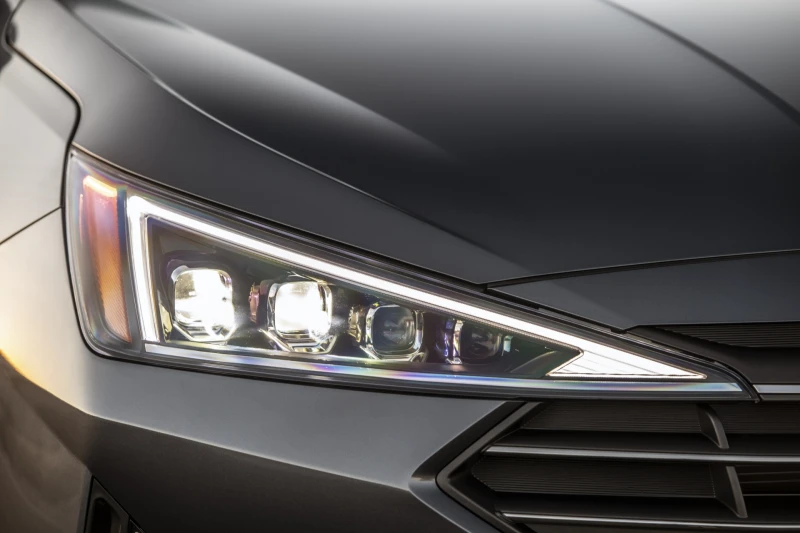
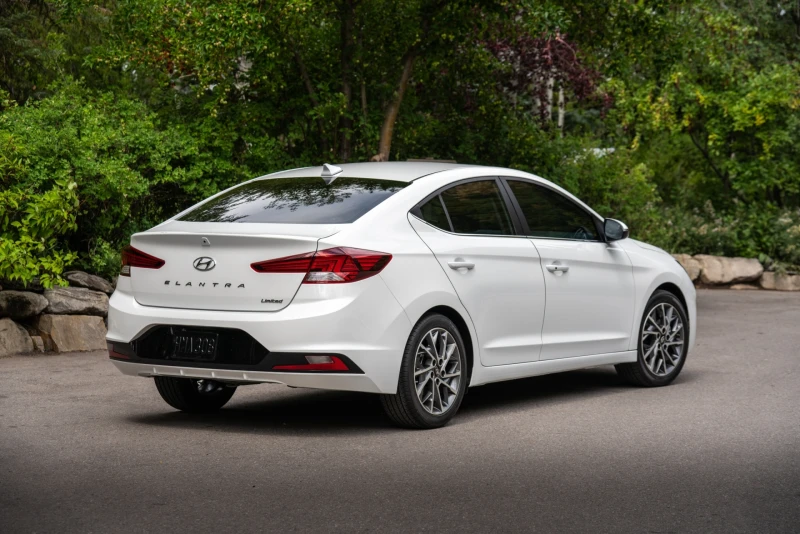
The Hyundai Elantra VI had a well-defined lifecycle. It debuted for the 2016 model year with the 1.6- and 2.0-liter MPI engines. The Sport trim arrived in 2017, featuring the 1.6 T-GDi turbo and a firmer chassis. The major mid-cycle refresh came for 2019: sharper triangular headlights replaced the older design, the grille and taillights were updated, and the cabin gained revised controls and better materials. On the tech side, the IVT replaced the conventional 6AT on many 2.0-liter models, boosting efficiency by a few percentage points. New active-safety features included forward collision avoidance and lane-keeping assist. The 1.4 T-GDi remained a niche offering in select trims.
In the US used market, post-facelift (2019–2020) models frequently came with the smoother IVT, which helped fuel economy and resale appeal. Earlier cars (2016–2018) with the 6AT remain popular for their proven simplicity. The addition of the 1.6 T-GDi Sport broadened appeal for enthusiasts, while safety upgrades made later examples more family-friendly.
Ownership Notes & Technical Highlights
On the US market, the Hyundai Elantra VI has proven quite dependable when properly maintained. The naturally aspirated 2.0 Nu MPI and 1.6 Gamma MPI engines often reach 200,000–300,000 miles with regular oil changes and basic care. The turbocharged 1.4 and 1.6 T-GDi units demand premium unleaded fuel and timely maintenance to keep the turbo healthy. There was no diesel option in the States, so owners avoided diesel-related concerns entirely.
The 2.0 Nu MPI with either the 6AT or IVT remains the sweet spot for most drivers—decent power, straightforward maintenance, and strong resale value. Approximate real-world fuel economy: 2.0L models average around 28–32 mpg combined, with highway figures reaching 37–40 mpg on the IVT; the 1.6 MPI sits in the 29–34 mpg range; turbo variants can hit low-30s mpg on the highway when driven gently. The 6AT is durable but benefits from fluid changes every 40,000 miles or so; the 7-speed DCT can feel hesitant in heavy traffic; the IVT offers the smoothest and most efficient ride. FWD provides predictable handling, though good winter tires are recommended in snowy regions.
Parts availability is excellent thanks to widespread dealer networks and aftermarket support. Costs remain reasonable: filters and basic items are inexpensive, while suspension components or electronics stay affordable compared with many rivals. General repairability is good—most work can be handled at independent shops, though post-facelift ADAS features usually require dealer-level diagnostics.
Bottom Line — Best Pick for the US Market
Overall, the Hyundai Elantra VI (AD) stands out as a well-rounded compact sedan. The 2.0 Nu MPI paired with the 6AT or IVT and FWD offers an excellent balance of fuel efficiency (typically 28–32 mpg combined), reasonable maintenance costs, and strong used-market liquidity. It suits daily commuting, road trips, and light family duties with plenty of power in reserve. If you prioritize maximum efficiency, the later IVT-equipped versions shine; for more engagement, the 1.6 T-GDi Sport delivers genuine fun. This generation adapted very well to American preferences and driving conditions.