


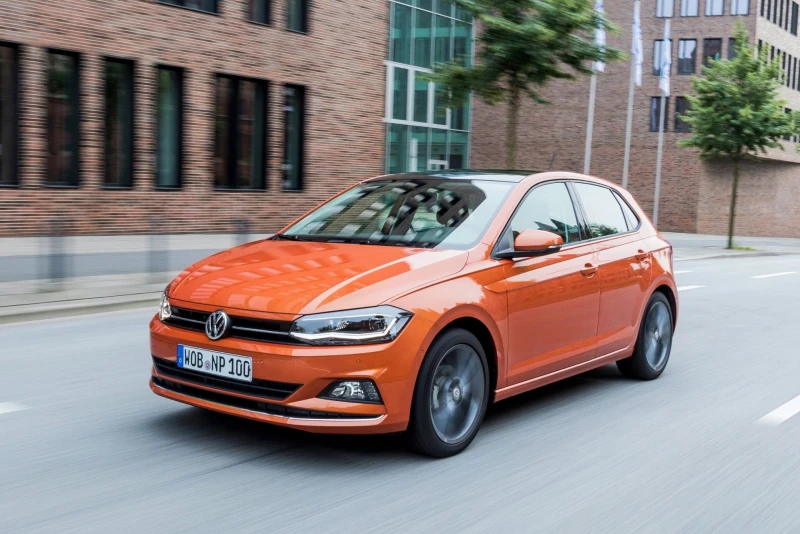
When Volkswagen moved from the 6R/6C generation to the Polo VI, the body became wider, the wheelbase grew by roughly 3.5 inches, and much of the engine lineup shifted toward three-cylinder 1.0-liter units. The basic layout remained conventional, with a transverse front engine, front-wheel drive, and a torsion-beam rear suspension.
For U.S. readers, one point matters from the start: the Polo VI (AW) was not part of Volkswagen of America’s regular new-car lineup. The specifications below therefore describe primarily European-market cars, and individual imported examples can differ by their original country of sale, model year, engine and equipment. That makes the source-market specification especially important when identifying a particular car.
MQB A0 defines the basic layout
The Polo VI was among the early Volkswagen Group models built on the MQB A0 modular architecture, which also underpins related hatchbacks and small crossovers. The engine is mounted transversely up front, and production Polo AW models use front-wheel drive. European-market versions did not offer all-wheel drive, a conventional torque-converter automatic, or a hybrid powertrain.
The front suspension uses MacPherson struts, while the rear uses a torsion beam. The Polo GTI differs from standard versions in spring and damper tuning, ride height, brakes and steering calibration, but the underlying architecture remains the same.
The engine range was broader than the cars most Americans are likely to encounter
At launch in 2017, Volkswagen offered several versions of the 1.0-liter engine, along with diesel, compressed-natural-gas, 1.5 TSI and 2.0-liter GTI powertrains in European and other overseas markets. Because there was no official U.S.-market Polo VI engine lineup, the exact specification of any car encountered in the United States should be matched to its original market rather than to a presumed U.S. trim.
| Engine type | Displacement | Output | Transmission | Drive |
| 1.0 MPI naturally aspirated gasoline | 999 cc | 65 or 75 hp | 5-speed manual | Front-wheel drive |
| 1.0 MPI naturally aspirated gasoline, post-refresh | 999 cc | 80 hp | 5-speed manual | Front-wheel drive |
| 1.0 TSI turbocharged gasoline | 999 cc | 95 hp | 5-speed manual or 7-speed DSG | Front-wheel drive |
| 1.0 TSI turbocharged gasoline | 999 cc | 110, 115 or 116 hp depending on model year | 6-speed manual on earlier versions or 7-speed DSG | Front-wheel drive |
| 1.5 TSI ACT turbocharged gasoline | 1,498 cc | 150 hp | 6-speed manual or 7-speed DSG | Front-wheel drive |
| 1.6 TDI diesel | 1,598 cc | 80 hp | 5-speed manual | Front-wheel drive |
| 1.6 TDI diesel | 1,598 cc | 95 hp | 5-speed manual or 7-speed DSG | Front-wheel drive |
| 1.0 TGI gasoline/CNG | 999 cc | 90 hp | 6-speed manual | Front-wheel drive |
| 2.0 TSI turbocharged gasoline, GTI | 1,984 cc | 200 or 207 hp | 6- or 7-speed DSG; some early-market versions also offered a manual | Front-wheel drive |
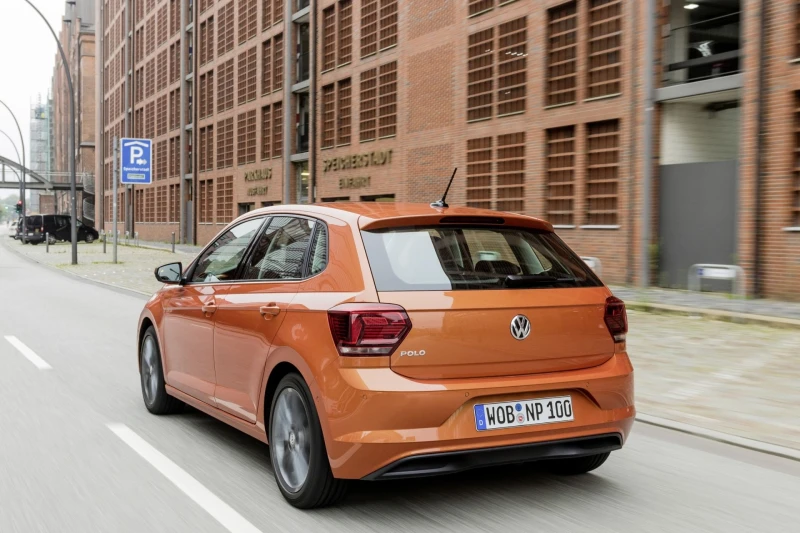
Why the 1.0-liter engine came in several output levels
The naturally aspirated MPI and turbocharged TSI engines share the same nominal displacement but differ substantially in design and driving character. The 1.0 MPI has no turbocharger or direct injection and produces roughly 69–70 lb-ft of torque. It is paired with a 5-speed manual and is best suited to lighter-duty use. Highway passing power is limited, especially with passengers and luggage aboard.
The 1.0 TSI adds turbocharging and direct injection. The 95-hp version produces about 129 lb-ft, while the more powerful versions are around 148 lb-ft. The difference is more noticeable in midrange acceleration than at the top of the rev range. Early 115-hp versions could be paired with a 6-speed manual or DSG, while after the refresh the 110-hp version was commonly paired with the 7-speed dual-clutch transmission. On some later European-market cars, the higher-output 1.0 TSI was rated at 116 hp.
Diesel became a used-market powertrain rather than a current European offering
Both 1.6 TDI versions belong to the EA288 family and produce about 184 lb-ft of torque. The 80-hp version was paired with a manual transmission, while the 95-hp version could also be ordered with DSG. Volkswagen removed the diesel from the mainstream European Polo lineup after the 2021 refresh, so these engines are now relevant mainly to older used cars rather than new-car inventory.
On a used diesel Polo, mileage and service history matter more than the fuel type alone. Particular attention should go to the diesel particulate filter, EGR system, fuel injection system and, depending on the original market and emissions specification, SCR hardware.
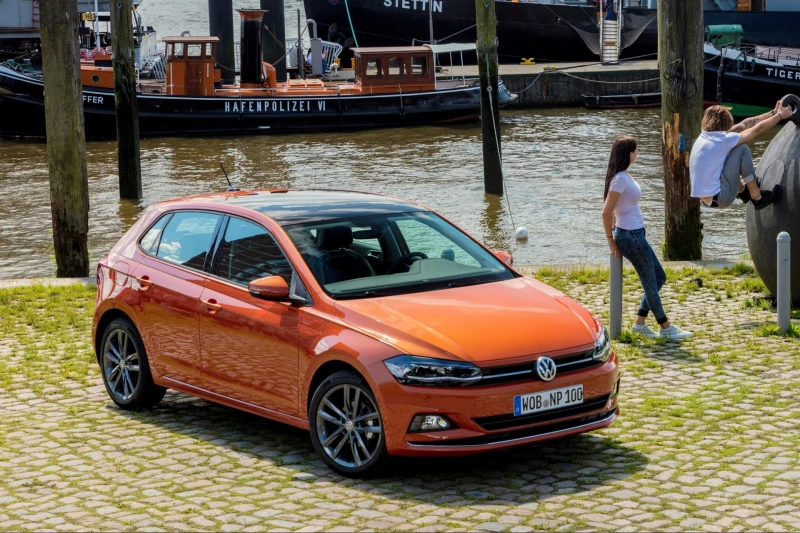
Transmissions: simple manuals and two different DSG use cases
The 5-speed manual was used with the 1.0 MPI, the 95-hp 1.0 TSI and diesel versions. Its gearing prioritizes efficiency more than performance. The 6-speed manual is much less common and was found mainly with early 115-hp 1.0 TSI cars, the 1.5 TSI and certain GTI versions in selected markets.
The 7-speed DSG used with the regular small-displacement engines is from the DQ200 family and uses dry clutches. In the AW generation it represents a later development of this transmission than the earliest DQ200 applications, but the operating principle is the same. Extended low-speed creeping, repeated hill starts and holding the car on the clutch can accelerate clutch wear. During a pre-purchase inspection, smooth takeoff, vibration, shift delays and stored mechatronics faults deserve close attention.
The GTI uses a transmission designed for higher torque and differs from the DSG fitted to the 1.0-liter versions. Running costs for a Polo GTI therefore should not be estimated from a regular 1.0 TSI. Brakes, tires and suspension components can also be more expensive on the performance model.
Dimensions varied slightly within the same platform
Technical catalogs show small differences in overall length, height and wheelbase depending on bumpers, suspension setup, measuring method and market specification. A pre-refresh Polo is commonly listed at about 159.6 inches long, while the refreshed car is around 160.4 inches. Body width without mirrors remained about 68.9 inches.
| Version | Length | Width | Height | Wheelbase | Curb weight | Gross weight | Transmission/drive |
| Polo 2017–2021, regular versions | about 159.6 in | 68.9 in | about 56.9–57.5 in | about 100.4–100.9 in | about 2,425–2,690 lb | about 3,527–3,704 lb | Manual or DSG, front-wheel drive |
| Polo after the 2021 refresh | about 160.4 in | 68.9 in | about 57.1 in | about 100.5 in | about 2,520–2,674 lb | about 3,417–3,682 lb | 5-speed manual or 7-speed DSG, front-wheel drive |
| Polo GTI | about 160.1–160.4 in | 68.9 in | about 56.3–56.6 in | about 100.4 in | about 2,976 lb | about 3,924 lb | DSG, front-wheel drive |
The regular hatchback offers about 12.4 cu ft of cargo space behind the rear seats and up to roughly 39.7 cu ft with them folded. The fuel tank on most gasoline and diesel versions holds about 10.6 U.S. gallons. TGI models package their CNG tanks differently, so usable space and vehicle weight differ from gasoline versions.
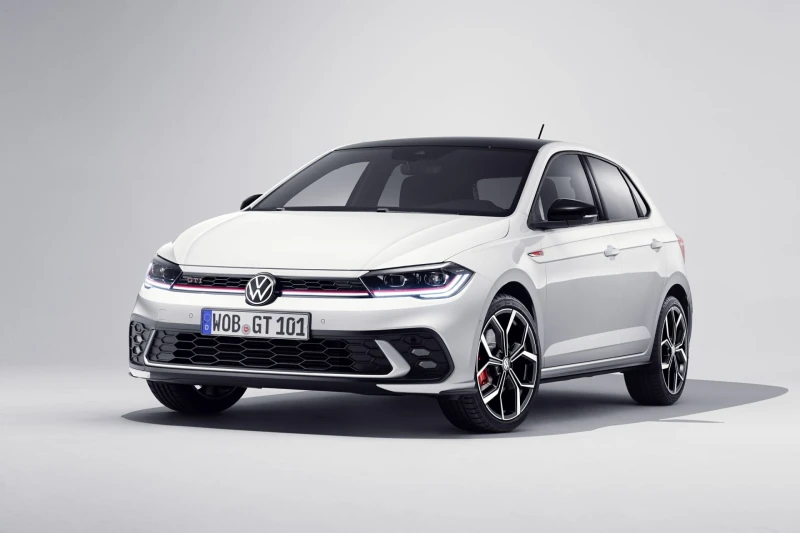
What changed after the refresh besides the styling
The facelift did not move the Polo to a new platform or change its basic suspension layout, but it simplified the powertrain range. At launch, the refreshed model retained the 80-hp 1.0 MPI and 95- and 110-hp 1.0 TSI engines, with the 1.0 TGI remaining available in some regions. Diesels and the 1.5 TSI disappeared from the mainstream range. The GTI kept its 2.0-liter turbocharged engine, with output rising from 200 to 207 hp.
By 2026, some European markets list regular Polo gasoline engines at roughly 80, 95 and 116 hp, with a 5-speed manual on the MPI and selected TSI versions and a 7-speed DSG on turbocharged variants. These are European-market configurations, not official U.S. new-car specifications.
Fuel economy and maintenance from a U.S. perspective
European certification figures commonly quoted for earlier Polo VI versions are around 50 mpg US equivalent for a 1.0 MPI rated at 4.7 L/100 km, about 49–50 mpg US equivalent for 1.0 TSI versions rated at 4.7–4.8 L/100 km, and roughly 60–64 mpg US equivalent for a 95-hp 1.6 TDI rated at 3.7–3.9 L/100 km. These are conversions of European certification figures, not EPA fuel-economy ratings, and they should not be compared directly with U.S. EPA window-sticker values.
EA211 gasoline engines use a timing belt. On a used car, belt age, cooling-system condition, leaks, turbocharger operation and oil-change history matter alongside the formal service schedule. On the 1.0 TSI, a pre-purchase inspection should also check ignition performance, cold-start behavior and any boost-related fault codes.
Diesel versions require extra attention to emissions hardware. Repeated short trips can make normal diesel particulate-filter regeneration more difficult. A car with documented highway use may present a different risk profile from one used almost exclusively for short urban trips.
Routine mechanical parts benefit from the broad use of MQB A0 components across Volkswagen Group products, but U.S. parts availability can still be less straightforward because the Polo VI itself was not a regular U.S.-market model. Body panels, GTI-specific parts, TGI hardware and equipment unique to particular European trims may require specialist sourcing. DSG, direct-injection and diesel-emissions diagnostics also call for appropriate Volkswagen-capable equipment.
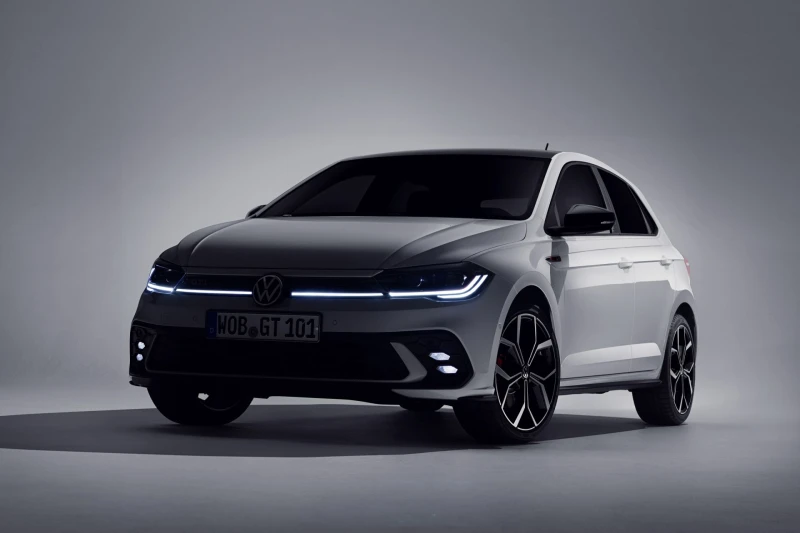
Which configurations make the most sense to understand in the U.S.
For a U.S. enthusiast evaluating an overseas-spec Polo VI, the 1.0 TSI is one of the most representative mainstream powertrains. A manual transmission reduces mechanical complexity, while DSG is more convenient in heavy traffic but deserves a careful inspection before purchase. The naturally aspirated 1.0 MPI is simpler but offers noticeably less performance.
The 1.6 TDI is better suited to drivers who regularly cover longer distances, where its low fuel consumption is easier to exploit. In short-trip use, potential DPF, EGR and other emissions-system costs become more relevant. Rarer 1.5 TSI, TGI and GTI versions should be assessed individually, especially when parts sourcing and specialist service are considerations.
Overall, the Volkswagen Polo VI AW is technically diverse: its early European powertrain range was broad, while the post-refresh lineup concentrated more heavily on small gasoline engines. For a U.S. reader, the key is not to treat the Polo as if it had a single American specification, but to identify the original market, engine, transmission, model year and service history of the individual car. The Polo VI’s design, interior and trim levels are covered in other articles in this series.