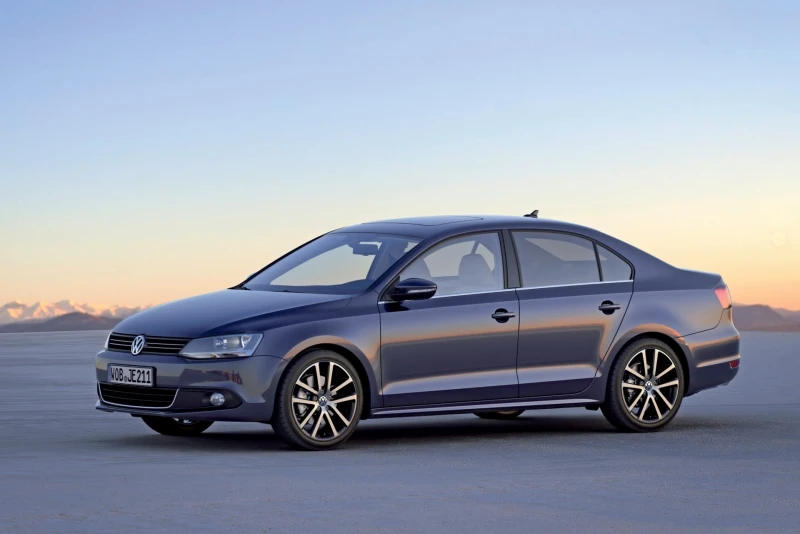
On the U.S. used-car market, the sixth-generation Volkswagen Jetta covers a surprisingly broad range of mechanical configurations. Cars sold from the 2011 through 2018 model years can have naturally aspirated four- or five-cylinder engines, turbocharged gasoline engines, a TDI diesel, the performance-oriented GLI powertrain, or the short-lived Jetta Hybrid system. Transmissions and rear-suspension layouts also changed during the generation.
For that reason, Volkswagen Jetta VI specifications need to be read together with the model year, engine code, and trim. A 2011 Jetta with the 2.5-liter five-cylinder is mechanically very different from a 2017 car with the 1.4-liter turbo, even though both belong to the same generation. The 2.0 TDI also changed output during the production run, while diesel sales ended before the generation itself was replaced. A VIN and engine code remain the most reliable way to identify a specific car.
This guide focuses on powertrains, transmissions, dimensions, weight, and fuel economy for U.S.-market cars. Design, interior equipment, and trim-level differences are covered separately in the Jetta VI series.
Which Jetta VI configurations were sold in the United States
The U.S. lineup opened with two naturally aspirated gasoline engines: a 2.0-liter four-cylinder rated at 115 hp and a 2.5-liter five-cylinder rated at 170 hp. The 2.0 served as the entry-level engine, while the 2.5 offered substantially more power and torque. Both could be paired with a conventional automatic rather than a DSG dual-clutch transmission.
The lineup later shifted toward turbocharged gasoline engines. For the 2014 model year, the 170-hp 1.8 TSI replaced the 2.5-liter engine in much of the range. The 150-hp 1.4 TSI arrived later and became the high-volume engine for the final years of this generation. The performance-oriented GLI used a 2.0 TSI, initially rated at about 200 hp and later at 210 hp.
Volkswagen also sold the 2.0 TDI in the United States. Earlier sixth-generation TDI sedans were rated at 140 hp, while the updated 2015 version produced 150 hp. New U.S. diesel sales stopped after the 2015 model year in the context of Volkswagen's diesel-emissions crisis, so a 2016–2018 Jetta on the U.S. market should not be described as a new TDI offering. The Jetta Hybrid, sold for a limited period during this generation, combined a turbocharged 1.4-liter gasoline engine with an electric motor and a seven-speed DSG.
| Engine | Displacement | Output | Transmission | Drive |
| 2.0 gasoline, naturally aspirated | 2.0 L | 115 hp | 5-speed manual or 6-speed automatic | Front-wheel drive |
| 2.5 gasoline, five-cylinder | 2.5 L | 170 hp | 5-speed manual or 6-speed automatic | Front-wheel drive |
| 1.8 TSI gasoline | 1.8 L | 170 hp | 5-speed manual or 6-speed automatic, depending on model year and trim | Front-wheel drive |
| 1.4 TSI gasoline, later U.S. models | 1.4 L | 150 hp | 5-speed manual or 6-speed automatic | Front-wheel drive |
| 2.0 TSI gasoline, GLI | 2.0 L | 200–210 hp, depending on model year | 6-speed manual or 6-speed DSG | Front-wheel drive |
| 2.0 TDI diesel | 2.0 L | 140 hp on earlier cars; 150 hp for 2015 | 6-speed manual or 6-speed DSG | Front-wheel drive |
| Jetta Hybrid, 1.4 TSI plus electric motor | 1.4 L gasoline engine | 170 hp combined | 7-speed DSG | Front-wheel drive |
The table covers the principal powertrains sold in the United States during the sixth-generation Jetta's run. Availability varied by model year and trim, so not every engine was offered throughout 2011–2018. The Hybrid is especially important to identify correctly because its high-voltage battery, power electronics, and seven-speed DSG require a different diagnostic approach from a conventional gasoline Jetta.
The transmission can matter as much as the engine
U.S.-market Jetta VI sedans used five- and six-speed manual transmissions, conventional six-speed automatics, and two DSG applications. The naturally aspirated 2.0 and 2.5 engines, as well as the mainstream 1.8 TSI and later 1.4 TSI, were commonly paired with a conventional torque-converter automatic rather than a dual-clutch gearbox. That distinction matters when comparing maintenance history and driving behavior.
Two DSG applications
The six-speed DSG with wet clutches was used with the higher-torque 2.0 TDI and 2.0 TSI GLI. The Jetta Hybrid used a seven-speed dual-clutch transmission with a different design and operating strategy because the electric motor is integrated into the hybrid drivetrain. These transmissions should not be treated as interchangeable simply because both carry the DSG name.
A DSG should not be judged only by whether it shifts smoothly during a short test drive. A pre-purchase inspection can include a scan for transmission faults, review of adaptation data, and confirmation of relevant service history. On six-speed wet-clutch DSG cars, documented fluid service is particularly important. The Hybrid deserves separate attention because transmission behavior, hybrid-system faults, and battery condition can overlap in the symptoms a driver notices.
Conventional six-speed automatics fitted to many 2.0, 2.5, 1.8 TSI, and 1.4 TSI cars are not DSG units. Used-car listings sometimes describe both simply as an “automatic,” so the VIN, shifter layout, engine, and build data should be checked before ordering parts or planning service.
Dimensions changed little, but the chassis evolved
The Jetta VI uses a transverse-engine, front-wheel-drive layout. All regular U.S. versions of this generation are front-wheel drive. One important U.S.-market distinction is the rear suspension: early mainstream Jetta sedans used a torsion-beam rear axle, while the GLI retained a more sophisticated independent rear setup. Volkswagen later expanded independent multilink rear suspension across the regular Jetta range, so suspension parts should be matched to the exact model year and configuration.
Wheelbase is approximately 104.4 inches. Pre-facelift cars are about 182.2 inches long, while the 2015 update increased overall length to roughly 183.3 inches through revised exterior panels and bumpers. Width is about 70.0 inches, and height is roughly 57 inches depending on specification. Small differences between reference sources can result from trim, tires, ride height, and measurement conventions.
| Version | Length | Width | Height | Wheelbase | Approx. curb weight | Gross vehicle weight | Transmission and drive |
| 2011–2014 mainstream gasoline models | About 182.2 in | About 70.0 in | About 57 in | 104.4 in | Roughly 2,900–3,100 lb, depending on engine and equipment | Varies by configuration; check the certification label | Manual or 6-speed automatic, front-wheel drive |
| 2011–2015 TDI | About 182.2–183.3 in, depending on model year | About 70.0 in | About 57 in | 104.4 in | Generally just over 3,100 lb | Varies by configuration; check the certification label | 6-speed manual or 6-speed DSG, front-wheel drive |
| GLI | About 182.2–183.3 in, depending on model year | About 70.0 in | About 57 in | 104.4 in | Typically around the low-3,000-lb range | Varies by configuration; check the certification label | 6-speed manual or 6-speed DSG, front-wheel drive |
| 2015–2018 mainstream gasoline models | About 183.3 in | About 70.0 in | About 57 in | 104.4 in | Roughly 2,900–3,100 lb, depending on configuration | Varies by configuration; check the certification label | Manual or 6-speed automatic, front-wheel drive |
| Jetta Hybrid | About 182–183 in, depending on model year | About 70.0 in | About 57 in | 104.4 in | Heavier than comparable gasoline models because of the hybrid system | Varies by configuration; check the certification label | 7-speed DSG, front-wheel drive |
Curb weight depends on more than the engine. Transmission, trim level, wheel and tire package, sunroof, power equipment, and the hybrid battery can all change the final figure. The certification label on the specific car is therefore more useful than a generic catalog number when payload or gross-weight information matters.
What changed during the generation
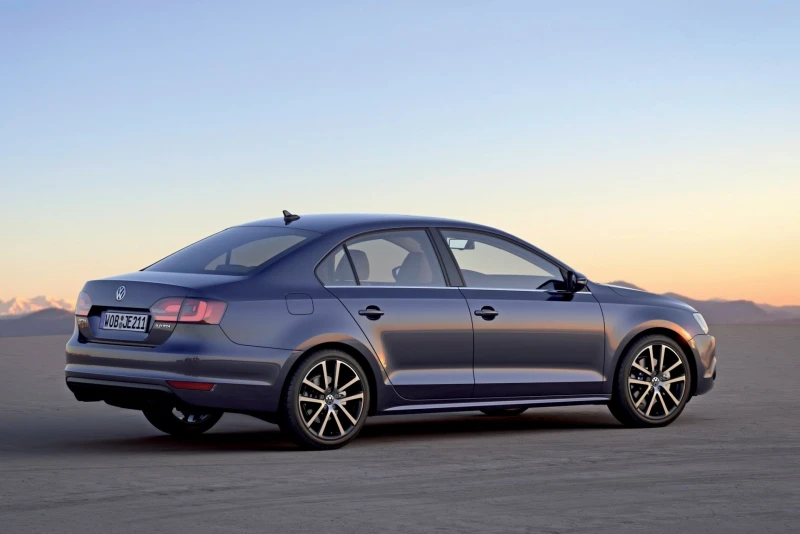
The 2015 model-year refresh brought styling and aerodynamic revisions, but the more important technical story is the gradual turnover in the U.S. engine lineup. The 2.5-liter five-cylinder gave way to the turbocharged 1.8 TSI in much of the range, and the later 1.4 TSI became the mainstream efficiency-oriented gasoline engine. The GLI's 2.0 TSI output also increased from about 200 hp to 210 hp during the generation.
The diesel changed as well. Earlier 2.0 TDI models produced 140 hp, while the 2015 U.S. version was rated at 150 hp. Diesel availability did not continue through the final model years, however. Buyers considering a used TDI should verify the car's emissions-system history and any applicable Volkswagen emissions modification or warranty documentation for that specific VIN rather than assuming all TDI sedans have identical hardware or coverage.
EPA fuel economy and real-world use
EPA ratings vary by model year, transmission, and powertrain, so a single mpg figure does not represent every Jetta VI. The naturally aspirated 2.0 and 2.5 gasoline engines generally sit in the lower part of the range, with city economy commonly in the low-to-mid 20s mpg and highway figures around the low 30s mpg. Exact ratings should be checked for the specific model year and transmission.
The 1.8 TSI improved highway efficiency while maintaining 170 hp, with many configurations rated in the mid-30s mpg on the highway. The later 1.4 TSI was the most fuel-efficient conventional gasoline engine in the U.S. lineup, with EPA highway ratings reaching roughly the upper-30s to around 40 mpg depending on configuration. Real-world consumption can vary substantially with speed, temperature, tires, traffic, and maintenance condition.
The 2.0 TDI typically delivered the strongest highway fuel economy among non-hybrid versions, with EPA highway ratings in roughly the low-to-mid 40s mpg depending on year and transmission. Short-trip use is less favorable for a modern diesel because the particulate filter and emissions system need appropriate operating conditions. The Jetta Hybrid was designed for high efficiency in mixed driving, but a used example should be evaluated as a hybrid system rather than compared solely by an mpg number.
Engine family matters more than displacement alone
The naturally aspirated 2.0 and 2.5 engines differ fundamentally from the later turbocharged TSI engines. On a used turbocharged Jetta, service records, cooling-system condition, oil consumption, boost control, and evidence of correct maintenance deserve attention. Engine-code identification is important because components and service procedures can change even when the displacement printed in an advertisement looks familiar.
The 2.5-liter five-cylinder has no turbocharger and delivers its power in a different way from the 1.8 TSI that replaced it. The late 1.4 TSI is smaller and more efficient, but it is also a different engine family with its own cooling, turbocharging, and timing-drive components. Parts should be ordered by VIN or engine code rather than by displacement alone.
On higher-mileage TDI cars, inspection should include the fuel system, turbocharger, EGR system, diesel particulate filter, and dual-mass flywheel where applicable. Because U.S. TDI cars were affected by Volkswagen's diesel-emissions settlement, documentation of emissions modifications and subsequent repairs can be especially relevant to a pre-purchase inspection.
Routine service parts for the Jetta VI are widely available in the United States, but GLI, TDI, Hybrid, and specific turbo-engine components can differ significantly from those used on a base gasoline sedan. The same applies to suspension hardware because early torsion-beam cars, GLI models, and later multilink cars do not share every rear-suspension component.
Which Jetta VI configuration makes sense in the U.S. used market
For buyers who prioritize mechanical simplicity over performance, the naturally aspirated 2.0 and 2.5 engines remain distinct options, although their fuel economy and driving character differ considerably. The later 1.4 TSI offers better efficiency, while the 1.8 TSI adds stronger performance without moving into GLI territory. In either case, the exact engine family and documented maintenance history matter more than the generic “Jetta” badge.
The 2.0 TDI can still appeal to drivers who cover substantial highway mileage, but its emissions-system history is an essential part of the purchase decision. The GLI combines the 2.0 TSI with a six-speed manual or six-speed DSG and should be evaluated with particular attention to performance-related wear and DSG service where applicable. A Jetta Hybrid adds another layer: battery health, hybrid electronics, and the seven-speed DSG should all be checked with appropriate diagnostic equipment.
On U.S. listings from platforms such as Autotrader, CarGurus, and Cars.com, model year, trim, and transmission descriptions are not always enough to identify the mechanical specification. A VIN check, service records, title history, and a pre-purchase inspection help separate cars that look similar in an advertisement but have very different engines, transmissions, suspension layouts, and maintenance requirements.