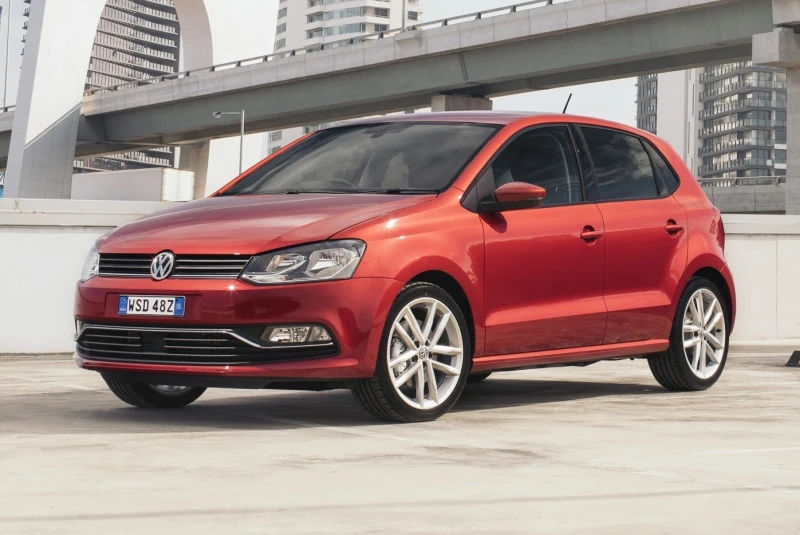
In European classifieds, the Polo name covers several noticeably different cars: three- and five-door hatchbacks, the separate Polo Sedan sold in certain regions, diesel versions, and performance-focused GTI models. For a U.S. buyer looking at an imported Volkswagen Polo V, the model year and engine displacement are only the beginning. The first step is identifying exactly which market and specification the individual car came from.
This article focuses on the European fifth-generation Polo hatchback, known by the 6R and 6C model codes and produced from 2009 through 2017. It is a subcompact hatchback that was positioned below the Golf while borrowing some of the larger model's approach to interior quality, chassis tuning, and powertrain variety. Volkswagen did not officially sell this generation of the Polo as a new passenger car in the United States, so examples encountered in the U.S. should be treated as imported, non-U.S.-market vehicles rather than as an American-market Volkswagen specification.
First determine which Polo you are looking at
The 6R/6C hatchback and Polo Sedan are not the same car
The European-market Polo V hatchback was offered with three or five doors. It measures about 13.0 ft long, has a wheelbase of roughly 97.2 in, and provides about 9.9 cu ft of luggage space behind the rear seats. In markets where the Polo Sedan was common, that model was longer, used a conventional trunk, and could have a different engine lineup. Although the sedan belongs to the broader Polo family, it should not automatically be treated as a 6R/6C hatchback with a different body.
That distinction matters when ordering body panels, interior components, suspension parts, and electronic modules. Even if a seller simply describes the car as a "Polo V," the VIN, production location, body style, and original market can reveal more than the generation label used in an advertisement.
Why the fifth generation mattered
The previous Polo 9N was practical, but by the end of its production run both its design and cabin were beginning to show their age. The 6R became wider, adopted cleaner proportions, and introduced Volkswagen's sharper late-2000s styling language. The extra size did not turn it into a Golf-class family hatchback, but it improved front-seat space and gave the car a more settled feel at highway speeds.
The Polo V's appeal was less about one headline technology than about overall cohesion. The dashboard was conservative and logically arranged, the controls were straightforward, and the cabin generally felt more substantial than those of many entry-level competitors from the same period. Rear-seat space, however, remained limited. Two adults can fit for shorter trips, but taller passengers will quickly notice the modest knee room.
The chassis uses a conventional layout for the segment, with MacPherson struts up front and a torsion-beam rear axle. That keeps the basic suspension relatively straightforward. The Polo tracks confidently and responds predictably to steering inputs, although its short wheelbase and relatively firm suspension tuning become more noticeable over larger bumps than they would in a bigger car.
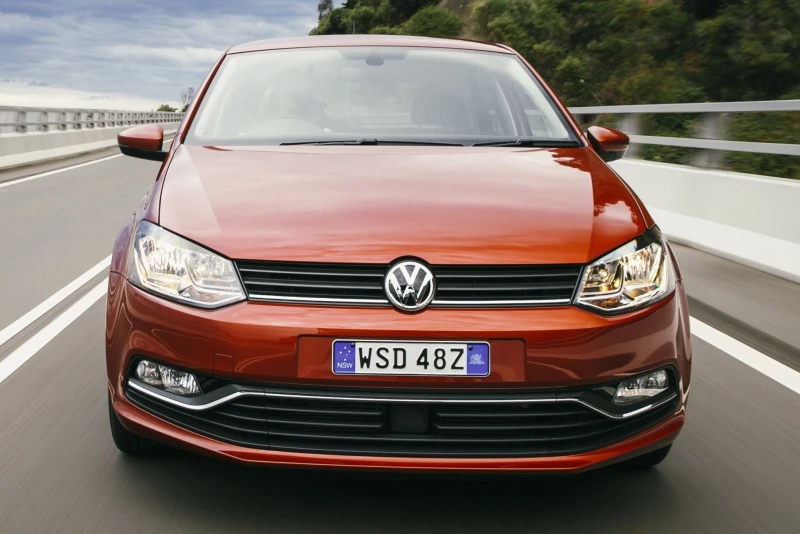
Two stages of the same generation
Volkswagen Polo 6R: broad European choice, but more age-related concerns
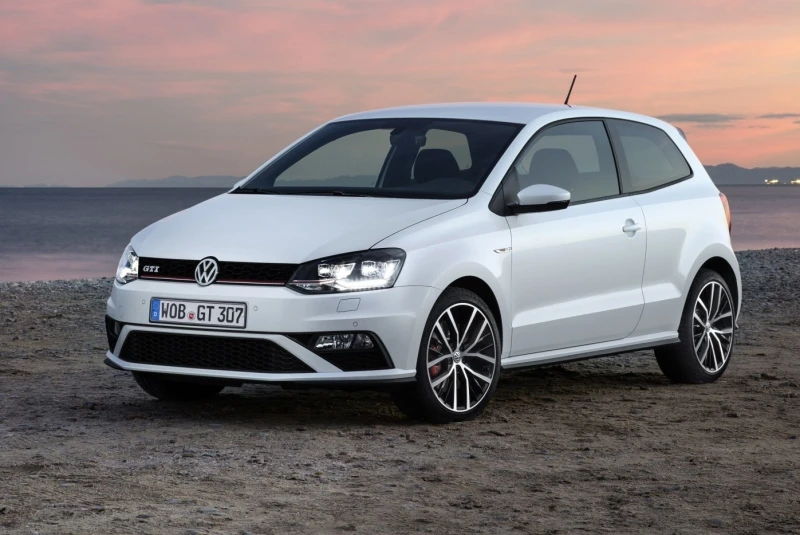
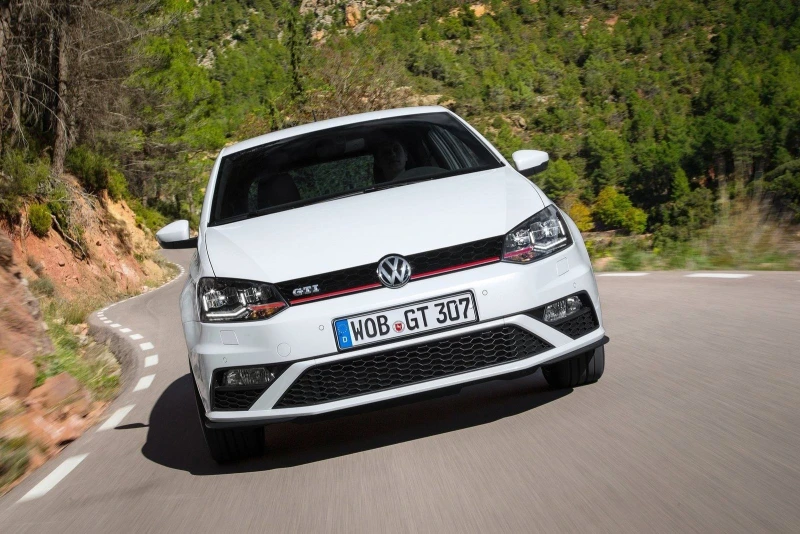
Pre-facelift cars from 2009 through 2014 were offered in Europe and other markets with naturally aspirated 1.2- and 1.4-liter gasoline engines, the turbocharged 1.2 TSI, and 1.2 TDI and 1.6 TDI diesels. Output varied by market and model year. Entry versions produced roughly 59–74 hp (60–75 PS), while common 1.2 TSI versions were rated at about 89 or 104 hp (90 or 105 PS). BlueGT, GTI, and the limited-production Polo R WRC also existed, but none represented an official U.S.-market Polo lineup.
Naturally aspirated versions paired with a manual transmission are mechanically simpler, but age still makes a thorough inspection essential. Check cold-start behavior, timing-system condition where applicable, the cooling system, maintenance documentation, and any evidence of abnormal oil consumption. Early 1.2 TSI engines require particular attention to service history. Metallic noise after startup, timing-related fault codes, or missing documentation for previous timing-system work should justify a more detailed inspection before purchase.
The seven-speed dual-clutch DSG with dry clutches can make the Polo easier to drive in traffic, but a smooth five-minute test drive is not enough to judge its condition. Test it both cold and fully warmed up, include gentle uphill starts and low-speed stop-and-go driving, and use a proper diagnostic scan. Jerking, delayed engagement, or persistent vibration when pulling away should not simply be dismissed as normal dual-clutch behavior.
Volkswagen Polo 6C: a facelift with meaningful technical changes
The 2014 update left the familiar body shape largely intact but brought significant mechanical changes. Depending on the European market, the lineup included three-cylinder 1.0 MPI engines with about 59 or 74 hp (60 or 75 PS), 1.2 TSI versions with roughly 89 or 109 hp (90 or 110 PS), and 1.4 TDI diesels replacing the earlier diesel range. Certain markets also received the 1.0 TSI, BlueGT, and an updated GTI with a 1.8 TSI.
There was no corresponding U.S.-specification Polo 6C engine or trim range because Volkswagen did not officially market the car here. As a result, two imported examples from the same model year can differ substantially in their infotainment systems, climate controls, lighting, heated-seat equipment, safety features, engines, and transmissions depending on their original country of sale.
A facelifted Polo can make more sense as a daily driver simply because it is newer and received updated electronics and powertrains. The later 1.2 TSI from the EA211 family also uses a different engine architecture from the earlier generation. Still, age now makes the condition and documented maintenance history of a specific car more important than the theoretical reputation of any particular engine code.
Trim levels: the badge does not tell the whole story
European-market trim names such as Trendline, Comfortline, and Highline do not correspond to a U.S. Volkswagen trim structure. A basic Trendline could be quite sparse: air conditioning was not universal in every market, rear windows could still be manually operated, and the audio system might be very simple. Comfortline typically brought upgraded seats, additional trim, power conveniences, and access to more options. Highline generally sat higher in the range, although actual equipment depended heavily on the country and optional packages ordered when the car was new.
On a used imported car, it is better to verify equipment individually instead of relying on the trim name in the listing. Automatic climate control, heated seats, cruise control, parking sensors, light and rain sensors, factory navigation, and sport seats could be bundled differently from one market to another. A Comfortline badge or listing description does not guarantee a specific feature set.
What does a Volkswagen Polo V cost in the United States?
There is no reliable nationwide U.S. used-car price range for the Polo V comparable to what exists for officially sold Volkswagen models. The 6R and 6C were never part of Volkswagen's regular U.S. new-car lineup, so mainstream inventory is extremely limited and individual cars can differ greatly in import history, registration status, specification, condition, and provenance. Converting European used-car prices directly into dollars would therefore give a misleading picture of the American market.
| Version | U.S. market context |
| Early Polo 6R with high mileage | No established nationwide U.S. price range; value depends heavily on import history and condition |
| Polo 6R in good condition | Too uncommon in normal U.S. used-car inventory for a meaningful mainstream pricing guide |
| Facelifted Polo 6C | Availability is especially limited and pricing should be evaluated car by car |
| Rare, performance, or unusually low-mileage versions | Collector interest, documentation, originality, and legal registration status can matter more than ordinary used-car pricing benchmarks |
Mainstream sites such as Autotrader, CarGurus, and Cars.com may provide little useful comparison data for this model because there was no official U.S. Polo V sales population. Before treating the asking price as representative, compare the car's original-market specification, condition, documentation, and import history rather than relying on a simple currency conversion from European listings.
What to check before buying
Start with the VIN, ownership history, and documentation showing where the car was originally sold. For a European-market Polo now located in the United States, confirm that the vehicle's title and registration status are clear in the state where it will be used. Service invoices and foreign registration records can also help verify mileage and maintenance history.
Inspect the body with more than a paint-thickness gauge. Look at panel openings, structural areas, headlight mounts, glass markings, the seams in the cargo-floor area, and evidence of repairs to the front structure. Factory corrosion protection is generally substantial, but a poorly repaired car can develop corrosion around welded areas and beneath plastic trim.
In the suspension, inspect the stabilizer links, control-arm bushings, strut mounts, wheel bearings, and the rear axle for evidence of previous impact damage. The electrical system is not unusually complex by modern standards, but age can show up in door locks, power windows, air conditioning, infotainment components, and wiring around the rear hatch.
Which Polo V makes the most practical sense?
For straightforward everyday driving, a gasoline-powered car with a manual transmission and a well-documented history is generally the simplest configuration to evaluate. Naturally aspirated engines have fewer forced-induction components, although the lower-output versions require more shifting and offer modest highway performance. A later 1.2 TSI provides stronger performance for its size, but maintenance history and the condition of the individual engine remain essential.
A diesel makes the most sense for drivers whose use pattern includes regular longer trips. For predominantly short-distance driving, potential expenses involving the fuel system, turbocharger, EGR system, and diesel particulate filter can outweigh the fuel-economy advantage. A DSG-equipped car can also be a reasonable option, but only after a thorough pre-purchase inspection and diagnostic scan rather than when the purchase budget leaves no room for transmission-related repairs.
The fifth-generation Volkswagen Polo is now an older but still straightforward European subcompact hatchback. Its appeal is not exceptional cargo capacity or unusually low ownership costs, but its balanced combination of compact dimensions, sensible ergonomics, predictable handling, and a broad European powertrain range. For a U.S. buyer, however, the most important factors are even more specific: the car's original market, its mechanical condition, documented service history, and clear ownership and registration documentation. With a model this uncommon in the United States, those details matter far more than the trim badge on the hatch.