


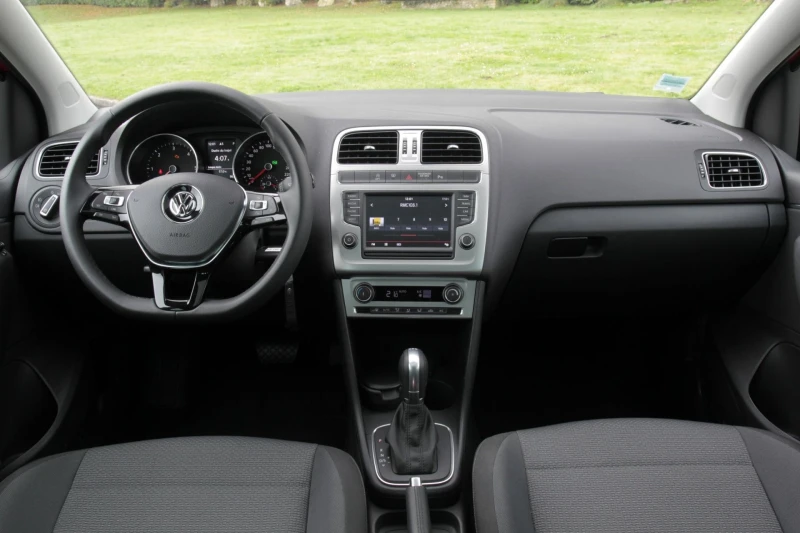
The cabin was designed without elaborate decorative elements: a horizontal center stack, large physical buttons, a separate climate-control panel, and clear analog gauges. As a result, the interior still looks relatively conventional many years later, although the small displays and lack of modern connected features clearly reveal the era in which the car was developed.
When evaluating the interior of a Volkswagen Polo V in the United States, the car's origin matters. The fifth-generation Polo was not officially sold by Volkswagen as a mainstream U.S.-market model, so examples found in the country are generally imported vehicles originally built for Europe or other markets. These can include five-door and less common three-door hatchbacks, CrossPolo, BlueMotion, GTI, and special-edition versions. Two cars from the same model year can therefore differ substantially in seat materials, climate-control systems, instrument clusters, and electronic equipment.
A cabin designed around everyday usability
The dashboard follows Volkswagen's traditional layout. The center air vents sit near the top, followed by the hazard switch and auxiliary controls, then the audio or infotainment unit, with the ventilation controls below. The main functions do not require navigating through touchscreen menus: fan speed, temperature, window defrosting, and heated seats, where fitted, are controlled through dedicated buttons or rotary knobs.
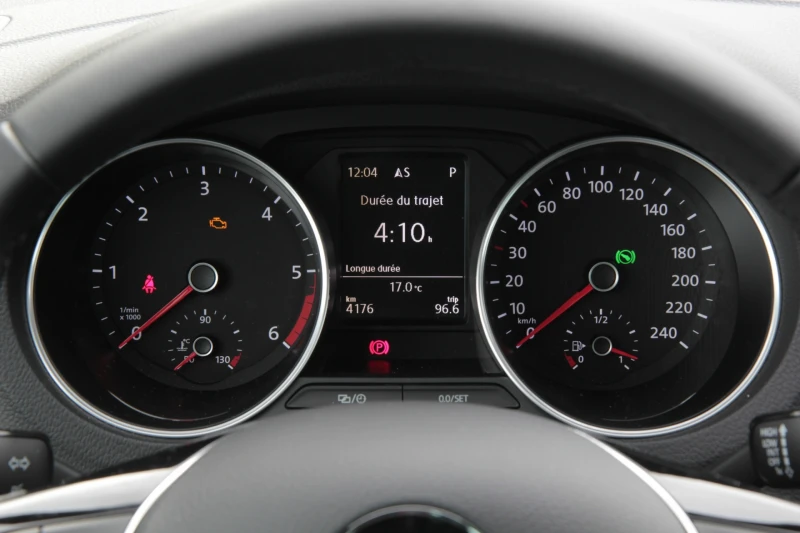
The center stack is angled slightly toward the driver. The angle is subtle, but the audio system and climate controls remain easy to see from the driving position. The gauges use white illumination, with the tachometer and speedometer separated by the trip-computer display. Basic versions provide essential information, while the larger multifunction display can show additional trip data, vehicle information, and selected settings.
Early Polo 6R models can be found with conventional audio systems featuring a CD player, AUX input, and memory-card slot, while better-equipped cars may have factory navigation. By modern standards, the screens are small, the graphics are simple, and smartphone integration is limited. Physical buttons and two rotary controls, however, remain convenient to operate while driving. On used vehicles, the original head unit is often replaced with an aftermarket touchscreen system. Such upgrades may add Bluetooth, Android Auto, or Apple CarPlay, but the installation quality should be inspected carefully.
Materials depend on more than the trim level
Hard plastic is used throughout much of the lower cabin. It is well suited to regular use and relatively easy to clean, but higher-mileage cars may show scratches and scuffs. On some mid- and higher-level European trims, including versions roughly comparable to Comfortline, the upper dashboard uses softer-touch material. Entry-level configurations generally contain more hard surfaces and simpler decorative trim.
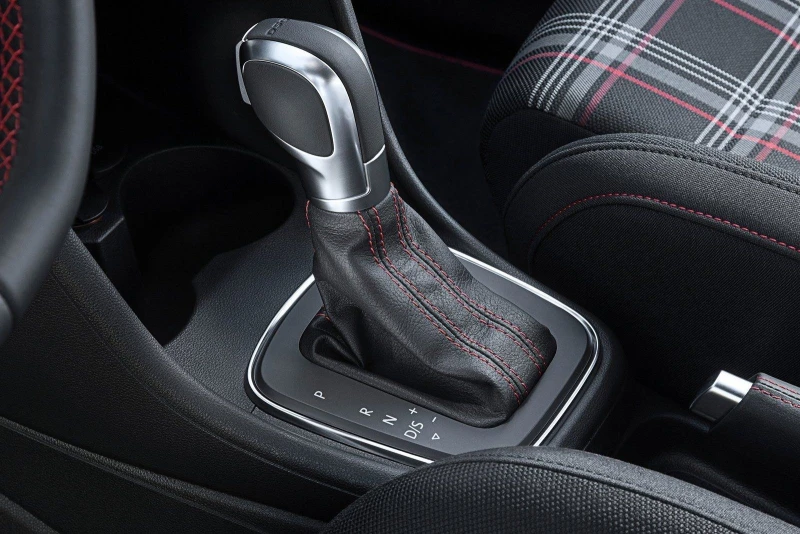
The restrained design helps the cabin age visually without becoming overly dated, but the condition of an individual vehicle depends heavily on previous use. The most obvious wear usually appears on the steering wheel, shift lever, parking-brake handle, driver's armrest, and outer edge of the driver's seat cushion. Light-colored upholstery tends to show dirt more easily, while black fabric can hide stains better but may become shiny in frequently touched areas.
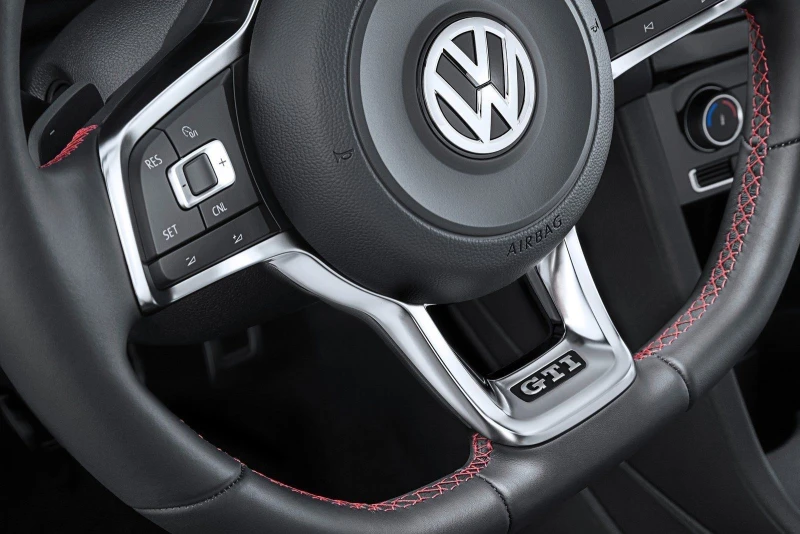
Full leather upholstery is uncommon in regular Polo models. More often, leather is limited to the steering wheel, shifter, and parking-brake handle while the seats remain cloth. Mixed materials, sport seats, and distinctive plaid patterns can be found in GTI, BlueGT, CrossPolo, and certain special editions. Because imported cars can come from many different markets, the trim name listed by a seller does not always describe the actual equipment of a 2009–2017 Volkswagen Polo accurately.
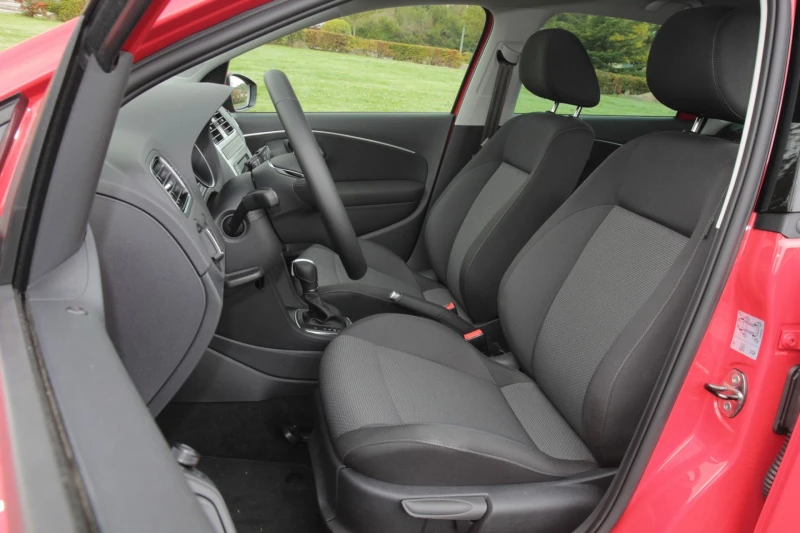
Driving position and space: a subcompact has its limits
The driver's position offers a useful range of adjustment. On most cars, the steering wheel adjusts for both tilt and reach, while the driver's seat provides fore-aft and height adjustment. Better-equipped versions may also include height adjustment for the front passenger seat. Seat cushioning and shape vary by version: standard seats have a relatively straightforward profile, while sport seats provide more pronounced side bolsters.
The seats themselves often retain their basic shape well with age, but adjustment mechanisms and seat heaters should be checked. Uneven heating, damaged wiring beneath a seat, or side-airbag warning faults can appear after seats have been removed, after careless interior cleaning, or following aftermarket accessory installation.
Front-seat space is adequate for a subcompact hatchback. The door pockets can hold a bottle, while the center tunnel provides cupholders and several small storage areas. Some versions were equipped with a center armrest containing a storage compartment, although it can interfere slightly with the manual parking brake or gear lever, particularly on cars with a manual transmission.
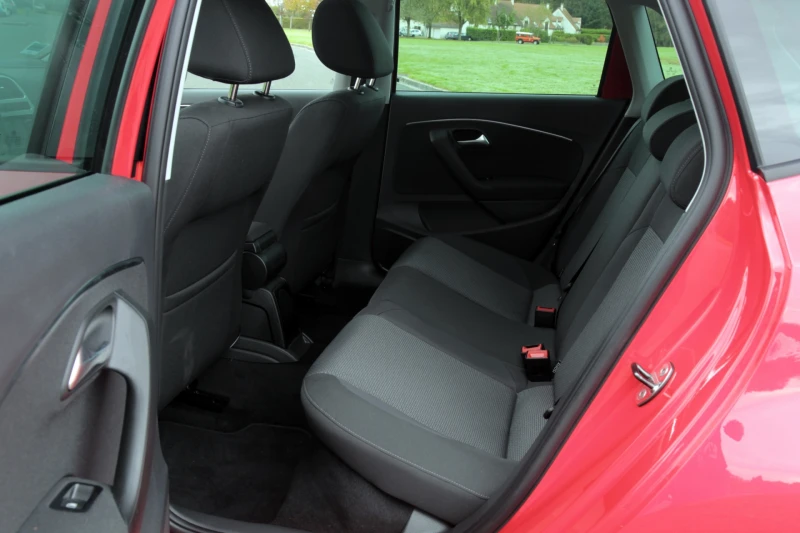
The rear seat is best suited to two adults
The Polo is designed as a five-passenger car, but the rear bench is more comfortable for two adults. Rear legroom depends heavily on the position of the front seats, and the cabin is not wide enough for three adults to remain comfortable on a long trip. The center seating position is narrower, while the center tunnel reduces foot space.
Rear-seat access in the five-door hatchback is straightforward, although the door openings are relatively compact. In three-door versions, the front seats tilt forward, making frequent rear-seat use less convenient. For families using a child seat, the five-door body is considerably more practical. European-market cars commonly use ISOFIX child-seat mounting points on the outer rear seats, though the exact restraint hardware should be confirmed on the individual imported vehicle.
Taller passengers may find their knees close to the front seatbacks, although headroom is generally acceptable. A panoramic roof, when fitted, can make the cabin feel more open but also adds complexity to the headliner and roof assembly. On a used car, the sunshade, tracks, seals, and drainage system should all be inspected.
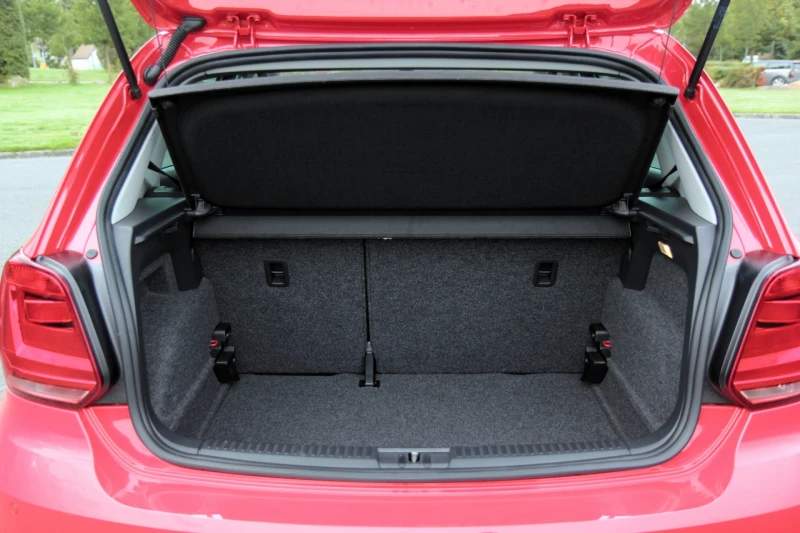
A straightforward cargo area
The cargo compartment is typical of a city-oriented subcompact hatchback. Its shape is relatively regular, although the loading height and raised sill are noticeable when lifting heavier items. Cars equipped with an adjustable cargo floor can position the panel at different heights. In the upper position, folding the rear seatbacks creates a flatter load surface; in the lower position, the cargo area gains additional usable depth.
A split-folding rear seat is common, but its presence and configuration should be verified on the individual car. Equipment on simpler early versions varied by original market. Beneath the cargo floor there may be a spare tire or a tire-repair kit, and imported used cars sometimes arrive with part of the original equipment missing.
There is enough room for routine shopping, a compact stroller, or luggage for two people. For larger items, the main limitation is often the width of the hatch opening and the overall size of the vehicle rather than the depth of the cargo area. In this respect, the Polo V remains typical of the European subcompact class of its period.
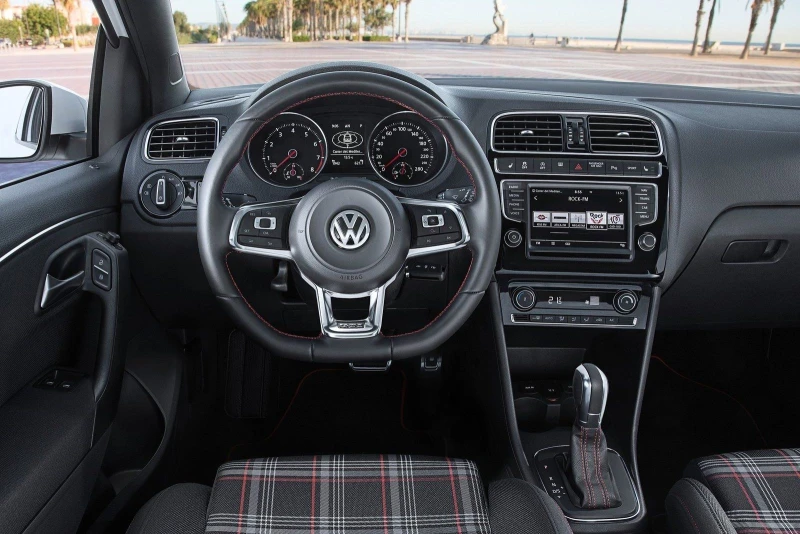
What changed from the 6R to the 6C
The 2014 facelift did not fundamentally change the cabin architecture, so early and later cars can look very similar at first glance. The most noticeable differences are found in the steering wheel, instrument cluster, trim details, and infotainment equipment. Updated models received newer head units, some with touchscreens, Bluetooth, and expanded connectivity for external devices.
The facelift also expanded the range of driver-assistance systems that could interact with the instrument display. Depending on the original market and options ordered, later cars could be equipped with driver fatigue monitoring, adaptive cruise control, Front Assist with city emergency braking, and a rearview camera. These features represented a significant technical update for the Polo V, but their availability varies greatly among imported vehicles, and they should not be assumed to be present based solely on model year.
The transition to the 6C made the cabin feel more modern mainly through updated electronics rather than major changes in materials or interior space. A well-preserved 6R with a solid equipment package can therefore feel just as usable as a basic facelifted model. When comparing cars, the actual equipment and condition matter at least as much as the production year.
Why equipment varies so much among imported cars
Trim names such as Trendline, Comfortline, and Highline were used differently depending on the market where the car was originally sold. Special editions could also be based on one trim level while receiving equipment normally associated with a more expensive version. For U.S. buyers considering an imported Polo V, the original market and factory equipment list are therefore more useful than trying to match the car to familiar U.S. Volkswagen trim conventions.
A basic Polo may have cloth seats, manual air conditioning or only a heater, front power windows, and a simple audio system. Mid-level configurations more often include Climatic air conditioning, heated front seats, power-adjustable and heated mirrors, a multifunction display, parking sensors, a height-adjustable passenger seat, and additional storage compartments.
Better-equipped cars may feature Climatronic automatic climate control, a leather-wrapped multifunction steering wheel, center armrest, sport front seats, rain and light sensors, cruise control, factory navigation, and bi-xenon headlights or LED lighting elements. A rearview camera, panoramic roof, and more advanced driver-assistance systems are also possible, but none should be considered standard across imported Polo V models.
For everyday use, a five-door version with working air conditioning, heated seats where desired, an adjustable driver's seat, and properly functioning factory electronics offers a sensible balance. Automatic climate control, factory navigation, or sport-oriented trim can make a car more appealing, but they do not compensate for a heavily worn interior or poorly executed electrical modifications.
Wear, rattles, and signs of previous modifications
As these cars age, rattles can develop around the door panels, center console, or rear of the cabin, especially after repeated use on rough pavement. The source is not always the original assembly quality: noises can appear after interior panels have been removed, an alarm system installed, speakers replaced, or wiring added for an aftermarket infotainment unit. A test drive over uneven pavement can help reveal these issues.
Forward and side visibility is generally straightforward, and the windshield pillars are not unusually bulky for a car of this size. Rear visibility is more limited because of the relatively small rear glass area and thick rear pillars, making parking sensors particularly useful. The rear-window defroster, rear wiper, and wiring passing through the hatch should also be checked.
In cold weather, the heater, seat heaters, and cabin blower deserve attention. In hot weather, the air conditioning should cool properly without producing unusual odors from the evaporator area. Moisture beneath the carpets can indicate blocked drains, leaking door membranes, previous body repairs, or problems associated with a panoramic roof.
How the interior feels today
The Polo V cabin no longer matches newer cars in display size, number of charging ports, or smartphone connectivity. At the same time, its primary controls do not depend on touchscreen menus, and the button layout remains easy to understand with little familiarization. That simplicity helps the interior remain practical even as the technology becomes dated.
When evaluating a used imported Polo V, it makes more sense to focus on seat condition, climate-control operation, seat heaters, infotainment, and all electrical equipment than on the trim badge alone. A facelifted 6C offers newer electronics, but a well-maintained 6R with air conditioning and the equipment you actually need can provide very similar day-to-day usability.
For a U.S. buyer, the most practical Polo V is generally a well-maintained five-door car with moderate equipment and no questionable electrical modifications. Higher-spec Highline, GTI, CrossPolo, BlueGT, and special-edition versions may add sport seats, distinctive trim, and additional features, but the condition of the cabin, documentation of the car's original specification, and quality of any previous modifications are more important than a rare trim designation.