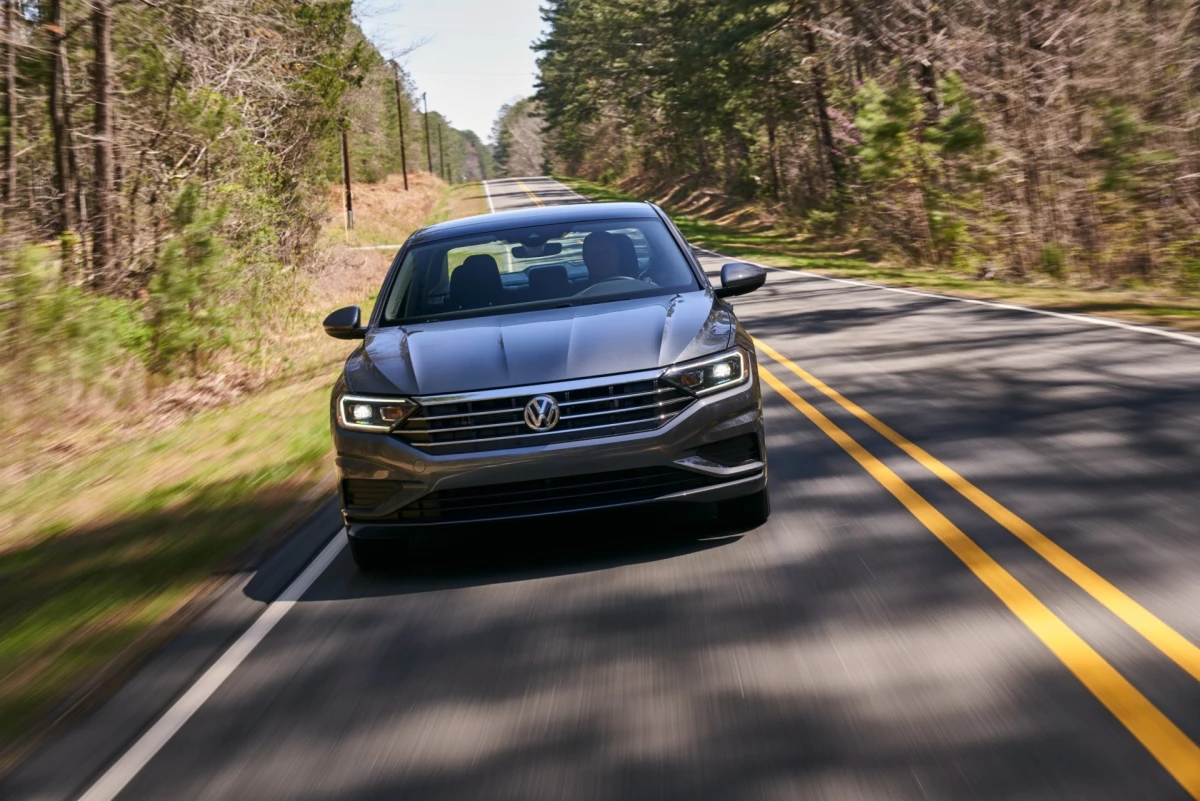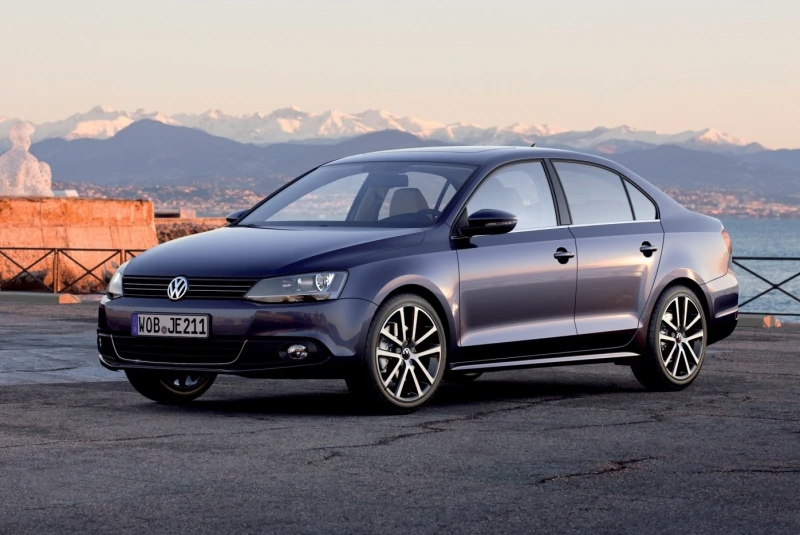
Under the same Jetta name, U.S. buyers can find everything from basic naturally aspirated sedans to turbocharged gasoline models, TDI diesels, the Jetta Hybrid, and the performance-oriented GLI. Depending on the model year and trim, these cars can differ substantially in engines, transmissions, suspension hardware, equipment, and overall character. The Volkswagen Jetta VI is therefore better viewed as a family of closely related compact sedans rather than one mechanically uniform model.
That variety is especially important on the used market. Two Jettas of similar age and mileage may have very different powertrains and maintenance requirements. For a buyer, the model year, engine, transmission, trim, service history, and accident record can be more informative than the mileage figure alone.
Why the sixth-generation Jetta became its own model
The previous Jetta was closely associated with the Golf in both engineering and cabin character. With the sixth generation, Volkswagen gave the sedan a more distinct identity, stretching the body and emphasizing the traditional three-box proportions that remained popular in North America.
The wheelbase is about 104.4 inches, while overall length varies slightly by model year at roughly 182–183 inches. Those dimensions gave the Jetta noticeably more rear-seat space than many compact hatchbacks of the period. The standard sedan also offers about 15.5 cubic feet of trunk space, making practicality one of the car's stronger everyday attributes.
At the same time, the Jetta did not become a smaller Passat. Its cabin width, materials, equipment strategy, and overall positioning remained firmly in the compact-car segment. It occupied a useful middle ground for buyers who wanted the formality and cargo space of a sedan without moving into a larger midsize car.
A design that aged more slowly than many trends
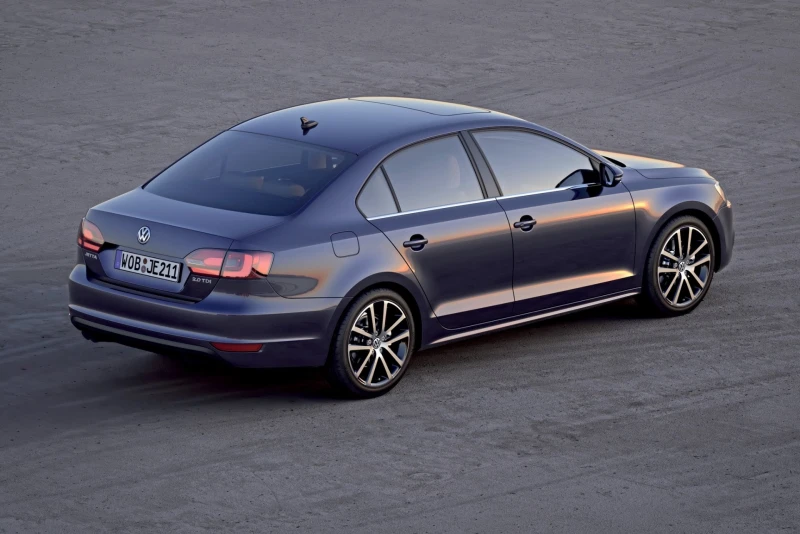
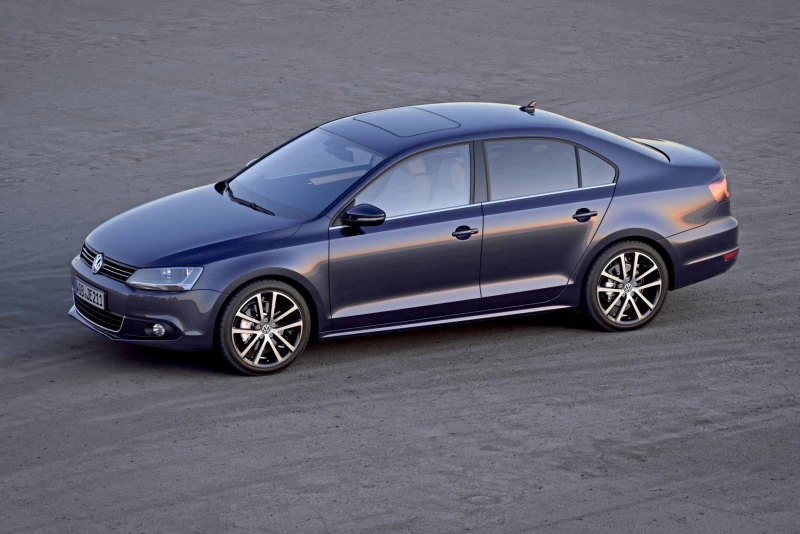
Early sixth-generation cars rely heavily on horizontal lines, rectangular lighting elements, and restrained detailing. The design was conservative even when the car was new, but that simplicity has helped it avoid looking excessively tied to one styling era. The Jetta works equally naturally as a commuter, family sedan, or basic fleet-style car.
The 2015 model-year refresh did not fundamentally alter the concept. Volkswagen revised the front and rear styling, made aerodynamic changes, updated parts of the interior, and expanded the availability of driver-assistance technology. Later cars look somewhat more contemporary, but the visual difference between early and facelifted examples remains moderate.
Interior: space matters more than premium materials
The dashboard follows a traditional Volkswagen layout with straightforward gauges, a clearly arranged climate-control panel, and controls that generally require little familiarization. Higher trims could add features such as automatic climate control, upgraded audio, navigation, heated seats, a sunroof, and more sophisticated infotainment. Entry-level cars are considerably simpler.
Compared with the previous generation, the cabin gained useful space but also adopted harder plastics in several areas. That was particularly noticeable in early U.S.-market cars, which were engineered to compete aggressively on price. Hard surfaces are therefore not necessarily evidence of poor treatment. Worn switchgear, damaged trim, a collapsed driver's seat bolster, and a heavily polished steering wheel can tell more about how intensively a particular car was used.
One body, several completely different U.S. powertrains
A Volkswagen Jetta VI review quickly becomes a discussion of model years because the U.S. engine lineup changed substantially during the generation. Early mainstream cars used naturally aspirated 2.0- and 2.5-liter gasoline engines, while later models increasingly moved toward turbocharged TSI power. The range also included diesel, hybrid, and GLI variants at different points in the production cycle.
Mainstream U.S. gasoline engines
Early entry-level Jettas could be equipped with a naturally aspirated 2.0-liter four-cylinder rated at 115 hp and 125 lb-ft of torque. Above it sat the 2.5-liter five-cylinder, rated at about 170 hp. The five-cylinder provided considerably stronger performance than the base engine and became one of the defining powertrains of early U.S.-market sixth-generation cars.
Volkswagen later shifted toward smaller turbocharged engines. The 1.8-liter TSI produced 170 hp and 184 lb-ft and replaced the 2.5-liter in much of the lineup. For 2016, the 1.4-liter TSI became the mainstream engine, producing 150 hp and 184 lb-ft. It remained a common choice through the end of the generation and was paired with either a manual transmission or a conventional six-speed automatic depending on configuration.
TDI, Hybrid and GLI
The Jetta TDI formed an important part of the U.S. lineup during several model years. Earlier versions of the 2.0-liter turbodiesel were rated around 140 hp, while the updated 2015 engine produced 150 hp and substantially more torque than the gasoline engines. Because U.S.-market TDI cars were affected by Volkswagen's diesel-emissions issue, a used-car inspection should include verification of emissions-related modifications, recall history, and the condition of the diesel aftertreatment system rather than treating a TDI like an ordinary gasoline Jetta.
The Jetta Hybrid combined a turbocharged 1.4-liter gasoline engine with an electric motor and a seven-speed dual-clutch transmission. It delivered a combined output of about 170 hp but is mechanically distinct from the regular 1.4T Jetta. The GLI occupied the opposite end of the lineup, using a turbocharged 2.0-liter engine with output around 200–210 hp depending on model year. It also received performance-oriented chassis, brake, interior, and appearance changes rather than being simply a standard Jetta with a more powerful engine.
Manual, automatic, or DSG
The sixth-generation U.S. Jetta was offered with several transmission types, including five- and six-speed manuals, conventional six-speed automatics, and dual-clutch DSG gearboxes on selected powertrains.
Manual-transmission cars are mechanically straightforward to evaluate, but age and mileage make clutch condition increasingly important. On TDI and higher-output versions, the condition of the flywheel and related driveline components also deserves attention. Engagement should be consistent, and vibration or abnormal noise should not be ignored.
The six-speed automatic used with many 2.5-liter, 1.8T, and 1.4T cars is a conventional torque-converter transmission rather than a DSG. Buyers should check shift quality both cold and fully warmed up and look for evidence of proper maintenance. Because online listings sometimes describe every two-pedal Volkswagen simply as an automatic, confirming the actual transmission by VIN and powertrain specification is worthwhile.
DSG transmissions are most relevant to cars such as the TDI and GLI, while the Hybrid used its own seven-speed dual-clutch setup. A DSG should be evaluated for smooth engagement, consistent low-speed behavior, warning lights, stored fault codes, and documented maintenance. Transmission type should always be matched to the exact engine and model year rather than assumed from the trim badge.
Trim level depends heavily on model year
U.S. trim names included Base, S, SE, SEL, Sport, SEL Premium, TDI, Hybrid, and GLI depending on the year. The hierarchy changed during the generation, so an SE from one model year does not necessarily match an SE from another in either equipment or engine choice.
Basic versions can be quite sparse, while higher trims may include heated seats, a sunroof, upgraded audio, navigation, a rearview camera, keyless access, larger alloy wheels, and additional interior trim. Facelifted cars also gained newer infotainment systems, while selected later versions added smartphone-integration features and more driver-assistance equipment.
Equipment therefore should not be judged by model year alone. A higher-powered car can still have a relatively simple cabin, while a visually ordinary Jetta may carry a substantial options list. Checking the VIN, original equipment data, and the physical features of the individual car is more reliable than assuming equipment from an advertisement's trim description.
What the U.S. used Jetta VI market looks like
In 2026, the sixth-generation Jetta is firmly a used-only proposition in the United States. The market includes inexpensive early cars with high mileage, later 1.4T sedans, surviving 2.5-liter models, TDIs with varying emissions-service histories, and a smaller number of GLI and Hybrid examples.
For mainstream 2011–2018 cars, a practical nationwide shopping range runs from roughly the mid-$5,000s for many older examples into the low-$12,000s for cleaner late-production cars. Individual listings can fall below or above that range depending on mileage, trim, location, accident history, ownership history, and overall condition. GLI models and unusually low-mileage examples may command more.
The lowest-priced cars are often early examples with substantial mileage, cosmetic wear, accident history, deferred maintenance, or some combination of those factors. Later 2017–2018 cars generally sit higher in the market. Price alone is not a reliable quality indicator: a more expensive Jetta can still require significant mechanical or collision-related work.
Why history matters more than the odometer alone
For a U.S.-market Jetta, the VIN is the starting point for understanding the car. A vehicle-history report can reveal recorded accidents, title events, ownership changes, registration history, and some service information. Maintenance invoices and dealer records can provide additional context that a mileage number by itself cannot.
The type of history that matters also depends on the powertrain. TDI buyers should pay particular attention to emissions-related work and diesel-system condition. GLI buyers should consider evidence of modification or hard use. On ordinary gasoline cars, consistent maintenance, collision repairs, fluid leaks, warning lights, and transmission behavior often matter more than whether one example has a few thousand fewer miles than another.
What Jetta VI makes sense today
The model's main practical strengths are its roomy cabin, useful trunk, straightforward ergonomics, and unusually broad selection of powertrains. It suits buyers who specifically want a compact sedan but do not need the additional size of a Passat. Parts and service knowledge are also widely available because many mechanical components are shared with other Volkswagen Group vehicles.
Buyers looking for a relatively conventional gasoline configuration often consider the naturally aspirated 2.5-liter cars with a manual or six-speed automatic, while later 1.4T models combine strong low-rpm torque with better EPA fuel-economy figures. A TDI can appeal to drivers interested in diesel characteristics, but its emissions-system history deserves special attention. The GLI offers substantially different performance hardware and should be inspected with the expectations appropriate to a used sport sedan rather than treated as an appearance package.
The Volkswagen Jetta VI is now old enough that choosing solely by trim, color, or advertised mileage makes little sense. Two cars from the same model year can differ dramatically in remaining condition because of maintenance, accidents, climate, driving patterns, and previous repairs. The most useful approach is to identify the exact powertrain first, verify the car's history, and then judge the individual example on its documented mechanical and structural condition.