


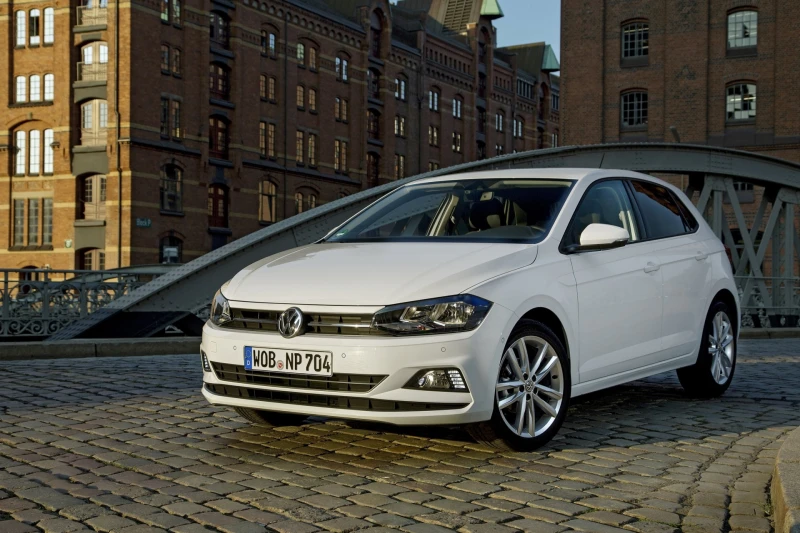
In Europe, a search for a sixth-generation Volkswagen Polo usually leads to a five-door hatchback with the factory code AW. For a U.S. reader, however, the first step is different: identifying what the car is and understanding that the Polo VI was never part of Volkswagen of America’s regular new-car lineup.
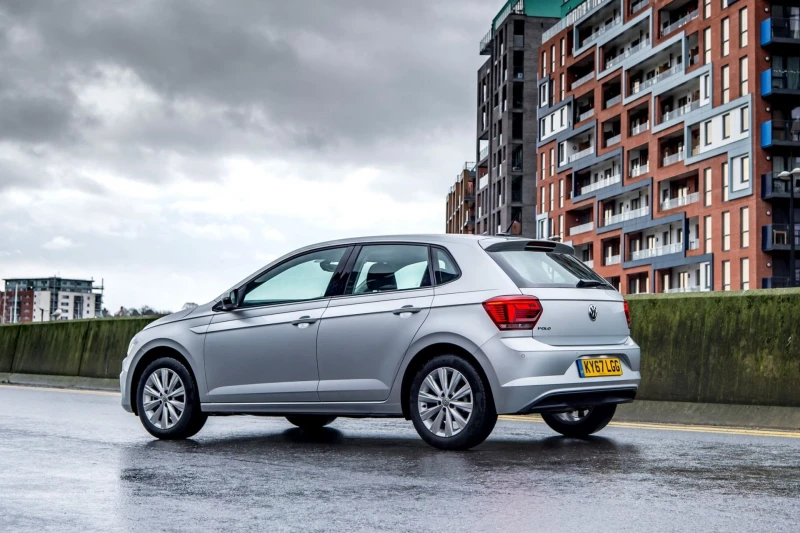
The true sixth-generation Polo debuted in 2017 on the MQB A0 platform and was developed as a five-door hatchback. There is no AW-generation Polo sedan in the European range. That distinction matters because the Polo name has also been used on sedan-based products in other regions, and those cars belong to a different model lineage even when their production years overlap.
The Polo that grew beyond its subcompact roots
Moving to MQB A0 changed the Polo’s proportions substantially. The hatchback is about 159.6 inches long, 68.9 inches wide, and rides on a roughly 100.9-inch wheelbase. European specifications quote 351 liters of luggage capacity, equal to about 12.4 cubic feet using a direct volume conversion.
That growth pushed the Polo closer to older compact hatchbacks in usable space while keeping a footprint well suited to dense cities. Compared with earlier generations, the cabin feels less narrowly focused on short urban trips and more capable of serving as a small household’s only car.
More than a larger 6R
Compared with the fifth-generation Polo, the AW is wider, uses a stiffer body structure, and has a more horizontal dashboard layout. Depending on trim and option package, European cars could be equipped with a digital instrument cluster, adaptive cruise control, blind-spot monitoring, upgraded infotainment, and other features once associated with larger Volkswagen models.
The underlying layout remained conventional: MacPherson struts in front, a torsion-beam rear suspension, and front-wheel drive. The regular Polo was not designed around all-wheel drive or a complex hybrid system; the emphasis was low weight, compact gasoline engines, and a straightforward small-car package.
The facelift changed more than the styling
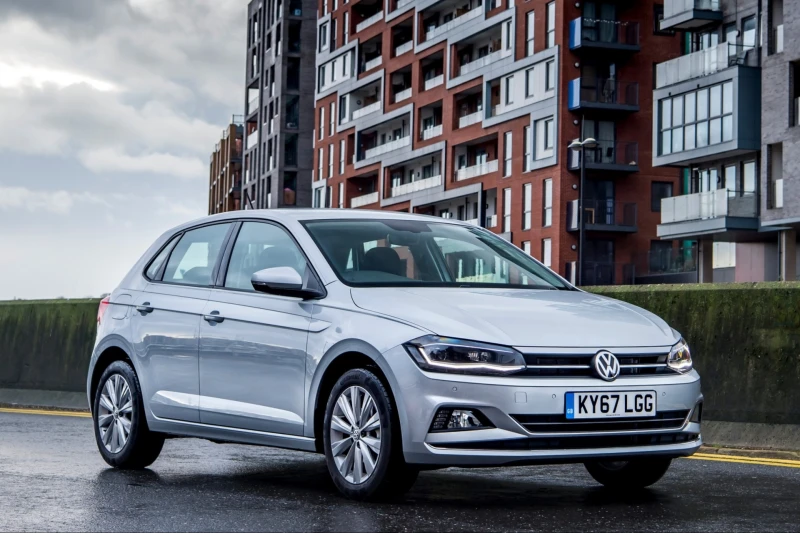
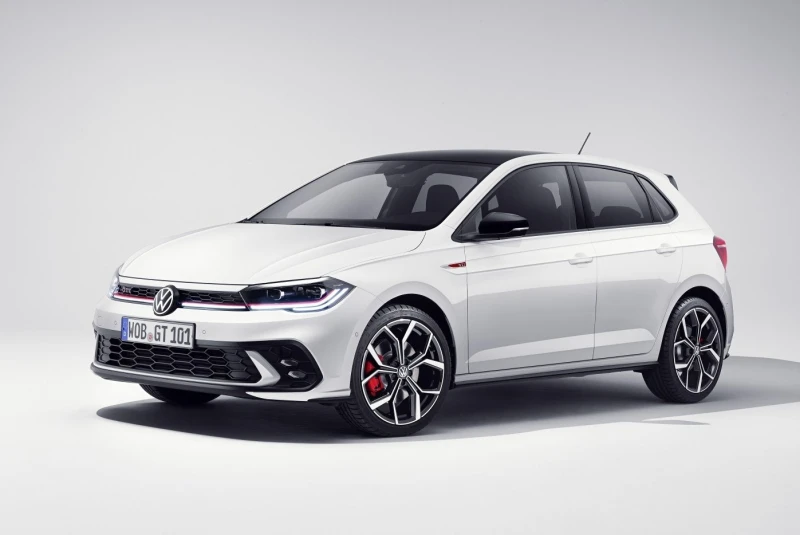
Volkswagen gave the Polo a major update in 2021. The front end moved visually closer to the Golf VIII, with redesigned bumpers, standard or available LED lighting depending on version, revised taillights, and IQ.LIGHT matrix headlights on higher-spec configurations. The cabin also expanded the use of digital instruments and newer-generation infotainment.
The trim structure changed at the same time. Earlier European-market names such as Trendline, Comfortline, and Highline gave way in many markets to Polo, Life, Style, and R-Line. For anyone researching a car abroad, that means model year alone does not describe the equipment level, and pre-facelift and post-facelift trim names are not directly interchangeable.
A well-optioned pre-facelift Highline can therefore have more equipment than a newer entry-level car. Special versions such as Beats often focused more on interior design and audio equipment than on major mechanical changes.
Engines: a European lineup, not a U.S. one
The 1.0 TSI became the core engine
The three-cylinder 1.0 TSI was one of the central engines in the European Polo VI range. Depending on model year and market, output was roughly 94 to 113 hp, with manual transmissions or a seven-speed DSG available in various configurations. The combination suited the Polo’s size well, offering useful low-end torque without turning the car into a performance model.
Naturally aspirated 1.0 MPI versions, rated at roughly 64 to 79 hp depending on specification, were simpler but noticeably slower. They make the most sense in low-speed urban use; highway merging, steep grades, and a fully loaded cabin demand more planning than with the turbocharged engines.
Diesels were mainly a pre-facelift European story
The 1.6 TDI was offered in several European markets, commonly around 79 or 94 hp, and is most often associated with earlier AW cars. These engines can deliver strong fuel economy, but they should be understood as European-market diesels rather than a powertrain ever supported by Volkswagen’s U.S. dealer network.
For a used example overseas, mileage history, diesel particulate filter condition, EGR operation, and fuel-system health deserve close inspection. A tidy cabin does not prove low mileage, especially on cars that may have spent years in fleet or long-distance use.
Rare variants and the Polo GTI
Some markets also received less common configurations such as the 1.0 TGI natural-gas version and, in selected periods, 1.5 TSI derivatives. For a U.S. enthusiast these cars add another layer of complexity because market-specific parts, diagnostics, and emissions equipment may not have a domestic support network.
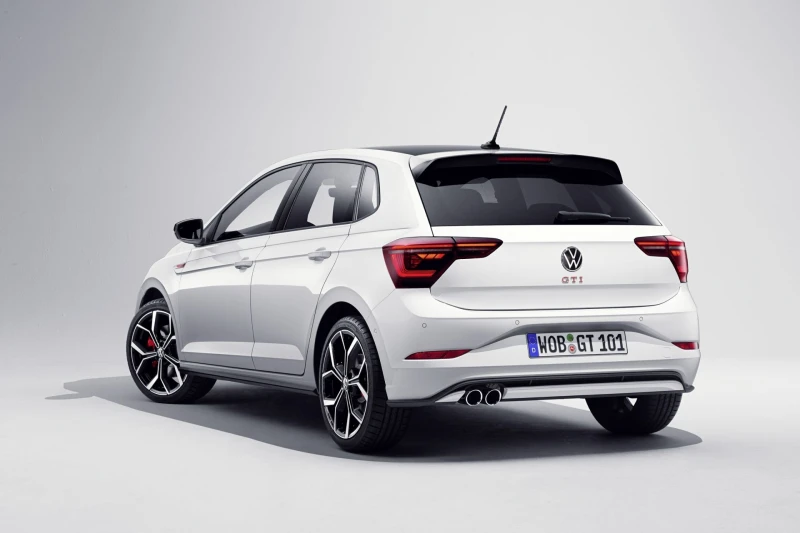
The Polo GTI sits apart from the regular range. It uses a 2.0-liter TSI, a sportier chassis, and DSG, with facelifted European versions rated at about 204 hp (207 PS). Its running costs, brakes, tires, and specialist parts are closer to hot-hatch territory than to an ordinary economy car.
Why the Volkswagen Polo VI is effectively absent from the U.S. market
The sixth-generation Polo was never a normal Volkswagen of America product, and it does not appear in Volkswagen’s current U.S. model lineup. That means there is no domestic dealer history, no U.S.-market trim ladder, and no meaningful pool of off-lease or certified pre-owned examples comparable with a Golf, Jetta, or Taos.
Import law is the bigger obstacle. A nonconforming vehicle less than 25 years old cannot simply be brought into the United States permanently as if it were a normal used car. Depending on the vehicle, a federal eligibility and compliance path through a Registered Importer or another applicable exemption may be required. The standard 25-year NHTSA exemption is measured from the vehicle’s date of manufacture.
Because the AW generation began in 2017, even the earliest cars do not reach that ordinary 25-year threshold until 2042. Federal safety rules are only part of the process; emissions requirements and state registration rules can also affect whether a specific vehicle can ultimately be used on public roads.
Why there is no meaningful U.S. price guide
There is no stable domestic used-car market for the Polo VI from which to build a credible U.S. price range. Mainstream sites such as Cars.com, Autotrader, and CarGurus may occasionally surface unusual imports or incorrectly categorized vehicles, but they do not provide the kind of representative sample available for U.S.-market Volkswagens.
Simply converting a European asking price into dollars would also be misleading. Purchase price is only one part of the cost; transportation, customs treatment, federal compliance work where applicable, storage, inspections, and state-level paperwork can materially change the total.
For that reason, a Polo VI in the United States should be evaluated as a specialty import rather than as a conventional used subcompact. A realistic budget has to start with the legal import pathway for the exact car, not with an overseas classified price.
Equipment has to be researched car by car
Polo VI equipment varied widely by original country, model year, trim, and option package. One car may have basic lighting, manual climate controls, and conventional gauges, while another may include LED headlights, a digital cluster, adaptive cruise control, parking sensors, keyless access, or lane-assistance features.
That is why a badge such as Highline, Life, Style, or R-Line is not enough on its own. European configurators allowed significant option-package variation, and some features were restricted or calibrated differently by market.
For actual ownership, the most useful features are usually the simple ones: effective climate control, heated seats where fitted, parking aids, a good infotainment system, and intact driver-assistance hardware. Larger wheels and R-Line styling can sharpen the appearance, but they also increase tire cost and may make the ride firmer on broken pavement.
Where the Polo VI stands in 2026
By 2026, the Polo name has entered a new phase in Europe. Volkswagen introduced the all-electric ID. Polo as the next generation of the nameplate, while the AW-generation combustion car remains relevant primarily as an established used model and, depending on market, as a continuing conventional offering.
That transition does not create a new U.S. Polo market. Volkswagen of America’s current lineup still centers on models such as the Jetta, Golf GTI, Golf R, Taos, Tiguan, Atlas, ID.4, and ID. Buzz rather than the Polo. For an American buyer, the AW therefore remains an enthusiast-interest European hatchback rather than a normal local alternative.
The practical case for a U.S. enthusiast
On its own merits, the Volkswagen Polo VI is a mature small hatchback: more spacious than its predecessor, easy to place in a city, sensibly packaged, and available with a broad range of European-market equipment. A 1.0 TSI with a manual transmission is mechanically straightforward by modern turbocharged-car standards, while a DSG-equipped version adds convenience but makes service history especially important.
The 1.6 TDI is best suited to the kind of regular long-distance driving for which modern European diesels were designed. For short urban trips, the additional emissions hardware can make less sense. The naturally aspirated 1.0 MPI is simpler but gives up substantial performance.
For someone in the United States, however, the decisive issue is not which engine or trim is best. It is whether the exact car has a lawful and financially sensible import path. Until ordinary 25-year eligibility begins for the earliest AW cars in 2042, most buyers will find the Polo VI far easier to appreciate as a European-market benchmark than to own as a conventional U.S. used car.