


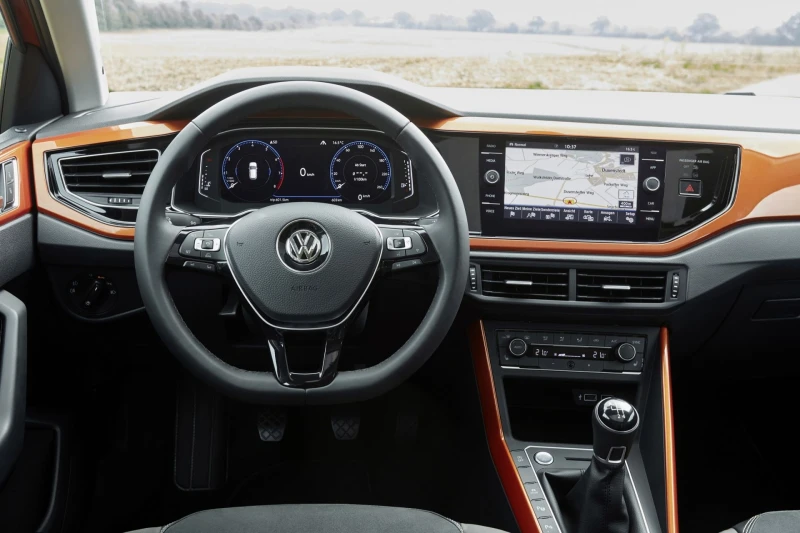
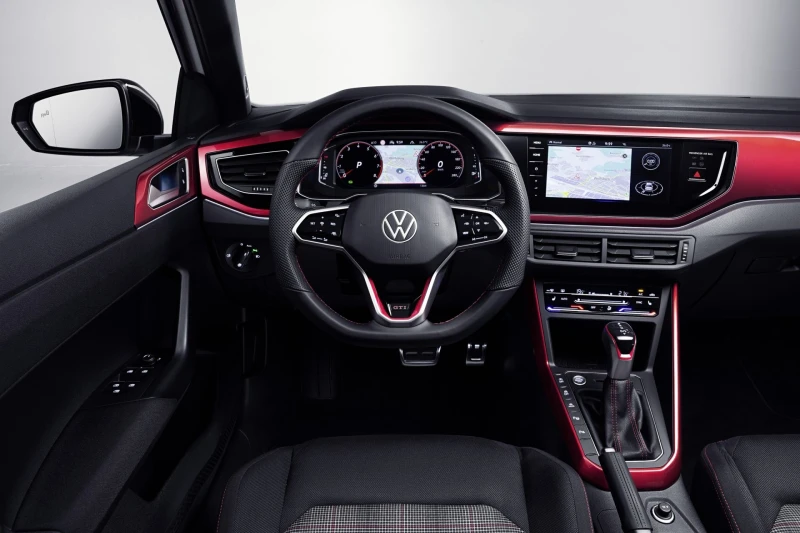
The dashboard is laid out horizontally, the infotainment screen sits close to the instrument cluster, and the driving position no longer feels cramped. At the same time, the Volkswagen Polo VI interior does not try to imitate a premium car: practical plastics are used throughout, cloth upholstery is far more common than upscale trim, and the exact equipment depends heavily on the country where the car was originally sold.
That distinction matters for U.S. readers because Volkswagen did not officially sell the sixth-generation Polo (AW) through its American dealer network. Any example encountered in the United States is therefore a foreign-market car, so trim names and equipment should be interpreted according to the vehicle's original market rather than as U.S.-spec configurations. Two visually identical Polo hatchbacks can differ in their instrument panel, climate controls, infotainment, heated-seat availability, and driver-assistance features. The trim badge is only a starting point; the VIN and the car's actual equipment matter more.
A dashboard built around one horizontal line
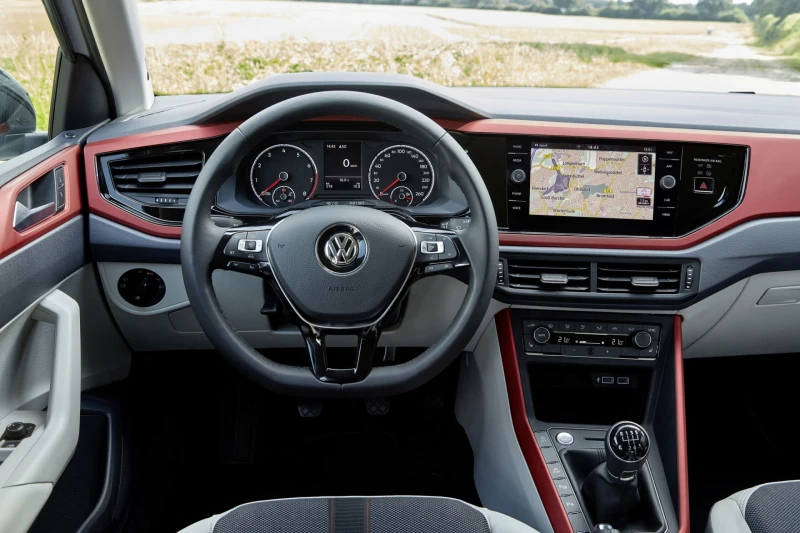
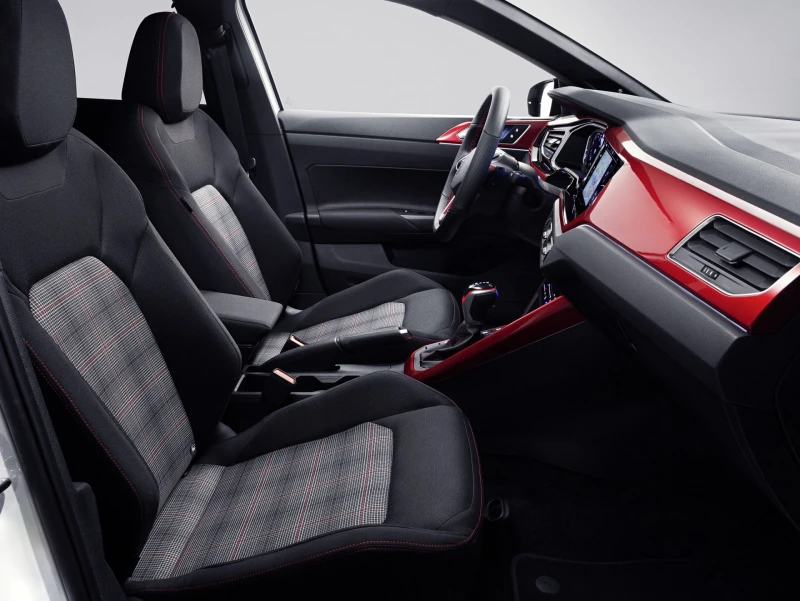
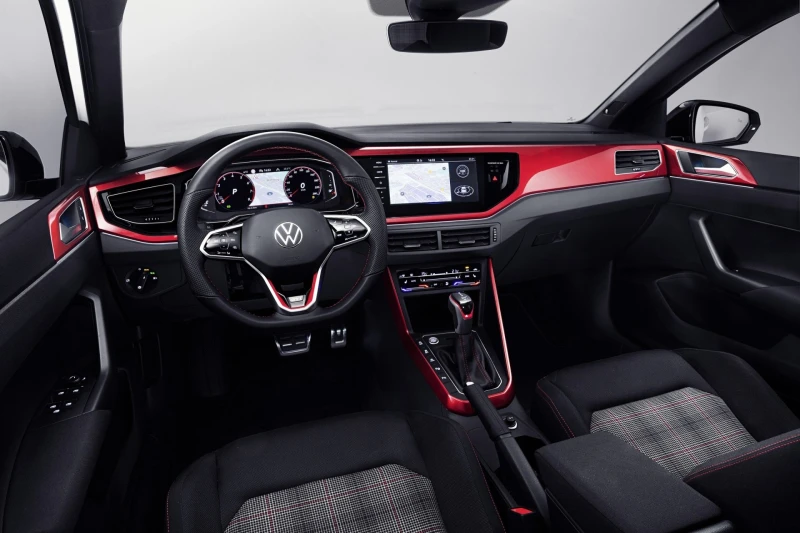
In pre-facelift Polo AW models, the center screen is integrated into a wide decorative section rather than sitting above the dashboard like a separate tablet. The trim line continues toward the air vents and door panels, visually widening the cabin and keeping the gauges and infotainment in the same general field of view. Separate climate controls sit below the screen, followed by a phone storage area and either a conventional transmission selector or a manual shifter, depending on the version.
Early cars retained a useful number of physical buttons and rotary controls. Radio functions, volume, and temperature can be adjusted without digging through menus, which is convenient while driving. The 2021 facelift kept the basic layout but made the dashboard noticeably more digital. An 8-inch Digital Cockpit became a key element in many updated versions, while higher trims could be equipped with the 10.25-inch Digital Cockpit Pro. Depending on specification, infotainment screens measured 6.5, 8, or 9.2 inches.
The facelift added more screens but reduced tactile control
The most debatable practical change is the touch-sensitive control panel used with the optional dual-zone Climatronic system. Temperature, fan speed, and related functions are adjusted through illuminated touch areas rather than conventional knobs. The panel looks consistent with the digital instrument cluster, but physical controls in the pre-facelift car are easier to operate by feel, especially on rough pavement or when the driver is wearing gloves.
Cars with the standard air-conditioning system retained a more traditional control layout, so a facelifted Polo without Climatronic can actually be simpler to use for routine adjustments. It is a good example of this generation's design philosophy: a more expensive configuration is not automatically the most intuitive one.
Materials vary more by trim level than they first appear
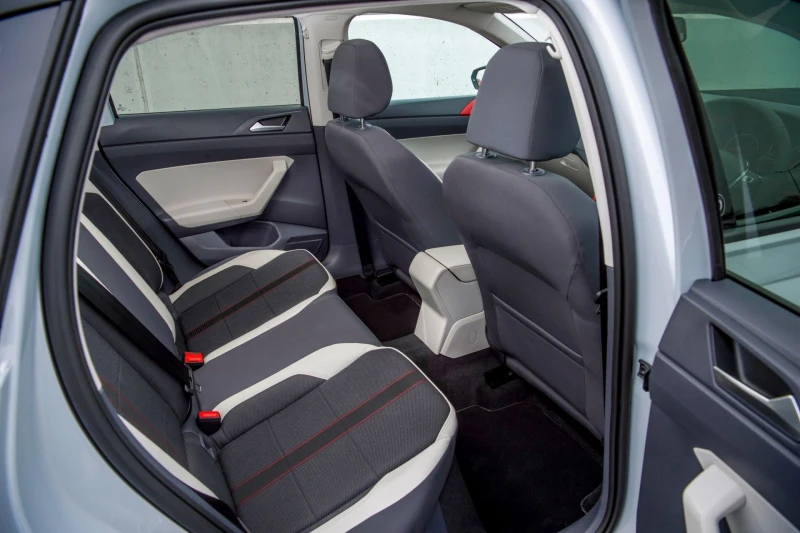
Volkswagen combined softer and harder surfaces throughout the cabin. The upper dashboard in mid-level and higher-spec versions has a more compliant finish, while the lower dashboard, center tunnel, and large sections of the door panels use hard plastic. That mix is normal for a subcompact hatchback, but the condition of a used interior still depends on mileage and whether panels have been removed for accessories, audio work, or added sound insulation.
Glossy trim around the infotainment and climate-control area quickly collects fingerprints and fine scratches. Lighter or painted decorative panels on early Comfortline, Highline, and Beats versions make the cabin look less plain, but they require careful cleaning because abrasive cloths can leave visible marks. On higher-mileage cars, the driver's seat bolster, steering-wheel rim, shifter surround, and window switches are useful places to inspect because they often reveal how intensively the cabin has been used.
Cloth is the most common seat material. A fully leather-trimmed Polo interior was not typical for European-market AW models. Higher versions could use mixed materials and ArtVelours, while R-Line cars received their own sportier upholstery. The Beats special edition added contrasting details, sport-style seats, and a 300-watt audio system, but the underlying cabin plastics remained those of the regular Polo.
European trim badges do not translate into U.S. specifications
Before the facelift, the European lineup commonly used Trendline, Comfortline, and Highline trim names, with Beats special editions and R-Line appearance packages also available in some markets. Because the Polo VI was not part of Volkswagen's official U.S. lineup, none of these should be treated as American trim levels. A car imported from Germany, Belgium, the Netherlands, or another market can carry the same badge as another Polo yet have a very different option list.
One Highline can have a digital instrument cluster, climate control, heated front seats, adaptive cruise control, and a rearview camera, while another may use analog gauges, manual air conditioning, and only rear parking sensors. Cars from warmer markets may legitimately lack heated seats, while examples sourced from northern Europe can combine navigation and a broader driver-assistance package with different comfort equipment. For a U.S.-based buyer or collector, verifying the original market and build specification is more useful than relying on the trim badge alone.
Life, Style and R-Line after 2021
The facelift introduced a revised hierarchy in major European markets: the base Polo, followed by Life, with Style and R-Line positioned above it. Life added features such as App-Connect, a center armrest, and upgraded steering-wheel and shifter trim in many configurations. Style placed more emphasis on digital equipment and decorative finishes, with ArtVelours seating available in some versions. R-Line added its own seats with Karoso/ArtVelours upholstery combinations and darker interior detailing.
For U.S. readers, these versions are best understood as source-market specifications rather than local trim levels. If a particular imported Polo is advertised as a Style or R-Line, the useful approach is to verify the actual equipment through photos, build data, and the VIN. Features such as Digital Cockpit Pro, a rearview camera, heated seats, or specific driver-assistance systems were often optional or market-dependent.
Cabin space was one of the biggest improvements over the Polo V
The move to the MQB A0 platform stretched the wheelbase to about 100.3 inches. The front seats are spaced generously for a subcompact car, and the driver's seat adjustment range works for a wide range of body types. The steering wheel adjusts for both height and reach, major controls are placed logically, and the center screen sits high enough that the driver does not need to look far away from the road.
The rear seat is best suited to two adults. Knee room is noticeably better than in the previous generation, and the roofline does not severely limit headroom. A third passenger can fit, but the cabin is not wide enough to make three-across seating comfortable for long trips. ISOFIX child-seat mounting points are provided, although anyone using U.S.-market child seats should confirm compatibility with the specific imported vehicle before purchase.
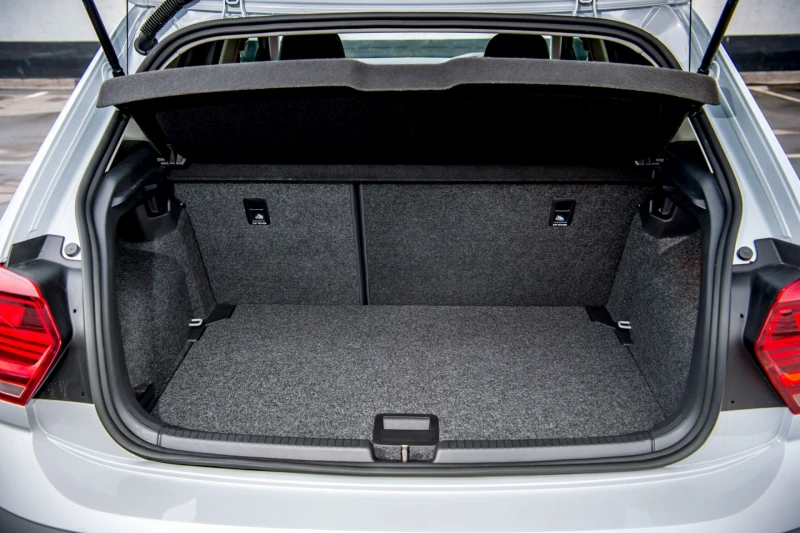
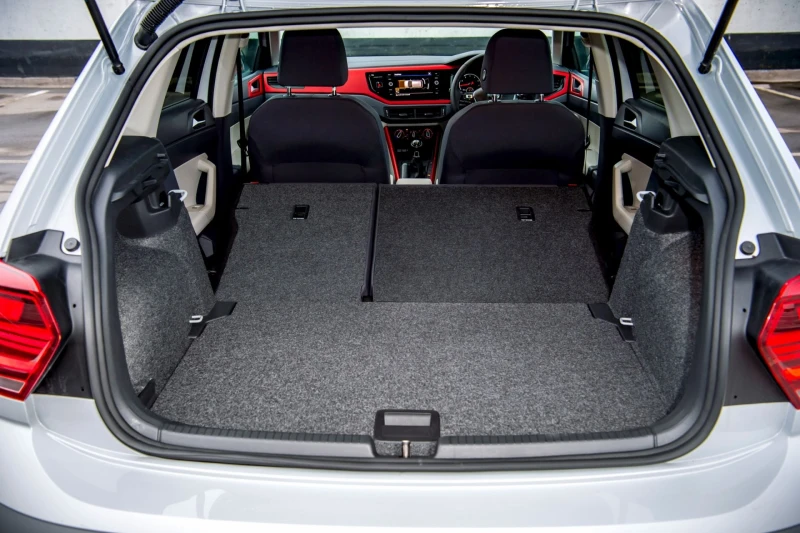
European cargo figures list 351 liters behind the rear seats, or about 12.4 cubic feet, and up to 1,125 liters, or roughly 39.7 cubic feet, with the seatbacks folded. The rear bench splits 60:40. Cars equipped with an adjustable double cargo floor can reduce the step created when the rear seats are folded or lower the floor for additional depth. The cargo area is usefully box-shaped for a city hatchback, though the relatively high load lip and the lack of a completely flat floor in some configurations are worth noting when carrying longer items.
What tends to show after several years of use
The hard interior panels generally tolerate normal use well, but localized rattles can develop around the door panels, glovebox, center tunnel, or cargo cover on cars that have seen rough roads or previous trim removal. That does not automatically indicate a major problem; loose clips or plastic-to-plastic contact after disassembly are common possibilities. During a test drive, it is useful to turn the audio system off and listen over small bumps with the cabin both cold and fully warmed up.
Noise insulation is typical for the subcompact class. On smooth pavement the cabin feels reasonably composed, but coarse surfaces make tire and rear-wheel-well noise more noticeable. Larger R-Line wheels can amplify that effect. Forward visibility is good thanks to the car's manageable dimensions and relatively low dashboard, while the broad rear pillars make a rearview camera and parking sensors genuinely useful rather than merely decorative options.
The Polo VI interior is not difficult to maintain. Glossy trim is best cleaned with a soft microfiber cloth, cloth upholstery should be cleaned without excessive moisture, and the touch-sensitive surfaces on facelifted cars benefit from regular wiping because fingerprints become obvious in side lighting.
Which interior strikes the best balance
By 2026 standards, the Polo AW cabin still feels functional, although early 6.5-inch infotainment systems and basic monochrome displays now look dated. A well-equipped pre-facelift car with an 8-inch infotainment system and Active Info Display can still feel modern while retaining convenient physical controls. Facelifted cars bring newer graphics and connectivity, but the touch-sensitive Climatronic interface will not suit every driver.
For an imported Polo in the United States, the most useful specification is not necessarily the highest trim badge. A car with heated seats, climate control, parking sensors, smartphone integration, and a clear equipment history may be more appealing in daily use than a rarer Style or R-Line bought mainly for its trim and larger screens. More important than the badge are the condition of the seats, evidence of careful trim removal, proper operation of the climate system, and confirmation that every listed driver-assistance feature actually works.
The sixth-generation Polo interior has aged well because its strengths are more structural than fashionable: a clear horizontal dashboard, sensible driving position, and useful cargo space still suit everyday use. The difference between a satisfying and disappointing example depends less on the trim name than on the actual option set, the car's original market, and how well the cabin was treated by previous owners.