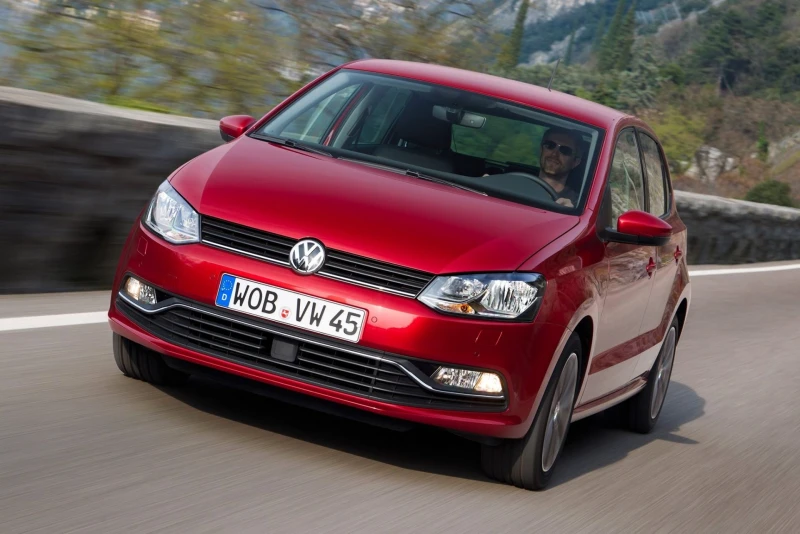
Over eight years of production, the hatchback moved from the 6R designation to 6C, adopted a new family of gasoline engines, replaced its diesel lineup, and gained several special versions. For U.S. readers, one point matters immediately: the Polo V was not part of Volkswagen's regular U.S. new-car lineup. Cars encountered in the United States are therefore imported examples rather than a factory-defined U.S.-market range.
That makes the original European specification especially important when identifying a car. Two Volkswagen Polos from the same model year can differ considerably. For example, the 1.2 TSI badge appears both on pre-facelift cars with the chain-driven EA111 engine and on later cars with the belt-driven EA211. The 1.4-liter diesel is mainly associated with the facelifted generation, while the 1.2 TDI and 1.6 TDI belong to the earlier phase of production.
The specifications below cover the European Polo V hatchback, because that is the core 6R/6C configuration most likely to appear as an imported car. The Polo Sedan sold in several other markets uses a different body, different dimensions, and a separate powertrain range, so its specifications should not be applied automatically to the 6R/6C hatchback. Design, interior, and trim details are covered in other articles in this series.
One platform, but two technical eras
The Polo V uses a front-wheel-drive layout with a transverse-mounted engine. The front suspension is independent with MacPherson struts, while the rear uses a torsion-beam design. This basic arrangement remained in place throughout the generation, including the facelift and the main performance variants. No production Polo V offered all-wheel drive: the GTI, BlueGT, and limited-production R WRC Street all sent power to the front wheels.
The basic chassis architecture did not change, but the 2014 update went well beyond bumpers and lighting. Volkswagen introduced the 6C designation, a revised engine range meeting newer European emissions standards, retuned electric power steering, and additional driver-assistance technology. The naturally aspirated 1.2- and 1.4-liter engines of the earlier cars gave way to a three-cylinder 1.0 MPI, while the 1.2 TDI and 1.6 TDI diesels were replaced by a 1.4 TDI family.
Main Volkswagen Polo engines, 2009–2017
Because there was no official U.S.-market Polo V powertrain lineup, the table below retains the principal European hatchback engines rather than substituting specifications from another Volkswagen model. Output figures are shown in U.S. horsepower and rounded from the original European PS ratings. Imported cars can still vary by country of origin, model year, and equipment.
| Engine type | Displacement | Power | Transmission | Drive |
| Naturally aspirated 1.2 MPI gasoline, 6R | 1.2 L | 59 or 69 hp | 5-speed manual | Front-wheel drive |
| Naturally aspirated 1.4 MPI gasoline, 6R | 1.4 L | 84 hp | 5-speed manual or 7-speed DSG | Front-wheel drive |
| Turbocharged 1.2 TSI gasoline, 6R | 1.2 L | 89 or 104 hp | 5- or 6-speed manual, 7-speed DSG | Front-wheel drive |
| Naturally aspirated 1.0 MPI gasoline, 6C | 1.0 L | 59 or 74 hp | 5-speed manual | Front-wheel drive |
| Turbocharged 1.0 TSI gasoline, 6C | 1.0 L | 94 or 108 hp | 5- or 6-speed manual; DSG on selected versions | Front-wheel drive |
| Turbocharged 1.2 TSI gasoline, 6C | 1.2 L | 89 or 108 hp | 5- or 6-speed manual, 7-speed DSG | Front-wheel drive |
| 1.4 TSI BlueGT gasoline with ACT cylinder deactivation | 1.4 L | 138 or 148 hp | 6-speed manual or 7-speed DSG | Front-wheel drive |
| GTI gasoline | 1.4 or 1.8 L | 178 or 189 hp | 7-speed DSG; 1.8 TSI also offered with a 6-speed manual | Front-wheel drive |
| 1.2 TDI diesel, 6R | 1.2 L | 74 hp | 5-speed manual | Front-wheel drive |
| 1.6 TDI diesel, 6R | 1.6 L | 74, 89, or 104 hp | 5-speed manual; 7-speed DSG on selected versions | Front-wheel drive |
| 1.4 TDI diesel, 6C | 1.4 L | 74, 89, or 104 hp | 5-speed manual; the 89-hp version could also be paired with DSG | Front-wheel drive |
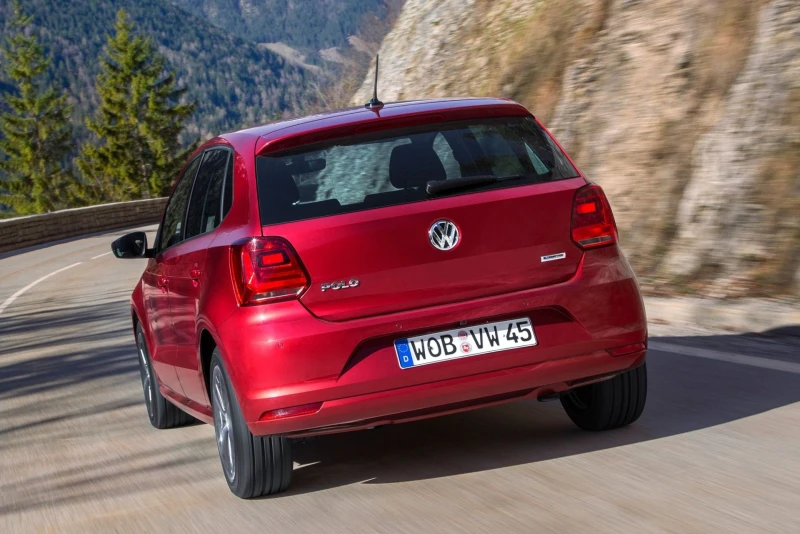
What the same 1.2 TSI badge can hide
When comparing Volkswagen Polo engines, it is important to separate the pre-facelift and facelifted units. The earlier EA111-family 1.2 TSI is a four-cylinder, direct-injected, turbocharged engine with a timing chain. On a used car, a cold start deserves close attention: prolonged metallic rattling can point to wear in the chain, tensioner, or related components. Mileage matters, but oil-change history is just as important.
After the update, Volkswagen used the EA211-series 1.2 TSI with a timing belt. It retained turbocharging and direct injection but is fundamentally different from the earlier engine. The lower-output version was commonly paired with a 5-speed manual or DSG, while the higher-output version could be matched with a 6-speed manual or 7-speed dual-clutch transmission.
The naturally aspirated 1.2 MPI and 1.0 MPI use simpler fuel systems and do not have a turbocharger. They provide enough performance for urban driving, but with a full load at highway speeds they require more frequent downshifts. Their three-cylinder layout can produce noticeable vibration at idle, which is not automatically a fault. Diagnosis should distinguish normal engine characteristics from worn mounts, ignition misfires, or uneven compression.
Diesels: efficiency depends on how the car was used
The pre-facelift 1.2 TDI and 1.6 TDI use common-rail fuel injection. The 1.2 TDI is a three-cylinder engine, while the 1.6 TDI has four cylinders and is generally better suited to sustained highway driving. In 2014, both were replaced by a three-cylinder 1.4 TDI range rated from about 74 to 104 hp in U.S. units. A balance shaft was used to reduce vibration.
For a used diesel Polo, the previous driving pattern matters more than an attractive fuel-economy figure. Repeated short trips can make diesel particulate filter regeneration more difficult. On higher-mileage cars, the EGR system, turbocharger, injectors, high-pressure fuel system, dual-mass flywheel, and exhaust aftertreatment all deserve inspection. A well-maintained diesel can make sense for frequent long-distance driving, but neglected fuel and emissions systems can be expensive to restore.
Dimensions changed little, but curb weight varied considerably
The facelift did not make the Polo substantially larger. A standard five-door hatchback is about 156.3 to 156.4 inches long and 66.2 inches wide without the side mirrors, with a wheelbase of roughly 97.2 inches. Width with the mirrors is about 74.8 inches. Height varies by suspension setup, BlueMotion aerodynamic specification, performance version, and measurement method.
Curb weight depends on engine, number of doors, transmission, and equipment. A basic gasoline Polo with a manual transmission weighs a little over 2,300 pounds, diesel versions are heavier, and the GTI approaches 2,800 pounds. Gross vehicle weight for many mainstream versions falls roughly between 3,460 and 3,700 pounds.
| Version | Length / width / height | Wheelbase | Curb weight | Gross vehicle weight | Transmission / drive |
| Standard gasoline hatchback | 156.3–156.4 / 66.2 / 57.2–58.4 in | about 97.2 in | about 2,315–2,469 lb | about 3,461–3,571 lb | 5- or 6-speed manual / front-wheel drive |
| Gasoline version with DSG | about 156.4 / 66.2 / 57.2–57.6 in | about 97.2 in | about 2,491–2,734 lb | about 3,616–3,704 lb | 7-speed DSG / front-wheel drive |
| Diesel hatchback | 156.3–156.4 / 66.2 / 57.2–58.4 in | about 97.2 in | about 2,513–2,646 lb | about 3,638–3,682 lb | 5-speed manual or DSG / front-wheel drive |
| Polo BlueGT | about 156.4 / 66.2 / 57.2 in | about 97.2 in | about 2,690–2,734 lb | about 3,660–3,704 lb | 6-speed manual or 7-speed DSG / front-wheel drive |
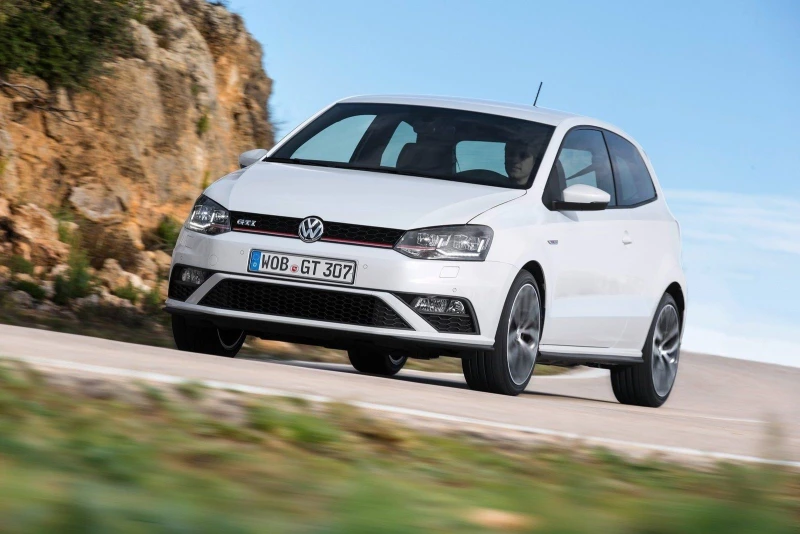
| Polo GTI | 156.5–156.8 / 66.2 / 57.1–57.2 in | about 97.2 in | about 2,800–2,822 lb | about 3,770 lb | 6-speed manual or 7-speed DSG / front-wheel drive |
Transmissions and what they mean on a used car
The manual transmissions used in the Polo V are conventional in design. On higher-mileage cars, inspect the clutch, release bearing, synchronizers, and shift linkage. Diesel versions add the dual-mass flywheel as another wear item. Gear-specific whine, difficult engagement, or vibration when pulling away calls for a proper diagnosis rather than assuming the issue is limited to linkage adjustment.
A 7-speed dry-clutch DSG was paired with some gasoline and diesel engines. It should not be judged only by the absence of a jerk during a short test drive. A useful inspection includes driving the transmission both cold and fully warmed up, creeping at low speed, starting on an incline, and scanning the control unit for faults and adaptation data. The clutches, mechatronics, actuators, and adaptation values all deserve attention. A DSG with documented maintenance can work well in normal use, but the possibility of repair costs should be considered when evaluating a used car.
Fuel economy: no U.S. EPA rating for these European configurations
Because the Polo V was not sold as a regular new model in the United States, the European-market engines discussed here do not have directly comparable U.S. EPA fuel-economy ratings. Owner-reported and regional figures should therefore be treated as approximate reference points rather than as official U.S. estimates. Converted to U.S. mpg, a naturally aspirated 1.2-liter Polo is often reported around 36–41 mpg in mixed driving, with heavy city use potentially falling to roughly 26–29 mpg. A 1.4 MPI may be around 34–36 mpg, while a healthy 1.2 TSI can fall roughly in the 39–47 mpg range in relaxed mixed use and around 29–36 mpg in city driving.
The 1.2, 1.4, and 1.6 TDI diesels can return roughly 47–59 mpg in mixed driving under favorable conditions. Actual consumption varies with temperature, speed, particulate-filter condition, transmission, and trip length. Factory-cycle figures, owner reports, and trip-computer readings are not interchangeable, so fuel-system corrections and incomplete DPF regeneration events matter more during a pre-purchase inspection than a single headline mpg number.
Which configurations still make practical sense
For a U.S. buyer considering an imported Polo V, simplicity still favors a naturally aspirated gasoline engine with a manual transmission. These versions lack a turbocharger and a more complex direct-injection system, although the early 1.2 MPI still deserves checks of the timing drive, compression, and oil consumption. A simpler design does not eliminate the need for a proper inspection.
The facelifted 1.2 TSI offers a stronger balance of low-end torque and fuel economy, but the cooling system, turbocharger, fuel system, and timing-belt condition should be verified. A pre-facelift 1.2 TSI can also be considered when its service history is clear and there are no signs of timing-chain wear.
A diesel makes the most sense for regular long-distance use. In predominantly short-trip driving, fuel savings can be offset by maintenance involving the EGR system, particulate filter, injectors, and dual-mass flywheel. BlueGT and GTI versions are more specialized and can involve costlier components, while parts availability in the United States may be less straightforward than for mainstream Volkswagen models officially sold there.
Ultimately, the best configuration depends on more than horsepower. A naturally aspirated gasoline engine with a manual transmission suits simple, low-stress use; a healthy facelifted TSI works well for mixed driving; and a properly maintained TDI is better aligned with frequent highway mileage. For U.S. ownership, documentation of the car's original market, parts compatibility, and service history is especially important. The condition of a specific Polo V matters more than a theoretical advantage held by any one version.