




In the United States, the Volkswagen Polo Mk5 is not a normal used-car-market purchase. Volkswagen did not officially sell this generation here, so examples that appear for sale are imports and can differ substantially depending on their original country. A facelifted car with an attractive asking price can require more work than a well-kept early example, and even the familiar 1.2 TSI badge can refer to engines from different families. The first step is therefore to identify exactly what car you are looking at: factory code, engine code, transmission, original market, and documented import and service history.
The generation itself should not be treated as uniformly troublesome. Most age-related concerns are tied to specific powertrains, accumulated mileage, previous repairs, or neglected maintenance rather than to every Polo 6R or 6C. For a U.S. buyer, that distinction matters even more because there is no single American trim or powertrain lineup to use as a reference. The cars found here may have started life in Germany, the United Kingdom, another European country, or a different global market.
The engine code can matter more than the model year
One of the engines that deserves the closest inspection is the early 1.2 TSI from the EA111 family. Used before the 2014 facelift in many European-market Polo models, this turbocharged four-cylinder uses a timing chain. On engines with a worn chain or tensioning components, warning signs can include metallic rattling after a cold start, cam/crank correlation faults, rough running, or difficult starting. Ignoring those symptoms can turn a manageable repair into a much more serious engine problem.
Replacing the timing-chain components is a familiar job for Volkswagen specialists, but documentation matters. A seller may say that the “timing set” was replaced without being able to show which parts were actually installed. A pre-purchase inspection should therefore include a true cold start after the car has been sitting, verification of the engine code, and review of invoices rather than relying on a vague maintenance note.
After the 2014 update, the Polo 6C used later EA211-series 1.2 TSI engines with a belt-driven timing system. Their design is different enough that the early EA111 chain reputation should not simply be transferred to every facelifted 1.2 TSI. Age still calls for inspection of the cooling system, turbocharger, fuel system, oil leaks, and service history. Long oil-change intervals are not automatically reassuring on an older turbocharged engine, especially if the car spent much of its life on short urban trips.
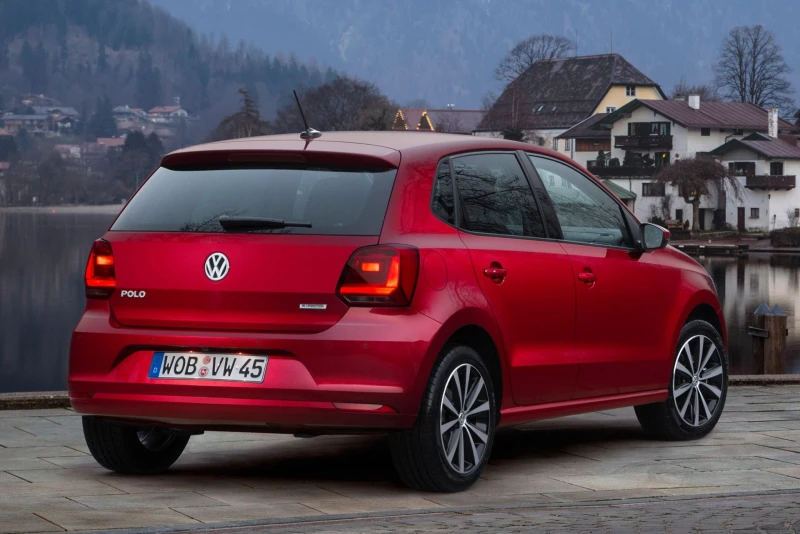
Naturally aspirated engines are simpler, not maintenance-free
The 1.2 MPI and 1.4 MPI gasoline engines are mechanically simpler choices in the European Polo lineup. They avoid a turbocharger and the more complex direct-injection hardware of the TSI engines, which can make diagnosis and routine ownership more straightforward. That does not mean every naturally aspirated Polo is automatically a better buy. Lower-output versions need more revs when merging, passing, or carrying a full load, and an engine that has been neglected can still erase the theoretical advantage of a simpler design.
The three-cylinder 1.2 MPI has a characteristic amount of vibration at idle. Mild unevenness can be normal for the layout, while pronounced shaking can point to worn engine mounts, ignition misfires, compression problems, or fuel-system issues. A scan-tool check alone is not enough; the engine should be evaluated during startup, at idle, and under load.
The naturally aspirated 1.4 MPI is often viewed as a comparatively straightforward early-Polo configuration, but age-related oil leaks, ignition-coil condition, cooling-system health, and timing-system service still need attention. Fewer complex components can reduce the number of expensive failure points, but simplicity cannot compensate for missing maintenance.
A DSG needs more than a quick drive around the block
Some gasoline and diesel Polo Mk5 variants were paired with a seven-speed DSG dual-clutch transmission using dry clutches. It shifts quickly and keeps engine speed low on the highway, but on a used imported car it deserves more scrutiny than a conventional manual transmission.
Minor low-speed behavior does not automatically mean the gearbox is failing, but clear shuddering from a stop, harsh engagement, delayed reverse selection, or repeated jerking once the transmission is warm should trigger a specialist inspection of the clutch system and mechatronics. Adaptation procedures and software work can improve operation in some cases, but they do not repair worn mechanical parts.
A proper test drive should include cold operation, fully warmed operation, slow stop-and-go movement, an uphill start, and repeated first-to-second-gear transitions. Diagnostic work should go beyond reading stored fault codes and include clutch-related measured values where supported. Because repair cost depends heavily on what is actually worn, a low purchase price can become misleading very quickly if the car needs clutch or mechatronic work.
The manual transmission is mechanically simpler, but it also wears. Higher-mileage cars can develop bearing noise, vague shift action, clutch wear, or seal leaks. On some diesel versions, a dual-mass flywheel can add another significant item to the repair list.
Diesel only pays off when the driving pattern suits it
The Polo Mk5 was offered in Europe with diesels including the 1.2 TDI, 1.6 TDI, and, after the facelift, 1.4 TDI. None of these were U.S.-market Polo powertrains, so a diesel example in the United States should be treated as a foreign-market import rather than compared directly with a domestic Volkswagen TDI model. Its low fuel consumption can be attractive, but the ownership case depends heavily on how the car is driven and on whether a shop familiar with that exact engine is available.
Frequent highway use is generally more favorable to a diesel particulate filter than repeated short trips. During inspection, a specialist should evaluate injector correction values, fuel-system pressure, turbocharger operation, EGR function, and DPF loading where diagnostic access allows it. Repeated or interrupted regeneration events can be associated with higher fuel use, cooling-fan operation after shutdown, or rising oil level. Removing emissions hardware should not be treated as a proper repair; poor software work can introduce additional problems, and the legality of modifications depends on the applicable jurisdiction.
For 1.6 TDI cars from the EA189 family, service-campaign history is also worth checking. A completed software campaign does not determine the mechanical condition of the car by itself, but supporting paperwork can help establish a more complete history for an imported example.
Fuel economy needs the right context
Fuel-economy claims for the Polo Mk5 require extra caution in the United States. European-market cars were commonly rated under European test cycles rather than the EPA procedure used for U.S.-market vehicles. Those figures should not be relabeled as EPA estimates, and simply converting liters per 100 kilometers to U.S. mpg does not make the underlying test methodology comparable.
Real-world consumption also changes with short trips, winter warm-up, heavy traffic, low tire pressure, roof loads, and aggressive acceleration. On gasoline versions, unexpectedly high fuel use can be related to thermostat operation, sensors, ignition faults, intake deposits, dragging brakes, or tire condition. On diesels, DPF regeneration frequency and injector condition can also play a role. A seller’s best-case mpg claim is less useful than diagnostic data and a meaningful test drive.
Import history matters more than the trim badge
Because the Polo V was never officially sold in the United States, there is no single U.S. trim hierarchy, engine list, or normal domestic pricing guide for the model. A car advertised simply as a “Polo” may have equipment and mechanical specifications that depend entirely on its original market. Verify the VIN, factory code, engine code, and build information before ordering parts or comparing one car with another.
Imported cars should be checked for a coherent mileage and service history using whatever records are available from the country where the car originally lived. A worn steering wheel does not prove unusually high mileage by itself, because materials and use patterns vary. A more useful picture comes from the combination of seat wear, pedals, seat belt condition, switchgear, door hinges, shifter wear, service invoices, and inspection records.
The Polo body is reasonably well protected for its era, so significant corrosion should not automatically be dismissed as “normal.” Inspect repaired areas first: rear wheel-arch edges, rocker panels, lower door seams, cargo-floor sections, subframe mounting points, and the inner faces of structural panels. Poor collision repairs can allow rust to start around welds or areas where factory protection was disturbed. The exhaust system may also show age-related corrosion before the body itself develops structural rust.
Road conditions and climate vary widely across the United States, and an imported Polo may also have spent most of its life abroad before arriving here. Potholes, rough pavement, and winter road salt can accelerate wear in stabilizer links, control-arm bushings, strut mounts, springs, and brake hardware. Broken or weakened spring coils have been reported on aging Polo Mk5 cars, so the lower coils are worth inspecting on a lift. Several individually minor chassis issues can add up to a meaningful post-purchase repair bill.
Noise, hard plastic, and old infotainment are not always faults
Cabin insulation is typical of a small European hatchback from this period. Tire noise, suspension sounds, and aerodynamic noise are more noticeable at highway speed than in a larger car. A pronounced new hum, however, may point to a wheel bearing, uneven tire wear, or missing wheel-arch liners rather than simply to the model’s basic sound insulation.
Hard plastic in the lower cabin scratches easily, and high-mileage cars can develop rattles in the door panels or center console. Some noises begin after the interior has been taken apart for an alarm, speakers, tracking hardware, or an aftermarket head unit. Non-factory wiring deserves a careful look: twisted wire joints, added relays, poorly secured modules, and improvised adapters can create more trouble than the original electronics.
Early factory audio systems can be basic, with small displays, CD, AUX, or limited Bluetooth depending on equipment and market. That is technological age, not a defect. Replacing the head unit is possible, but the installation should preserve steering-wheel controls, parking-sensor functions where fitted, and proper communication with the vehicle network. An expensive touchscreen is not automatically an upgrade if the correct interface hardware is missing.
How to separate normal wear from a risky purchase
Stabilizer links, brake components, engine mounts, worn upholstery, and outdated infotainment generally fall into the category of predictable age-related expenses. Their condition and repair scope can usually be estimated during an inspection, and many service parts are available through Volkswagen specialists and European-parts suppliers.
More financial reserve is appropriate for a DSG with obvious symptoms, an early 1.2 TSI with no credible timing-chain history, a diesel with fuel-system or emissions-system faults, or a car with evidence of serious structural repair. Because there is no broad U.S. used-Polo market to establish a reliable price band, the asking price should be judged against the specific car’s condition, import status, documentation, and repair needs rather than against a converted European price.
Service campaigns and recalls should also be checked by VIN. Since a Polo Mk5 in the United States is a foreign-market vehicle, campaign coverage and lookup tools may depend on the country where the car was originally sold. Documentation from the original market, Volkswagen service records, and a specialist familiar with imported VW models can therefore be more useful than assuming a U.S.-market database contains the full history.
Which version is worth considering?
For a U.S. buyer, the first question is not which American trim to choose, because no official U.S. Polo Mk5 lineup existed. The practical choice is between the imported cars that are actually available. A naturally aspirated gasoline engine with a manual transmission is mechanically straightforward, while a facelifted 1.2 TSI offers stronger low-end torque but makes a documented service history more important. A diesel can make sense for frequent longer-distance driving if the exact engine can be properly serviced, and a DSG should be considered only after a successful specialist inspection.
A later model year should not outweigh the condition of the individual car. A well-maintained 6R with transparent history can be a lower-risk purchase than a newer 6C with high mileage, collision damage, or irregular servicing. The model’s rarity in the United States also makes parts sourcing, diagnostic familiarity, and prior-market documentation part of the ownership equation.
When shopping for a used Volkswagen Polo Mk5 in the United States, start with the VIN, factory and engine codes, a cold start, transmission behavior, body condition, service history, and import paperwork. That process cannot eliminate every future expense, but it can separate normal age-related wear from faults that can materially change the cost and practicality of owning a non-U.S.-market Polo.