


Volkswagen Passat B7 Technical Specifications in the United States primarily featured gasoline engines, with a strong emphasis on the TSI lineup and limited diesel availability compared to Europe. This article covers the main engines, transmissions, dimensions, and key ownership considerations for the 2010–2015 generation. Design, interior, trim levels, and common issues are covered in separate articles in this series.
Engines and Transmissions
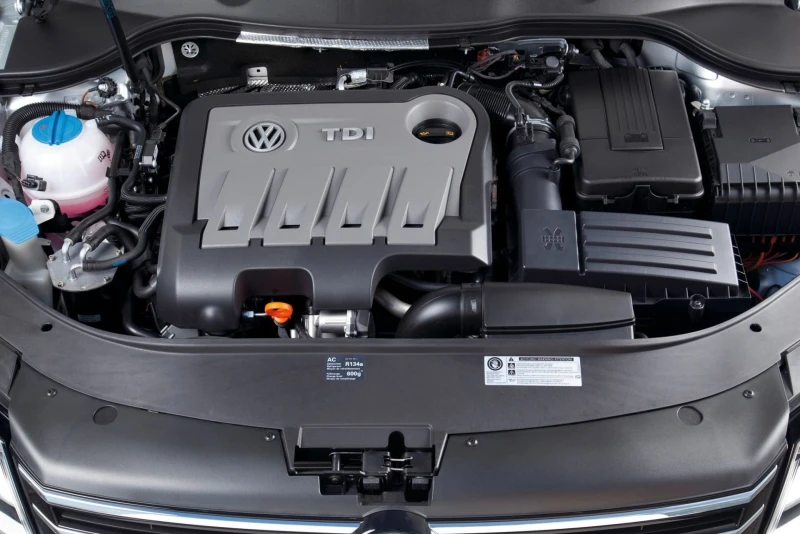
Throughout its production run (2010–2015), the Volkswagen Passat B7 offered a range of powertrains tailored to different markets. In the US, the lineup focused heavily on turbocharged gasoline engines (TSI), with the 2.5L naturally aspirated five-cylinder available in earlier years and the 1.8 TSI and later 2.0 TSI becoming prominent. The powerful 3.6L V6 was offered in select trims, while diesels were extremely rare in the American market during this generation. 4Motion all-wheel drive was available mainly on higher trims and the Alltrack variant (introduced later in the cycle).
Most common powertrains found on the US used market:
| Engine Type | Displacement | Power, hp | Transmission | Drivetrain |
| Gasoline (TSI) | 1.8L | 170 | 6-speed Auto / 6-speed DSG (DQ250) | Front-wheel |
| Gasoline (TSI) | 2.0L | 200 | 6-speed DSG (DQ250) | Front-wheel / 4Motion (select trims) |
| Gasoline (V6 FSI) | 3.6L | 280–300 | 6-speed DSG / 6-speed Auto | 4Motion |
| Gasoline (5-cyl) | 2.5L | 170 | 5-speed Auto / 6-speed Auto | Front-wheel |
Note: The 3.6L V6 and early 2.5L five-cylinder were more common in the US than in Europe, while smaller 1.4 TSI engines were virtually absent from the American lineup.
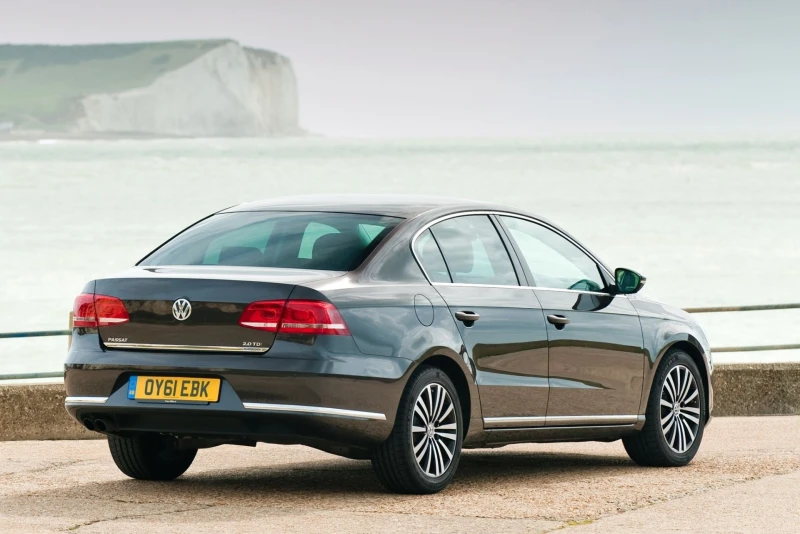
Dimensions and Weight
The Passat B7 dimensions are nearly identical to the B6, with minor adjustments from revised bumpers and styling. Figures vary slightly depending on body style (sedan or wagon Variant) and trim level.
| Parameter | Sedan | Wagon Variant |
| Length, in | 187.6–191.0 | 187.6–191.0 |
| Width (without mirrors), in | 71.7 | 71.7 |
| Height, in | 58.0–59.7 | 59.7–60.0 |
| Wheelbase, in | 106.7 | 106.7 |
| Curb Weight, lbs (approx.) | 3200–3600 | 3300–3800 |
| Gross Vehicle Weight, lbs (approx.) | 4300–4700 | 4400–4900 |
Values are averaged across the most common configurations (1.8 TSI and 2.0 TSI). Alltrack models offer around 6.5 inches of ground clearance compared to the standard 5.4–5.9 inches.
Yearly Updates and Changes
The B7 was already a deep facelift of the B6, so it did not receive a mid-cycle refresh. Key updates rolled out gradually:
- 2010–2011: Launch with 2.5L five-cylinder and early TSI engines; introduction of 6-speed DSG in select models.
- 2012: Major engine shift — introduction of the 1.8 TSI and 2.0 TSI engines for improved efficiency and power.
- 2013–2014: Refinements to transmission software, improved interior materials, and better infotainment options.
- 2015: Final model year with minor equipment updates before the arrival of the next-generation Passat (NMS platform in the US).
In the US market, post-2012 models with the 1.8 TSI and 2.0 TSI engines are generally considered the most refined and desirable.
Ownership Notes & Technical Highlights
In the US, the 1.8 TSI and 2.0 TSI engines dominate the used market. Real-world fuel economy (based on EPA estimates and owner reports) typically falls in these ranges:
- 1.8 TSI automatic — 22–28 mpg combined;
- 2.0 TSI DSG — 21–27 mpg combined;
- 3.6L V6 — 17–23 mpg combined.
Engine reliability: Post-2012 1.8/2.0 TSI engines are generally solid when maintained properly, though early TSI units may require attention to timing chain, carbon buildup, and turbo health. The 6-speed “wet” DSG (DQ250) is more durable than early dry-clutch units. Parts availability is excellent due to the model’s popularity, but complex repairs (DSG, turbo) should be handled by experienced VW specialists.
Conclusion & Best Choice for the US Market
On the American used market, the sweet spot is usually a 2012–2015 1.8 TSI or 2.0 TSI with the 6-speed DSG and front-wheel drive. These offer a strong balance of performance, fuel economy, reasonable maintenance costs, and excellent resale value.
The V6 models appeal to those wanting more power and are often found with 4Motion, but they come with higher fuel and upkeep costs. Avoid very early models (2010–2011) unless service history is impeccable.
When shopping, prioritize examples from 2012+ with documented service records — especially regular DSG fluid changes (every 40,000 miles) and timing chain inspections on TSI engines.
Overall, a well-maintained Passat B7 remains a practical, spacious, and surprisingly enjoyable midsize sedan in the D-segment.