


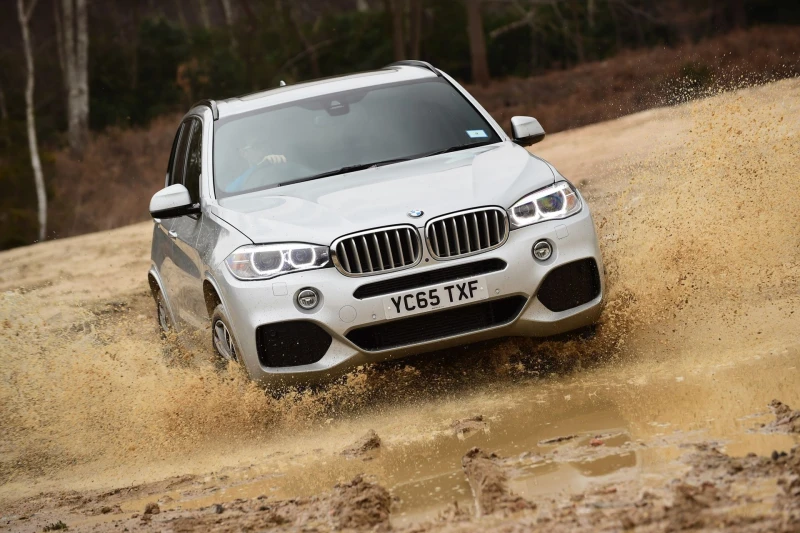
Produced from 2013 to 2018, the third-generation BMW X5 delivers an excellent blend of premium quality, dynamic driving character, and real-world usability. In this article, we break down the engines, transmissions, dimensions, and other key technical specifications of the F15-generation X5, with focus on what matters most to American buyers. Exterior design, interior, trim levels, and common issues are covered in other articles in this series.
Engines and Transmissions
The BMW X5 (F15) offered a wide range of gasoline, diesel, and plug-in hybrid powertrains, all paired with an 8-speed ZF automatic transmission known for smooth shifts and good efficiency. Most models came with xDrive all-wheel drive, while select versions were offered with sDrive rear-wheel drive. Below is a summary table of the main powertrains available in the U.S. during 2013–2018.
| Model | Engine (type, displacement, power) | Transmission | Drivetrain |
|---|---|---|---|
| xDrive35i | Gasoline, I6, 3.0L turbo, 300–315 hp | 8-speed automatic | All-wheel drive |
| xDrive50i | Gasoline, V8, 4.4L twin-turbo, 445 hp | 8-speed automatic | All-wheel drive |
| xDrive35d | Diesel, I6, 3.0L turbo, 255 hp | 8-speed automatic | All-wheel drive |
| xDrive40e | Plug-in Hybrid, I4 2.0L turbo + electric motor, 313 hp (combined) | 8-speed automatic | All-wheel drive |
Acceleration ranges from about 5.3 to 6.8 seconds to 60 mph depending on the model. In the U.S. market, the xDrive35i and xDrive35d were the most popular choices, balancing performance and reasonable fuel economy. According to EPA estimates, the xDrive35i typically achieves 18–20 mpg combined, while the xDrive35d diesel offers 23–26 mpg combined – a significant advantage for highway driving and long-distance travel.
Dimensions and Weight
The F15 X5 maintains consistent exterior dimensions throughout its production run, positioning it firmly as a midsize luxury SUV. It offers a spacious interior and a versatile cargo area ranging from 650 to 1,870 liters (23–66 cu ft). Weight varies depending on engine and equipment, but the use of aluminum and high-strength steel helps keep the curb weight reasonable. Key dimensions are shown below.
| Parameter | Value (base models) | Notes |
|---|---|---|
| Length | 192.4 in (4886 mm) | Consistent across versions |
| Width | 76.3 in (1938 mm) | Excluding mirrors |
| Height | 69.4 in (1762 mm) | With roof rails |
| Wheelbase | 115.5 in (2933 mm) | Provides excellent stability |
| Curb Weight | 4,750–5,200 lbs (2150–2360 kg) | Varies by engine; xDrive35i ≈ 4,850 lbs |
| Gross Vehicle Weight | 6,100–6,570 lbs | Maximum allowable |
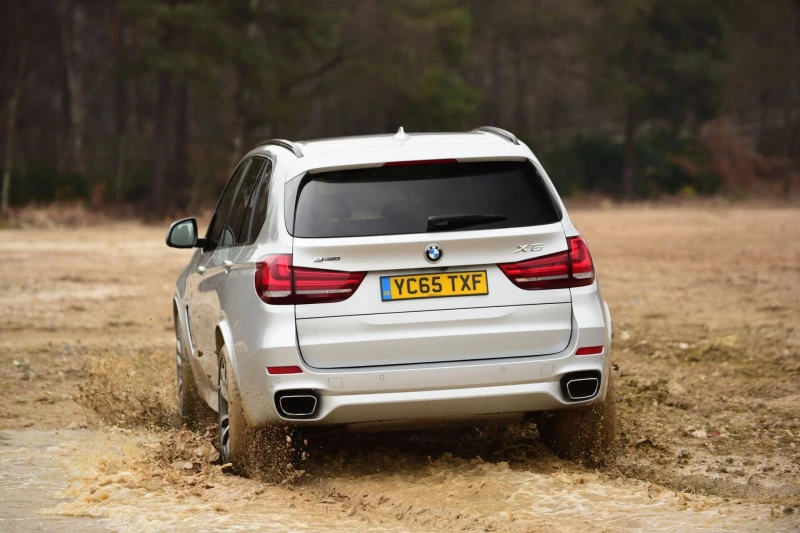
| Ground Clearance | 8.3 in (211 mm) | Adequate for light off-road use |
These dimensions make the X5 relatively easy to park in urban environments like Los Angeles or New York, though the width can feel substantial in tight spaces. The 8.3 inches of ground clearance helps handle moderate rough roads and light off-road situations.
Model Year Updates
The F15 X5 did not receive a major facelift, but several meaningful technical updates were introduced. In 2015, the xDrive40e plug-in hybrid variant debuted, combining a 2.0L turbo gasoline engine with an electric motor for an electric-only range of up to ~15–18 miles. This version became especially interesting in states with strict emissions regulations and for buyers looking to reduce fuel costs in city driving.
In 2016–2017, BMW improved the 8-speed automatic’s efficiency, slightly reduced fuel consumption, and introduced updated engine calibrations to meet stricter emissions standards. Later models (2016+) generally feature better interior materials, improved infotainment response, and enhanced long-term reliability of electronics and drivetrain components.
What to Look For When Buying
BMW X5 (F15) examples on the U.S. used market vary widely in condition. The N57 diesel (xDrive35d) is renowned for exceptional longevity – frequently exceeding 200,000–300,000+ miles with proper maintenance, though it is very sensitive to fuel quality and oil change intervals. The N55 3.0L turbo gasoline engine is powerful and responsive, but higher-mileage examples may develop oil consumption issues.
The ZF 8-speed transmission is generally very reliable, but fluid changes every 50,000–60,000 miles are strongly recommended to avoid harsh shifting at higher mileage. xDrive system components (transfer case, front differential) can show wear on vehicles used in harsh conditions or with neglected maintenance. Parts availability in the U.S. is excellent, though genuine BMW components remain expensive. Always check service history, perform a thorough pre-purchase inspection, and pay special attention to turbocharger health, cooling system, oil leaks, and suspension wear.
Bottom Line
The BMW X5 (F15) 2013–2018 remains a compelling choice on the U.S. used market in 2026. The sweet spot for most buyers is the xDrive35i (or xDrive35d where available) – offering strong performance, acceptable fuel economy, reasonable maintenance costs, and excellent long-term ownership experience. These models typically sell in the $18,000–$35,000 range depending on year, mileage, and condition. They combine engaging driving dynamics, spacious interiors, strong resale value, and premium feel. Avoid high-mileage early examples (2013–2014) without documented service history. For more information on ownership experience, styling, and features, check the rest of this series.