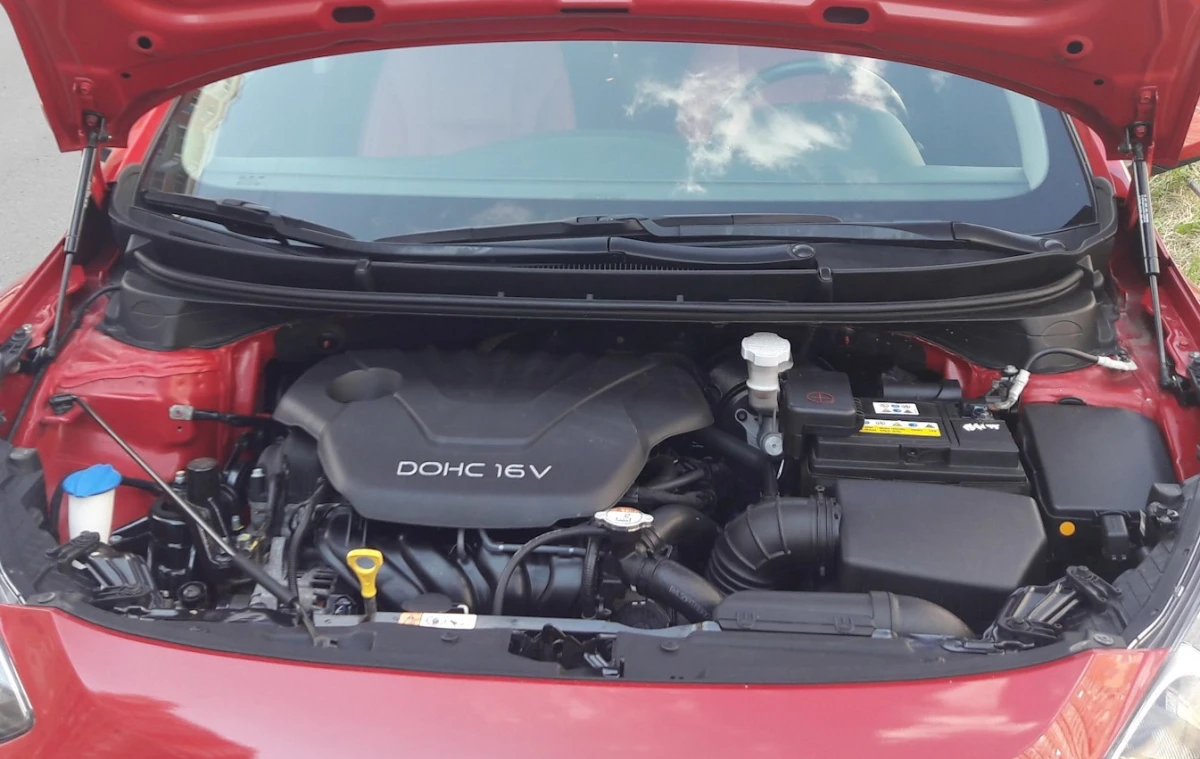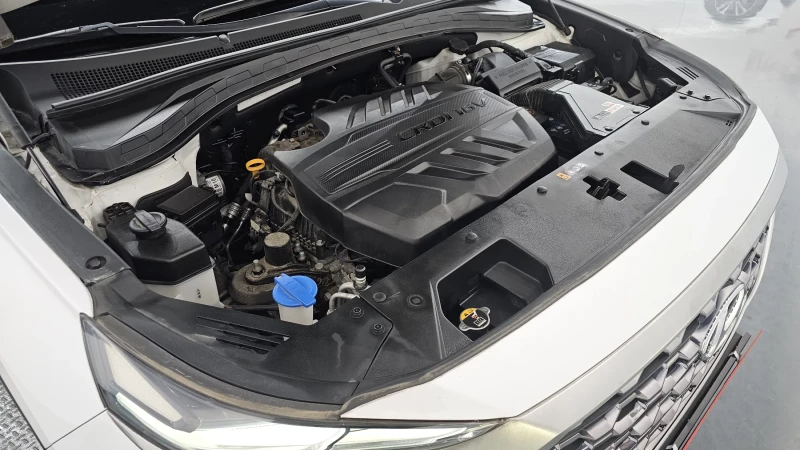
In this article we take a detailed look at the engine lineup, transmissions, dimensions, year-to-year changes and key ownership points specifically for the American market. Exterior design, interior, trim levels and common issues of this generation are covered in separate articles in the series.
Engines and Transmissions
In the US, the Hyundai Santa Fe TM was offered with a range of gasoline and hybrid powertrains. The diesel engines available in other markets were not offered in the United States. The facelifted models brought updated engines and the introduction of a strong hybrid variant.
| Engine Type | Engine Code | Displacement | Power | Transmission | Drivetrain | Availability (US) | Notes |
|---|---|---|---|---|---|---|---|
| Gasoline | 2.4L MPI (Theta II) | 2.4 L | 185 hp (138 kW) | 8-speed automatic | FWD / AWD | 2019–2020 | Pre-facelift base engine, gradually phased out |
| Gasoline | 2.5L MPI (Smartstream) | 2.5 L | 191 hp (142 kW) | 8-speed automatic | FWD / AWD | 2021–2023 | Facelift replacement for 2.4L |
| Turbo Gasoline | 2.0L T-GDi | 2.0 L | 235 hp (175 kW) | 8-speed automatic | AWD | 2019–2022 | Available on higher trims, later replaced |
| Hybrid | 1.6L T-GDi HEV | 1.6 L + electric | 226 hp (combined) | 6-speed automatic | FWD / AWD | 2021–2023 | Introduced with facelift, very popular |
| Plug-in Hybrid | 1.6L T-GDi PHEV | 1.6 L + electric | 261 hp (combined) | 6-speed automatic | AWD | 2022–2023 | Limited availability, longer electric range |
Dimensions and Weight
The overall dimensions of the fourth-generation Santa Fe remained nearly unchanged throughout its production run. The 2021 facelift brought minor styling updates to the front fascia but kept the same body geometry.
| Parameter | Value | Notes |
|---|---|---|
| Length | 187.8 in (4770 mm) | Consistent pre- and post-facelift |
| Width | 74.4 in (1890 mm) | Without mirrors |
| Height | 66.1–67.1 in (1680–1705 mm) | Depends on roof rails and trim |
| Wheelbase | 108.9 in (2765 mm) | — |
| Ground Clearance | 7.3 in (185 mm) | Unladen |
| Curb Weight | 3,730–4,450 lb (1690–2020 kg) | FWD gas ~3730 lb, AWD hybrid ~4400–4450 lb |
| Gross Vehicle Weight | 4,960–5,600 lb (2250–2540 kg) | Depends on powertrain |
| Cargo Volume (5 seats) | 36.4–72.1 cu ft (1030–2040 L) | Behind rear seats / seats folded |
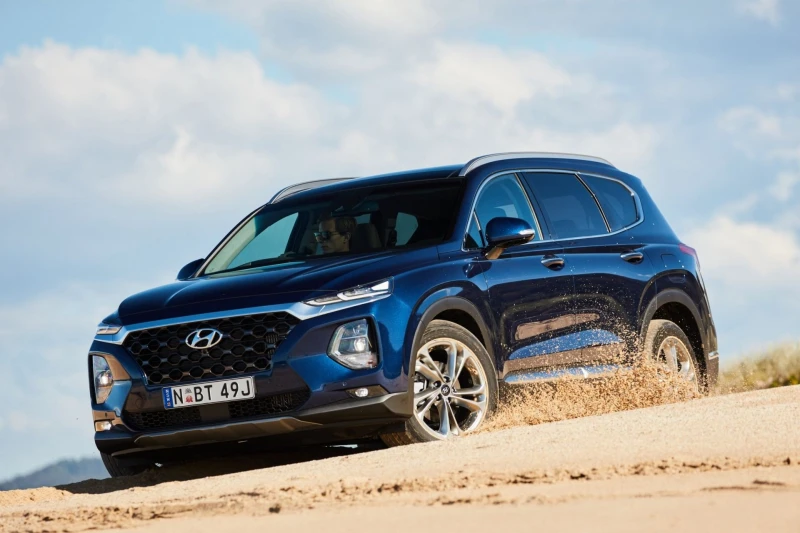
Yearly Updates and 2021 Facelift
The major facelift for the Santa Fe (model year 2021) arrived in late 2020 with a bold new front end featuring “Parametric Dynamics” grille, redesigned headlights, and updated bumpers. Inside, the steering wheel, center console, and infotainment system were refreshed.
Technical changes included:
- 2.4L MPI replaced by more efficient 2.5L MPI Smartstream engine;
- Introduction of the 1.6L T-GDi Hybrid (226 hp combined);
- Later addition of Plug-in Hybrid variant (2022+);
- 2.0L turbo engine phased out on most trims after 2022;
- All non-hybrid models received an 8-speed automatic (earlier hybrids use 6-speed);
On the used market, pre-facelift (2019–2020) models are usually more affordable than the sharper-looking 2021–2023 versions.
Ownership Notes & Real-World Performance
The most popular and generally considered reliable combination in the US is the post-facelift 2.5L MPI or 1.6L Hybrid + 8-speed / 6-speed automatic + AWD. These deliver a good balance of power, efficiency, and long-term durability when properly maintained.
According to real-world data from owner reports and US sources (Edmunds, Fuelly, EPA user averages):
- 2.5L MPI AWD — 22–27 mpg combined;
- 2.0L Turbo AWD — 20–24 mpg combined;
- Hybrid FWD/AWD — 33–36 mpg combined (real-world often 32–38 mpg in calm driving);
The Hyundai/Kia 8-speed automatic is regarded as robust up to 150,000–180,000 miles with fluid changes every 40,000–60,000 miles. The HTRAC AWD system with on-demand coupling is simple and reliable. Parts availability is excellent, with OEM components reasonably priced and many quality aftermarket options.
Summary – Best Choice for the US Market
For most American buyers the sweet spot is the facelifted 1.6L Hybrid AWD (or FWD in milder climates) — it offers excellent fuel economy, strong low-end torque thanks to the electric motor, smooth power delivery, and strong resale value.
The conventional 2.5L MPI AWD is a solid pick if you prefer a simpler non-hybrid setup and don’t mind slightly higher fuel costs. The earlier 2.0L turbo models appeal to those wanting more performance, though they are less common on the used market now.
When shopping used, pay close attention to service history (especially transmission fluid changes and hybrid battery health if applicable). Overall, the 2018–2023 Santa Fe remains one of the most well-rounded and value-packed midsize SUVs on the American market in 2025–2026.