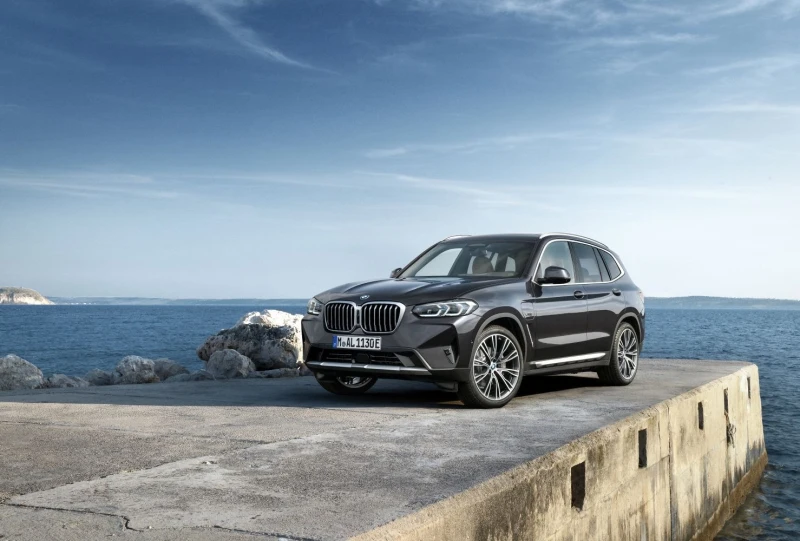
This model masterfully balances sporty driving dynamics, everyday comfort and premium technology. It became a strong seller across the United States through BMW dealerships starting in 2018. The BMW X3 III rides on the modular CLAR platform, allowing extensive use of lightweight materials and sophisticated chassis systems. In this guide we dive deep into the engines, transmissions, dimensions, weights, year-by-year changes and real-world ownership notes for American roads. Understanding the powertrain options helps explain why the X3 remains highly sought-after on the used market today. Exterior design, interior, trim levels and common issues are covered in separate articles in this series.
Engines & Transmissions
The 2017–2024 BMW X3 offers a wide range of turbocharged gasoline, diesel and plug-in hybrid powertrains focused on strong performance and good efficiency. All engines meet strict EPA / CARB emissions standards, most with particulate filters where applicable. Gasoline: 2.0L B48 turbo I4 (184–248 hp), 3.0L B58 turbo I6 (355–382 hp in M40i). Diesel (where offered): 2.0L B47 turbo I4, 3.0L B57 turbo I6. PHEV: xDrive30e with 2.0L turbo + electric motor (288–292 hp combined). Every model uses an 8-speed ZF Steptronic automatic transmission. Drive: rear-wheel sDrive on select base models or standard xDrive intelligent all-wheel drive. See the table below for the main powertrain lineup across 2017–2024.
| Model | Engine Type / Displacement | Power (hp) | Transmission | Drivetrain |
|---|---|---|---|---|
| sDrive18d / xDrive20d equivalent | I4 turbo diesel, ~2.0L | 148–190 | 8-speed Auto | sDrive RWD or xDrive AWD |
| xDrive30d equivalent | I6 turbo diesel, ~3.0L | 261–286 | 8-speed Auto | xDrive AWD |
| M40d equivalent | I6 turbo diesel, ~3.0L | 335+ | 8-speed Auto | xDrive AWD |
| sDrive20i / xDrive20i | I4 turbo gasoline, 2.0L | 181–184 | 8-speed Auto | sDrive RWD or xDrive AWD |
| xDrive30i | I4 turbo gasoline, 2.0L | 248–255 | 8-speed Auto | xDrive AWD |
| M40i | I6 turbo gasoline, 3.0L | 355–382 | 8-speed Auto | xDrive AWD |
| xDrive30e | 2.0L turbo PHEV + electric | 288–292 combined | 8-speed Auto | xDrive AWD |
Acceleration ranges from about 4.4 to 8.3 seconds 0–60 mph depending on model. Estimated real-world fuel economy (EPA / owner reports): diesels ~28–35 mpg combined, gasoline models 21–28 mpg combined, PHEV up to 60+ MPGe in electric + gas mode when regularly charged.
Dimensions & Weight
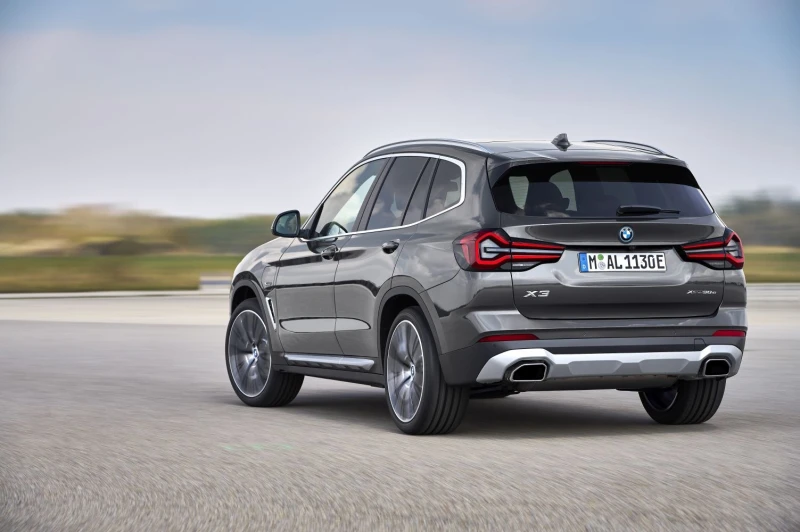
The BMW X3 III offers compact exterior dimensions paired with a spacious, practical interior — perfect for city driving and long highway trips across the US. Body construction uses aluminum and high-strength steel for rigidity and reduced weight. Curb weight ranges from roughly 4,000 lb (base models) to about 4,600 lb (M40i). Gross vehicle weight rating typically 5,300–5,700 lb. xDrive all-wheel drive is standard on most trims; sDrive rear-drive was offered on select lower-powered variants. See the table for key measurements.
| Version | Length (in) | Width (in) | Height (in) | Wheelbase (in) | Curb / GVWR (lb) | Transmission | Drivetrain |
|---|---|---|---|---|---|---|---|
| Standard | 185.9 | 74.4 | 66.0 | 112.8 | 4,000–4,200 / ~5,300 | 8-speed Auto | xDrive AWD |
| M Sport (higher output) | 185.9 | 74.4 | 66.0 | 112.8 | 4,200–4,400 / ~5,500 | 8-speed Auto | xDrive AWD |
| M40i | 185.9 | 74.4 | 66.0 | 112.8 | 4,400–4,600 / ~5,700 | 8-speed Auto | xDrive AWD |
These dimensions deliver agile handling and excellent stability, with ground clearance around 8.0 inches — well-suited to light snow, gravel roads and most American driving conditions.
Year-by-Year Updates
The X3 G01 received a mid-cycle facelift (LCI) in 2021. Pre-2021 models featured the original 2.0L B48/B47 and 3.0L B58/B57 engines meeting early EPA standards. The 2021+ facelift brought a revised kidney grille, updated LED headlights & taillights, new bumpers, fresh interior with iDrive 7 / iDrive 8 interface, mild-hybrid assistance on many gasoline and diesel engines, and the xDrive30e plug-in hybrid. Ride & handling were refined with revised suspension tuning and improved sound insulation. Post-facelift models (2021–2024) are especially popular in the US used market for their updated tech, better efficiency and smoother power delivery.
Buying Tips for US Owners
BMW X3 III models are generally reliable when properly maintained, but American owners should pay attention to several key areas. The most popular used variants are the xDrive30i (gas) and — where available — higher-output diesels or the xDrive30e PHEV. Gasoline engines prefer premium unleaded (91–93 AKI); lower octane can cause knock or reduced performance. Real-world fuel economy: ~22–26 mpg city / 28–32 mpg highway for 2.0L turbo gas models, slightly better on the highway for mild-hybrid versions. Common concerns: ZF 8-speed transmission (occasional harsh shifts after 90–120k miles; fluid changes help), xDrive transfer case & front differential service intervals, adaptive suspension wear on rough roads (dampers ~$800–$1,200 each to replace), turbocharger and high-pressure fuel pump issues if maintenance is neglected. Parts are readily available at dealers and aftermarket; genuine parts are expensive, quality equivalents often cost 40–60% less. Winter driving: xDrive performs excellently with good snow tires; pre-heaters / block heaters are useful in colder states.
Bottom Line
For most US buyers the sweet spot remains the xDrive30i — strong performance, solid fuel economy (24–30 mpg real-world), reasonable maintenance costs and excellent resale value. Post-2021 facelift models with mild-hybrid tech are the most desirable today. Overall the BMW X3 III delivers an outstanding mix of driving enjoyment, practicality and luxury that still feels modern on American roads and highways.