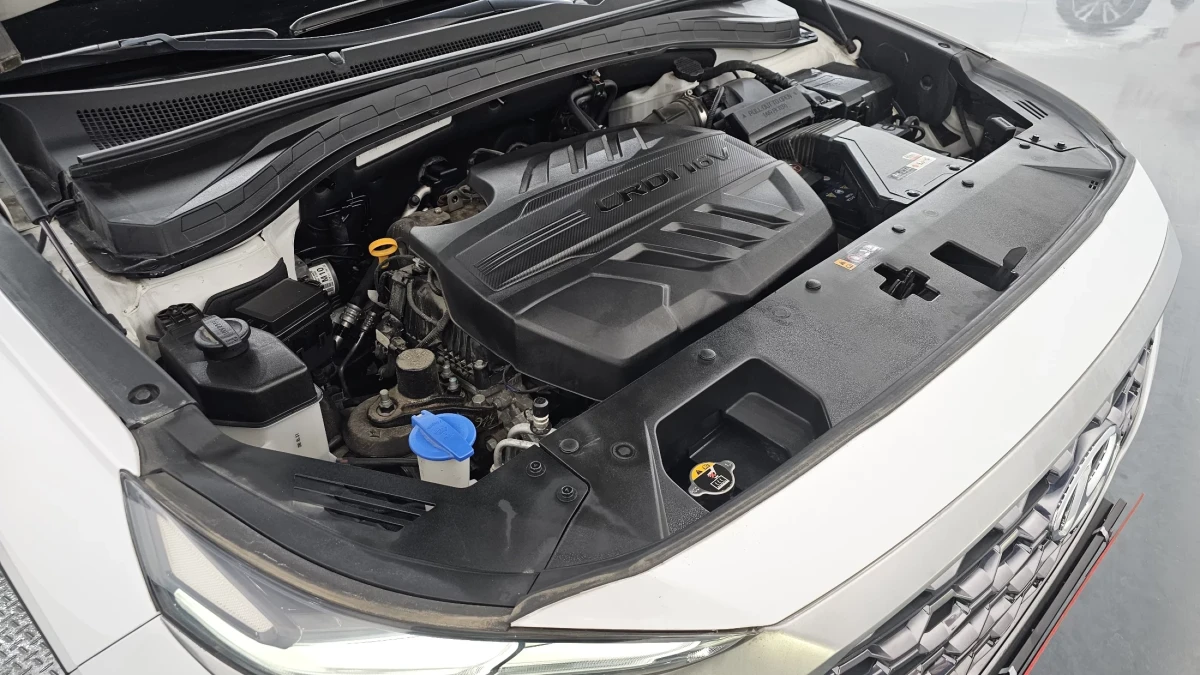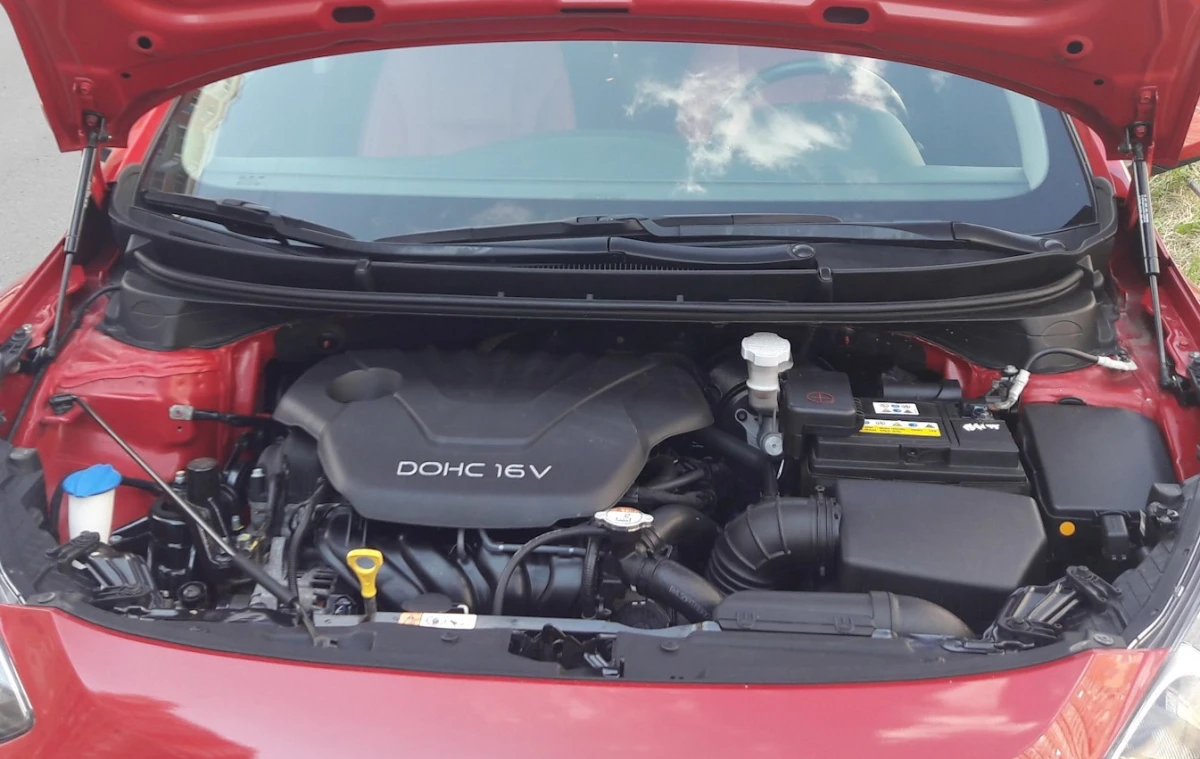



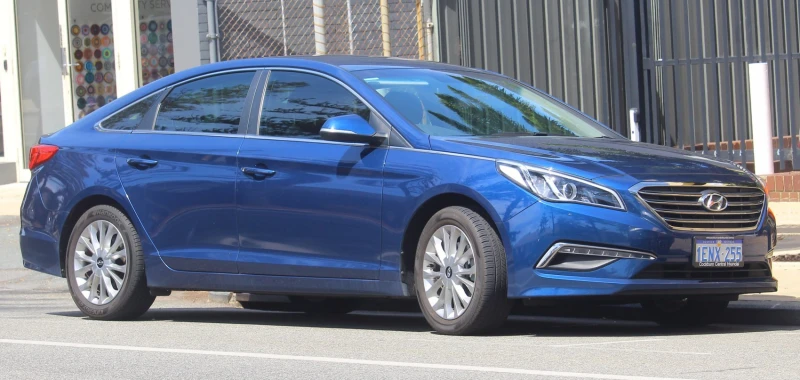
In the US market, vehicles of this generation are widely available on the used-car scene, coming primarily from domestic production in Alabama as well as imports from South Korea and occasionally other regions. The technical specifications, engines, and ownership experience of the 2014–2019 Hyundai Sonata are defined by the most common powertrains found stateside: naturally aspirated 2.0L MPI and 2.4L GDI gasoline engines, along with hybrid variants and a smaller number of turbo models.
A detailed look at design, interior, trim levels, and typical issues of this generation is covered in other articles in this series.
Engines and Transmissions
Throughout its production, the Hyundai Sonata LF was equipped mainly with naturally aspirated gasoline engines from the Nu and Theta II families. Turbocharged versions, hybrids, and very few diesels reached the US market. Full-time all-wheel drive was not offered in this generation — all models are front-wheel drive (FWD).
| Type | Displacement, cu in | Power, hp | Engine Code | Injection | Transmission | Drive | Prevalence in US Market |
|---|---|---|---|---|---|---|---|
| Gasoline | 122 (2.0L) | 147–185 | G4NA / Nu 2.0 MPI / CVVL | Port | 6-speed automatic A6MF1 / A6MF2 | Front | Most common (US-built + Korea) |
| Gasoline | 144 (2.4L) | 185–199 | G4KJ / Theta II 2.4 GDI | Direct (GDI) | 6-speed automatic A6MF2 | Front | Very popular (US & Korea) |
| Hybrid | 122 (2.0L) | 154–199 system (engine 154–164 + electric 38–51) | G4NG + electric motor | Port | 6-speed automatic (hybrid) | Front | Common in used market (mostly US) |
| Gasoline Turbo | 122 (2.0L) | 245 | Theta II 2.0 T-GDI | Direct | 6-speed automatic | Front | Less common (Sport models, mostly US) |
After the 2017 facelift, the main naturally aspirated engines received reliability upgrades (oil jets, improved cooling, reinforced head gaskets), though no major engine redesign took place.
Dimensions & Weight
The overall dimensions of the Hyundai Sonata LF remained nearly unchanged throughout the generation. After the 2017 facelift, minor adjustments were made to ride height and ground clearance depending on trim and wheel size. Below are the most typical figures found in the US market.
| Parameter | Value | Note |
|---|---|---|
| Length, in | 191.1–191.3 | Most often 191.1 in after 2017 |
| Width, in | 73.4 | Excluding mirrors |
| Height, in | 58.1–58.3 | Depends on trim and tires |
| Wheelbase, in | 110.4 | Constant across the generation |
| Ground Clearance, in | 5.3–6.1 | Typically 5.5–5.9 in US-market cars |
| Curb Weight, lb | 3,200–3,500 | 2.0 MPI ≈3,200–3,300 lb, 2.4 GDI & hybrid ≈3,300–3,500 lb |
| Gross Vehicle Weight, lb | 4,200–4,500 | Varies by engine and equipment |
| Trunk Volume, cu ft | 16.3 | By SAE, without spare tire well |
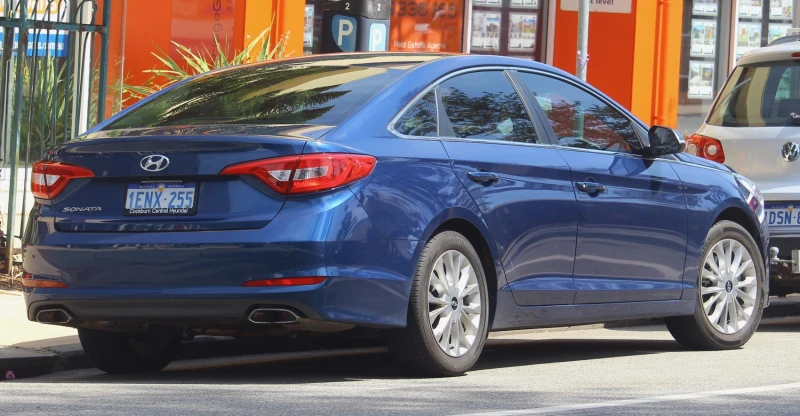
Yearly Updates & 2017 Facelift
2014–2016 (pre-facelift): base models with 2.0 MPI (147–185 hp) and 2.4 GDI (185–199 hp), 6-speed automatic. Hybrids mainly from US production.
2017–2019 (facelift): revised front bumper, headlights, grille, taillights. Engines gained reliability improvements (stronger pistons, piston-cooling jets, better crankcase ventilation). Later US and Korean units often feature the 185-hp 2.0 MPI with CVVT. Hybrid models received a slightly more powerful electric motor (up to 51 hp).
In the US used market, facelifted 2017–2019 models significantly dominate and are generally preferred for their updated styling and improved reliability.
Ownership Notes & Technical Details
The most reliable and popular engines in the US used market are the 2.0 MPI (G4NA) and hybrid variants. The 2.4 GDI (G4KJ) offers stronger performance but is more sensitive to fuel and oil quality, with carbon buildup on intake valves being a more frequent issue.
According to US sources (Edmunds, Cars.com, Fuelly, etc.), average real-world fuel economy:
- 2.0 MPI — 25–32 mpg combined
- 2.4 GDI — 23–30 mpg combined
- Hybrid — 38–45 mpg combined in real-world driving
The 6-speed automatic A6MF1/A6MF2 usually lasts 150,000–220,000 miles with fluid changes every 40,000–50,000 miles. Issues are more common on 2.4 GDI models with aggressive driving and neglected maintenance.
Parts availability is excellent and affordable (OEM and quality aftermarket). Repairability is high — most components are well understood by independent shops.
Bottom Line & Best Choice for the US Market
The most well-rounded option on the American used market in 2026 is considered to be:
- 2.0 MPI engine (147–185 hp) + 6-speed automatic
- 2017–2019 model years (facelifted)
This combination delivers decent performance, low ownership costs, strong resale value, and excellent parts availability. The hybrid is a great pick for those prioritizing fuel economy and doing mostly city/highway driving. The 2.4 GDI appeals to buyers wanting more power, provided they accept slightly higher maintenance costs. The 2.0T Sport models remain a niche enthusiast choice.