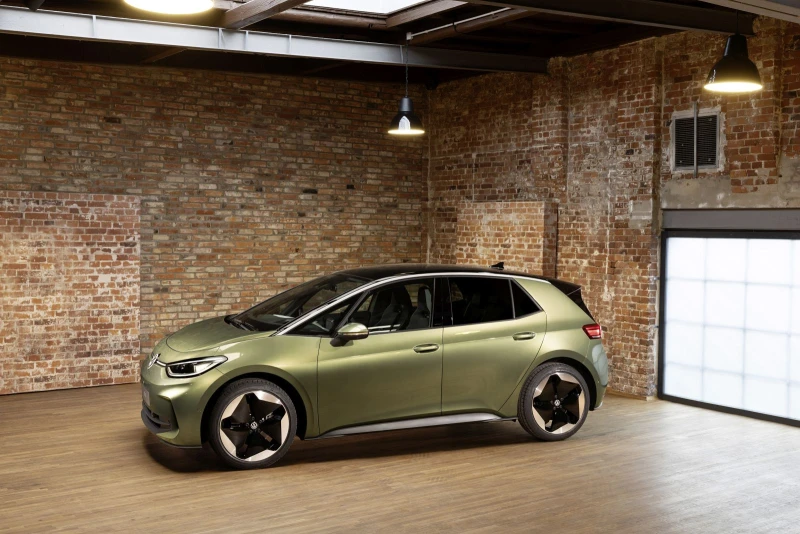
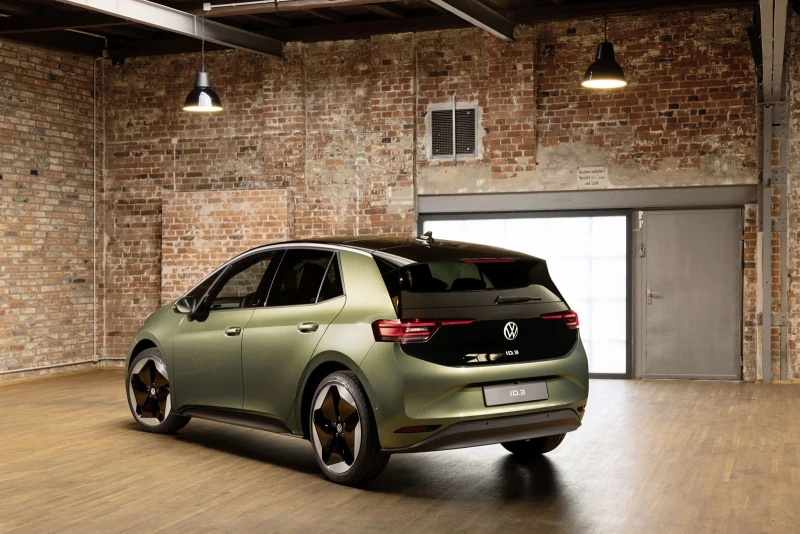
The comparison presents notable findings. The updated Volkswagen ID.3, positioned as a key model, faces challenges against the established Golf. Despite a price reduction to approximately 32,000 €, the ID.3 is overshadowed by the gasoline-powered Golf, starting at 27,000 €. This raises questions about the added cost of electric powertrains compared to conventional hatchbacks.
The situation is further complicated by competitors like the Tesla Model 3, which offers greater size, speed, and range at similar pricing. Without the recent price adjustments, ID.3 adoption might remain limited.
Depreciation Considerations
Analysis from Auto Bild evaluates daily usability, including dynamics and comfort, with a focus on value retention over four years and 60,000 km. Estimates suggest the Golf depreciates by about 18,000 €, while the ID.3 loses around 21,000 €. These figures appear optimistic; real-market data for four-year-old ID.3 models often shows values around 15,000 €, despite higher initial costs. Comparable Golf models experience more moderate depreciation.
Market listings indicate a depreciation gap of 10–15,000 € between internal combustion engine vehicles and electric models, shifting the economic balance away from electrics.
On-Road Comparison
The ID.3 demonstrates stronger acceleration with 204 hp compared to the Golf's 150 hp. However, maximum speed and range alter the perspective. The Golf, with a 50-liter fuel tank and average real-world consumption of 5.8 l/100 km, achieves approximately 860 km. The ID.3, equipped with a 59 kWh battery, manages about 360 km. This difference becomes apparent for longer trips.
Charging for the electric Volkswagen reaches a maximum of 125 kW, limited to 10–80% state of charge. Cold weather extends charging times.
Cost Savings and Overall Assessment
Energy costs for the electric model are lower, potentially saving around 2,000 € over four years. However, insurance premiums are higher, maintenance costs comparable, and depreciation more significant. Based on these calculations, the Golf emerges as more practical and cost-effective long-term.
Underlying Factors
Despite substantial investments in electric vehicles, practical demands persist for range, quick refueling, and predictable expenses. The Golf meets these criteria effectively. The ID.3, while advancing, does not yet provide a fully compelling alternative to traditional gasoline hatchbacks. Future iterations may address these gaps, but currently, the conventional model maintains its position.