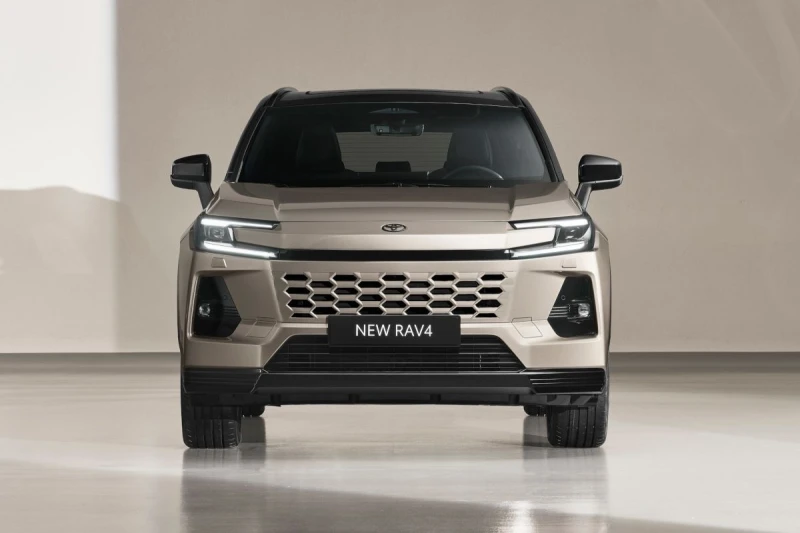
The sixth-generation Toyota RAV4 is still too new for meaningful long-term reliability statistics. That makes it important to separate documented specifications and practical tradeoffs from problems that have not yet been established. For U.S. buyers, the main considerations involve the all-electrified powertrain lineup, trim-dependent ride and fuel economy, software-driven features, and the potentially higher cost of repairing advanced hybrid and electronic components outside warranty.
U.S. Market Context and Configuration Differences
The 2026 RAV4 sold in the United States is available only as a hybrid electric vehicle (HEV) or a plug-in hybrid electric vehicle (PHEV). There is no conventional gasoline-only version with a traditional automatic transmission or belt-type CVT in the U.S. lineup. Hybrid trims include LE, SE, XLE Premium, Woodland, XSE, and Limited, while the plug-in hybrid range includes SE, Woodland, XSE, and GR SPORT. Buyers comparing online listings should verify the powertrain, drivetrain, and trim rather than assuming that equipment shown on a similarly named model from another market applies to a U.S.-spec vehicle.
Availability can also vary by region and dealer allocation. A window sticker is the most reliable way to confirm factory equipment, packages, and destination charges on a new vehicle. For a used example, the VIN, service records, and original specification should be checked carefully. A non-U.S.-spec import may differ in software, connected services, lighting, emissions equipment, and warranty eligibility, so it should not be evaluated as if it were identical to a vehicle originally delivered through Toyota's U.S. network.
Powertrain Tradeoffs in U.S. Driving
The standard hybrid combines a 2.5-liter gasoline engine with electric motors and an electronically controlled continuously variable transmission. Front-wheel-drive versions produce 226 net combined hp, while all-wheel-drive models produce 236 hp. Toyota lists fuel-economy ratings as high as an EPA-estimated 47 mpg city and 40 mpg highway on selected trims, but the ratings are lower on versions fitted with larger wheels, all-terrain tires, or standard all-wheel drive. Real-world results will vary with temperature, speed, traffic, terrain, and driving style, so a top-line rating should not be applied to every configuration.
The plug-in hybrid uses a larger traction battery, standard all-wheel drive, and a 324-hp combined system. The SE is rated for up to an EPA-estimated 54 miles of electric driving, while range and efficiency differ by trim and operating conditions. Its main tradeoff is that the benefit depends heavily on regular access to charging. Cold weather, sustained highway speeds, cabin heating, and aggressive acceleration can reduce electric range. Both the HEV and PHEV use an eCVT; it should not be confused with the belt-type CVT used in some gasoline vehicles, although its engine-speed behavior under hard acceleration may still feel unfamiliar to drivers coming from a stepped automatic.
Cabin Materials, Ride, and Everyday Comfort
The redesigned cabin features a standard 12.3-inch digital gauge cluster and either a 10.5- or available 12.9-inch multimedia display, depending on trim. Material quality and seat upholstery also vary substantially across the lineup. LE and other lower trims prioritize durability and value, while upper trims add SofTex, synthetic suede, ventilation, and more convenience features. Buyers should inspect the exact vehicle rather than judging the entire generation from a highly equipped display model.
Wheel and tire choice can have a noticeable effect on comfort. The XSE and Limited use 20-inch wheels, while the Woodland is fitted with all-terrain tires. Those configurations may transmit more impact harshness or road noise than trims with smaller wheels and efficiency-oriented tires, and replacement tires can cost more. A test drive on coarse pavement and at highway speed is more informative than a short loop around a dealership. Touchscreen responsiveness and control layout should also be checked while the vehicle is stationary, especially by drivers who prefer dedicated physical controls.
Electronics, Software, and Diagnostics
The new generation introduces Toyota Safety Sense 4.0, updated multimedia hardware, and a more software-centered vehicle architecture. This expands functionality but also makes software versions, account setup, and sensor calibration more important. Some connected or driver-assistance functions require an active trial or subscription, and Traffic Jam Assist depends on 5G network availability. Buyers should confirm which features remain functional after trial periods end instead of treating every demonstrated feature as permanently included.
Cameras, radar sensors, parking equipment, and driver-assistance systems may require calibration after windshield replacement, collision repair, suspension work, or certain alignment procedures. That can add time and expense to otherwise routine repairs. The high-voltage system also requires appropriate diagnostic equipment and trained technicians. There is not yet enough history to identify a generation-wide battery defect; on a used vehicle, a proper hybrid-system scan, warning-light check, and review of repair records are more useful than unsupported assumptions about battery degradation.
Service, Parts, and Ownership Costs
Toyota has an extensive U.S. dealer network, but a fully redesigned model uses components that may not be interchangeable with the previous generation. Early in a model cycle, availability and lead times for body panels, electronic modules, sensors, and plug-in-hybrid-specific parts can vary. Before buying a damaged or previously repaired example, it is sensible to confirm that the required parts and calibration services are actually available locally.
Road salt, coastal air, and repeated freeze-thaw cycles remain relevant in northern and coastal states, but there is not enough evidence to label corrosion as a specific weakness of the XA60 generation. Regular underbody washing during winter and inspection of repaired areas are practical preventive measures. Any aftermarket rustproofing should be applied carefully so that drain holes, high-voltage components, connectors, and service points remain accessible.
Major hybrid components, power electronics, cameras, displays, and large alloy wheels can be expensive after a collision or outside warranty. The PHEV may also involve home-charging installation costs, while higher trims can carry higher tire and insurance expenses. Conversely, routine brake wear may be reduced by regenerative braking. Ownership estimates should therefore be based on the exact trim, local insurance quote, charging situation, and anticipated annual mileage rather than on a generic RAV4 average.

What to Check Before Buying
Most concerns at this stage are design or ownership tradeoffs, not proven chronic failures. Confirm whether the fuel-economy rating applies to the selected trim, assess ride quality with its actual wheel-and-tire package, and test the multimedia and driver-assistance functions. PHEV shoppers should determine where and how often they can charge; without routine charging, they may carry the cost and weight of the larger battery without receiving the full electric-driving benefit.
For vehicles listed on Autotrader, CarGurus, or Cars.com, verify the VIN, title history, original window sticker, service records, recall status, and remaining factory coverage. A pre-purchase inspection should include a scan of all control modules, checks of the hybrid system and 12-volt battery, confirmation that cameras and sensors are calibrated, and inspection of tires, wheels, suspension, and prior body repairs. For a plug-in hybrid, confirm that the charging equipment is present and that the vehicle charges normally.
Other articles in this series cover the generation overview, specifications, and interior in more detail. Overall, the Toyota RAV4 VI is a major update built around hybrid and plug-in-hybrid powertrains, modern displays, and more advanced driver-assistance technology. Its long-term weak points are not yet established. Choosing the right trim, verifying the vehicle's history and software status, and understanding charging, tire, insurance, and repair costs are more useful today than treating early anecdotes as a settled reliability record.