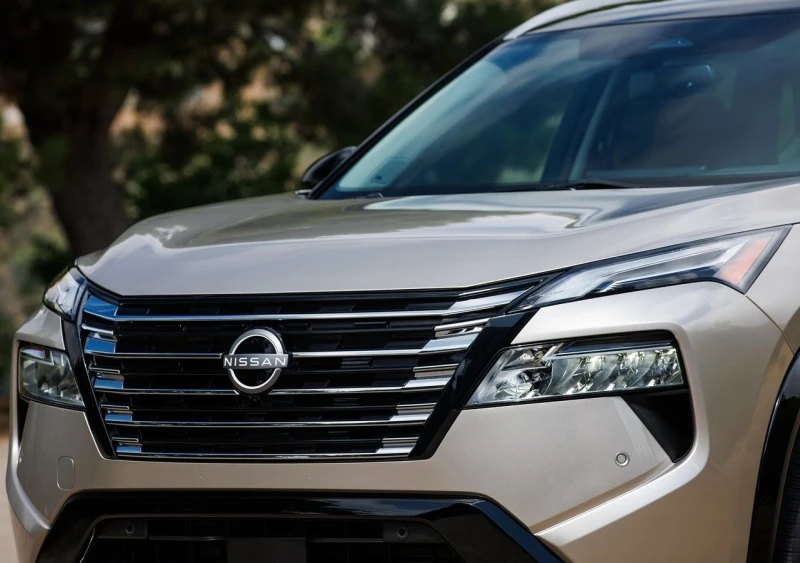
On the US used car market, the third-generation Rogue (T33) has carved out a solid position in the popular compact crossover segment. Examples from the 2021–2023 model years show up regularly in dealer inventories and private listings, with transaction prices typically falling in the $17,000–$25,000 range depending on mileage, trim level, and condition. Buyer focus has moved beyond the basic “buy or not buy” question to more specific considerations: which model year and equipment package delivers the best ownership experience. This is where the details matter. The Rogue is a fundamentally capable vehicle, but it carries several characteristics that become more apparent in day-to-day US driving conditions than they might in the controlled environment of a new-car review. For a complete look at the generation, technical specifications, and interior design, see the other articles in this series. This one zeroes in on the weak spots and real-world buying advice.
Market Context: Where Do These T33 Rogues Come From?
The majority of used Nissan Rogue III models available today were built for the North American market, with many assembled in the US or Canada. A European-spec X-Trail T33 badged as Rogue is extremely rare here. This matters because these vehicles were engineered around US fuel specifications, dealer service networks, and typical North American climates. A meaningful portion of examples on the market have some prior insurance claim history — often minor front-end impacts, quarter-panel damage, or occasional airbag deployments. These don’t automatically disqualify a car, but they do mean you should start any evaluation with a detailed vehicle history report and a professional pre-purchase inspection.
Examples showing 40,000–75,000 miles frequently still look remarkably fresh. That’s partly thanks to the smoother highways and milder winters in many regions, plus consistent dealer servicing. Once these vehicles encounter harsher US conditions — potholed city streets, heavy road salt in the Northeast and Midwest, or stop-and-go commuting — small issues can surface after a season or two of ownership.
Engines: Where the Nissan Rogue III’s Shortcomings Show Up Most Clearly
The most talked-about change in this generation is the switch to the turbocharged 1.5-liter three-cylinder KR15DDT VC-Turbo engine with variable compression ratio. It’s a technically sophisticated powerplant, but its character differs noticeably from the naturally aspirated four-cylinder in the previous generation. At idle under certain conditions you may notice a slight vibration — a normal trait of an inline-three that Nissan partially masked with a balance shaft and optimized engine mounts, though it wasn’t entirely eliminated. Once the engine is warm and under load the vibrations are rarely intrusive; early 2021 and early 2022 builds tend to show this trait a bit more prominently.
The variable compression mechanism itself is a multi-link design driven by its own electric actuator motor. There haven’t been widespread failures of this system at typical mileages seen today, but buyers should understand that repairing it at an independent shop is still a relatively uncommon job. Dealer experience with the VC-Turbo is solid, yet the complexity means future repair costs could be higher than for a conventional engine. It’s not a ticking time bomb, but it is a factor that can influence long-term ownership costs.
Fuel economy is another frequent discussion point. The official EPA estimates for the 1.5-liter VC-Turbo were developed around relatively steady American driving patterns. In real-world conditions — heavy traffic, aggressive acceleration, and especially when using regular-grade unleaded instead of the recommended premium — observed city consumption often lands in the low-to-mid 20s mpg. That can feel high for a 1.5-liter turbocharged engine. On the highway the picture improves markedly; the VC-Turbo shifts into its high-compression, efficient mode and returns numbers much closer to the window sticker during steady interstate cruising. The 2.5-liter naturally aspirated PR25DD four-cylinder fitted to some early 2021 models feels more linear and predictable, though its absolute fuel consumption figures are generally higher.
The CVT: Prevention Over Repair
The Jatco continuously variable transmission is the component that historically draws the most buyer concern in the 2020–present Rogue conversation. To be fair, the CVT in the T33 received meaningful updates: larger heat exchangers, revised calibration, and a stronger belt-and-pulley assembly. At current mileage levels we’re not seeing the sudden, widespread failures that plagued some earlier Nissan CVTs. Still, the fundamental truth remains: this transmission is sensitive to heat and fluid condition.
When shopping used examples, check the service records for documented CVT fluid and filter changes. If a 2021–2022 model with 60,000+ miles has no proof of fluid maintenance, don’t automatically reject it — but do plan to perform a fluid exchange and filter service shortly after purchase. On 2023–2024 refreshed models the transmission feels more refined under hard acceleration; software updates have largely eliminated the occasional RPM surge or “flare” that some early cars exhibited when the driver demanded quick throttle response.
Body and Suspension in Real-World US Conditions
The T33 body is generally well protected against corrosion across all model years. The paint finish is thinner than on some earlier Japanese-built models and tends to collect small stone chips on the hood, front fenders, and lower rocker panels. In regions that use road salt heavily during winter, this remains mostly a cosmetic issue rather than a structural rust concern. Still, after two or three harsh winters the car can start to look tired faster than many owners expect.
The suspension was calibrated for typical American roads — moderately compliant, with good absorption of long highway undulations. It handles most US pavement adequately, including the sharp, short potholes common in older cities. However, the stabilizer links and their bushings are relatively short-lived wear items; clunking from the front end often appears between 40,000 and 50,000 miles. This is an inexpensive, straightforward repair. Lower control arm bushings and ball joints have proven more durable in most cases.
The brake system is prone to rear rotor corrosion when the car is used primarily in city driving where the rear brakes see limited load. This is typical of many modern crossovers with electronic brake-force distribution. It’s not a design flaw, but when inspecting a potential purchase, check rotor condition all around. Replacement is a normal maintenance expense at average market rates.
Electronics, Infotainment, and Interior Details
The T33 interior represents a big step up from the previous generation, yet it still has its quirks. Base S and SV trims came with an 8-inch infotainment screen that feels noticeably more responsive than the system in the Rogue II, though it doesn’t match the fluidity of some premium competitors. Higher SL and Platinum versions received a larger display with a more modern interface — a difference worth experiencing during a test drive.
Early-build cars occasionally exhibit minor glitches: slight lag in the digital gauge cluster on cold starts, occasional 360-degree camera system hiccups, and squeaks from the center console area. The majority of these issues are resolved with dealer software flashes or minor disassembly. Refreshed 2023–2024 models show far fewer of these teething problems.
Noise insulation is a compromise. Up to about 55 mph the cabin feels pleasantly quiet. Above 65–70 mph, wind rush around the mirrors and tire roar become more prominent, especially if the car is fitted with winter tires. Base cloth upholstery is comfortable but shows dirt and wear more readily; the leather-appointed surfaces on top trims are noticeably more resilient in daily use.
Trim Levels and Origin Nuances
On the US used market you’ll see both domestically badged and Canadian-market examples. Externally they look almost identical, but they can differ in option content and the default language or regional settings of the infotainment system. Certain advanced driver-assistance packages (such as expanded ProPILOT Assist) were sometimes restricted to higher trims in specific US regions. It’s surprisingly easy to misread a car’s exact equipment level from online photos. Before you commit, verify the VIN against a detailed factory build sheet or dealer history report so you know exactly what you’re getting and that no aftermarket additions are being misrepresented.
At the same time, always pull a comprehensive vehicle history report. Service records, insurance claims, and major component replacements tell the real story. Cars with significant prior accident damage exist in the supply, and not every private seller discloses the full picture. This isn’t a reason to dismiss the model, but it is a compelling reason to scrutinize any individual example carefully.
What’s Normal vs. What Requires Investment
When evaluating a used Rogue III, it helps to categorize potential issues by how they affect your ownership budget.
| Category | Typical Situations | Budget Approach |
| Normal for Age & Mileage | Paint chips, plastic scuffs, console squeaks, stabilizer link wear | Minor expenses, routine maintenance |
| Requires Attention at Purchase | CVT fluid condition & service history, rear brake rotor corrosion, pending infotainment software updates | Expect costs around average market rates, depending on current condition |
| Serious Risks | Accident/insurance claim history, hidden body damage, incomplete or unknown VC-Turbo service records | Set aside a contingency fund roughly equal to (or exceeding) the cost of a major service |
Cosmetic wear and consumables are predictable and inexpensive to correct. CVT fluid maintenance is a planned expense, not an emergency repair. The engine itself has not shown major systemic problems at this stage, but incomplete service documentation on the VC-Turbo is the single biggest variable that should influence your risk assessment when choosing a specific vehicle.
Practical Buying Guidelines
Taking all of the above into account, here’s a clear picture for someone shopping the used market. 2021 models equipped with the 2.5-liter naturally aspirated engine offer a mechanically simpler alternative, though they are less common now and generally hold value a bit less strongly. 2022 1.5 VC-Turbo examples are worth serious consideration provided the transmission software updates have already been performed (most were done during regular dealer visits). 2023–2024 vehicles are widely regarded as the most refined in terms of small operational details, but they also carry prices noticeably closer to those of new or nearly-new examples.
All-wheel-drive versions provide extra capability in snow-prone regions and on poor road surfaces, but they do require periodic fluid services for the rear differential and coupling. There are no widespread failures specific to the AWD system. Front-wheel-drive models are lighter, more efficient, and perfectly adequate for most suburban and city driving; they also tend to be priced a little lower on the used market.
Overall, the T33 is a vehicle you should approach with clear eyes rather than either blind optimism or automatic suspicion. The majority of its known weak points are either inexpensive to address or easily prevented with proper maintenance. What ultimately matters most is not the model year or trim in isolation, but the documented history of the individual car you’re looking at. With the Rogue III, that history often tells you more about future ownership costs than any brochure spec sheet ever could.