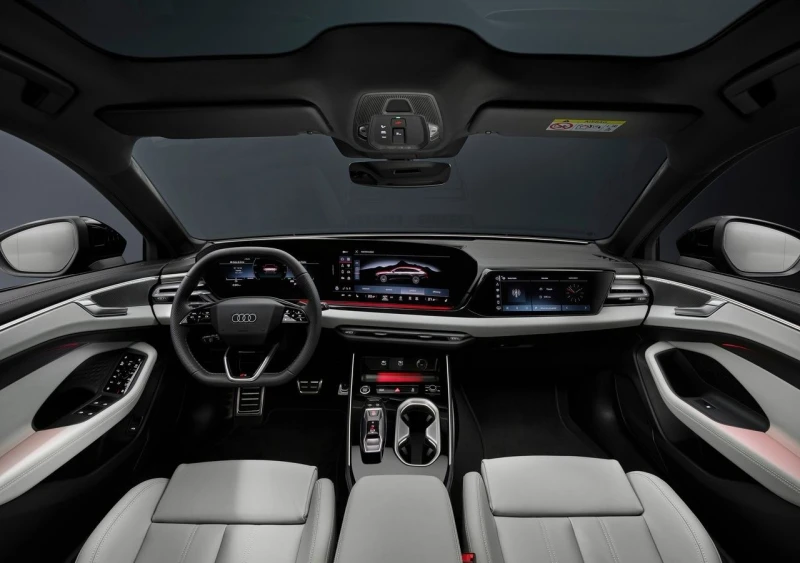
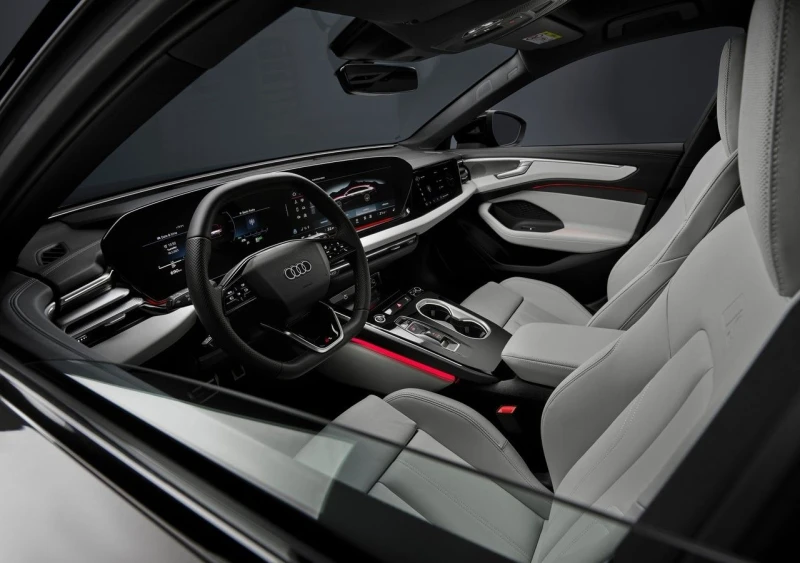
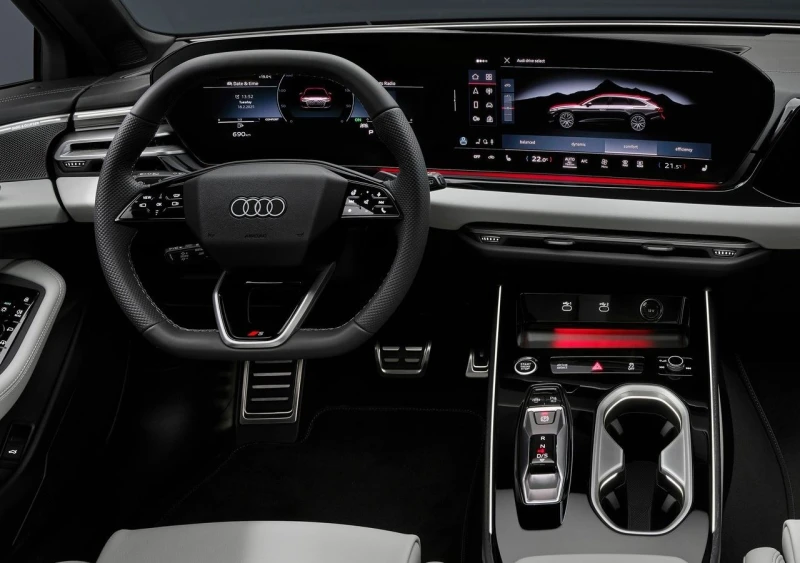
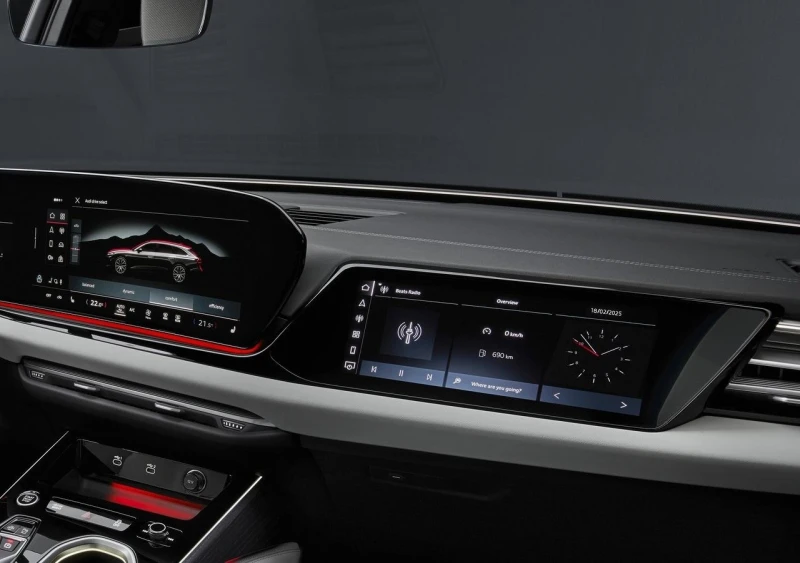
The dashboard is organized around two large displays: an 11.9-inch digital instrument cluster and a 14.5-inch central MMI touchscreen. That setup shapes the first impression of the cabin, surrounding the driver with broad, flat surfaces, minimalist lines, and noticeably fewer physical buttons.
The center console now relies heavily on touch controls. Temperature and volume adjustments have partly moved into the on-screen interface, although Audi has retained several physical shortcuts for frequently used functions. The layout takes some getting used to, especially for anyone moving from the previous-generation A6 or from a vehicle with more traditional controls. In everyday driving, changing the temperature or audio level can require a quick glance away from the road, though Audi has tried to keep the most important functions close to the surface of the menu system.
Materials and Perceived Quality in Everyday Use
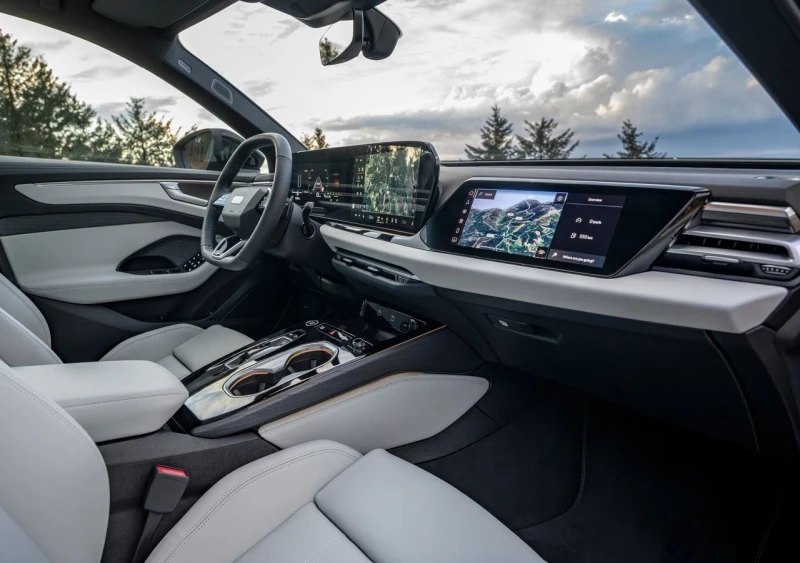
Cabin materials vary significantly by trim and option package. Entry-level configurations use restrained, easy-care surfaces with matte finishes, while more expensive versions add leather, Dinamica or microfiber accents, upscale headliner materials, and decorative wood or aluminum trim. Assembly quality is what buyers expect from a luxury sedan in this class: panel alignment is precise and gaps are tight. Still, glossy trim on the center console and doors quickly collects fingerprints and fine scratches, especially in areas where winter road salt, dust, and grime are regularly tracked into the cabin.
Leather upholstery on the seats and door panels should age well with routine care. In regions with sharp temperature swings, cold winters, or high humidity, occasional conditioning is worthwhile; otherwise, small cracks can eventually appear in high-wear areas such as the outer bolsters of the driver and front-passenger seats. Cloth or microfiber surfaces demand less conditioning but absorb odors more readily and can be harder to clean after spills.
Driving Position, Ergonomics, and Space
The front seats provide solid lateral support and a wide range of adjustment. The driving position is relatively upright for an executive sedan, which helps forward and side visibility. The steering column offers enough reach and tilt adjustment, and the pedal placement works well even for taller drivers. On long Interstate trips, that can reduce fatigue, although some owners may want stronger lumbar support than the standard seats provide. More extensive lumbar and contour adjustments are generally tied to upgraded seating packages.
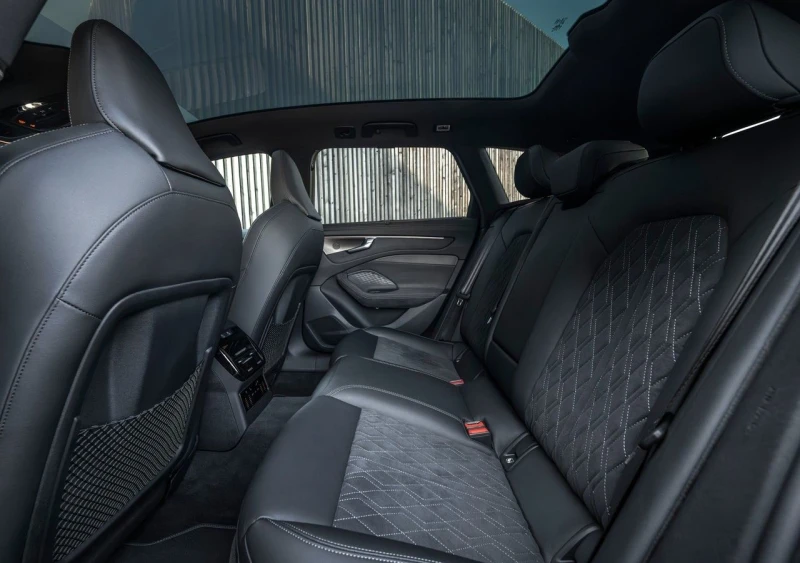
Rear-seat space has improved thanks to the longer wheelbase. Two adults have generous knee, shoulder, and head room, even when they are taller than average. A third passenger in the middle is less comfortable because of the high center tunnel and the shape of the rear bench. The setup works for occasional family use or chauffeured travel, but buyers who regularly carry three adults in back may find a larger crossover—or an Avant wagon where offered—more practical.
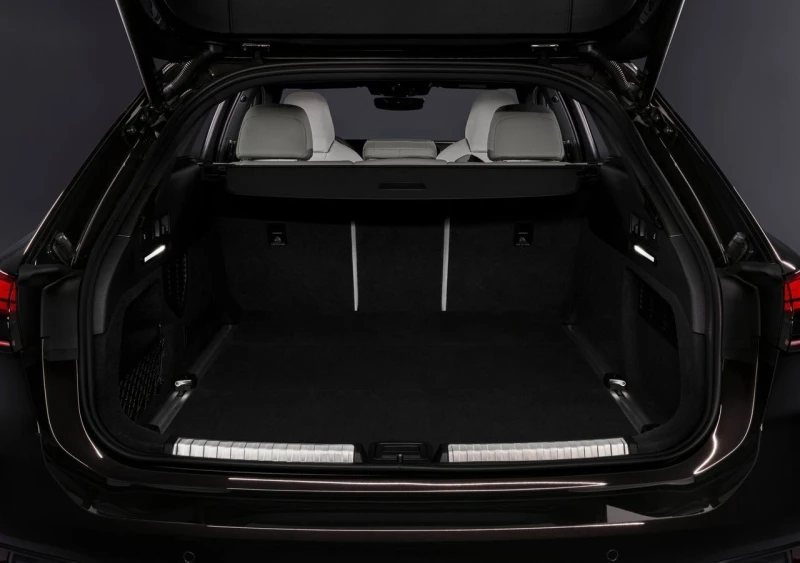
Sedan cargo capacity is approximately 15.9–17.3 cubic feet, depending on equipment and whether a spare tire is fitted. The trunk has a useful shape for suitcases and everyday bags, and it includes hooks and cargo nets. The load floor is neither the lowest nor the highest in the class. For airport runs, road trips, or loading in tight parking garages, it should not create major inconvenience.
Trim Levels and Real-World Equipment in the U.S. Market
U.S.-market Audi A6 models are typically offered in luxury-focused configurations rather than the sparsely equipped cloth-trim versions found in some other regions. Depending on the final model-year lineup, the range is expected to follow Audi's familiar Premium, Premium Plus, and Prestige structure. Even the entry model should include the digital instrument cluster, central touchscreen, dual-zone climate control, and a comparatively upscale seat finish. Mid-level versions are likely to add upgraded leather, heated front seats, more advanced LED lighting, adaptive cruise control, lane-centering assistance, and a surround-view camera system, depending on the selected packages.
Top configurations add features such as ventilated seats, four-zone climate control, a Bang & Olufsen premium audio system, a head-up display, and more advanced parking and maneuvering assistance. The broadest driver-assistance package is most likely to appear on higher-output models and upper trims. In practice, U.S. luxury-sedan buyers generally gravitate toward mid- and high-spec versions, since leather seating, stronger audio, and a fuller safety package are often considered essential in this segment.
The infotainment system supports wireless Apple CarPlay and Android Auto. Audi's newest interface takes time to learn because many functions are buried in menus, although customizable shortcut tiles help. In heavy traffic around cities such as Los Angeles, where drivers may need to switch quickly between navigation, music, and calls, the system can still demand more interaction than a conventional control layout.
Long-Term Cabin Durability and Ownership Details
In everyday U.S. driving, the cabin should behave much as expected from a modern Audi. Sound insulation remains one of the A6's strengths, and the interior stays composed even at highway speeds. Squeaks and rattles are uncommon in new vehicles and are usually linked to isolated plastic trim pieces in the doors or center console during major temperature changes. Beyond roughly 30,000–45,000 miles, some owners may begin to notice light creaking around the dashboard, particularly if the car spends much of its life on rough secondary roads.
Visibility from the driver's seat is good thanks to relatively slim pillars and a large windshield. The side mirrors provide a useful field of view, while cameras and parking sensors in better-equipped trims compensate for the car's size in tight parking structures. The rear seat remains comfortable for two passengers on long trips, though a fully loaded car can transmit more vibration through the firmer sections of the rear bench on broken pavement—especially without the available air suspension.
Keeping the cabin clean requires consistency in areas that use road salt and de-icing chemicals. Winter grime quickly soils the floor mats and lower door panels, so high-quality all-weather mats and periodic leather treatment are worthwhile. In hot, sunny climates, glossy plastic trim can become noticeably warm and show dust and fingerprints more clearly. Overall, the interior is not difficult to maintain, but it demands slightly more attention than the more conservative cabins of earlier A6 generations.
At this stage of the model's launch, the Audi A6 VI interior remains fundamentally unchanged. Most early updates are expected to focus on infotainment software, improving responsiveness and adding smaller convenience features. No major revisions to the materials or basic cabin layout have been introduced.
Which Interior Specification Makes the Most Sense in the U.S.?
For most buyers, a mid- or upper-level Audi A6 trim is the sensible choice. Leather upholstery, heated and ventilated seats, and a comprehensive driver-assistance package make a meaningful difference on long highway drives and in dense city traffic. A lightly equipped version may suit a strict budget or primarily urban use, but basic luxury sedans are less common in the U.S. market and can be less desirable at resale time.
The new Audi A6 cabin combines a modern digital interface with improved rear-passenger space, but it also carries the usual compromises of a touchscreen-heavy layout. For drivers who spend many hours behind the wheel, the most balanced configuration pairs leather upholstery with upgraded seat adjustment and a strong suite of driver-assistance features. That combination delivers comfort without adding unnecessary complexity and should keep the cabin feeling current for years.