


For the European market, the model has already lost its two-liter engine, while preliminary information suggests that the next generation may receive an electrified powertrain. Against this background, the Japanese brand has opted for a minor update to the existing version of the car, preserving its established concept: a naturally aspirated engine, manual transmission, rear-wheel drive, and relatively low mass.
European MX-5 Retains 1.5-Liter Engine
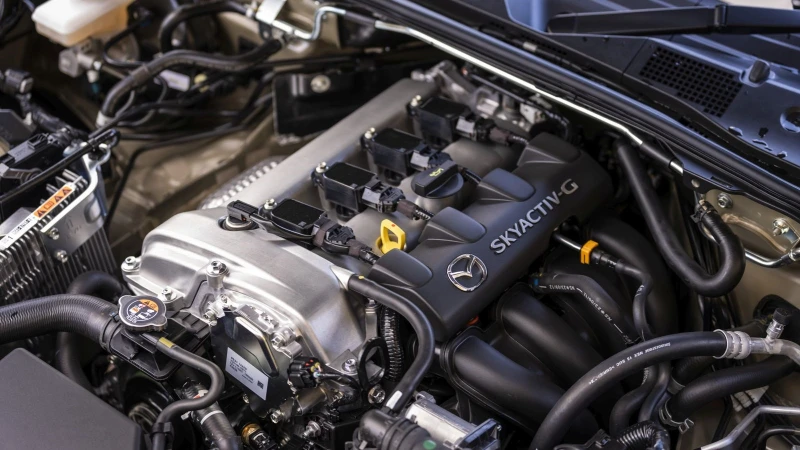
In Europe, the Mazda MX-5 is currently available exclusively with a naturally aspirated four-cylinder 1.5-liter engine. The two-liter variant was previously removed from the local range due to stricter emissions requirements. Prior to the update, the base unit delivered 132 hp and 152 Nm of torque.
For the 2027 model year, the engine has received a modest increase in output. Power has risen to 136 hp, with maximum torque now at 155 Nm. At the same time, Mazda reports a reduction in average fuel consumption: the previous 6.2–6.3 liters per 100 kilometers has been lowered to 6.1 liters per 100 kilometers.
The specification changes do not transform the MX-5 into a more powerful sports car, but they help keep the smaller-engine version relevant. The model's primary strengths continue to lie in its compact dimensions, low seating position, and curb weight of approximately 1,090 kilograms.
Why the Next Generation Raises Questions
The future Mazda MX-5 will likely have to account for new emissions regulations and safety requirements. The company has already referenced the possibility of adopting a hybrid or other electrified powertrain layout. While such a solution could deliver higher power, it would simultaneously tend to increase vehicle mass through the addition of an electric motor, battery, and related components.
This is a particularly pertinent issue for the MX-5. The model has traditionally centered on straightforward engineering and low weight, meaning significant electrification could alter the car's fundamental character. In addition, packaging a traction battery would necessitate revisions to the floor and body structure, potentially impacting the roadster's proportions.
It is also possible that the transmission could change with the new generation. The current MX-5 is renowned for its six-speed manual gearbox, whereas a more complex hybrid architecture might call for an automatic transmission. Mazda has yet to reveal the definitive configuration of the upcoming model, meaning the current generation will serve as the basis for the lineup for several more years.
Equipment Updates and New Versions
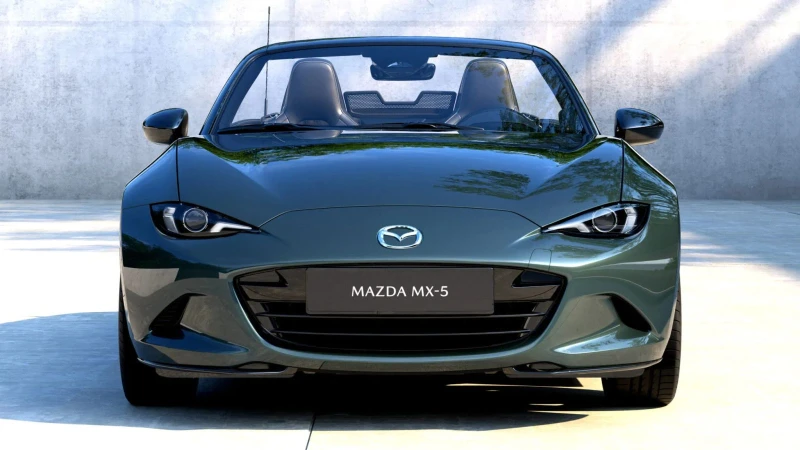
Beyond the engine revisions, Mazda has reviewed select equipment details. A new exterior color, Zinc Green, has been added to the MX-5 palette. The electronic driver assistance suite has also been updated with the inclusion of the Driver Attention Alert system. Features of this type are becoming mandatory for new vehicles in the European Union market.
A Yakudo edition will join the range. It will be offered with a soft folding roof, Alcantara-trimmed interior elements, silver brake calipers, and decorative accents in a matching style. Mechanically, this variant will retain the 136-hp engine.
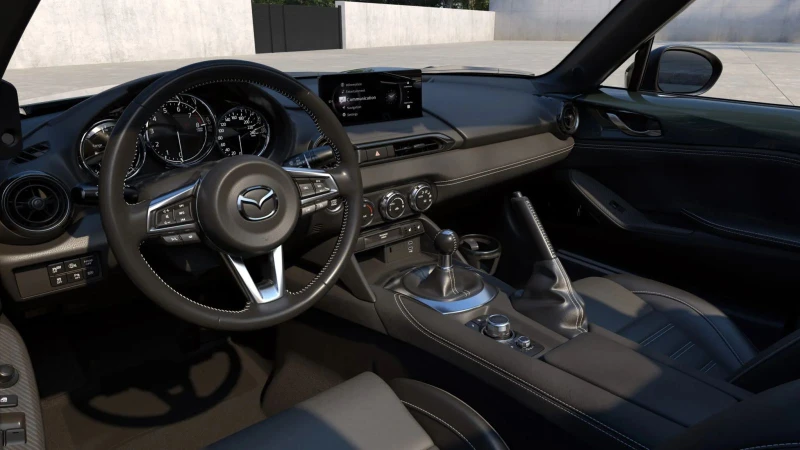
For enthusiasts who place greater emphasis on chassis dynamics, the Homura variant will continue in the lineup. It is distinguished by lighter Rays wheels, a front body brace, and Bilstein dampers. These elements are intended to enhance the precision of the car's responses without modifying the core architecture.
Summary
The Mazda MX-5 update does not fundamentally alter the model but supports its continued relevance during the lead-up to the next phase of development. The roadster gains a modestly more powerful engine, lower fuel consumption, new options, and an expanded array of driver assistance systems. Throughout, Mazda retains the defining traits of the current MX-5 — lightweight construction, rear-wheel drive, and a naturally aspirated engine.