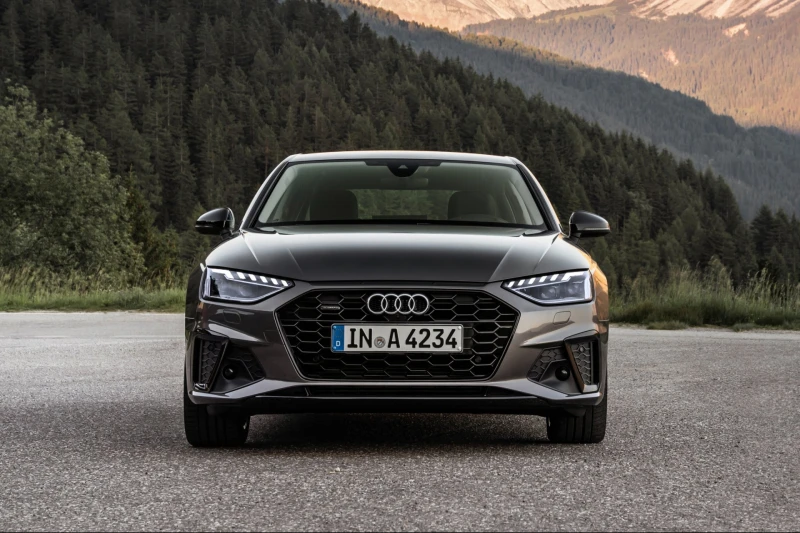
On paper, the B9 has a reassuring reputation. It was a mature generation, improved steadily through its production run, and avoided the kind of high-profile systemic failures associated with some early dual-clutch transmissions or the timing-chain troubles seen in its predecessor. But once the discussion shifts from the model line to a specific used car—especially one with higher mileage, an auction history, or five to seven years of deferred maintenance—the picture becomes much more complicated. Those individual details are what ultimately determine the real cost of ownership.
For a broader overview of the generation, specifications, and interior, see the other articles in this series. This guide focuses on the problems that appear in real-world Audi A4 B9 ownership and how they affect buyers on the U.S. used-car market.
Starting point: what is actually on the U.S. used-car market
Most Audi A4 B9 examples for sale in the United States are domestic-market cars from the 2017–2025 model years. Many began life as leases, dealer loaners, corporate vehicles, or privately owned commuter cars. A smaller but highly visible group consists of insurance-auction vehicles that were repaired and returned to the road with rebuilt or branded titles.
These two groups can have very different weaknesses. A clean-title lease return may have complete dealer records but also years of short-trip city use and long manufacturer-recommended service intervals. A rebuilt car may look attractive in photos while hiding structural repairs, mismatched driver-assistance sensors, or water intrusion. Climate matters as well: California and Arizona cars may show sun and heat damage, while cars from New York, Pennsylvania, or the Upper Midwest deserve extra scrutiny for road-salt exposure. Carfax and AutoCheck are useful, but neither report should replace a physical inspection and a pre-purchase scan.
Estimated market price for the United States: roughly $10,000–$35,000 for mainstream used examples, depending on model year, mileage, trim, title status, options, and service history. Low-mileage late-model cars can sit above that range.

Engines: where the biggest risks tend to collect
2.0 TFSI (EA888)
This is the most common engine in the generation and the main source of questions on the used market. The third-generation EA888 used in early B9 models was significantly improved over earlier versions: oil-control rings were revised, the PCV system was updated, and excessive oil consumption became less common. Even so, once mileage climbs past roughly 75,000–95,000 miles, some engines begin using a noticeable amount of oil. A quart every 2,000–3,000 miles is not automatically catastrophic, but it is enough to justify a compression check, a leak inspection, and a close look at the crankcase-ventilation system.
Intake-valve carbon buildup is another recurring issue. Because many U.S.-spec engines rely heavily on direct injection, fuel does not continuously wash the backs of the intake valves. By around 90,000 miles, some cars benefit from intake cleaning, and on heavily driven examples it can become a maintenance item every 40,000–50,000 miles. Later facelift engines are generally better, but they are not immune.
The timing chain is far less notorious here than it was on some earlier 2.0 TFSI engines in the B8 generation. Still, buyers should listen for cold-start rattle, review camshaft-adjustment values with a scan tool, and verify that oil changes were not stretched excessively.
2.0 TDI
Diesel-powered B9 A4s are not a mainstream U.S.-market choice. They are more likely to appear as gray-market imports, Canadian-market cars, or unusual specialty listings. That changes the risk profile: beyond the normal diesel concerns—injectors, high-pressure fuel pump, EGR valve, and diesel particulate filter—buyers may also face parts delays, emissions-compliance questions, state-registration hurdles, and limited dealer support.
Short-trip use is especially hard on a modern diesel. An incompletely regenerated particulate filter and a sticking EGR valve are among the most common post-purchase surprises. A diesel only makes sense when the car regularly covers long highway distances and the buyer has access to a shop that understands modern Audi TDI systems.
Later facelift models also introduced mild-hybrid hardware on selected powertrains. The 12-volt starter-generator system is generally predictable in service, but replacing a failed starter-generator or related control module costs considerably more than replacing a conventional starter.
3.0 TDI and gasoline V6 models
Six-cylinder versions are rare in the A4 B9 context in the United States and are more often encountered through imported cars or closely related performance models. They are usually better documented and owned by enthusiasts, but repair costs are in a different league. On an early 3.0 TDI, failure of the CP4 high-pressure fuel pump can contaminate the entire fuel system. One major repair can erase the price advantage that originally made the diesel attractive.
Transmission and all-wheel drive
Most U.S.-spec Audi A4 B9 models use a seven-speed S tronic dual-clutch automatic. The eight-speed ZF 8HP is more common in higher-performance related models than in the standard A4 lineup, so buyers should verify the exact powertrain rather than relying on a listing description.
The ZF 8HP has an excellent reputation when serviced properly. Fluid should not be treated as truly “lifetime”; a service interval around 40,000–50,000 miles is a sensible ownership practice. The S tronic requires more attention to fluid service, clutch behavior, mechatronic faults, and low-speed hesitation. Clutch wear often becomes relevant around 90,000–125,000 miles, depending on traffic, driving style, and maintenance. That should be treated as a foreseeable ownership expense rather than an automatic reason to reject the car.
The B9 generation uses more than one quattro layout. Some versions rely on a more traditional permanent mechanical system, while many later cars use quattro ultra, which can disconnect the rear axle to reduce drag. Quattro ultra improves efficiency but adds actuators, clutches, and control logic. High-mileage cars should be checked for delayed engagement, warning codes, fluid leaks, and abnormal vibration during acceleration or deceleration.
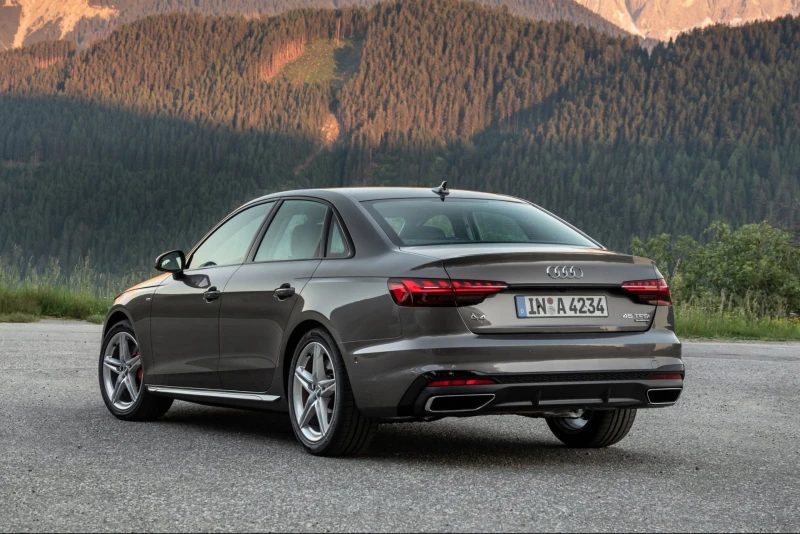
Electronics, multimedia, and interfaces
The facelift divides the B9 into two distinct eras. Earlier cars use an MMI system controlled by a physical rotary dial and, on some trims, a touch-sensitive writing pad. Facelift models moved to a larger touchscreen-based MIB 3 interface. Early systems are criticized mainly for slower processing and dated graphics. Later systems can suffer from occasional freezes, delayed startup, navigation glitches, wireless phone-connection problems, and uneven response in very cold weather.
The Virtual Cockpit is generally reliable, but failure is rare and expensive. Replacement often requires coding and component-protection procedures, so a dead or flickering display can become a major repair. The same is true of adaptive LED or matrix-design headlights: they provide excellent illumination, but a damaged lamp assembly, control module, or calibration procedure can easily produce a bill of several thousand dollars.
More routine electronic complaints involve parking sensors, cameras, blind-spot sensors, and radar calibration—especially after bumper or body repairs. Pre-facelift climate-control panels can also develop worn or inconsistent touch-sensitive controls over time.
Body, noise insulation, and cabin wear
Factory corrosion protection is strong. Age-related perforation rust is uncommon on well-kept cars, even as the oldest examples approach a decade in service. But that can work against the buyer: a clean-looking body may still hide major collision repairs. A paint-depth gauge is not overkill. It is especially important on bargain-priced cars from insurance auctions, where repaired structural damage, replaced quarter panels, and poorly aligned crash sensors are common risks.
Cabin isolation is good but not class-leading. Compared with a Mercedes-Benz C-Class W205, the A4 can allow more tire noise into the cabin, while its overall acoustic character is closer to a BMW 3 Series. Coarse pavement and aggressive all-season tires make the difference more obvious. Facelift cars received incremental improvements, but owners who keep the car long term sometimes add sound-deadening material in the wheel arches, doors, and floor.
Interior quality is generally high, though lower door panels and sections of the center console scratch more easily than expected. By around 90,000 miles, the steering-wheel leather, shift selector, driver’s seat bolster, and pedal surfaces may show meaningful wear. That is normal aging, but on a car advertised as “perfect” with only 55,000 miles, mismatched wear patterns can be an early warning that the odometer story deserves closer investigation.
Real-world fuel economy
EPA estimates are useful for comparison, but actual results depend heavily on traffic, wheel size, tire choice, temperature, altitude, and driving style. Real-world owner reports commonly fall near the following ranges:
| Version | City | Highway |
| 2.0 TFSI 190 hp quattro | 18–21 mpg | 29–34 mpg |
| 2.0 TFSI 252 hp quattro | 17–20 mpg | 28–31 mpg |
| 2.0 TDI 150 hp | 29–34 mpg | 43–47 mpg |
| 2.0 TDI 190 hp quattro | 26–29 mpg | 36–43 mpg |
| 3.0 TDI quattro | 21–24 mpg | 31–36 mpg |
These are broad estimates drawn from owner reports, service communities, and used-car listings. Real numbers can move significantly with maintenance condition, seasonal fuel blends, traffic, and driving habits.
Suspension and chassis
The multilink suspension at both ends is fundamentally durable, but it is expensive to refresh. Control-arm bushings, ball joints, and sway-bar links may begin making noise around 50,000–75,000 miles, while a full front-end rebuild can become a serious bill. Cars equipped with adaptive dampers add another layer of risk because replacement parts cost substantially more than standard shocks.
On rough pavement, the B9 suspension is not inherently weak, but it has little tolerance for years of neglected bushings, bent wheels, low-profile tires, and cheap replacement parts. When the previous owner postpones repairs, the next owner often pays for several overdue jobs at once.
What can be fixed—and what remains a gamble
Some problems are straightforward to manage. Moderate oil consumption on the 2.0 TFSI may improve after PCV-system repairs, leak correction, or more extensive internal engine work. Intake carbon buildup is a service procedure, not a terminal defect. S tronic clutch wear and suspension components are normal long-term expenses that can be budgeted in advance. Road noise can also be reduced with better tires and additional sound insulation.
Electronics are harder to predict. Adaptive headlights, the Virtual Cockpit, MMI displays, cameras, and driver-assistance modules may work for years—or fail with little warning and generate a large bill. Preventive maintenance cannot eliminate most of that risk, so buyers should leave room in the budget for an unexpected electronic repair.

How to choose the right one
Viewed without blanket judgments, the safest purchase is usually a facelift car from roughly the 2020 model year onward, with a clean title, complete maintenance records, and no evidence of structural repair. In a standard U.S.-spec A4, the seven-speed S tronic is normal; its service history and current behavior matter more than the transmission name itself. On well-maintained cars, the largest risks are usually electronics and wear items rather than a fundamental engine or chassis flaw.
Early 2017–2018 examples can be strong values, but they deserve a more detailed engine, transmission, cooling-system, and scan-tool inspection. Front-wheel-drive versions may be cheaper, while quattro cars are more common and easier to resell in many regions. Diesel versions are difficult to justify unless the buyer specifically understands the import, emissions, and service implications.
The biggest mistake is assuming that a premium badge makes pre-purchase inspection optional. The Audi A4 B9 has real durability built into it, but only when maintenance is consistent and repairs are done correctly. A carefully selected example can be rewarding; a neglected or poorly rebuilt one can punish any attempt to save money on diagnosis before the sale.