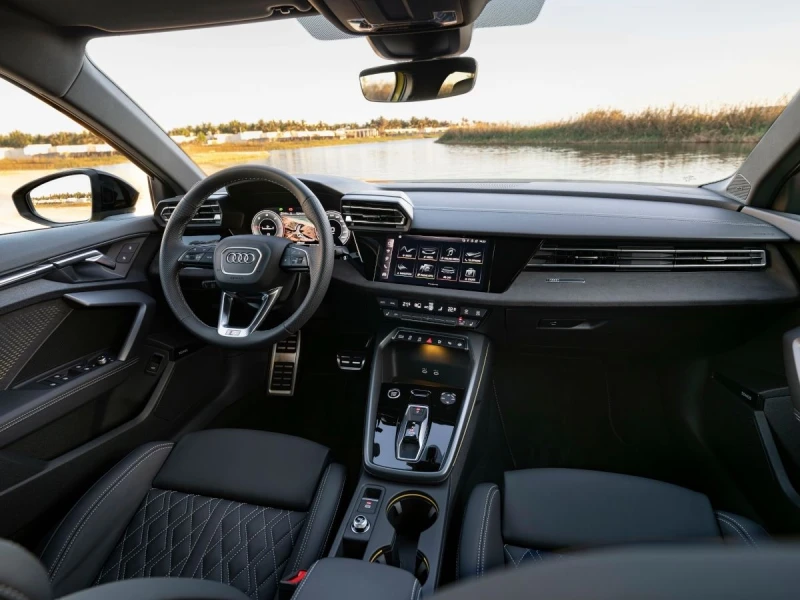
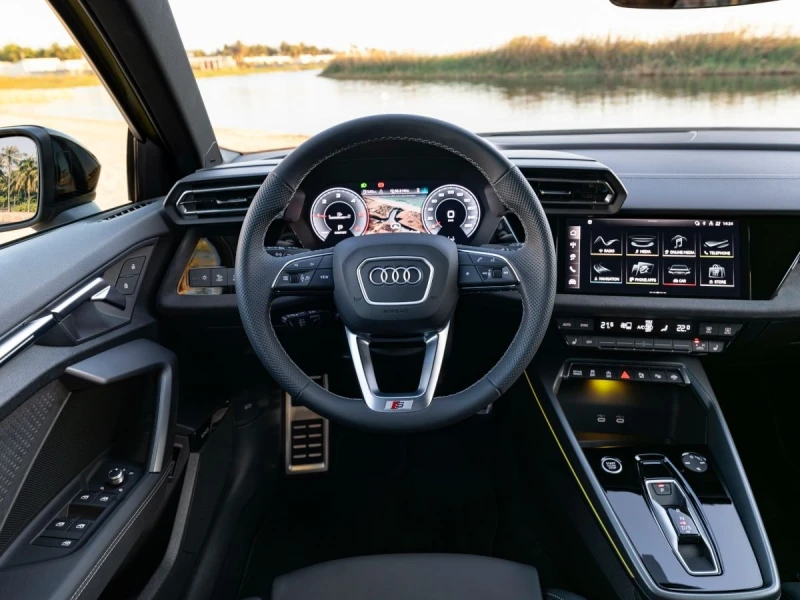
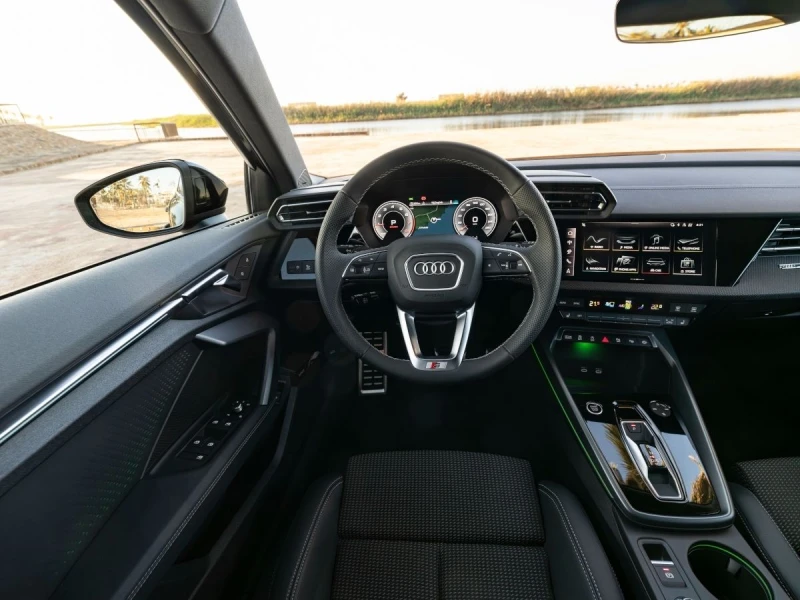
In Ingolstadt, Audi moved away from the smooth, flowing lines of the previous dashboard and adopted a sharply geometric architecture with a strong horizontal emphasis. This geometry is the model’s most recognizable feature — and simultaneously the point that continues to divide owners: some find it fresh and mature, others consider it too technical for a compact hatchback.
Dashboard Architecture and Cabin Feel
The front dashboard of the Audi A3 IV is centered around two screens: a 10.25-inch digital instrument cluster (optional 12.3-inch with Virtual Cockpit Plus) and a 10.1-inch infotainment touchscreen angled toward the driver. Between them sits a dedicated climate control panel with physical buttons and knobs plus a small narrow display above the vents. This detail deserves attention: unlike the Volkswagen Golf VIII, where climate functions are controlled solely through touch sliders, the A3 8Y retains proper physical switches and dials. In daily driving, this proves to be one of those thoughtful decisions that noticeably reduces driver distraction.
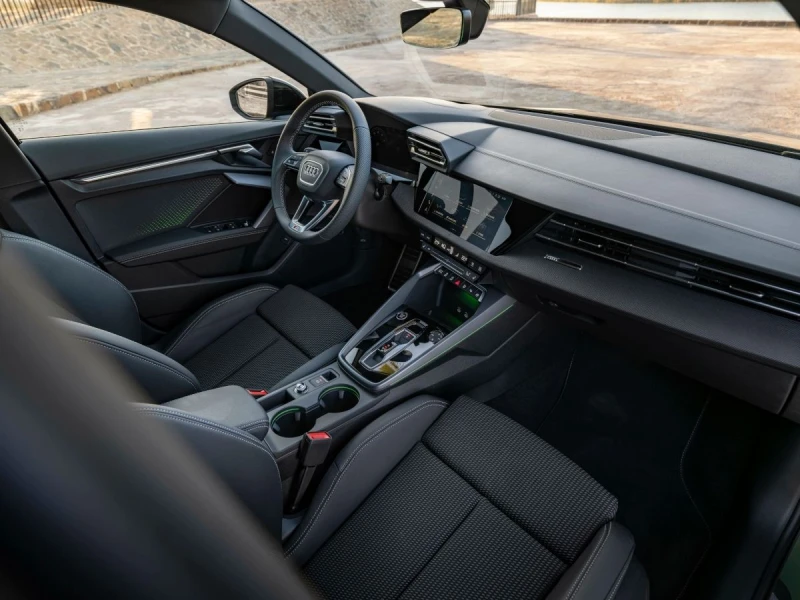
The transmission selector on DSG models is a compact joystick with a trim piece, freeing up space on the center tunnel for storage bins and wireless charging (on higher trims). The center console is raised and driver-oriented — a typical Audi design cue that feels even more pronounced here than in the Q3 or previous A4.
Materials and Perceived Quality
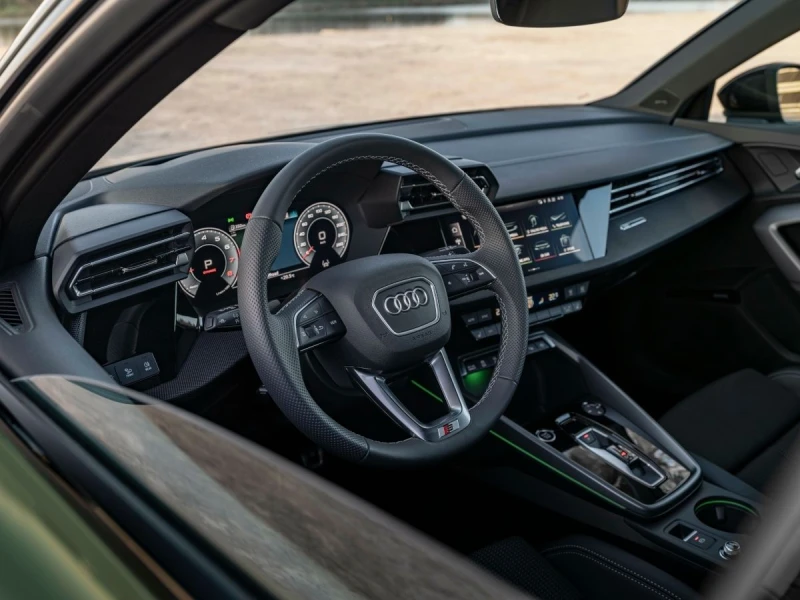
This is where the Audi A3 IV interior draws the most mixed opinions. The upper dashboard and upper door card sections are wrapped in soft-touch plastic with a satin texture. The lower section of the dash, plastics around the center tunnel, and lower door cards are harder, with a structural grain. This approach is typical for the premium C-segment, but owners coming from the 8V predecessor often note that earlier A3 models felt slightly more practical and less formal.
Console trim varies by trim level: base models get matte aluminum-look plastic, mid-levels feature anodized metal with a fine brushed texture, while S line and S3 get glossy black inserts or Alcantara with contrast stitching. Alcantara on the steering wheel and seat bolsters in S line models holds up well initially, but around 40,000–50,000 miles it can start to develop a noticeable sheen — something to inspect carefully on used examples.
Ergonomics, Seating, and Space
The front seats are a strong point. Base trims come with standard seats and cloth upholstery, but even these have a well-shaped profile and good back support. Sport seats with integrated headrests and more pronounced bolstering from the S line package are quite common, especially on cars imported from Europe. Top trims offer power adjustment, memory, and heating, while the S3 adds Alcantara and a more aggressive frame.
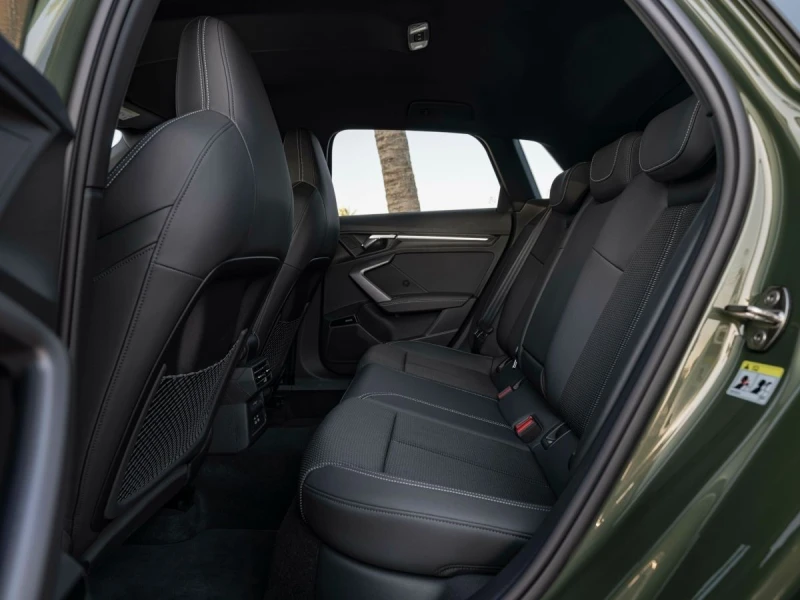
The rear seat is traditionally the most compromised area in the A3. The wheelbase is unchanged from the predecessor, so legroom for a 6-foot passenger with the driver similarly positioned is marginal. Headroom is limited by the sloping roofline, especially in the Sportback. The sedan is slightly better in this regard thanks to a higher roofline over the rear bench, but it remains primarily a car for two adults in the back on short to medium trips.
Luggage capacity: Sportback offers 380 liters (13.4 cu ft) to the parcel shelf, sedan 425 liters (15 cu ft). The plug-in hybrid 40/45 TFSI e has noticeably less — around 280 liters (9.9 cu ft) — because the traction battery sits under the floor. This is an important consideration for anyone looking at PHEV versions: the compact body loses a significant portion of its everyday practicality.
Trim Levels Commonly Found on the US Market
Official imports combined with a healthy supply of European and US-spec vehicles mean the range of available configurations on the used market is broader than the standard dealer offering. These can be roughly grouped into several equipment tiers that reflect both European packages (Advanced, S line) and US-specific naming (Premium, Premium Plus, Prestige).
| Level | What's Typically Included | What's Common on the US Market |
| Base | Cloth upholstery, dual-zone climate control, 10.1″ touchscreen, basic audio system, front parking sensors | Least common — mostly early examples imported from Europe |
| Advanced / Premium | Dual-zone automatic climate, MMI Navigation Plus, partial leather, heated front seats, front and rear parking sensors | One of the most frequently seen configurations in used listings |
| S line | Sport seats (cloth or Alcantara), flat-bottom steering wheel, glossy black trim inserts, Virtual Cockpit Plus 12.3″, S line exterior package | The most popular target specification among buyers |
| Premium Plus / Prestige (US) | Leather upholstery, B&O Premium Sound, head-up display, adaptive cruise control, parking sensors with rear camera | Regularly available — US-spec examples from 2021–2023 model years |
| S3 | Performance sport seats with Alcantara, distinctive trim elements, S3-specific MMI menu, ambient lighting | Limited availability but a steady niche following |
Ambient lighting with a choice of 30 colors tells its own story. It comes standard on nearly all US-spec cars, whereas on European models it usually requires selecting the appropriate package. This makes a noticeable difference to the evening atmosphere: vehicles equipped with full ambient lighting and illuminated door panels tend to feel more upscale even when the actual trim materials are identical.
Infotainment and Driver Assistance Systems
The third-generation MMI system fitted to the A3 IV follows Audi’s established tile-based interface with voice assistant support and wireless Apple CarPlay plus Android Auto. System responsiveness has improved over the years through successive software updates, yet the core hardware remains unchanged from the earliest cars. Against newer rivals equipped with more powerful processors, it can occasionally feel less fluid in animations — most apparent when scrolling through navigation maps.
Driver assistance features most often encountered include Audi Pre Sense Front, lane departure warning with active keep assist, and adaptive cruise control. The complete package featuring matrix LED headlights, active lane change assist, and a 360-degree camera system remains uncommon, though it does appear on well-equipped examples from both European and US sources.
Ownership Experience Under US Conditions
Weather and road maintenance practices leave a clear imprint. Cars that have covered several winters in northern states where road salt sees heavy use frequently exhibit fading and color loss on the Alcantara bolsters of the driver’s seat, particularly in S line trims. Milano and Fine Nappa leather proves more resilient but benefits from regular conditioning; without it, fine cracks can develop on the steering wheel and center armrest after 50,000–62,000 miles.
Squeaks and rattles form a separate chapter. During the initial production years (2020–2021) owners commonly reported unwanted noises from the dashboard plastics, seatbelt retractors, and the area where the windshield meets the headliner. Starting with 2022–2023 models Audi made improvements through revised clips, enhanced seals, and material adjustments. On earlier cars the issues can be mitigated at an independent specialist, though the repair is seldom a permanent single-visit solution and may require follow-up work.
Outward visibility is average: the A-pillars are reasonably thick while the rear pillars are substantial, especially on the Sportback with its fastback roofline. A rearview camera greatly simplifies maneuvering, and given typical US parking situations — from crowded urban garages to shopping center lots — its inclusion in the equipment list is virtually a prerequisite for most buyers. Day-to-day cabin care is uncomplicated: the glossy console trim pieces need routine wiping, otherwise they quickly collect fine scratches from keys, phones, and dust.
What to Prioritize When Shopping Today
Several years after launch, the Audi A3 IV interior continues to look and feel current. Much of the credit goes to the successful equilibrium between physical controls and digital screens rather than an all-touch approach. Rivals that eliminated traditional buttons have, in certain respects, traded away long-term usability; the A3 solution has aged well.
A sensible balance for most buyers is a Premium or Premium Plus (or equivalent Advanced/S line) specification that includes dual-zone climate control, navigation, supportive sport seats, and a rearview camera. Entry-level cars can feel surprisingly plain for a premium brand and generally hold their value less strongly on the used market. Higher-spec examples fitted with a head-up display, B&O audio, and the fuller driver assistance suite are most appealing to those prepared to pay extra for the equipment and who intend to keep the car for an extended period. PHEV models, with their reduced cargo capacity and elevated potential costs for high-voltage repairs, represent a specialized choice best matched to a clear usage profile that includes regular charging access.
Technical details regarding engines and transmissions, along with exterior styling and body characteristics, are examined in dedicated articles within this series. The central point here is different: the 8Y interior remains one of the strongest reasons to consider the model, and grasping its real strengths and shortcomings matters more than simply tallying options from a specification sheet.