


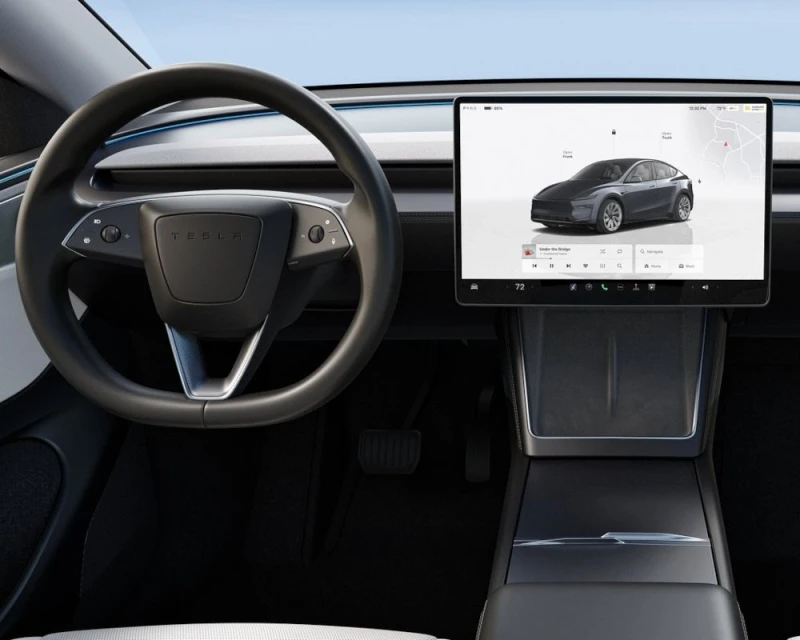
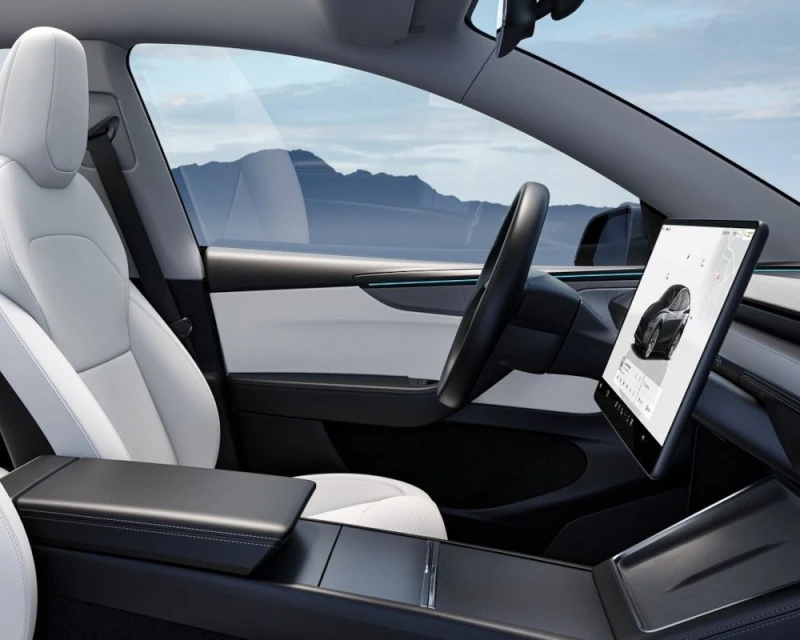
The centerpiece of the cabin remains the 15.4-inch touchscreen positioned horizontally across the upper dashboard. There is no traditional gauge cluster; all vehicle information appears on the central display. The steering wheel is free of stalk controls — turn signals, headlights, and gear selection are managed through capacitive touch zones on the wheel and on-screen controls.
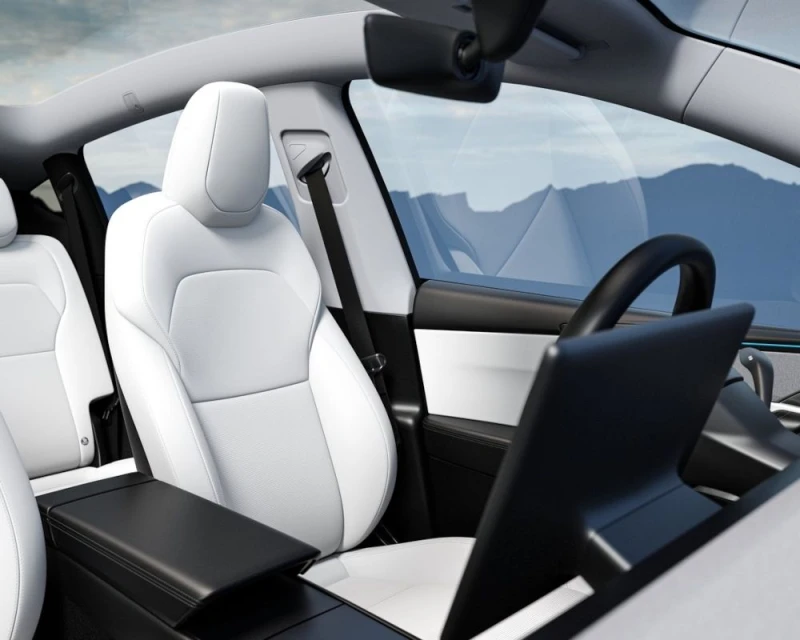
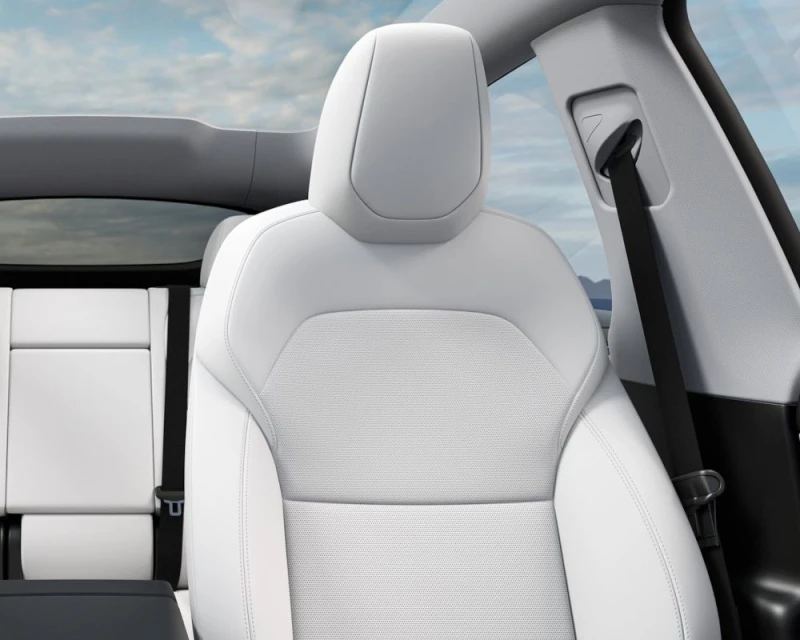
Interior materials have been meaningfully upgraded: soft-touch plastics with a pleasing texture cover the dashboard and door cards, while premium vegan leather is used for the seats, center console, and door panels. Higher trims add open-cell carbon fiber or natural wood decorative inserts. Fit and finish are consistently excellent, with tight panel gaps and virtually no squeaks or rattles reported even on early 2025–2026 vehicles.
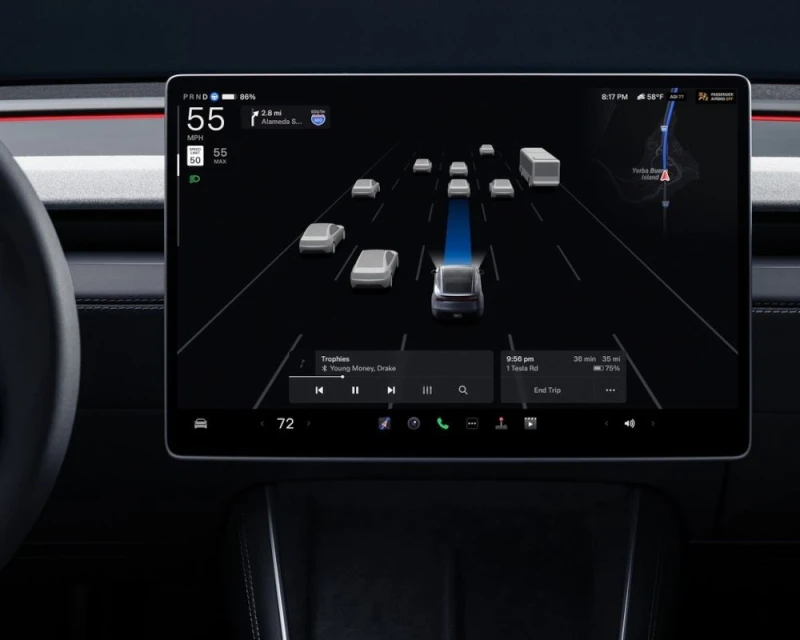
Driver ergonomics revolve around the big screen. Seat position, mirrors, climate settings, and steering wheel adjustments are all accessed through on-screen menus. Physical buttons are kept to a minimum (hazard lights and trunk/frunk releases). Seats provide strong lateral support, power adjustment with memory function, plus heating and ventilation as standard equipment. The driving position suits a wide range of heights — comfortable for drivers from about 5'3" to 6'5" — with generous adjustment travel.
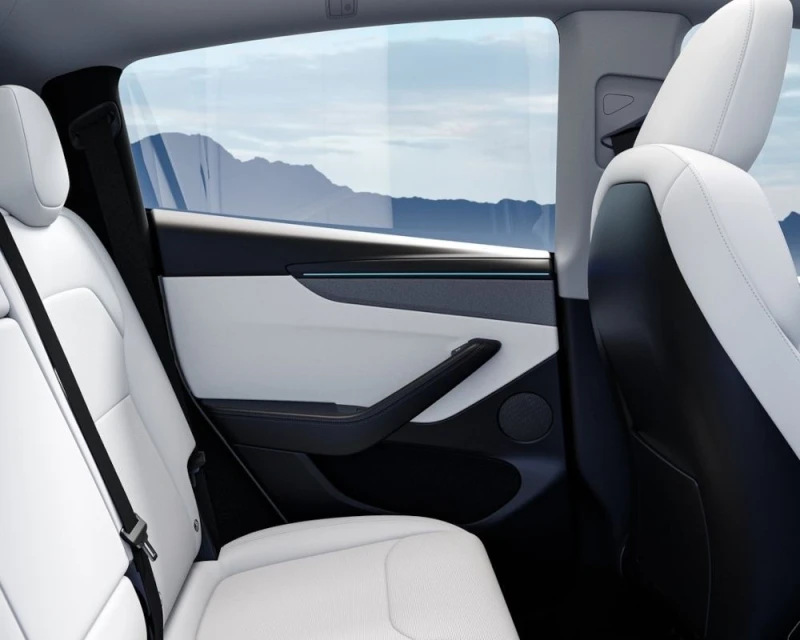
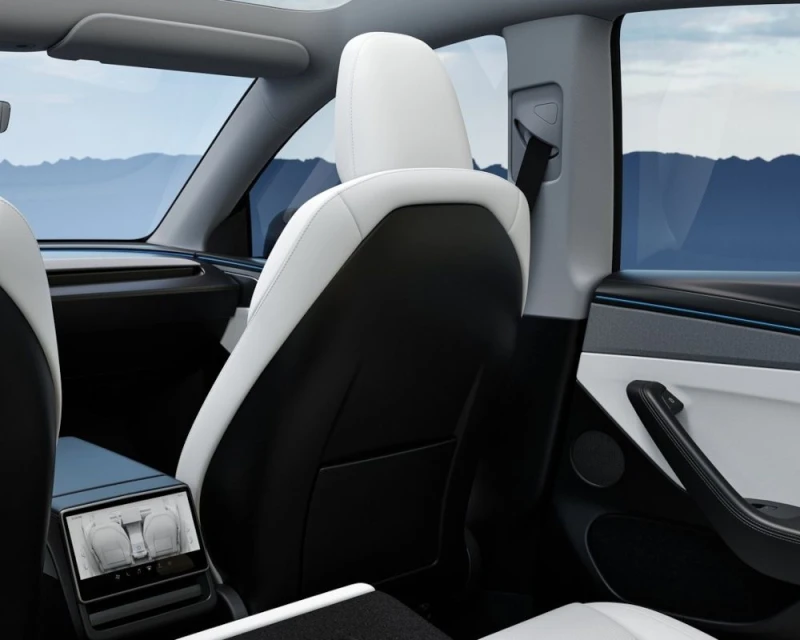
Front seats are well-suited for long-distance travel. The rear bench offers generous space: both headroom and legroom have increased thanks to the revised roofline and optimized seating geometry. The center tunnel is low, making the middle seat usable. Rear passengers in Long Range and higher models benefit from their own 8-inch touchscreen for controlling climate, media, and seat functions.
Cargo space: the rear compartment provides approximately 30 cubic feet (an increase of about 1 cubic foot versus the previous generation), while the frunk offers 4.1 cubic feet on RWD models or 1.4 cubic feet on AWD versions. The 60/40-split rear seatbacks fold flat to create a level load area. Practicality is strong, with multiple storage compartments, USB-C ports front and rear, wireless phone charging, and bag hooks. The relatively high rear load lip and absence of a conventional center storage bin can make handling very large items slightly less convenient.
Trim Levels and Configurations
The Tesla Model Y Juniper is offered in the following typical configurations (trim names can vary slightly depending on options and timing):
| Trim Level | Seat and Interior Materials | Infotainment and Displays | Climate and Comfort | Driver Assistance and Safety | Configuration Notes |
|---|---|---|---|---|---|
| Base / RWD | Premium vegan leather, black interior | 15.4" front touchscreen + 8" rear screen (optional) | Dual-zone automatic climate control, heated and ventilated front seats | Basic Autopilot | Often LFP battery versions in select 2025–2026 builds |
| Comfort / Long Range AWD | Vegan leather in white or black with wood or carbon fiber accents | 15.4" + 8" rear touchscreen, 17-speaker premium audio system | Heated rear seats, front seat ventilation, heated steering wheel | Enhanced Autopilot or Full Self-Driving (FSD) | Most popular configuration for 2025–2026 model years |
| Top / Performance | Sport seats with reinforced bolstering, Alcantara trim option | 15.4" + 8" screens, 17-speaker premium audio | Full heating and ventilation package, adaptive suspension | Full Self-Driving, Track Mode | Less common; typically special order or limited allocation for 2025–2026 |
Long Range AWD examples with white or black interiors, comprehensive seat ventilation, and FSD capability are frequently chosen. Base RWD LFP models usually come with black interiors and a more limited options list. Every version now uses a fixed glass roof with electrochromic dimming instead of the earlier panoramic design.
Year-by-Year Interior Changes and Refinements
This represents the current production generation. While no large-scale interior redesign has taken place since the Juniper launch, Tesla has introduced several targeted improvements via production tweaks and software:
- 2025/2026: Initial launch with new stalk-free steering wheel, 15.4-inch main display, 8-inch rear screen (standard on Long Range and above), significantly improved acoustic insulation thanks to double-glazed windows all around, and ventilated front seats included from the start
- 2026: Expanded choice of interior colors (new white and gray tones), faster touchscreen response through software updates, and upgraded sound-deadening materials in later production batches
Every update aims to raise comfort and material quality. At present the Juniper cabin stands as one of the most contemporary in its segment, free of outdated design choices. Early 2025 cars are essentially indistinguishable from 2026 models in terms of materials and standard equipment.
Common Owner Questions and Potential Drawbacks
On the used market (typical mileages between 2,000 and 25,000 miles), owners commonly mention the following characteristics and minor issues:
- White interior durability: Vegan leather surfaces can collect dirt and develop a yellowish tint with heavy daily use, particularly in cars shared with children or pets
- Squeaks and rattles: A few early 2025 builds exhibit minor creaking from the center console and door cards when traversing rough pavement or highway expansion joints
- Noise insulation: Dramatically better than the first-generation Model Y, although tire and road noise from the wheel arches remains audible on coarse asphalt or at highway speeds
- Rear headroom: Generally generous, but occupants taller than roughly 6'3" may occasionally brush the headliner when sitting fully upright
- Rear visibility: Thick C-pillars and a narrow rear window restrict direct sightlines; the camera suite compensates but takes some getting used to
- Interior upkeep: High-gloss screen and console areas show fingerprints almost immediately, and light-colored upholstery benefits from periodic professional cleaning
Materials perform reliably across diverse climate conditions, though lighter interiors typically require detailing once or twice annually. Overall assembly quality is high, and reports of persistent squeaks are less frequent than with the previous generation.
Final Assessment: The Juniper Interior in 2026
As of 2026 the Tesla Model Y Juniper interior remains one of the most advanced and pleasant cabins in the electric crossover class. The dual large screens, clean minimalism, standard seat heating and ventilation, and upgraded sound insulation keep it feeling fresh and competitive right from the start of production.
For most buyers seeking the best balance of equipment, comfort, and everyday usability, the Long Range AWD models from 2025–2026 with white or black interiors, full seat ventilation, and the rear display represent the strongest choice. The more affordable base RWD versions deliver solid value but provide less luxury for rear-seat passengers. Stepping up to Performance makes sense primarily if you prioritize outright acceleration and sportier handling.
Whether buying new or used, it pays to inspect the following areas carefully:
- Seat and door card condition (scuffs, stains, and wear — especially noticeable on lighter colors)
- Absence of squeaks or rattles when driving over uneven surfaces
- Functionality of both touchscreens (no dead pixels, freezing, or excessive lag)
- General material condition and any evidence of prior smoking or pet use
- Performance of the climate control system, seat ventilation/heating, and rear display
The interior of the Tesla Model Y II (Juniper) continues to be one of the model's major strengths, combining advanced technology, genuine comfort, and a high-quality feel.