


The model has fully transitioned to electric propulsion and is equipped with three electric motors, all-wheel drive, and performance figures comparable to hypercars. At the same time, the vehicle prompts discussion not only regarding its price but also the fundamental concept of an electric sports sedan.
The new model is positioned to serve as the flagship of the AMG range in the coming years and to illustrate Mercedes' vision for the future of high-performance automobiles. However, alongside the impressive specifications come certain trade-offs related to vehicle mass, driving range, and overall character.
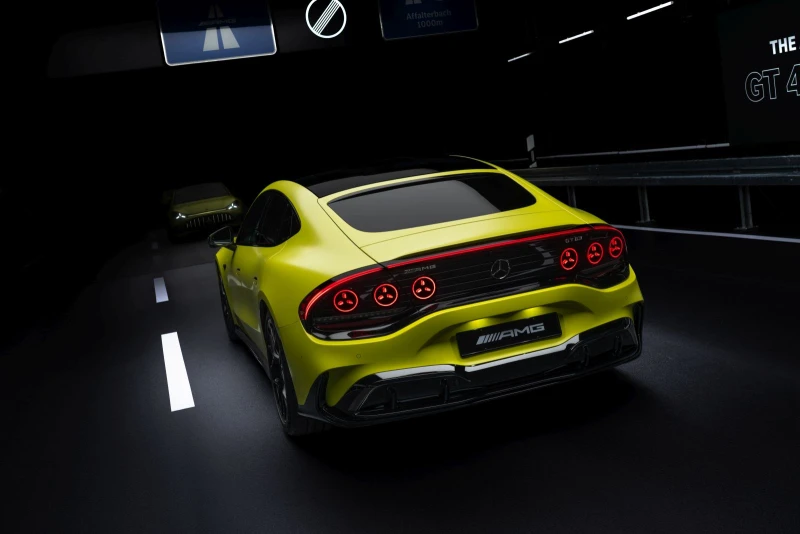
Three Electric Motors and Over 1,100 Horsepower
The Mercedes-AMG GT 4-Door EV will be offered in two variants — GT 55 and GT 63. Both versions feature three electric motors: one at the front and two at the rear.
The entry-level GT 55 produces 816 horsepower, while the flagship GT 63 is equipped with a powertrain generating 1,169 horsepower. Official figures indicate that the top version can accelerate from 0 to 100 km/h in approximately 2.4 seconds and reach 200 km/h in less than 7 seconds. Top speed is rated at 300 km/h when fitted with the optional Driver’s Package.
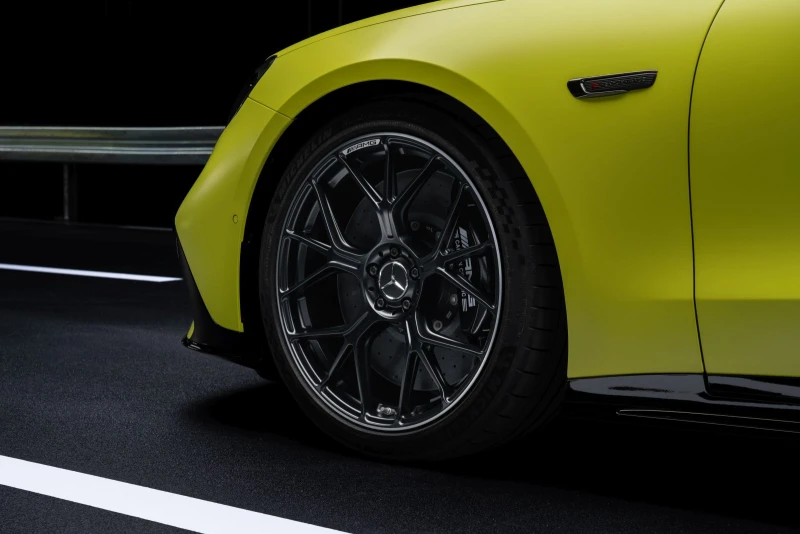
These performance levels rank the model among the quickest production Mercedes-Benz vehicles ever. However, such dynamics were achieved through a significant increase in mass. The curb weight stands at around 2,460 kilograms, considerably more than traditional gasoline-powered AMG sports cars.
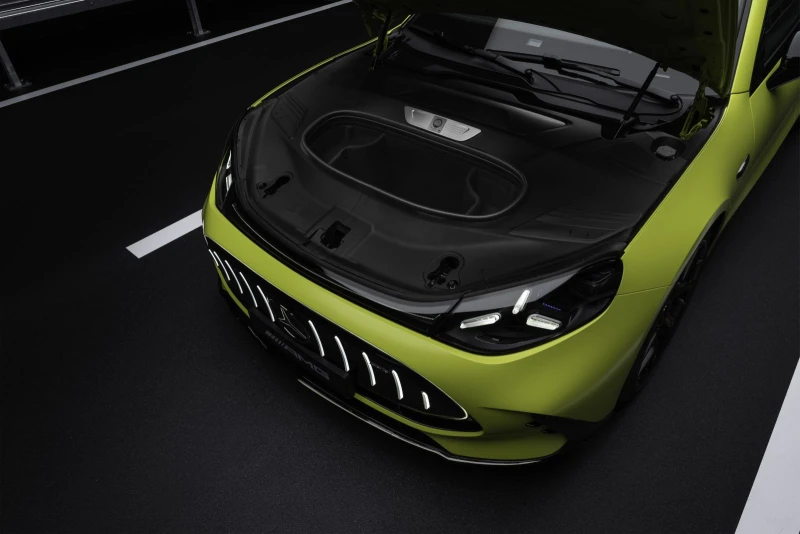
Battery, Charging, and Real-World Range
The electric vehicle is equipped with a 106 kWh battery. The manufacturer claims a maximum range of up to 764 kilometers; however, this figure is based on the European test cycle and may vary considerably in real-world operation.
During spirited driving, especially at sustained high speeds, energy consumption rises markedly. For a high-performance sports car, this means more frequent charging stops, particularly during extended journeys.
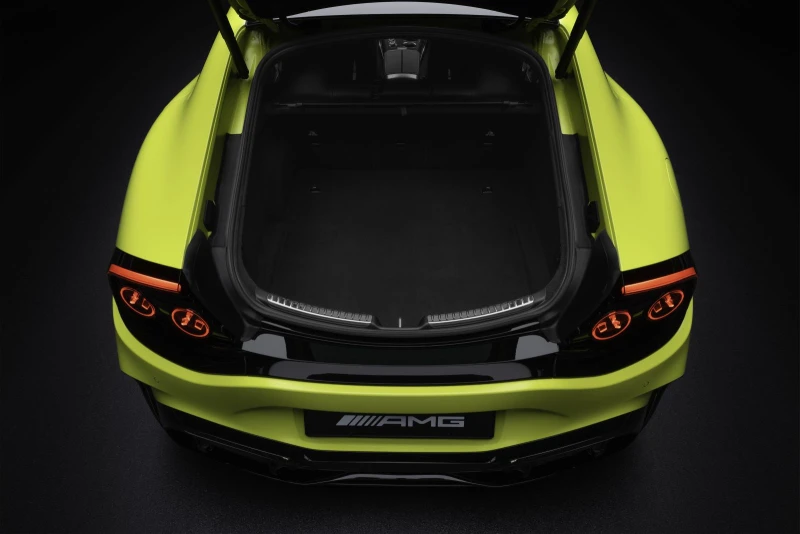
A notable advantage is support for ultra-rapid charging at up to 600 kW. While this theoretically enables quick energy replenishment, such high-power chargers remain uncommon. Most public charging stations operate at 50–150 kW, and residential units are typically limited to 11–22 kW.
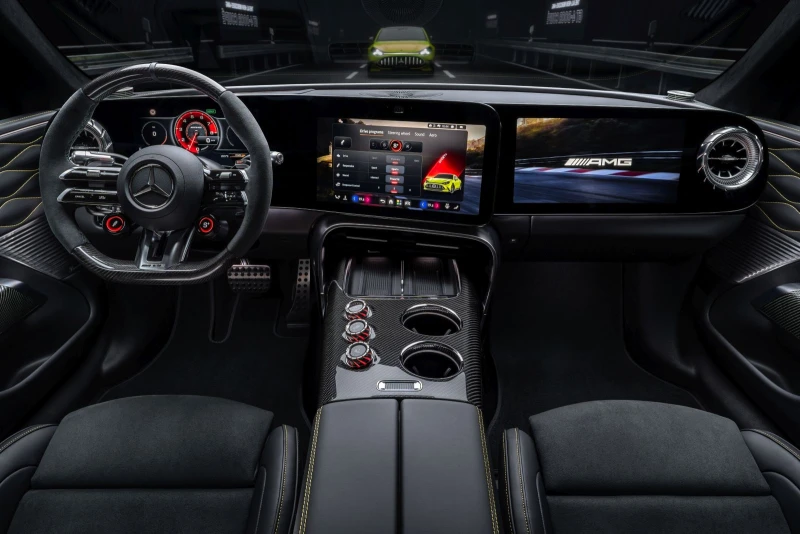
Interior and Digital Technologies
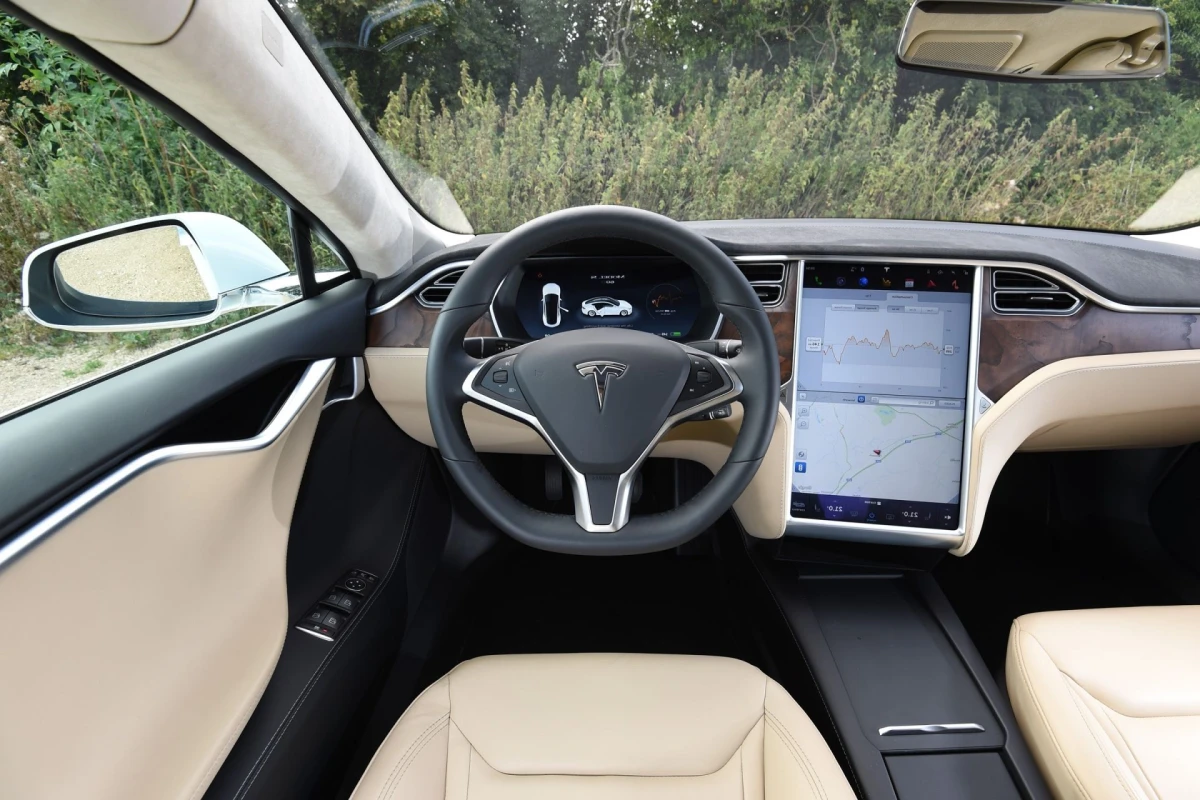
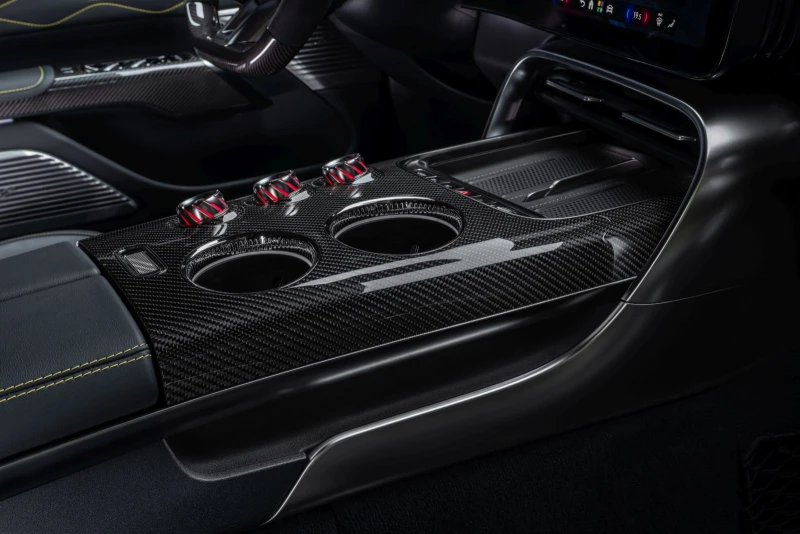
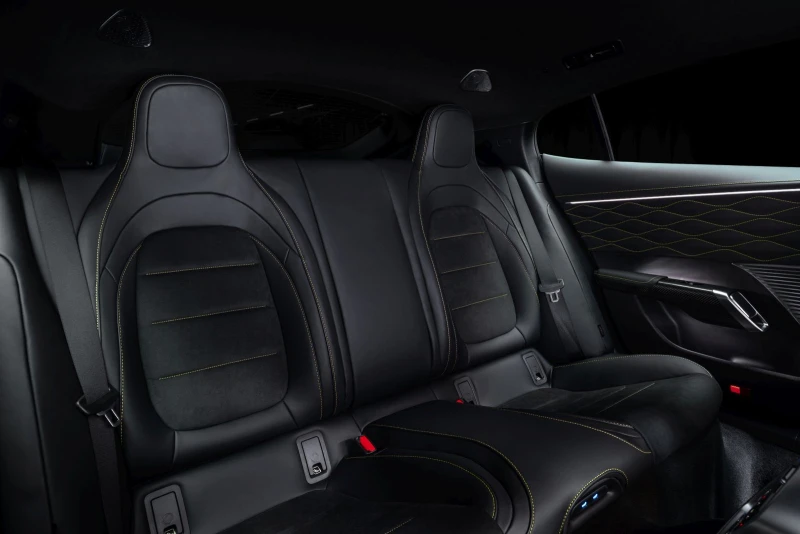
The AMG GT cabin follows the contemporary Mercedes-Benz design language, featuring large digital displays and a reduced number of physical controls. The multimedia system with touchscreen operation takes center stage.
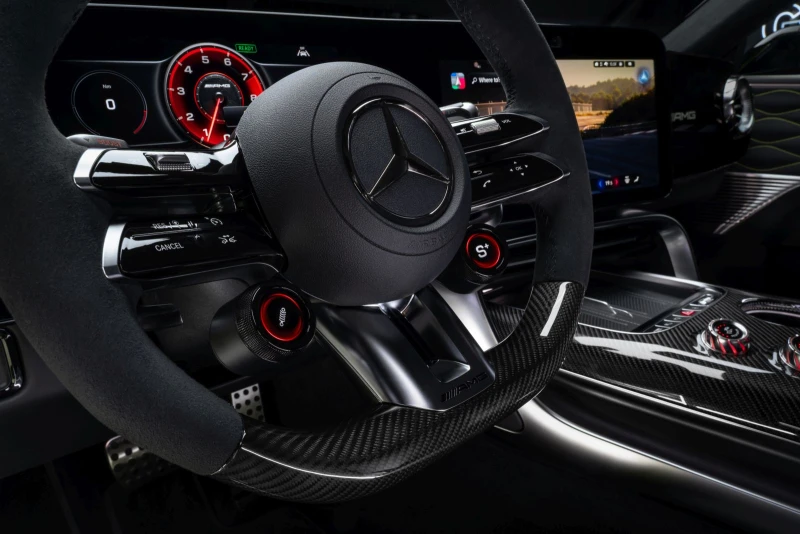
Special driving modes are available that emulate the behavior of traditional gasoline sports models. A synthesized V8 engine sound is played through the audio system, while the digital instrument cluster displays virtual gear shifts and changing engine speeds.
These features represent an attempt to retain the engaging character of sports cars in the electric era. At the same time, powertrain operation remains entirely electric and is not linked to mechanical gear changes.
Design and Positioning
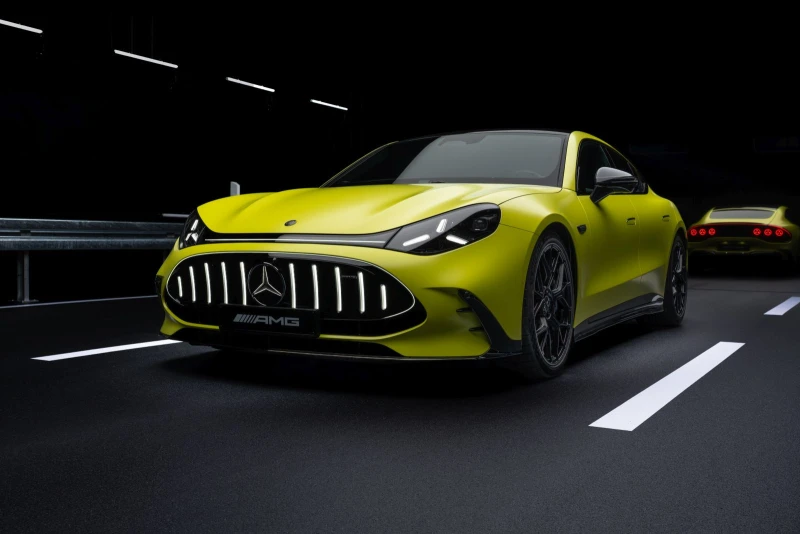
The new AMG GT presents a low-slung silhouette, broad rear section, and distinctive LED lighting. Despite its assertive styling, the design has been met with mixed reactions and differs noticeably from classic AMG models of previous years.
Preliminary estimates suggest the model’s price in Europe may exceed 200,000 euro depending on specification. As such, the electric AMG GT is expected to compete with the Porsche Taycan Turbo GT and other high-output premium electric vehicles.
Conclusion
The Mercedes-AMG GT 4-Door EV exemplifies how the sports car segment is evolving under electrification. The new model delivers extreme power, rapid acceleration, and a modern digital architecture, while facing typical limitations of large electric vehicles — elevated mass, fast-charging infrastructure requirements, and range considerations under demanding use.
For Mercedes-Benz, this vehicle marks an important step in AMG’s development. It reflects the brand’s intent to maintain its sporting identity within new technical parameters, even as the traditional sports car concept evolves.