


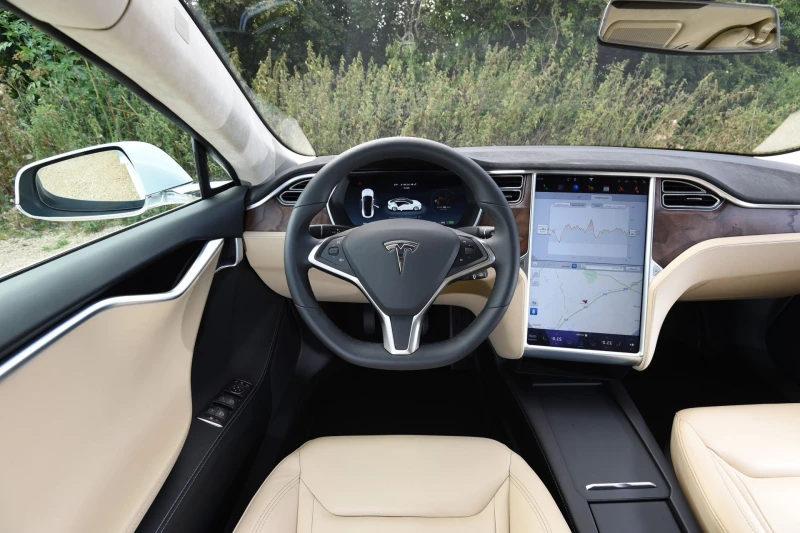
The cabin of the second-generation Tesla Model S (Palladium) revolves around maximum digitalization. At its heart is a large 17-inch vertical touchscreen that manages virtually every function in the vehicle. Traditional gauges are gone — all vital information appears on the central display. The steering wheel remains classically round, featuring two scroll wheels and two unmarked buttons for controls.
Base models use synthetic vegan leather for the seats and trim inserts, complemented by a mix of hard and soft-touch plastics. Higher trims add aluminum or wood-effect decorative accents. Early examples from 2016–2018 drew criticism for inconsistent panel gaps and squeaks, though quality control improved noticeably from 2019 onward. Noise insulation received upgrades over the previous generation, including acoustic double-pane front glass and extra sound-deadening material in the doors and floorpan.
Getting comfortable behind the wheel takes some adjustment since nearly all settings — seats, mirrors, climate, and even suspension — are adjusted via the touchscreen menus. The seats provide decent lateral support with full power adjustment and memory functions, plus heating as standard (ventilation came later as an option). The driving position suits a wide range of drivers, from about 5'3" to 6'5", with plenty of adjustment travel.
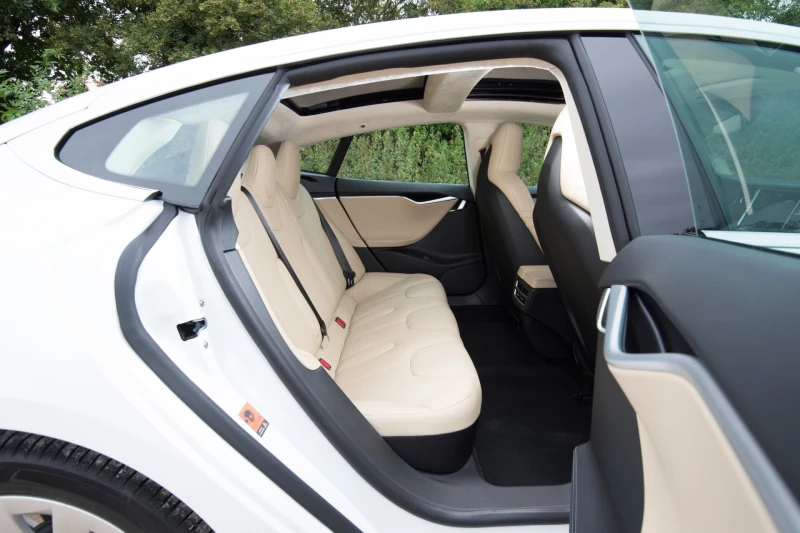
Front seats are supportive for long highway runs. In the rear, space is generous thanks to the generous 116.5-inch wheelbase — headroom and legroom rank among the best in the luxury sedan segment. The center tunnel is low, making the middle seat usable for shorter trips. Rear seats also offer heating, with ventilation available on higher trims.
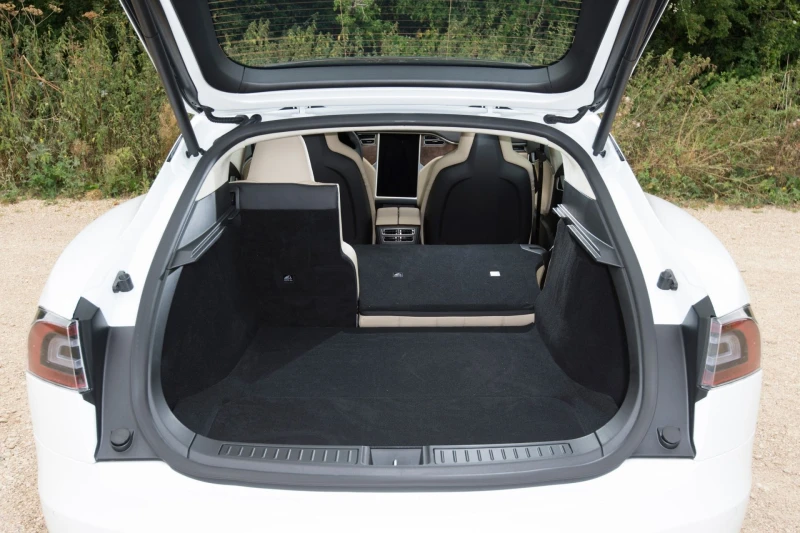
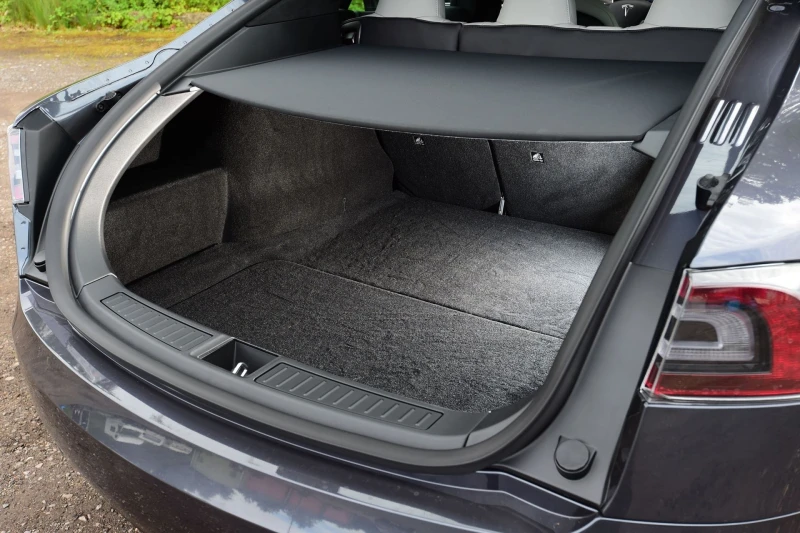
Cargo capacity includes a rear compartment of approximately 25 cubic feet (709 liters, including underfloor storage) and a front frunk of about 3.1 cubic feet (89 liters). The rear seatbacks split 60:40 and fold nearly flat. Storage is plentiful with multiple bins, USB-A and USB-C ports (later models), wireless phone charging from 2019, and handy hooks. Note that the high rear load lip and lack of a traditional center armrest bin can make loading bulky items slightly less convenient.
Trim Levels and Equipment on the US Used Car Market
On the US secondary market, the Tesla Model S Palladium most commonly appears in these typical configurations (official or descriptive names vary by model year and origin):
| Trim Level | Seating and Interior Materials | Multimedia and Displays | Climate and Comfort | Driver Assistance and Safety | Common US Market Notes |
|---|---|---|---|---|---|
| Base / Long Range AWD | Synthetic vegan leather, black or white cabin | 17" vertical touchscreen, premium audio system with 11–12 speakers | Dual-zone automatic climate control, heated front seats and steering wheel | Basic Autopilot | Often US-spec examples from 2018–2020 |
| Comfort / Performance | Premium synthetic leather, white cabin option | 17" touchscreen, upgraded premium audio with 12–14 speakers | Ventilated front seats, heated rear seats, air suspension | Enhanced Autopilot or Full Self-Driving | The most frequently encountered configuration from 2019–2021 |
| Top / Ludicrous / Performance+ | Alcantara and leather combination, optional carbon fiber trim | 17" screen, high-end audio with 14–22 speakers | Full heating and ventilation package, optional massaging front seats | Full Self-Driving Capability, Ludicrous acceleration mode | Less common but available, typically 2019–2021 examples |
Long Range AWD and Performance variants with black or white interiors, air suspension, and Enhanced Autopilot or FSD dominate the US used inventory. Every example features a fixed panoramic glass roof.
Year-by-Year Interior Updates and Changes
This generation is complete. Key interior developments include:
- 2016–2017: Major refresh introducing the 17-inch vertical screen, upgraded softer-touch materials, acoustic front glass, and initial noise insulation improvements
- 2018–2019: Center console refinements including dual wireless chargers, shift to HW3 Autopilot hardware, and better sound deadening for the floor and wheel arches
- 2020–2021: Later production benefited from higher-grade materials, standard USB-C ports, and interface refinements for smoother graphics and responsiveness
On the US used market, 2019–2021 models generally feel more refined and quieter than the earlier 2016–2018 cars. Pre-2019 examples frequently show more noticeable squeaks from interior panels and increased road noise from the wheel wells.
Common Questions and Potential Drawbacks
With typical mileages between 50,000 and 125,000 miles on the US used market, owners commonly note these characteristics and concerns:
- White cabin wear: The synthetic leather can stain and discolor over time with heavy use and sunlight exposure
- Squeaks and rattles: 2016–2019 cars often develop noises from door panels, the center console, and rear shelf on bumpy roads
- Noise insulation: Pre-2019 models transmit more tire roar and road noise above 65 mph, particularly on coarse concrete highways
- Rear seating: While headroom is excellent, the seat cushion length can feel insufficient during very long trips
- Rear visibility: Thick C-pillars and a relatively narrow rear window limit over-the-shoulder visibility
- Maintenance: The glossy finish on the big screen and console shows fingerprints and fine scratches quickly
Across the wide range of US climates — from freezing northern winters to intense southern heat — the interior materials generally prove durable with routine care. White cabins, however, typically benefit from professional cleaning once or twice a year to maintain their appearance.
Final Thoughts on the Palladium Interior
By 2026 standards, the Tesla Model S Palladium cabin remains impressively high-tech, though newer electric vehicles have moved the goalposts further. The signature vertical 17-inch display, strong audio options, and generous interior space continue to impress.
For buyers on the US used market, the sweet spot for value, equipment, and comfort lies with 2019–2021 Long Range AWD and Performance models equipped with ventilated seats and air suspension in either black or white. Earlier cars from 2016–2018 can be found at lower prices but generally lack the later refinements in quietness and feature content.
Before buying a used Model S, pay close attention to:
- Seat condition — check for wear, discoloration, or stains, especially on lighter colors
- Absence of annoying squeaks and rattles over rough pavement
- Screen functionality — confirm there are no dead pixels, lag, or touch issues
- Overall material condition and any lingering odors
- Proper operation of seat ventilation and air suspension where fitted
The interior of the Tesla Model S II (Palladium) stands out as one of the model's enduring strengths on the American used car market, offering a compelling mix of space, advanced technology, and upscale ambiance in the better-equipped examples.