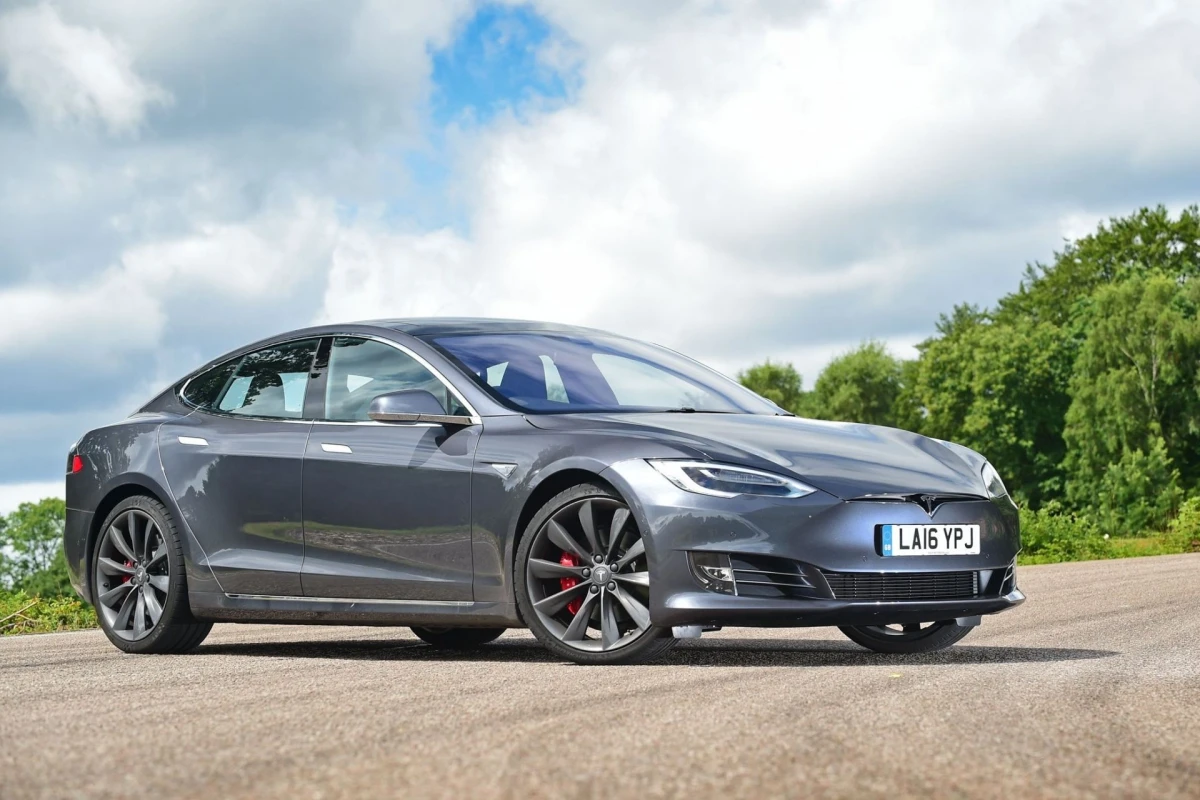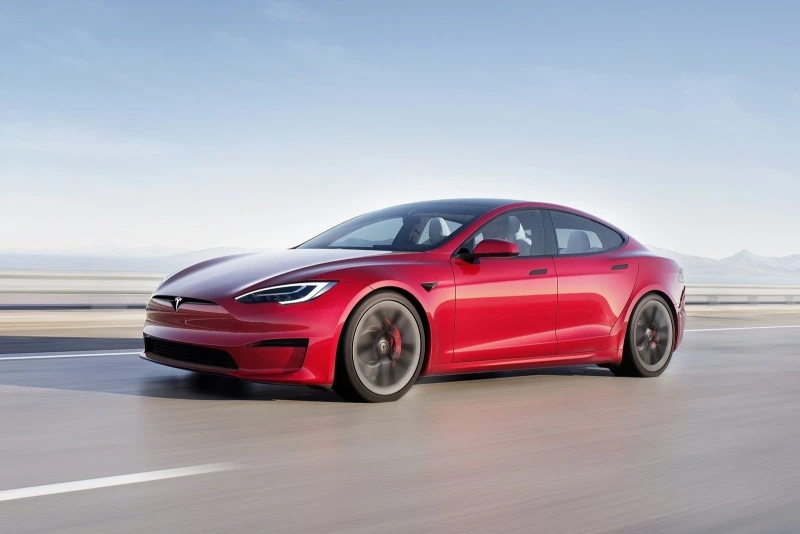
All versions feature permanent magnet synchronous motors (PMSM). The transmission consists of a single-speed reduction gear with a fixed ratio. In the US market, primarily American-built versions from the Fremont factory are common, equipped with the native NACS charging port.
Main powertrain configurations:
| Battery (nominal) | Drivetrain | Power (hp) | Torque (lb-ft) | Transmission | Years available | Note / market |
|---|---|---|---|---|---|---|
| ~100 kWh (NMC) | AWD (Dual Motor) | 670–780 | ~685–738 | Single-speed reducer | 2021–present | Long Range AWD, the primary version on the US market |
| ~100 kWh (NMC) | AWD (Tri Motor) | 1020 (peak) | ~1,047 | Single-speed reducer | 2021–present | Plaid, tri-motor setup, the highest-performance variant |
Plaid versions use a unique rear motor with a carbon-sleeved rotor, enabling short bursts of peak power. The high-voltage system operates at 400 V (versus 800 V on the Cybertruck and some Model X versions). Maximum DC fast-charging rate is up to 250 kW (typically 180–230 kW at most US Superchargers). Regional differences are minor, with the NACS connector being standard across the US.
Dimensions and Weight
The dimensions have stayed remarkably consistent throughout the model's lifecycle. Figures are averaged from the most common Long Range and Plaid variants.
| Parameter | Value | Note |
|---|---|---|
| Length, in | 196 | Consistent, with minor trim variations |
| Width (mirrors folded / unfolded), in | 77.3 / 86.2 | Unchanged |
| Height, in | 56.9–57.1 | Depends on air suspension and wheel setup |
| Wheelbase, in | 116.5 | Fixed |
| Ground clearance, in | 4.6–6.4 | Adjustable air suspension (min. 4.6 in, max. 6.4 in) |
| Curb weight, lbs | 4,560–4,770 | Long Range ~4,560–4,630 lbs, Plaid ~4,720–4,770 lbs |
| Gross vehicle weight (GVWR), lbs | 5,720–5,840 | Varies by version |
| Cargo volume (rear + frunk), cu ft | 25.0 + 3.1 | Consistent throughout the generation |
Weight varies notably by configuration: the Plaid is 150–220 lbs heavier due to the additional motor and reinforced components.
Yearly Updates and Changes
This generation is still current. No major facelifts have been applied to the Plaid, but Tesla has made continuous small improvements via production and over-the-air updates:
- 2021: Launch of Long Range AWD and Plaid. Panasonic ~100 kWh battery, tri-motor Plaid configuration, yoke steering (optional traditional wheel), HW3/HW4 hardware
- 2022–2023: Switch to HW4 in later builds, software refinements for better Autopilot/FSD reliability, improved build quality and sound insulation
- 2024–2025: Updates to suppliers for acoustic materials and motors, software optimizations for faster charging and lower energy use
- 2026: Production tweaks including better motor bearings and new trim options, with some batches receiving higher-capacity batteries (up to 108 kWh in the US)
All 2021–2026 configurations are relevant on the US market. Older lower-range non-Plaid models have largely been discontinued. Key choices remain Long Range AWD for the best mix of range and performance, and Plaid for outright speed.
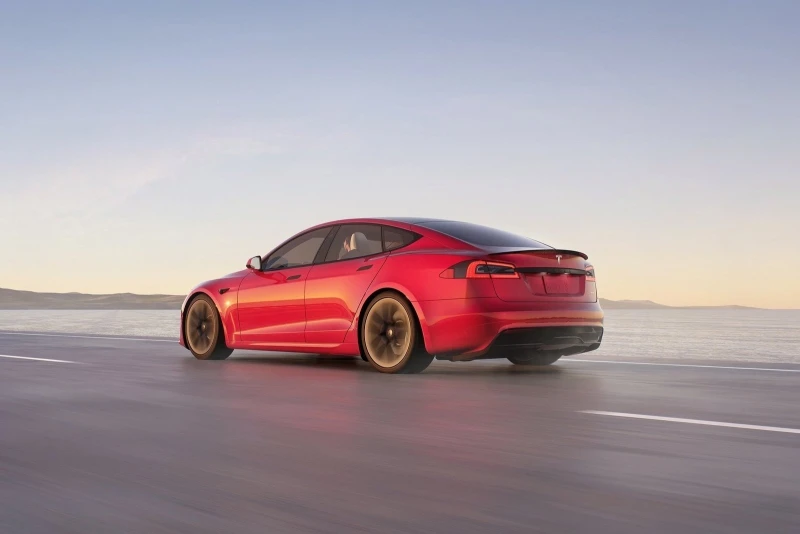
Real-World Operation and Technical Details
The Model S Plaid has been on US roads since 2021. The PMSM motors (carbon-sleeved rotor on Plaid) have shown excellent reliability with few major issues reported. The most popular models are the Plaid AWD and Long Range AWD.
Based on US owner reports and data from Tesla communities and review sites (2023–2026), average energy consumption in mixed driving is roughly 27–32 kWh/100 miles in summer and 34–44 kWh/100 miles in winter (at temperatures around 5–14°F). Real-world range typically reaches 320–380 miles in summer and 245–310 miles in winter for the Long Range; Plaid versions deliver 80–120 miles less when driven enthusiastically.
The single-speed gearbox is robust and requires no scheduled oil changes. All-wheel drive increases consumption by about 10–15% but greatly enhances traction on wet, snowy, or icy roads common in many parts of the US. Consumables like brake pads, filters, and tires are widely available and affordable. High-voltage parts such as the inverter, ICCU, or battery pack are costly and may require ordering, though Tesla's service network is extensive. Repairability is good at specialized EV shops, but official battery work and diagnostics are handled through Tesla Service Centers.
Battery degradation after 50,000–90,000 miles is usually 4–10% with proper charging habits (regularly charging to 80–90% and avoiding full 100% or deep discharges).
Conclusion and Recommended Choice for the US Market
Technically, the Long Range AWD with the ~100 kWh battery stands out as the most balanced option on the US market — offering strong range, impressive acceleration, reasonable efficiency, and solid value on the pre-owned market. The Plaid provides extreme performance but at the cost of higher energy use and more demanding maintenance on tires and suspension.
When shopping the used market, always verify battery State of Health (SoH) via Tesla diagnostics, review charging history, and check for any major accident damage. For a full review of styling, interior, features, and known issues, check other articles in this series.