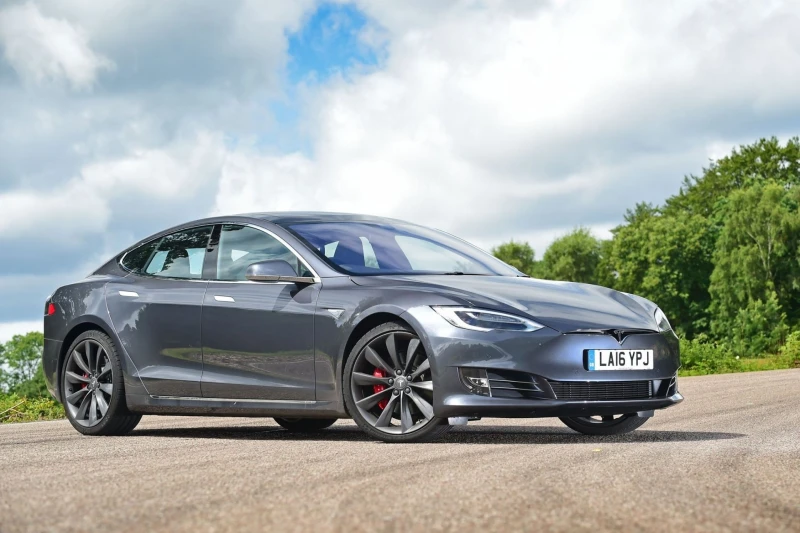
All versions are equipped with synchronous electric motors (early versions used induction motors; from 2019 onward, most feature permanent magnet synchronous motors — PMSM). The transmission is a single-speed reduction gear with a fixed gear ratio. On the US market, you will primarily find American-built examples produced in Fremont, California, equipped with Tesla’s native NACS charging port.
The main powertrain configurations offered between 2016 and 2021 included:
| Battery (nominal) | Drive | Power (hp) | Torque (lb-ft) | Transmission | Years available | Note / market |
|---|---|---|---|---|---|---|
| 60–75 kWh | RWD | 315–333 | 325–387 | Reduction gear | 2016–2019 | Standard Range / 75D, common in the US and Europe |
| 75–100 kWh | RWD | 333–518 | 387–487 | Reduction gear | 2017–2020 | Long Range / 100D, popular on the US market |
| 75–100 kWh | AWD (Dual Motor) | 518–762 | 487–738 | Reduction gear | 2016–2021 | 75D / 100D / Long Range / Performance, the most common version on the US market |
| 100 kWh | AWD (Dual Motor) | 762–825 | 738–811 | Reduction gear | 2019–2021 | Performance / Ludicrous / Performance+, top-tier version |
Regional differences: US-spec cars typically came with Panasonic NCA/NCM battery cells, while some European and later US production batches used LFP cells in select runs (rare on the used market). DC fast charging is rated up to 150–200 kW, with real-world charging speeds of 120–180 kW commonly observed at stations during the 2016–2021 period.
Dimensions and Weight
Overall dimensions stayed nearly constant throughout the generation, with only minor bumper revisions in 2019–2020. Values are averaged across the most popular configurations.
| Parameter | Value | Note |
|---|---|---|
| Length, in | 196–196.1 | Fixed |
| Width (without mirrors / with mirrors), in | 77.3 / 86.2 | No significant changes |
| Height, in | 56.9–57.1 | Varies with air suspension and wheel/tire package |
| Wheelbase, in | 116.5 | Fixed |
| Ground clearance, in | 4.6–6.4 | Adjustable air suspension (minimum 4.6 in, maximum 6.4 in) |
| Curb weight, lbs | 4,560–4,960 | RWD ≈ 4,560–4,630 lbs; AWD ≈ 4,740–4,960 lbs |
| Gross vehicle weight (GVWR), lbs | 5,720–5,840 | Depends on battery size and drivetrain |
| Trunk volume (rear + frunk), cu ft | 25 + 3.1 | Unchanged throughout the generation |
Curb weight varies noticeably with battery capacity and drivetrain. Dual Motor versions with the 100 kWh battery are typically 220–330 lbs heavier than early 75 kWh RWD models.
Year-by-Year Updates and Facelifts
This generation has been discontinued. The most important changes during its production run were:
- 2016–2017: Major facelift with new exterior styling, 17-inch vertical touchscreen, improved noise insulation, and Dual Motor PMSM powertrains
- 2018–2019: Introduction of the Long Range (100 kWh) variants, hardware upgrade from HW2.5 to HW3, addition of Ludicrous+ mode, and suspension refinements
- 2020–2021: Final production focused on maximum range, software polish, and elevated build quality
On the US used market, 2019–2021 model years (especially Long Range AWD and Performance models equipped with HW3) are the most desirable thanks to better noise insulation and lower battery degradation. Earlier 2016–2018 examples appear less frequently and are generally more affordable, but they benefit from a more thorough pre-purchase inspection of the battery and electronics.
Ownership Experience and Technical Considerations
The Model S Palladium has been on American roads since 2017. Both induction and PMSM electric motors have shown outstanding long-term reliability, with major failures remaining rare. Long Range AWD and Performance variants with the 100 kWh battery continue to be the most popular choices among owners.
According to aggregated US owner reports, forums, and real-world testing data from 2022–2026, average energy consumption in mixed driving is approximately 26–31 kWh per 100 miles in summer conditions and 32–42 kWh per 100 miles in winter (at 5–14 °F). Real-world range typically reaches 280–340 miles in summer and 220–280 miles in winter for Long Range models. Performance versions usually deliver 50–75 miles less when driven enthusiastically.
The single-speed reduction gearbox is highly reliable and requires no scheduled oil changes. All-wheel drive increases energy consumption by 10–15% but provides a significant advantage in traction on wet or slippery roads. Wear items such as brake pads, cabin filters, and tires are widely available and reasonably priced. High-voltage components (inverter, battery pack, and motors) are expensive and are typically sourced through Tesla Service Centers or specialized EV repair facilities. Most routine service and repairs can be performed at independent shops, but official battery diagnostics, repairs, and replacements must go through Tesla-certified centers.
Battery degradation after 60,000–125,000 miles of normal use generally stays in the 5–12% range when owners follow recommended charging habits (daily charge to 80–90%, avoiding constant 100% charges and deep discharges).
Summary and Top Recommendations
From a technical perspective, the best-balanced choice for most buyers is the Long Range AWD with the 100 kWh battery from the 2019–2021 model years. It combines strong real-world range, excellent performance, moderate energy consumption, and good liquidity on the used market. Performance variants deliver the highest acceleration numbers but consume more energy and place greater demands on tires and suspension.
When purchasing on the used market, it is strongly recommended to check battery state of health (SoH) via Tesla diagnostics, review the full charging and service history, and confirm the vehicle has no major accident damage. A comprehensive look at exterior design, interior quality, available trims, and common issues for this generation can be found in other articles in this series.