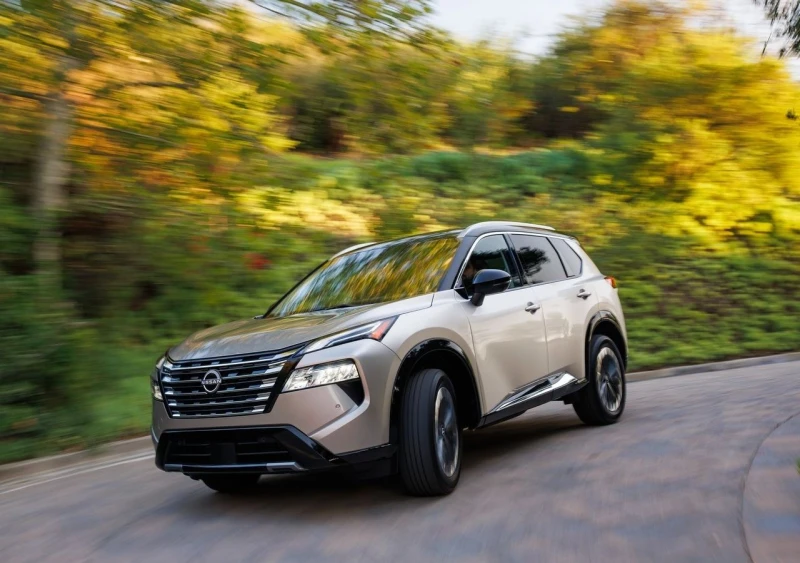
If the previous generation largely carried forward the familiar formula of the prior X-Trail with its naturally aspirated 2.5-liter engine and Jatco CVT, the T33 marks a clean break. It rides on the new CMF-C platform shared across the Renault-Nissan-Mitsubishi alliance, bringing higher torsional rigidity, a revised multi-link rear suspension, and better weight distribution. Front suspension remains MacPherson strut, steering is electrically assisted, and brakes are discs all around with ventilated fronts. The track is wider than before, and while overall length is slightly shorter than its predecessor, the increased width enhances high-speed stability and composure on long interstate runs.
Design, interior, and trim details are covered in companion articles in this series. This piece focuses strictly on the mechanical hardware: powertrains, transmissions, all-wheel-drive system, and body dimensions.
Platform and Powertrain Philosophy
The Rogue T33 is built on the CMF-C platform. Compared with the previous CMF-CD architecture, it delivers noticeably stiffer body structure, a more sophisticated rear suspension, and optimized mass distribution. These changes translate into sharper handling, better ride quality over broken pavement, and improved refinement at highway speeds — all priorities for American buyers who often log long miles on interstates and encounter everything from smooth highways to potholed city streets and winter slush.
For the US market the story is straightforward: the vast majority of Rogues on American roads are the domestic North American specification. The core mechanical package — especially from the 2022 model year onward — centers on a single dominant powertrain concept, which simplifies ownership considerations for buyers shopping the used market.
Nissan Rogue 2021–Present Engines and Transmissions
Through the 2021 model year, North American Rogues carried the naturally aspirated 2.5-liter PR25DD inline-four with direct injection, rated at approximately 181 horsepower. These early examples remain on the used market and appeal to buyers who prefer mechanical simplicity.
Beginning with the 2022 model year, Nissan switched the Rogue to the turbocharged 1.5-liter KR15DDT inline-three featuring variable compression ratio (VC-Turbo) technology. Despite the smaller displacement, it produces about 201 horsepower and a stout 225 lb-ft of torque. The compression ratio varies between roughly 8:1 and 14:1 thanks to a sophisticated multi-link crankshaft mechanism actuated electronically. In steady cruising the engine runs high compression for efficiency; under acceleration or load it drops compression to safely accommodate boost and deliver strong mid-range pull.
Hybrid variants such as e-Power (where the gasoline engine acts purely as a generator) exist in other markets on the related X-Trail, but they are not offered in meaningful volume on the Rogue in the United States. Shoppers looking at a “Rogue” in the US should not expect hybrid powertrains.
Every current Rogue T33 uses an updated Jatco Xtronic CVT with a wider ratio spread and improved cooling. There is no conventional manual or stepped automatic available. All-wheel drive is on-demand via an electromagnetic clutch (Intelligent AWD) with multiple selectable modes — Auto, Sport, Off-Road, Snow, and others depending on trim. Front-wheel drive remains standard on base models and is perfectly adequate for most drivers.

| Engine | Displacement | Power | Transmission | Drivetrain |
| PR25DD, gasoline, naturally aspirated, I4 (early models, MY2021) | 2.5 L | ~181 hp | Xtronic CVT | FWD / AWD |
| KR15DDT VC-Turbo, gasoline, I3, variable compression (from MY2022) | 1.5 L | ~201 hp | Xtronic CVT | FWD / AWD |
| Mild Hybrid 1.5 VC-T (limited markets) | 1.5 L | ~158–204 hp | CVT | FWD / AWD |
| e-Power 1.5 VC-T (other markets, rare in US) | 1.5 L (engine acts as generator) | ~204 hp (combined) | Electric transmission | FWD / e-4ORCE AWD |
Dimensions, Weight, and Packaging
The North American Rogue T33 is slightly shorter in overall length than its predecessor yet wider, with a wider track. Wheelbase stays essentially unchanged at approximately 106.5 inches, which, combined with the new rear suspension, yields noticeably more rear-seat legroom without increasing exterior footprint. Ground clearance on AWD models is a useful 8.3 inches — respectable for the class, though the vehicle remains primarily a paved-road crossover rather than a serious off-roader.
| Measurement | Value |
| Length | ~183.0 in (4,651 mm) |
| Width | ~72.4 in (1,839 mm) |
| Height | ~66.9 in (1,700 mm) |
| Wheelbase | ~106.5 in (2,705 mm) |
| Curb Weight (FWD / AWD) | ~3,550 / ~3,700 lb (~1,610 / ~1,680 kg) | Gross Vehicle Weight Rating | ~4,740–4,920 lb (~2,150–2,230 kg) |
Cargo volume behind the rear seats measures approximately 36.3 cubic feet to the window line (using the US measurement method), a noticeable increase over the previous generation. The load opening is rectangular and the lift-over height is low, making everyday grocery runs and weekend gear hauling straightforward.
Evolution Within the Generation
The most consequential change arrived in the second year of production when the naturally aspirated 2.5-liter engine was replaced by the VC-Turbo three-cylinder. This was not a traditional facelift; the body and interior architecture stayed the same while the entire powertrain philosophy changed. At the same time, Nissan refined the CVT calibration. Later 2023–2024 models exhibit noticeably smoother behavior under load, with less of the “rubber-band” feel that characterized some early 1.5 VC-Turbo examples.
For the 2024 model year, updates focused on the infotainment system, ProPILOT Assist driver aids, and additional sound insulation. The core mechanical components — engine, transmission, and AWD hardware — carried over with minimal structural revision. For used buyers this is good news: the technical foundation is consistent across 2022–2025 examples, and differences are mainly in software calibration and feature content rather than fundamental hardware.
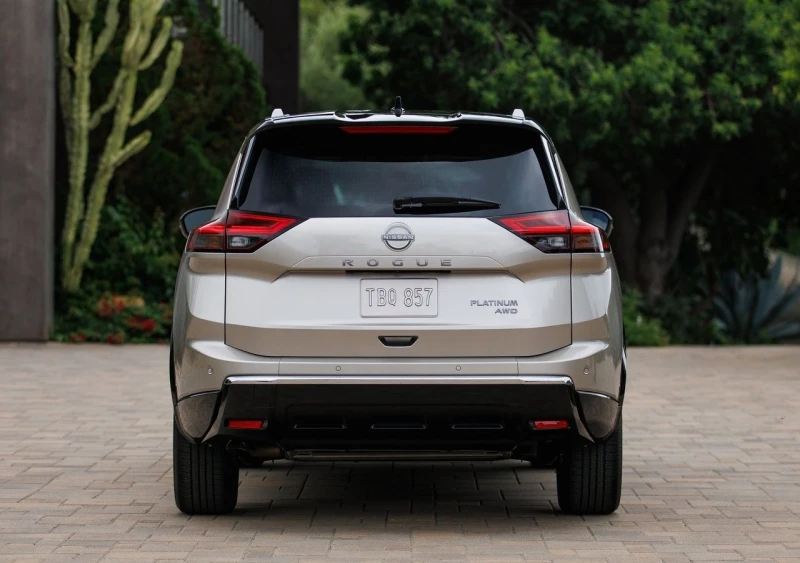
Ownership Experience and Technical Reliability
On paper the specifications look strong, but real-world ownership in the US brings a few practical considerations. The VC-Turbo engine is mechanically more complex than a conventional naturally aspirated four-cylinder: it combines turbocharging, direct injection, and a variable-compression mechanism with its own electric motor and actuator. It is not a disposable unit, but it does reward attentive maintenance. Use quality fuel, change the synthetic oil at or before the recommended interval, and consider slightly shorter service intervals in severe conditions (hot summers, frequent short trips, or heavy highway use).
The 2.5-liter PR25DD is mechanically simpler with a timing chain and has a long track record of durability in American conditions. Many high-mileage examples continue to serve owners reliably with routine care.
The Jatco Xtronic CVT in the T33 is a significantly updated unit compared with earlier problematic generations. With regular fluid changes — many independent specialists recommend intervals around 30,000 miles — and avoidance of prolonged wheelspin or overheating, most units are proving durable well past 100,000 miles. The Intelligent AWD system is low-maintenance in normal use; owners who frequently drive on salted winter roads or rough surfaces should periodically inspect the propshaft and joints.
Real-world fuel economy for VC-Turbo models is competitive. Front-wheel-drive versions typically return 28–31 mpg in mixed driving, while all-wheel-drive models see roughly 27–30 mpg. On the highway at a steady 70 mph, many owners report 33–37 mpg. The earlier naturally aspirated 2.5-liter engine generally uses 4–6 mpg more in similar conditions — the trade-off for its simpler construction and more linear power delivery.
All versions are calibrated for regular unleaded gasoline (87 AKI). However, the VC-Turbo engine benefits from premium unleaded (91 AKI or higher) for optimal performance, smoother operation of the variable-compression system, and reduced risk of detonation, particularly in hot weather or when carrying loads. Consistent top-tier fuel quality across the US makes this an easy recommendation for maximum longevity and enjoyment.
Parts availability is excellent nationwide. Routine maintenance items — filters, brake components, suspension bushings — are widely stocked both at dealers and in the aftermarket. Specific components for the VC-Turbo’s variable-compression mechanism are available through Nissan dealers and increasingly through knowledgeable independent shops. The broad network of Nissan service centers and experienced indie technicians means owners rarely struggle to find competent help, regardless of where they live.
Technical Verdict
For American drivers the T33 Rogue is best understood as the “1.5 VC-Turbo + Xtronic CVT + Intelligent AWD” combination in its most common recent configuration. It offers a compelling balance of responsive performance, strong mid-range torque, competitive real-world fuel economy, and attractive pricing on the used market. Front-wheel drive is the smart choice for most suburban and urban drivers who want lower weight, slightly better efficiency, and less complexity. All-wheel drive adds meaningful confidence in snow, heavy rain, or light unpaved roads with only a modest fuel-economy penalty.
The earlier 2.5-liter models remain a sensible niche choice for buyers who prioritize mechanical simplicity, proven long-term reliability, and potentially lower maintenance costs as the vehicle ages. Hybrid e-Power variants, while interesting in other markets, are not a practical consideration when shopping for a Rogue in the United States.
Clean, well-maintained 2022–2023 examples with average mileage typically change hands in the $19,000–$24,000 range, depending on trim, options, and condition. They hold value better than many less popular powertrain configurations and continue to be one of the stronger players in the compact crossover segment.