


On the US market, the model was available through official channels and imports starting around 2015, primarily with gasoline and diesel powertrains meeting EPA and emissions standards of the time. Technical specs for the Kia Sorento III (UM) varied by model year, trim, and configuration, emphasizing a balance of power, efficiency, and family-friendly features. Below are the key details on engines, transmissions, dimensions, and operating notes relevant to the current used market in the United States. Exterior styling, interior, trim levels, and common issues are covered in other articles in this series.
Engines and Transmissions
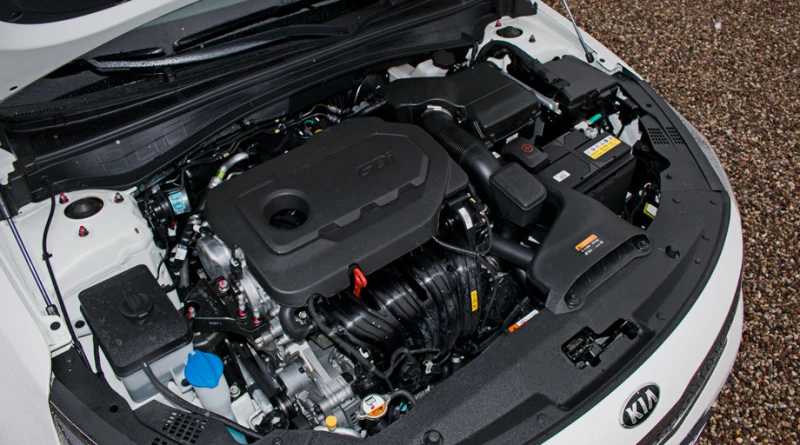
In the US and North American markets, the Kia Sorento III featured gasoline engines from the Theta family (with direct injection GDI) and, in some cases, diesel options through gray-market imports. Hybrid 2.4 variants appeared after the 2017 facelift, mainly for the domestic US market. All-wheel drive (AWD) was offered as an option on most engines, with electronic torque distribution. The 3.3 V6 gasoline was primarily available in the US and some Asian markets.
Main powertrains available in the US market:
| Engine Type | Displacement, cu in | Power, hp | Transmission Type | Drivetrain | Notes |
| Gasoline, Theta II GDI (naturally aspirated, direct injection) | 144 (2.4L) | 185–191 | 6-speed automatic | FWD / AWD | Common base engine in US until 2017 |
| Gasoline, Theta II T-GDI (turbocharged, direct injection) | 122 (2.0L) | 240 | 6-speed automatic | AWD | Post-facelift, less common |
| Gasoline, Lambda II Hybrid (naturally aspirated + electric motor) | 144 + electric | 193 (system) | 6-speed automatic | AWD | From 2017, primarily US market |
| Diesel, R (CRDi, turbo) – import/gray market | 134 (2.2L) | 197–200 | 6- or 8-speed automatic | FWD / AWD | Popular import option, meets emissions standards |
Transmissions were 6- or 8-speed automatics with torque converter; no manual option in the US. The 2.2 CRDi diesel with 6/8-speed auto and AWD formed a solid part of imported offerings.
Dimensions and Weight
The Kia Sorento III dimensions stayed largely consistent throughout production, with minor updates after the 2017 facelift (slight lengthening from bumpers). Averaged values for the most common versions with the 2.4 GDI or 2.2 diesel and automatic:
| Parameter | Value | Notes |
| Length, in | 188–189 | Pre-facelift ≈188, post-facelift ≈189 |
| Width, in | 74.4 | Excluding mirrors |
| Height, in | 66.3–66.7 | With roof rails |
| Wheelbase, in | 109.4 | Consistent across versions |
| Curb Weight, lbs | 4050–4520 | Lowest for 2.4 FWD, highest for 2.2 AWD |
| Gross Vehicle Weight, lbs | 5530–5840 | Depending on engine and drivetrain |
| Ground Clearance, in | 7.3 | Standard for the class |
Higher weights apply to hybrid and AWD versions. Cargo volume — 73–2057 liters (VDA) in seven-seat configuration with seats folded.
Yearly Updates and Facelift
Production of the Kia Sorento III ran from 2014 to 2020. Key changes:
- 2014–2016 — launch with 2.4 GDI (185–191 hp), 2.0 T-GDI (240 hp), and 2.2 CRDi (197–200 hp) options, 6-speed auto, AWD available. Gasoline engines met EPA standards, diesels included DPF and SCR systems.
- 2017 facelift — introduction of 8-speed auto for gasoline and hybrid models, refined 2.2 CRDi for better efficiency, addition of 2.4 Hybrid (193 hp system) mainly for the US market.
- 2018–2020 — final years with focus on stricter emissions compliance, wider use of 8-speed auto. Hybrids common in the US, 2.2 CRDi diesel more through imports.
The 2017 facelift boosted appeal in the US: post-facelift models with 8-speed auto and improved efficiency became popular. Earlier models are more affordable but may need updates to emissions components.
Operating Features and Technical Notes
On the US used market in 2026, the most sought-after are the 2.2 CRDi diesel (197–200 hp) and 2.4 GDI gasoline (185–191 hp) versions. Engines are reliable with quality fuel: expected lifespan 200,000–250,000 miles, though diesels are sensitive to DPF and DEF systems requiring maintenance every 60,000–70,000 miles. Gasoline GDI engines prone to intake valve carbon buildup, recommend cleaning every 50,000 miles.
Based on US owner reports and sites (Fuelly, forums, EPA data), approximate real-world fuel economy:
- 2.4 GDI (185–191 hp) — 19–23 MPG combined (FWD), 18–21 MPG with AWD;
- 2.2 CRDi (197–200 hp) — 25–30 MPG combined (AWD, automatic);
- 2.4 Hybrid (193 hp system) — 30–35 MPG combined (common in US).
The 6- or 8-speed automatic is reliable but requires ATF changes every 40,000 miles; AWD system with coupling is durable, though the clutch pack may wear beyond 110,000 miles with heavy towing. Parts are widely available (OEM and aftermarket from Hyundai), maintenance costs average for the class. Repairability is good: engines and transmissions shared with Hyundai Santa Fe, multi-link suspension is straightforward but control arms wear faster on rough roads by 60,000–70,000 miles.
Summary and Best Choice for the US Market
On the US used market in 2026, the most balanced option appears to be the 2.2 CRDi (197–200 hp) with 8-speed automatic and AWD: it delivers reasonable fuel economy, strong performance, and good resale value in the $14,000–$22,000 range (approximate market price for the United States). The 2.4 GDI gasoline with 6/8-speed auto and AWD suits those prioritizing smoothness and less fuel sensitivity, though it carries higher running costs.
Considering average ownership costs for the class and used pricing, the diesel version is preferable for highway driving where fuel savings add up. Post-facelift 2017–2020 models offer the best liquidity, especially with documented service history. When shopping, prioritize inspection of the automatic transmission and AWD system to avoid surprise expenses.
This engine overview highlights the versatility of the generation: 2014–2020 powertrains remain relevant for US conditions with regular maintenance. Kia Sorento III specs combine capability and practicality for the used market.