The ninth-generation Honda Accord was engineered for the global market, with strong availability in the United States through Honda dealerships. This overview covers the key powertrains — gasoline Earth Dreams engines, V6, and hybrid variants — emphasizing efficiency, performance, and everyday usability. Engines met strict U.S. emissions standards (LEV II / Tier 2 Bin 5 or better), with hybrids particularly popular in states like California. Below are the main engine options, dimensions, and key notes on ownership in the U.S. as of early 2026.
Detailed reviews of styling, interior, trim levels, and common issues are covered in other articles in this series.
Engines and Transmissions
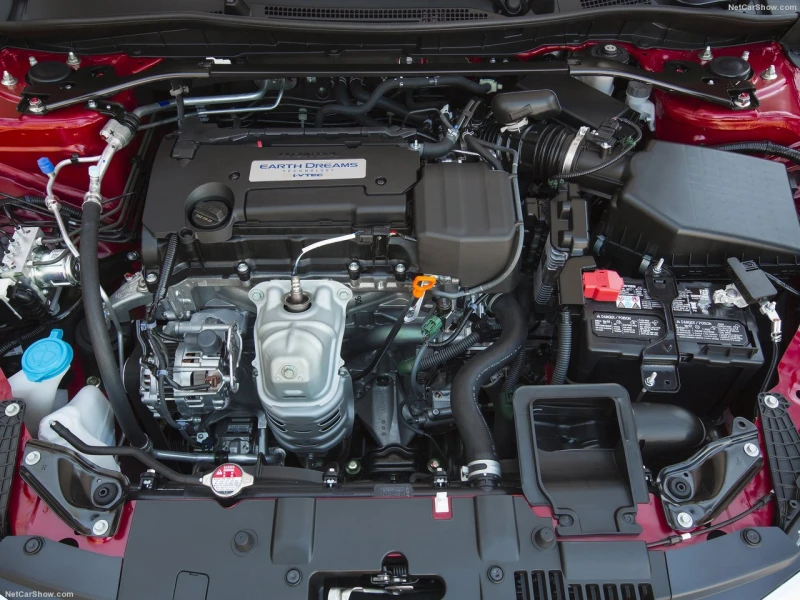
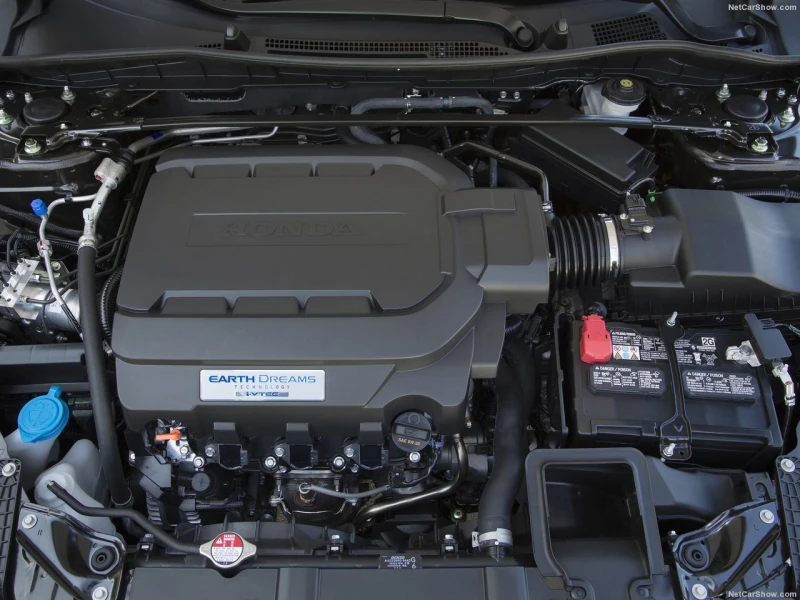
During its 2013–2017 production run, the Honda Accord offered a range of powertrains tailored to different driving needs. In the U.S., the lineup focused heavily on the efficient 2.4L Earth Dreams inline-four and the potent 3.5L V6, with the two-motor hybrid becoming a strong seller in later years. The 2.4L (K24W) featured direct injection, the 3.5L V6 (J35Y) included Variable Cylinder Management (VCM), and the hybrid paired a 2.0L Atkinson-cycle engine with electric motors. Transmissions included 6-speed manual (early models), CVT (most 4-cylinders), or 6-speed automatic (V6). Drive was almost exclusively front-wheel drive (FWD).
| Engine Type | Displacement | Horsepower | Transmission | Drive | Notes / Availability |
| Gasoline | 2.4L (K24W Earth Dreams) | 185–189 hp | 6MT / CVT | FWD | Core engine for most U.S. models, excellent balance of power and efficiency |
| Gasoline V6 | 3.5L (J35Y) | 278–278 hp | 6AT | FWD | Top performance option, widely available at U.S. dealers |
| Hybrid | 2.0L Atkinson + electric motors | 196 hp (combined) | e-CVT | FWD | Strong U.S. presence, especially after 2014; focused on maximum efficiency |
Dimensions and Weight
Exterior dimensions were consistent across the ninth-generation Accord lineup (sedan body style), with only minor market-specific variations. Curb weight varies depending on engine and equipment — V6 and hybrid models are heavier due to added components. Figures below represent typical U.S.-spec sedans.
| Specification | Value | Notes |
| Length, in | 191.4–191.5 | Slight variation by trim and year |
| Width, in | 72.8 | Excluding mirrors |
| Height, in | 57.7 | Standard across models |
| Wheelbase, in | 109.3 | Consistent for the generation |
| Curb Weight, lbs | 3,100–3,550 | Lowest: 2.4L base; highest: hybrid / V6-loaded |
| Gross Vehicle Weight, lbs | approx. 4,400–4,850 | Varies by configuration |
| Ground Clearance, in | 5.8–5.9 | Typical for the class |
Yearly Changes and Mid-Cycle Refresh
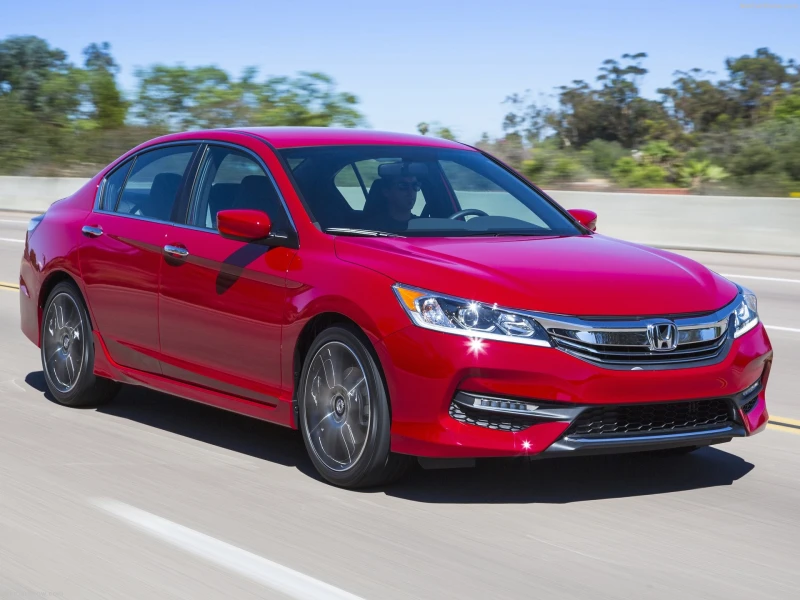
The 2013–2017 Accord received a significant refresh for the 2016 model year (often referred to as the 2015 facelift in some markets). Early models (2013–2015) came with the 2.4L (185 hp) or V6 (278 hp), plus the hybrid introduced in 2014. Transmissions included 6-speed manual (select 2.4L), CVT, or 6-speed auto.
The 2016 refresh brought an updated 2.4L engine (189 hp in Sport trim), refined CVT calibration for smoother response, improved sound insulation, and chassis tweaks for better handling stability. The V6 remained unchanged, while the hybrid saw minor efficiency gains. No major powertrains were discontinued — the focus simply shifted toward CVT-equipped models for better fuel economy.
Post-refresh models (2016–2017) tend to hold stronger resale value in the U.S. used market thanks to the smoother drivetrains, quieter cabins, and refined ride quality.
Ownership Notes and Technical Highlights
In the U.S., most ninth-gen Accords are 2.4L or hybrid models, with the V6 prized by enthusiasts for its power. The K24W and J35Y engines are known for excellent longevity — frequently exceeding 200,000–300,000 miles with regular maintenance. The CVT is generally reliable when fluid is changed every 30,000–40,000 miles; avoid prolonged heavy stop-and-go traffic without proper cooling.
Real-world fuel economy (based on owner reports and EPA data): 2.4L models average 28–32 mpg combined; V6 around 25–28 mpg; hybrids frequently achieve 42–46 mpg depending on driving style and conditions.
Parts are widely available through Honda dealers and aftermarket suppliers. Maintenance costs are reasonable for the class, though hybrid battery replacement (if needed after 150,000+ miles) is more expensive. Overall repairability remains strong, with many components shared across Honda's lineup.
Summary & Best Picks for the U.S. Market
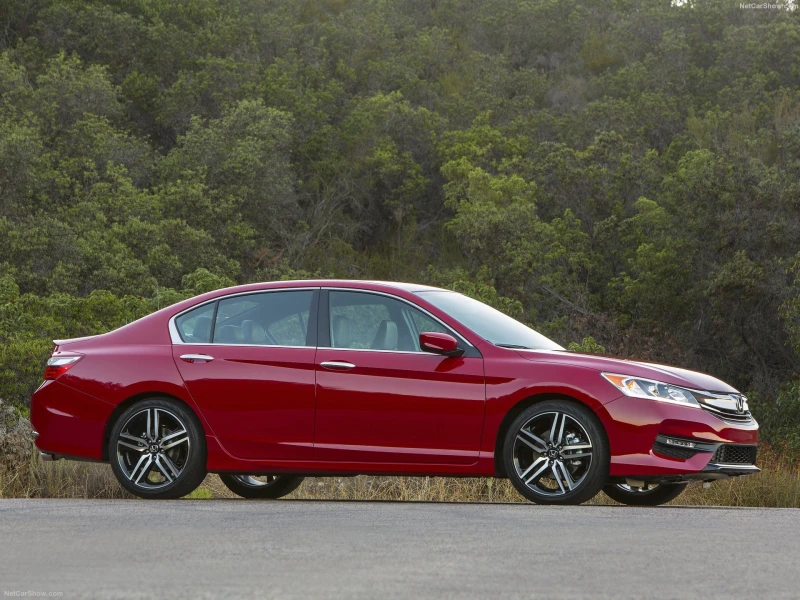
From a technical standpoint, the sweet spots for American buyers are the 2.4L (185–189 hp) + CVT + FWD combo for everyday efficiency and strong resale value, or the 3.5L V6 (278 hp) + 6-speed auto for spirited driving. The 2.4L offers the best balance for commuting and city use, while the V6 delivers rewarding performance at the cost of higher fuel consumption. The hybrid (196 hp combined) + e-CVT shines for maximum efficiency, especially in traffic-heavy areas, though long-term battery service costs should be considered.
When shopping used, prioritize vehicles with documented maintenance history, premium unleaded fuel usage where recommended, and avoid examples with neglected CVT fluid changes. The ninth-generation Accord continues to enjoy excellent reputation and strong demand in the U.S. used-car market.