


In the United States, the Kia Sorento second generation was introduced for the 2011 model year and offered primarily with gasoline engines meeting U.S. emissions standards. Technical characteristics of the Kia Sorento II (XM) varied depending on the year, trim, and configuration, balancing power and efficiency. Below are the main specifications for engines, transmissions, dimensions, and operating features relevant to the U.S. used car market. Exterior, interior, trims, and common issues of the generation are covered in other articles in the series.
Engines and Transmissions
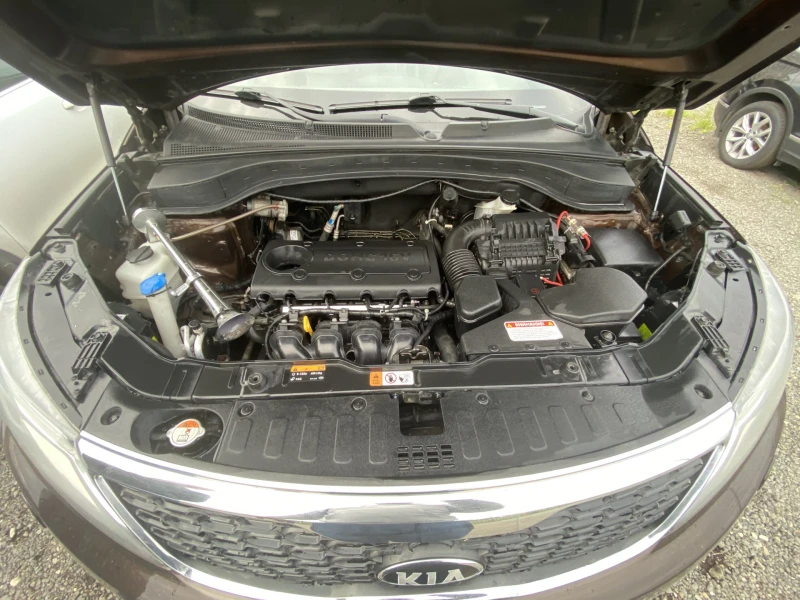
On the North American market, the Kia Sorento II was equipped with gasoline engines from the Theta and Lambda families. Hybrid versions were not available in this generation. All-wheel drive (AWD) was offered as an option on most models with electronic torque distribution. The 2.2 CRDi diesel was primarily for other markets but can be found rarely through imports.
Main powertrains for the generation (with focus on US availability):
| Engine Type | Displacement, cc | Power, hp | Transmission | Drivetrain | Notes |
| Gasoline, Theta II (naturally aspirated, MPI) | 2359 | 166-175 | 6-speed manual / 6-speed auto | 2WD / AWD | Early base engine |
| Gasoline, Theta II GDI (naturally aspirated, direct injection) | 2359 | 188-191 | 6-speed auto | 2WD / AWD | Post-facelift, very popular in the US |
| Gasoline, Lambda II (naturally aspirated, MPI) | 3470 | 276 | 6-speed auto | 2WD / AWD | Available in the US market |
| Diesel, R (CRDi, turbo) | 2188 | 197 | 6-speed auto | 2WD / AWD | Rare in the US (imports), popular in Europe |
Transmissions include a 6-speed manual for base gasoline models or a 6-speed automatic with torque converter. AWD system with viscous coupling was reliable for the class. In the US, the 2.4 GDI with 6-speed auto and AWD was a common configuration.
Dimensions and Weight
The dimensions of the Kia Sorento II remained nearly constant throughout production, with minor updates after the 2012 facelift (bumpers and lights). Average values for common versions with the 2.4L engine and automatic:
| Parameter | Value | Notes |
| Length, mm (in) | 4685–4690 (184.4–184.6) | Slight increase post-facelift |
| Width, mm (in) | 1885 (74.2) | Excluding mirrors |
| Height, mm (in) | 1710 (67.3) | With roof rails |
| Wheelbase, mm (in) | 2780 (109.4) | Same for all versions |
| Curb weight, kg (lbs) | 1840–2000 (4056–4409) | Lower for 2.4 2WD, higher for AWD |
| Gross weight, kg (lbs) | 2510–2600 (5534–5732) | Depends on engine and drivetrain |
| Ground clearance, mm (in) | 185–190 (7.3–7.5) | Standard for the class |
Weights are higher for AWD and V6 models. Cargo volume ranges from 492 to 2052 liters (VDA) in seven-seat layout.
Yearly Updates and Facelift
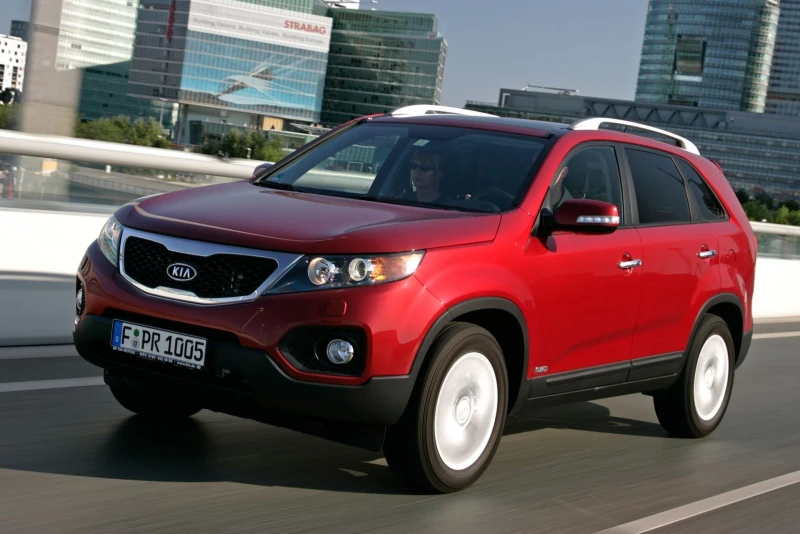
Production ran from 2009 to 2014. Key changes:
- 2009–2011 — Launch with 2.4 MPI and 2.2 CRDi, 5- or 6-speed autos. Early gasoline engines met stricter emissions over time.
- 2012 facelift: Introduced 2.4 GDI, refined automatic for smoother shifts, added LED lights and better sound insulation. Improved efficiency.
- 2013–2014 — Final years with focus on refinement and availability of 6-speed autos across lineup. 3.5 V6 popular in the US.
The 2012 facelift boosted popularity in the US with better features and efficiency. Post-facelift models command higher resale value.
Operating Features and Technical Notes
In the U.S. used car market, the most common are gasoline versions: 2.4 GDI (188-191 hp) and 3.5 V6 (276 hp). Engines are reliable with proper maintenance and quality fuel: lifespan 250,000–300,000 miles, though direct-injection engines benefit from intake cleaning every 50,000 miles. Diesels (if imported) require attention to DPF system.
Real-world fuel economy estimates based on owner reports and US data:
- 2.4 GDI (188-191 hp) — 21–26 mpg combined (FWD), 19–23 mpg with AWD;
- 2.2 CRDi (197 hp, if present) — 26–32 mpg combined (AWD, auto);
- 3.5 V6 (276 hp) — 18–22 mpg combined.
The 6-speed automatic is generally reliable but benefits from fluid changes every 40,000 miles. AWD system with viscous coupling is durable but watch for wear over 100,000 miles with heavy use. Parts are widely available (OEM and aftermarket from Hyundai), maintenance costs average for the class. The suspension is straightforward to service but control arms may need replacement around 60,000-80,000 miles on typical U.S. roads.
Summary and Best Choice for the US Market
In the U.S. used car market in 2026, the most balanced choice is the 2.4 GDI (188-191 hp) with 6-speed automatic and AWD: it offers good fuel economy, decent performance, and strong value in the $7,000–$13,000 range for well-maintained examples. The 3.5 V6 suits those wanting more power for highway driving and towing. Approximate market price for the United States: $7,000–$13,000 depending on year, mileage, and condition.
Post-facelift 2012–2014 models offer better features and reliability. Diesel imports can provide superior economy but may have higher maintenance on emissions equipment. When buying, get a pre-purchase inspection focusing on the transmission and AWD system.
This overview of Kia Sorento engines highlights the versatility of the 2009–2014 generation. The technical specifications combine power and practicality for daily driving and family use on American roads, provided regular maintenance is followed.